Thank you all for sharing your expertise here. I have been in multiple
discussions around the world of late regarding the USA BEAD rollouts,
and trying to get a grip on the state of present technology and the
future has been hard for this old farte. All I cared about, until
recently, was to see various bufferbloat-related fixes roll out
worldwide, although cpe security issues have been bugging me a lot.
(for a cynical take on it, see me channeling a BOFH
here:http://blog.cerowrt.org/post/trouble_in_paradise/ )
I am told that 10Gbit active fiber optics can be had for 2 us dollars
nowadays, which is pretty mindboggling, and that sweet spot for the
future is not just at 100Gbit, but in 400nz, which can run 120km,
except that BGP cannot keep up. Scion seems like an option...

At the top of my list of questions are things like typical IPv4
oversubscription in CGNATs. I have heard that 8x1 is fairly common.

Similarly, any other observable benefits to IPv6 rollouts. In my
personal case, about 6 years back, I had observed udp ports held open
decrease at one site from 18000 or so, to about 5000, just by
switching to dns over ipv6. I imagine that benefit has declined with
the rise of 8.8.8.8, etc.

is MPLS still a thing? PPPoe?

And so on.

On Sat, Apr 1, 2023 at 10:50 PM John Mann <[email protected]> wrote:
>
> Dave,
>
> [ Possibly dated information from the 2000's rollout of VERNet and AARNet ]
>
> For <100 km (say) links, thick fibre builds and CWDM optics (one service per
> pair, or passive muxes)
> beats DWDM on skinny fibre.
> In a pinch, circulators can be used to get the same set of frequencies going
> both ways on a single core.
> Watch fibre cleanliness and splices, may need attenuators on short CWDM hops.
>
> Try and play in the wholesale fibre market, not the retail market.
> Build a thick fibre run somewhere, and pair-swap with someone to get access
> somewhere else.
> Leasing conduit, fibres or wavelengths is OK for short-term sites, otherwise
> higher long-term costs!
>
> Try co-operative multi-fibre build to save costs / increase coverage
> https://www.aarnet.edu.au/fibre-optic-sharing-in-regional-australia-to-create-opportunities
> But be careful about who owns/controls the resulting infrastructure; get an
> IRU :-(
>
> For fibre resilience, build hierarchical dual-attached rings. (Neil Clarke
> VERNnet design)
> CoreA <-> Hub1 <-> Hub2 <-> CoreB ; Hub1 <-> Site1 <-> Site2 ... <-> Hub2
>   add more hub rings from the core; and more site rings from each hub pair.
> Also helps differentiate between a broken link vs. no power at a remote site.
>
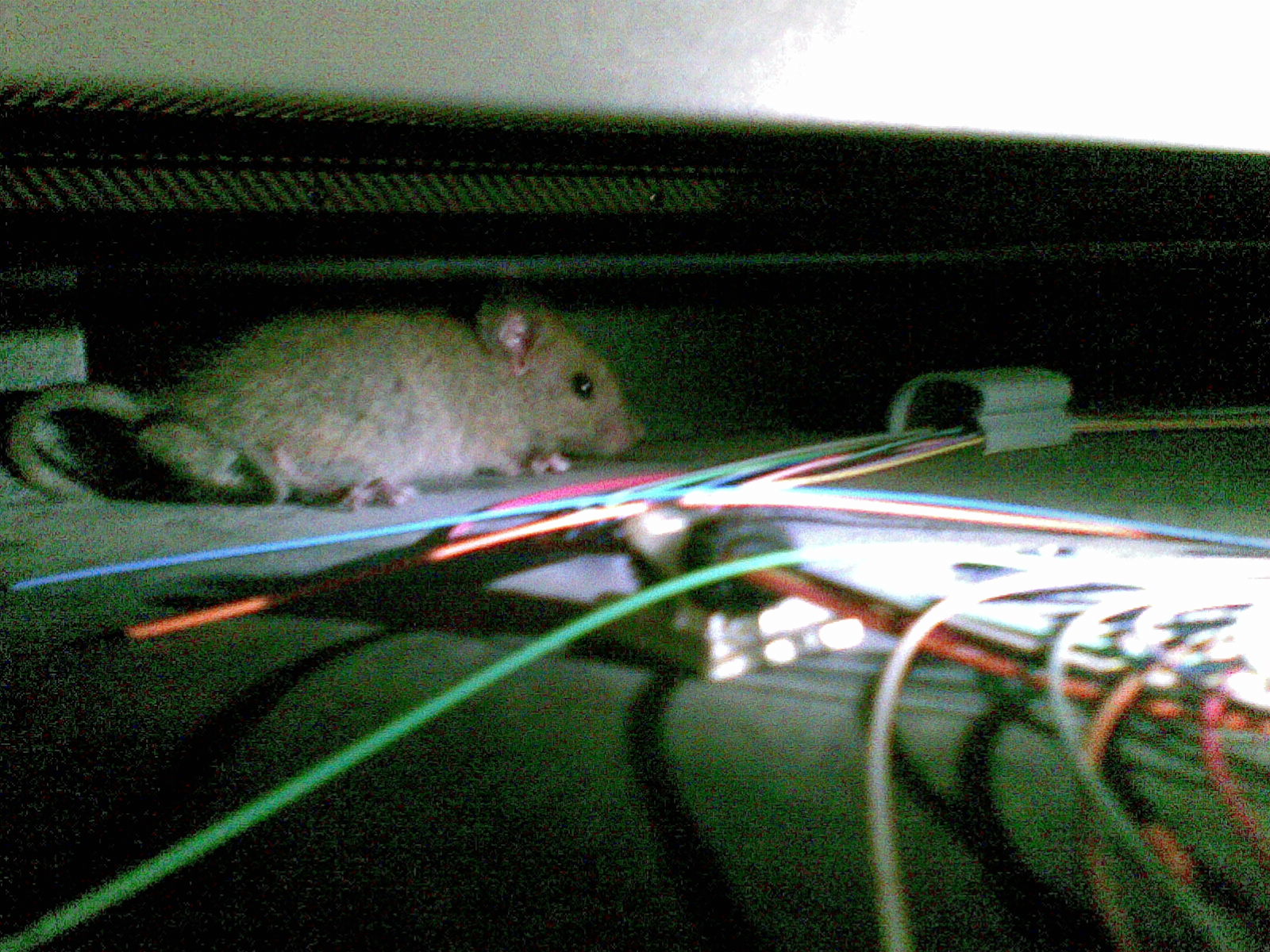
> And finally, look out for environmental factors like mice eating fibre
> termination epoxy.
> https://users.monash.edu.au/~ralphk/murine-network-engineer-03062009.jpg
> from Ralph Klimek https://users.monash.edu.au/~ralphk/more3.html
>
> Thanks,
>     John
>
> On Thu, 30 Mar 2023 at 02:49, Dave Taht <[email protected]> wrote:
>>
>> I am doing an AMA friday, in part about the $70B dollar USA NTIA
>> broadband and BEAD programs, which are largely targetted at improving
>> rural access to the internet. The target audience is one with which I
>> am mostly unfamiliar, the directors of the 50 US states administering
>> these programs.
>>
>> I am very interested about what y'all have learned about how to roll
>> out fiber and fixed wireless right, in your country, so far, and what
>> could be done better, in mine.
>>
>> Please let me know what you think here, (links to studies would be
>> great, too)
>>
>> and/or come heckle!
>>
>> --
>> AMA March 31: https://www.broadband.io/c/broadband-grant-events/dave-taht
>> Dave Täht CEO, TekLibre, LLC
>> _______________________________________________
>> AusNOG mailing list
>> [email protected]
>> https://lists.ausnog.net/mailman/listinfo/ausnog


--
AMA March 31: https://www.broadband.io/c/broadband-grant-events/dave-taht
Dave Täht CEO, TekLibre, LLC
_______________________________________________
AusNOG mailing list
[email protected]
https://lists.ausnog.net/mailman/listinfo/ausnog