On Jun 5, 2006, at 4:08 PM, Marcel wrote:
I envisage the application working upon a Cayenne Modeler XML file. This will load the queries and the objects involved. When a query is selected it will be run to get back the initial objects. The whole graph will be shown in the application, but the instance data won't be loaded for any particular object until it is selected. The records returned from the query should be able to be scrolled through, and the data edited and saved back to the DB. Is that what you had in mind?
I am confused about showing the "whole graph" part. Showing *all* object graph means showing the entire database. This is certainly NOT how you want to do it. So let me reiterate: You'd start with a list of objects fetched for a given query (i.e. a small subset of a db), and then expand the graph on demand as the user clicks on a relationships of a specific objects. Cayenne yields itself extremely well to this type of navigation, lazily resolving relationships behind the scenes (so instead of "instance data won't be loaded" you may say "relationship data won't be loaded").
E.g. in response to a query a user may get a list of artists (a1, a2, ... an). (S)he clicks on some artist's "paintings" relationships, this would expand a list of paintings for this artist only, and so on.
For version 1.1, we may also take query "prefetching" into account to show more than one kind of objects on the initial graph.
Can you point me in the right direction for Cayenne's XML file parsing code please? Does Cayenne maintain an accessible (to the ROP client) model of the object graph, or will I have to build one based upon the XML file?
Cayenne provides all the metadata to you, on the client as well as on the server. And you don't need to parse any XML. ObjectContext.getEntityResolver() is what you are looking for.
The third is to build it under a graphical editor framework such as Eclipse's GEF [3]. I am tending towards the latter - it builds in editing and visualisation, and I am a fan of Eclipse. There's good documentation and good examples - some of which look promisingly like what I had in mind for the final application [4]. Moreover it can be deployed as a plugin or standalone via RCP.
Sure. GEF/EMF looks ok (and seems to even work on Mac), although I don't know any of the internals of course.
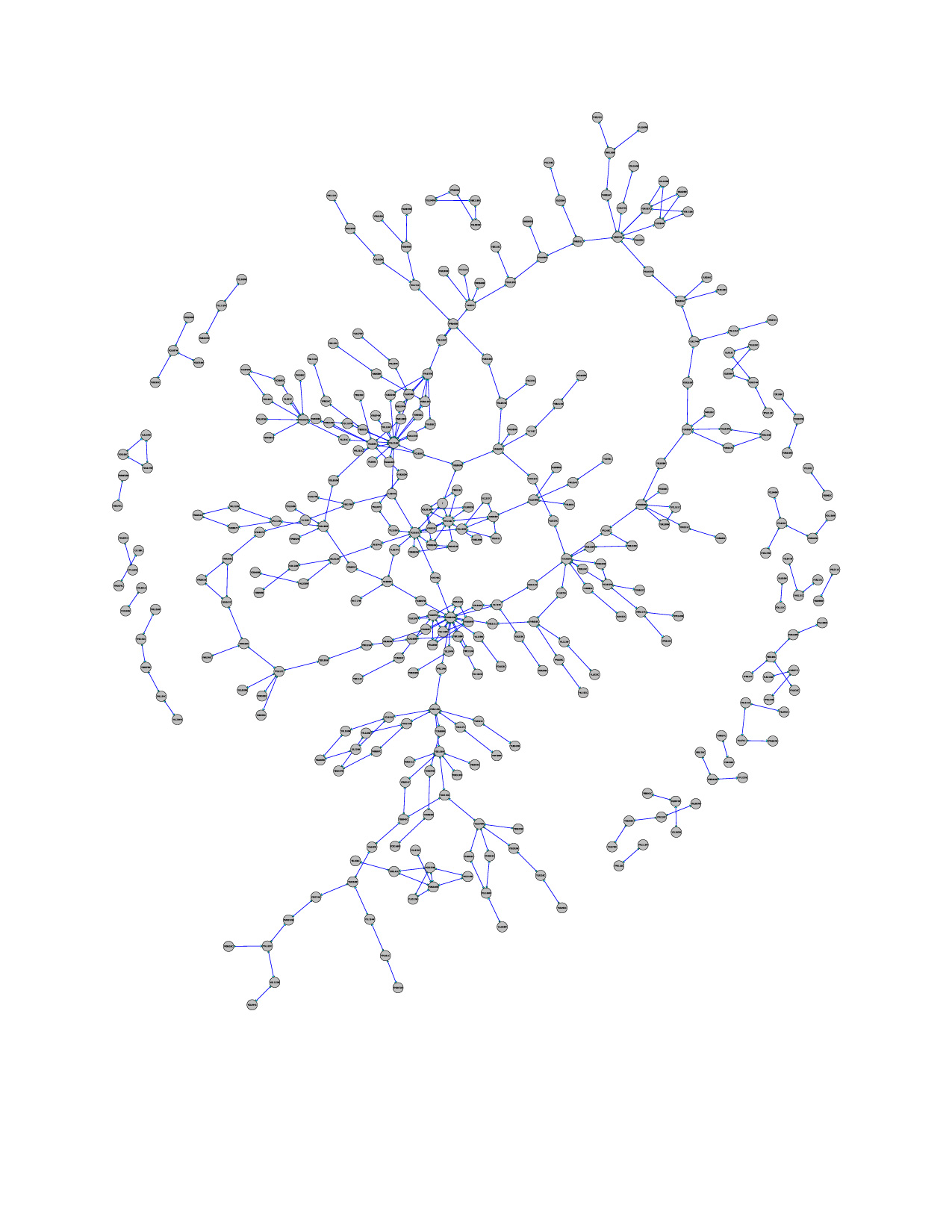
BTW, looks like a substantial part of the project will be graph layout - something that can be rather non-trivial [1]. I wonder if Eclipse tools include auto-layout algorithms (Sugiyama, etc.)? If this part becomes a problem, you can prototype the whole system using the UI similar to Apple Finder [2] (or Eclipse class browser), that should simplify the coding.
[1] http://csbi.sourceforge.net/images/gal.jpg
[2] http://dev.objectstyle.org/~andrus/browser-ui.jpg

Andrus