This is an automated email from the ASF dual-hosted git repository.

mmerli pushed a commit to branch master
in repository https://gitbox.apache.org/repos/asf/pulsar.git
The following commit(s) were added to refs/heads/master by this push:
new 8d13ff81108 [doc][improve] update concepts-messaging.md (#17863)
8d13ff81108 is described below
commit 8d13ff81108b95ae5f63245e4a5edf4e097aaf47
Author: Dave Duggins <[email protected]>
AuthorDate: Thu Oct 6 20:25:22 2022 -0400
[doc][improve] update concepts-messaging.md (#17863)
* [improve][doc] add developers-landing page
The Pulsar for Developers content block on the documentation landing page
needs to link to this page.
* Update getting-started-standalone.md
* Update getting-started-standalone.md
* move the file to /site2/docs/
* Update about.md
* Update site2/docs/developers-landing.md
Co-authored-by: tison <[email protected]>
* Update site2/docs/getting-started-standalone.md
Co-authored-by: tison <[email protected]>
* [doc][improve] Update concepts-messaging.md
Minor content edits, add / replace images to improve clarity and
consistency.
* Update site2/docs/concepts-messaging.md
Co-authored-by: Anonymitaet <[email protected]>
Co-authored-by: momo-jun <[email protected]>
Co-authored-by: tison <[email protected]>
Co-authored-by: Anonymitaet <[email protected]>
---
site2/docs/concepts-messaging.md | 38 +++++++++++++++++++++++++++++---------
1 file changed, 29 insertions(+), 9 deletions(-)
diff --git a/site2/docs/concepts-messaging.md b/site2/docs/concepts-messaging.md
index 6137d5aa0c7..a5738fd84f5 100644
--- a/site2/docs/concepts-messaging.md
+++ b/site2/docs/concepts-messaging.md
@@ -12,6 +12,8 @@ import TabItem from '@theme/TabItem';
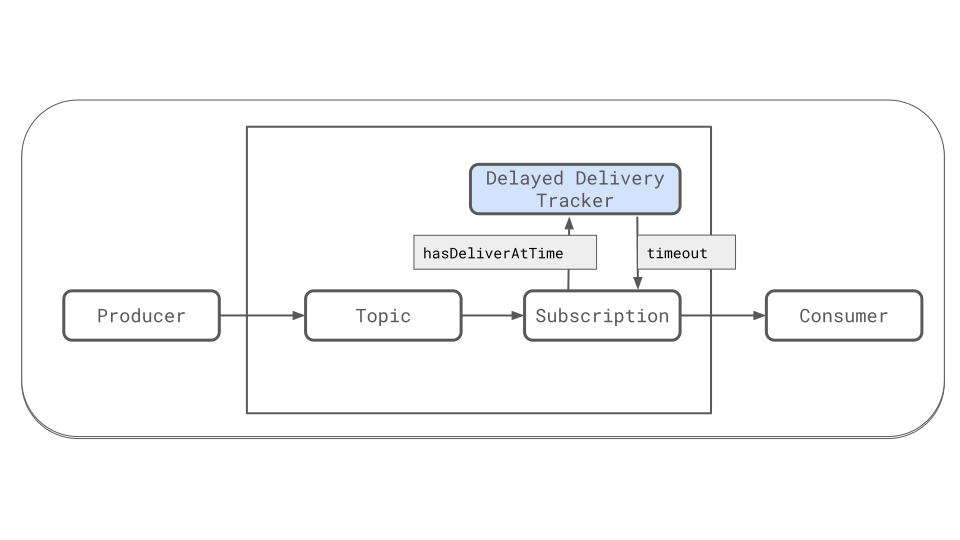
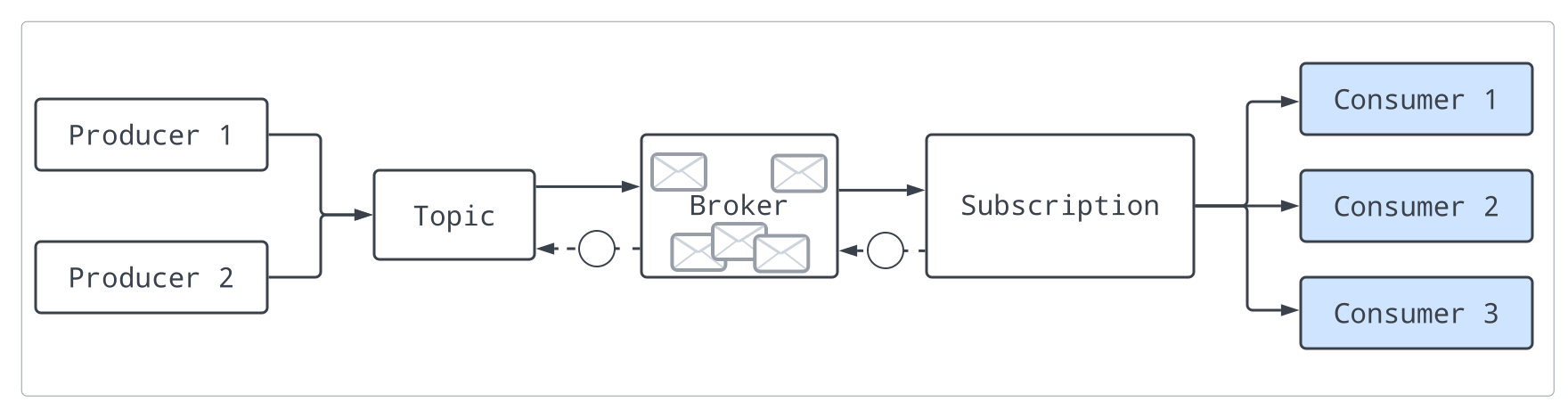
Pulsar is built on the
[publish-subscribe](https://en.wikipedia.org/wiki/Publish%E2%80%93subscribe_pattern)
pattern (often abbreviated to pub-sub). In this pattern,
[producers](#producers) publish messages to [topics](#topics);
[consumers](#consumers) [subscribe](#subscription-types) to those topics,
process incoming messages, and send [acknowledgments](#acknowledgment) to the
broker when processing is finished.
+
+
When a subscription is created, Pulsar
[retains](concepts-architecture-overview.md#persistent-storage) all messages,
even if the consumer is disconnected. The retained messages are discarded only
when a consumer acknowledges that all these messages are processed successfully.
If the consumption of a message fails and you want this message to be consumed
again, you can enable [message redelivery mechanism](#message-redelivery) to
request the broker to resend this message.
@@ -87,17 +89,29 @@ You can set producer access mode through Java Client API.
For more information,
### Compression
-You can compress messages published by producers during transportation. Pulsar
currently supports the following types of compression:
-
+Message compression can reduce message size by paying some CPU overhead. The
Pulsar client supports the following compression types:
* [LZ4](https://github.com/lz4/lz4)
* [ZLIB](https://zlib.net/)
* [ZSTD](https://facebook.github.io/zstd/)
-* [SNAPPY](https://google.github.io/snappy/)
+* [SNAPPY](https://google.github.io/snappy/).
+
+Compression types are stored in the message metadata, so consumers can adopt
different compression types automatically, as needed.
+
+The sample code below shows how to enable compression type for a producer:
+
+```
+client.newProducer()
+ .topic(“topic-name”)
+ .compressionType(CompressionType.LZ4)
+ .create();
+```
### Batching
When batching is enabled, the producer accumulates and sends a batch of
messages in a single request. The batch size is defined by the maximum number
of messages and the maximum publish latency. Therefore, the backlog size
represents the total number of batches instead of the total number of messages.
+
+
In Pulsar, batches are tracked and stored as single units rather than as
individual messages. Consumers unbundle a batch into individual messages.
However, scheduled messages (configured through the `deliverAt` or the
`deliverAfter` parameter) are always sent as individual messages even when
batching is enabled.
In general, a batch is acknowledged when all of its messages are acknowledged
by a consumer. It means that when **not all** batch messages are acknowledged,
then unexpected failures, negative acknowledgments, or acknowledgment timeouts
can result in a redelivery of all messages in this batch.
@@ -170,6 +184,8 @@ If the consumer fails to receive all chunks of a message
within a specified peri
A consumer is a process that attaches to a topic via a subscription and then
receives messages.
+
+
A consumer sends a [flow permit
request](developing-binary-protocol.md#flow-control) to a broker to get
messages. There is a queue at the consumer side to receive messages pushed from
the broker. You can configure the queue size with the
[`receiverQueueSize`](client-libraries-java.md#configure-consumer) parameter.
The default size is `1000`). Each time `consumer.receive()` is called, a
message is dequeued from the buffer.
### Receive modes
@@ -421,7 +437,8 @@ consumer.reconsumeLater(msg, customProperties, 3,
TimeUnit.SECONDS);
:::note
* Currently, retry letter topic is enabled in Shared subscription types.
-* Compared with negative acknowledgment, retry letter topic is more suitable
for messages that require a large number of retries with a configurable retry
interval. Because messages in the retry letter topic are persisted to
BookKeeper, while messages that need to be retried due to negative
acknowledgment are cached on the client side.
+* Compared with
negativ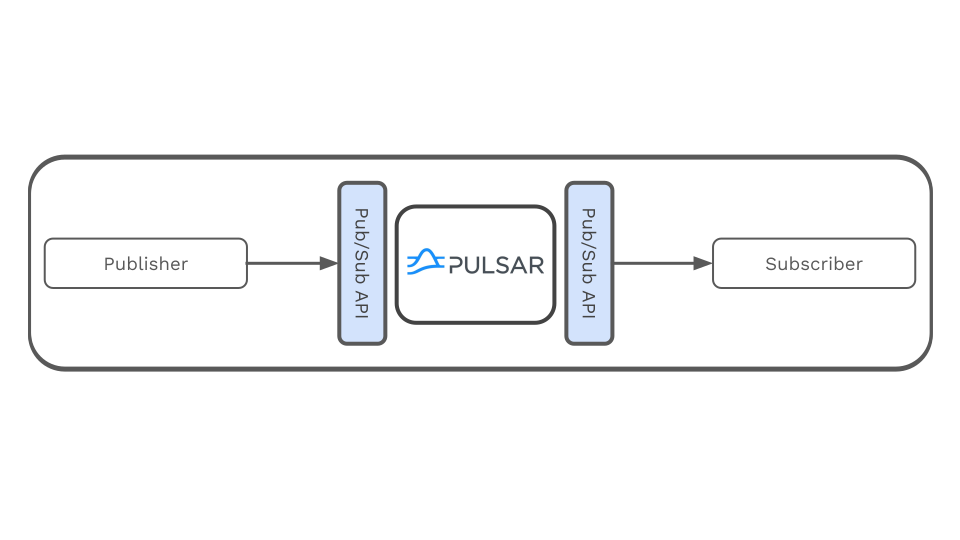
+e acknowledgment, retry letter topic is more suitable for messages that
require a large number of retries with a configurable retry interval. Because
messages in the retry letter topic are persisted to BookKeeper, while messages
that need to be retried due to negative acknowledgment are cached on the client
side.
:::
@@ -914,11 +931,10 @@ All message retention and expiry are managed at the
[namespace](#namespaces) lev
:::
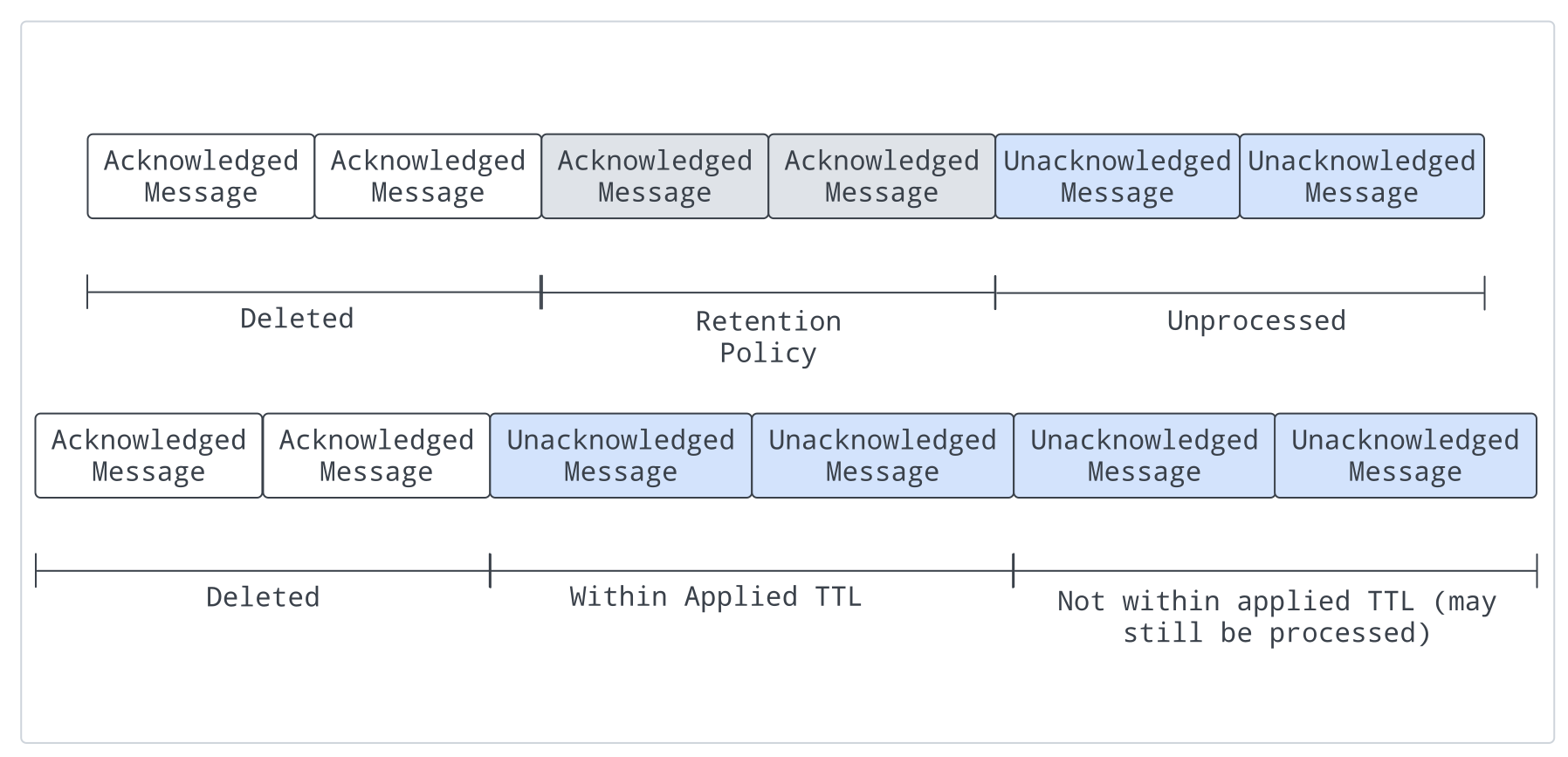
-The diagram below illustrates both concepts:
-
-
+
-With message retention, shown at the top, a <span style={{color: "
#89b557"}}>retention policy</span> applied to all topics in a namespace
dictates that some messages are durably stored in Pulsar even though they've
already been acknowledged. Acknowledged messages that are not covered by the
retention policy are <span style={{color: " #bb3b3e"}}>deleted</span>. Without
a retention policy, *all* of the <span style={{color: " #19967d"}}>acknowledged
messages</span> would be deleted.
+With message retention, shown at the top, a <span style={{color: "
#89b557"}}>retention policy</span> applied to all topics in a namespace
dictates that some messages are durably stored in Pulsar even
thoug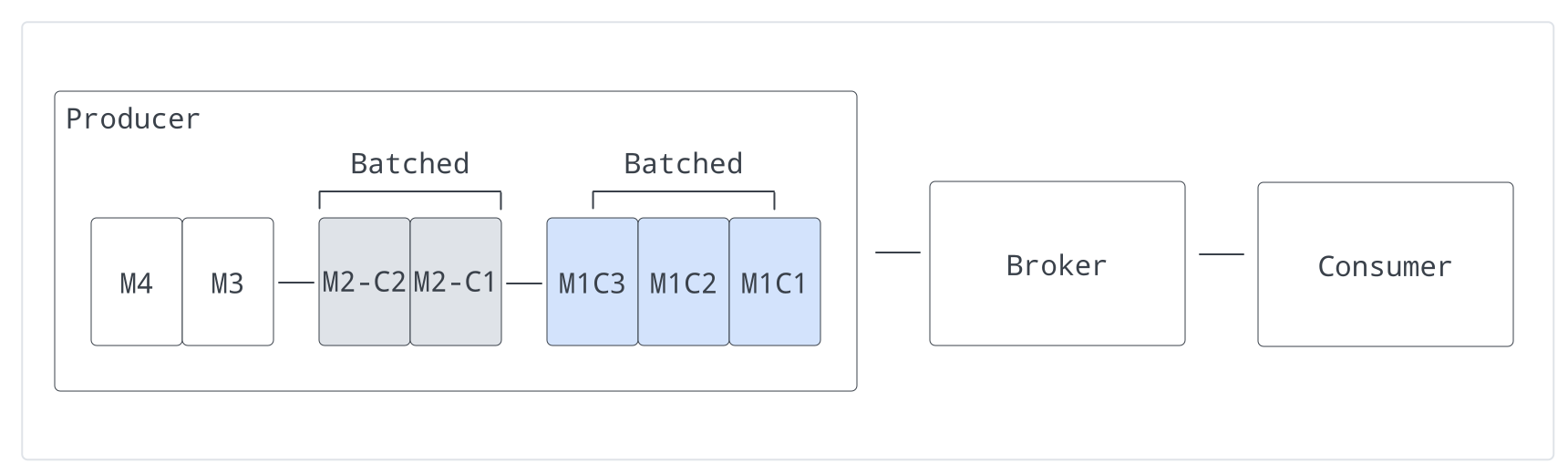
+h they've already been acknowledged. Acknowledged messages that are not
covered by the retention policy are <span style={{color: "
#bb3b3e"}}>deleted</span>. Without a retention policy, *all* of the <span
style={{color: " #19967d"}}>acknowledged messages</span> would be deleted.
With message expiry, shown at the bottom, some messages are <span
style={{color: " #bb3b3e"}}>deleted</span>, even though they <span
style={{color: " #337db6"}}>haven't been acknowledged</span>, because they've
expired according to the <span style={{color: " #e39441"}}>TTL applied to the
namespace</span> (for example because a TTL of 5 minutes has been applied and
the messages haven't been acknowledged but are 10 minutes old).
@@ -928,7 +944,7 @@ Message duplication occurs when a message is
[persisted](concepts-architecture-o
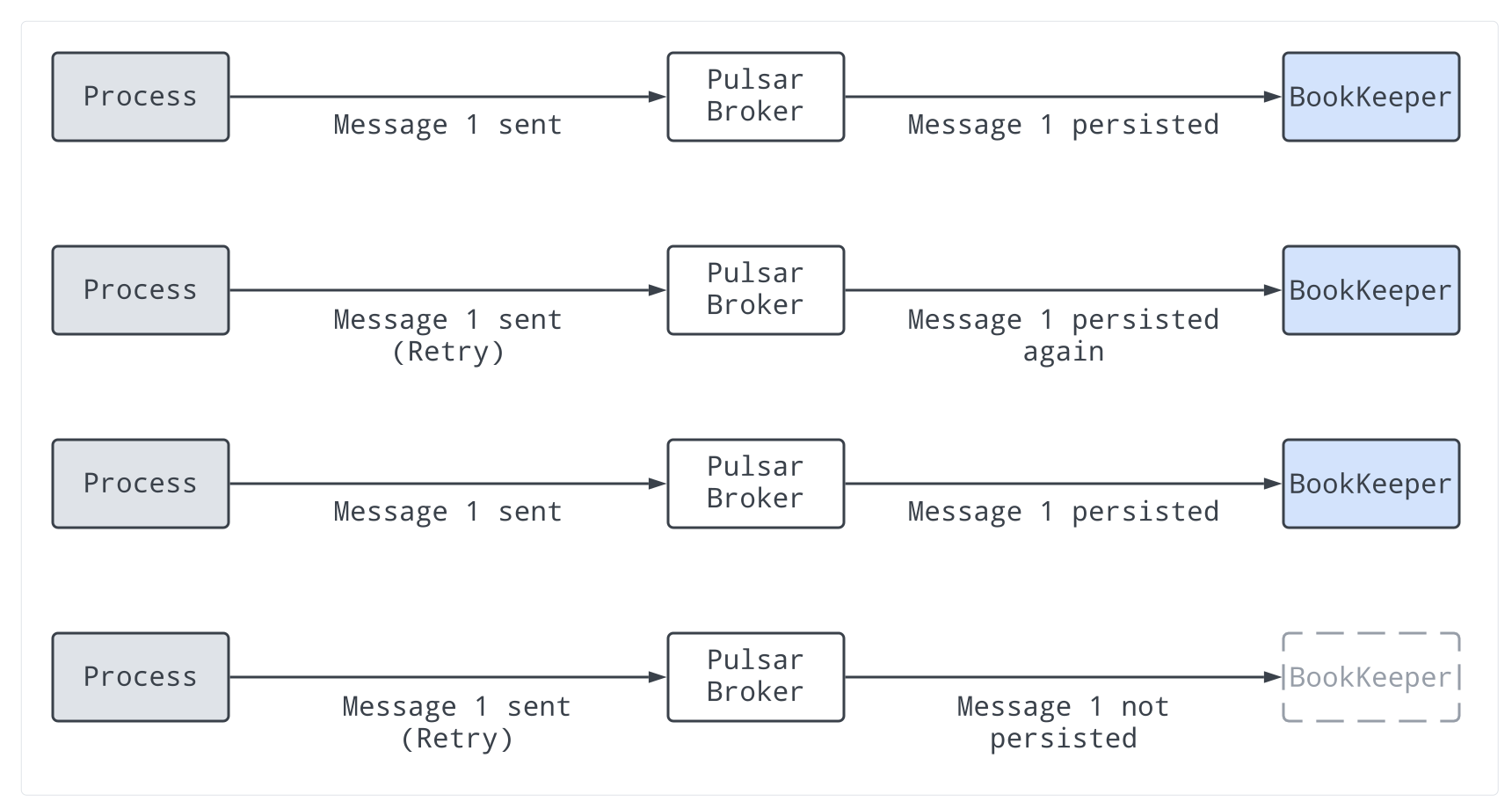
The following diagram illustrates what happens when message deduplication is
disabled vs. enabled:
-
+
Message deduplication is disabled in the scenario shown at the top. Here, a
producer publishes message 1 on a topic; the message reaches a Pulsar broker
and is [persisted](concepts-architecture-overview.md#persistent-storage) to
BookKeeper. The producer then sends message 1 again (in this case due to some
retry logic), and the message is received by the broker and stored in
BookKeeper again, which means that duplication has occurred.
@@ -990,3 +1006,7 @@ The following is an example of delayed message delivery
for a producer in Java:
producer.newMessage().deliverAfter(3L, TimeUnit.Minute).value("Hello
Pulsar!").send();
```
+
+
+
+