For all our dear users who upload a photo on Common saying "it was
online, it's in the public domain!".
Federico
-------- Messaggio inoltrato --------
Oggetto: CJEU rules that unauthorized re-posting of protected content
may be an infringement
Data: Tue, 07 Aug 2018 15:50:52 GMT
Mittente: Eleonora Rosati
<https://ipkitten.blogspot.com/2018/08/cjeu-rules-that-unauthorized-re-posting.html>
CJEU rules that unauthorized re-posting of protected content may be an
infringement
<https://1.bp.blogspot.com/-nIZEexqdH5g/W2m8rg-XiEI/AAAAAAAALFo/tnNi-w_H1UkEf6w2KqfCByK3C8BisWrggCLcBGAs/s1600/Dbnt3M4W4AANTUz.jpg>
/The Cordoba photo at issue in /Renckhoff
Today the Court of Justice of the European Union (CJEU) issued its last
copyright judgment *[but also - incredibly - the first copyright
judgment of 2018] *before the summer break.
In */Renckhoff/, C-161/17
<http://curia.europa.eu/juris/document/document.jsf?text=&docid=204738&pageIndex=0&doclang=EN&mode=req&dir=&occ=first&part=1&cid=307577>*it
ruled - contrary to the *Opinion
<http://curia.europa.eu/juris/document/document.jsf?text=&docid=201468&pageIndex=0&doclang=EN&mode=req&dir=&occ=first&part=1&cid=625251>*
of Advocate General Campos Sanchéz-Bordona *[here
<http://ipkitten.blogspot.com/2018/04/ag-campos-sanchez-bordona-denies.html>
and here
<http://the1709blog.blogspot.com/2018/04/ag-campos-provides-reasonable.html>;
ALAI thought it was very bad, and criticized it here
<http://www.alai.org/en/assets/files/resolutions/180529-opinion-land-nordrhein-westfalen-en.pdf>]*
- that in a situation like the one at issue the unauthorized re-posting
of a copyright work would be an act of communication to the public
within Article 3(1) of the *InfoSoc Directive
<https://eur-lex.europa.eu/LexUriServ/LexUriServ.do?uri=OJ:L:2001:167:0010:0019:EN:PDF>*.
*_Background_*
As readers might remember, this case had a fairly odd factual
background. The national proceedings relate in fact to copyright
litigation that a photographer has brought in Germany against a school
over the use, by one of the pupils, of copyright-protected material
without authorization.
More specifically, one of the pupils found an image of the city of
Cordoba online and used it for an assignment for her Spanish class,
providing acknowledgment of the website from which she had downloaded
the photograph (though not of the photographer, because the website
where the photograph appeared did not provide any).
Upon finishing her work, she and her teacher uploaded it on the school's
website, but the photographercame forward claiming infringement of his
copyright in the photograph, and that he had just granted a licence to
use to the image to the website from which the pupil had downloaded it.
Litigation has gone all the way up the German Federal Court of Justice,
which decided to stay the proceedings and refer this question to the CJEU:
    Does the inclusion of a work — which is freely accessible to all
    internet users on a third-party website with the consent of the
    copyright holder — on a person’s own publicly accessible website
    constitute a making available of that work to the public within the
    meaning of Article 3(1) of [Directive 2001/29] if the work is first
    copied onto a server and is uploaded from there to that person’s own
    website?


*_The CJEU response_*

Today the Court answered in the affirmative, noting that:

 1. The reposting of protected content freely available with the
    rightholder's consent on a third-party website is a new act of
    communication to the public (I'd also add that it is also an act of
    reproduction, and in fact this has been already established in the
    national proceedings) and no analogy with linking to lawful and
    freely accessible content in a /*Svensson
    <http://curia.europa.eu/juris/liste.jsf?num=C-466/12>*/ sense may be
    drawn. Here the point is not - as it was, instead, in /Svensson/
    whether there is a communication to a new public, because there is a
    new communication to the public /tout court/.
 2. Holding otherwise would mean that a copyright owner would lose any
    control over their work once this has been made available online the
    first time. This would basically amount to an undue exhaustion of
    the right of communication to the public, contrary to Article 3(3)
    of the InfoSoc Directive, and would also be in breach of the
    principle according to which economic rights are preventive in
    nature (in a */Soulier

<http://curia.europa.eu/juris/liste.jsf?language=en&jur=C,T,F&num=c-301/15&td=ALL>/*
    sense)
 3. The fact that a work has been initially published online and made
    available with no restrictions is irrelevant: holding otherwise
    would be akin to imposing formalities to the enjoyment and exercise
    of copyright, and this would go against the prohibition in Article
    5(2) of the Berne Convention

<http://www.wipo.int/wipolex/en/treaties/text.jsp?file_id=283698#P109_16834>.

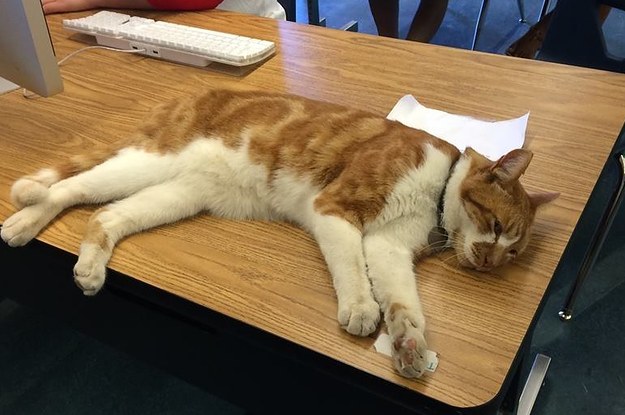
<https://4.bp.blogspot.com/--_wLi64ocjg/W2m8_B9TtrI/AAAAAAAALFw/35cCevu83d8oLSdxj5AiGYJqBQI4rTm6ACLcBGAs/s1600/a-cat-hung-around-a-high-school-so-much-that-they-2-31505-1440453793-0_dblbig.jpg>
/If that was ever possible,
now school may become even more stressful/
The Court also recalled that copyright protection in a photograph only
arises when the photograph is its author's own intellectual creation, in
the sense that it results from the making of free and creative choices
and carries the author's personal touch, in the sense clarified in
/*Painer <http://curia.europa.eu/juris/liste.jsf?&num=C-145/10>*/.
Readers will remember that the AG doubted that the one at issue would be
a copyright-protected photograph. However, Article 6 of the Term
Directive leaves EU Member States free to protect sub-original photos.
_
_
*_Implications_*
Overall, the judgment is good news for copyright owners, in that it
gives them reassurance that the control over their works is not reduced
over the internet.
The ruling is also interesting in relation to the practice of certain
websites (including newspapers) that directly host third-party video
content in respect of which they neither own the rights nor do they have
a licence, in lieu of displaying such videos by means of embedded links.
While the latter might be lawful (depending on whether the requirements
set in /Svensson/ and */GS Media
<http://curia.europa.eu/juris/liste.jsf?num=C-160/15>/* are fulfilled),
the former might pave the way to a finding of liability. This may be
something that we knew already, but that now the CJEU has confirmed.
_______________________________________________
Commons-l mailing list
[email protected]
https://lists.wikimedia.org/mailman/listinfo/commons-l