------------------------ Yahoo! Groups Sponsor --------------------~-->
$9.95 domain names from Yahoo!. Register anything.
http://us.click.yahoo.com/J8kdrA/y20IAA/yQLSAA/GSaulB/TM
--------------------------------------------------------------------~->
There are 25 messages in this issue.

Topics in this digest:

      1. Re: Ice tea and Robin Hood
           From: Andreas Johansson <[EMAIL PROTECTED]>
      2. Re: Ice tea and Robin Hood
           From: Paul Bennett <[EMAIL PROTECTED]>
      3. Re: Ice tea and Robin Hood
           From: John Cowan <[EMAIL PROTECTED]>
      4. Re: Ice tea and Robin Hood
           From: Joe <[EMAIL PROTECTED]>
      5. Re: Ice tea and Robin Hood
           From: Andreas Johansson <[EMAIL PROTECTED]>
      6. Re: here is some stuff i want all of ya'll to look at even though you have
better things to do.
           From: Carsten Becker <[EMAIL PROTECTED]>
      7. Re: The Big Idea
           From: Philippe Caquant <[EMAIL PROTECTED]>
      8. Re: Ice tea and Robin Hood
           From: Philippe Caquant <[EMAIL PROTECTED]>
      9. Re: Sapir-WhorFreakiness
           From: Doug Dee <[EMAIL PROTECTED]>
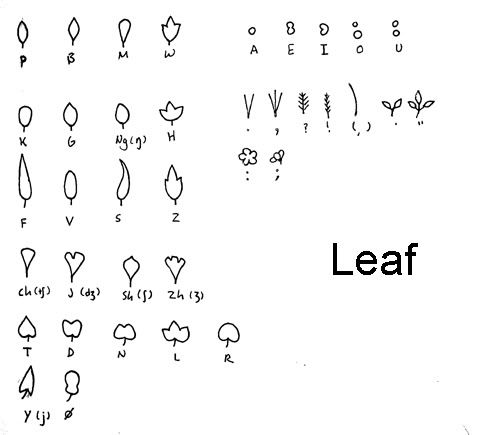
     10. Re: Leaf script
           From: Carsten Becker <[EMAIL PROTECTED]>
     11. Re: Ice tea and Robin Hood
           From: "Mark J. Reed" <[EMAIL PROTECTED]>
     12. Re: CHAT: _Describing Morphosyntax_
           From: Carsten Becker <[EMAIL PROTECTED]>
     13. Re: Ice tea and Robin Hood
           From: Paul Bennett <[EMAIL PROTECTED]>
     14. YAEPT Re: English /T/, was Re: Spanish ll in different dialects
           From: David Peterson <[EMAIL PROTECTED]>
     15. Re: YAEPT Re: English /T/, was Re: Spanish ll in different dialects
           From: Joe <[EMAIL PROTECTED]>
     16. Re: Ice tea and Robin Hood
           From: Andreas Johansson <[EMAIL PROTECTED]>
     17. Re: Sorry
           From: Ben Poplawski <[EMAIL PROTECTED]>
     18. Re: Spanish ll in different dialects
           From: Ben Poplawski <[EMAIL PROTECTED]>
     19. Re: Spanish ll in different dialects
           From: "Mark P. Line" <[EMAIL PROTECTED]>
     20. Re: CHAT: _Describing Morphosyntax_
           From: "Mark P. Line" <[EMAIL PROTECTED]>
     21. Re: YAEPT Re: English /T/, was Re: Spanish ll in different dialects
           From: Roger Mills <[EMAIL PROTECTED]>
     22. Re: Ice tea and Robin Hood
           From: "Mark P. Line" <[EMAIL PROTECTED]>
     23. Re: The Big Idea
           From: "Mark P. Line" <[EMAIL PROTECTED]>
     24. Re: Spanish ll in different dialects
           From: Roger Mills <[EMAIL PROTECTED]>
     25. Re: YAEPT Re: English /T/, was Re: Spanish ll in different dialects
           From: Mark Reed <[EMAIL PROTECTED]>


________________________________________________________________________
________________________________________________________________________

Message: 1
   Date: Sat, 28 Aug 2004 18:01:23 +0200
   From: Andreas Johansson <[EMAIL PROTECTED]>
Subject: Re: Ice tea and Robin Hood

Quoting John Cowan <[EMAIL PROTECTED]>:

> Elyse M. Grasso scripsit:
>
> > They specify low fat milk because that is what the calories and other
> > nutritional information on the label are based on. That way they can claim
> > fewer calories even if no normal person would make it that way.
>
> Umm, "normal"?
>
> 1% milk is the only kind available in my house, so naturally I cook
> with it too.
>
> John, the Abnormal

1% milk? In my experience, normal folks use .1% or .5%, so you're indeed
abnormal. :p

                                                   Andreas


________________________________________________________________________
________________________________________________________________________

Message: 2
   Date: Sat, 28 Aug 2004 12:45:33 -0400
   From: Paul Bennett <[EMAIL PROTECTED]>
Subject: Re: Ice tea and Robin Hood

On Sat, 28 Aug 2004 18:01:23 +0200, Andreas Johansson <[EMAIL PROTECTED]>
wrote:

> Quoting John Cowan <[EMAIL PROTECTED]>:
>
>> 1% milk is the only kind available in my house, so naturally I cook
>> with it too.
>
> 1% milk? In my experience, normal folks use .1% or .5%, so you're indeed
> abnormal. :p

Huh. The US scheme (AIUI) is:

Full-fat
2%
1%
0.5%
Fat free

I can't even fathom the kind of difference in lactic worldview that would
lead to such a divergent numbering scheme.

FWIW, the UK scheme seems to be:

Extra cream ("Gold Top")
Full-fat
Semi-skimmed
Skimmed

Which is yet another permutation. Weirdness appears to abound. I can only
guess what kind of cultural/political influence the international dairy
cabal is trying to acheive.


Paul


________________________________________________________________________
________________________________________________________________________

Message: 3
   Date: Sat, 28 Aug 2004 12:50:55 -0400
   From: John Cowan <[EMAIL PROTECTED]>
Subject: Re: Ice tea and Robin Hood

Paul Bennett scripsit:

> Full-fat

In the U.S., full-fat is in fact skimmed down to 4%, the lowest
percentage permitted by law.  The other types are made by mixing
"whole" milk and skim milk in the appropriate proportions, as
the label reveals.

--
John Cowan  [EMAIL PROTECTED]  www.reutershealth.com  www.ccil.org/~cowan
Assent may be registered by a signature, a handshake, or a click of a computer
mouse transmitted across the invisible ether of the Internet. Formality
is not a requisite; any sign, symbol or action, or even willful inaction,
as long as it is unequivocally referable to the promise, may create a contract.
       --Specht v. Netscape


________________________________________________________________________
________________________________________________________________________

Message: 4
   Date: Sat, 28 Aug 2004 17:56:47 +0100
   From: Joe <[EMAIL PROTECTED]>
Subject: Re: Ice tea and Robin Hood

John Cowan wrote:

>Paul Bennett scripsit:
>
>
>
>>Full-fat
>>
>>
>
>In the U.S., full-fat is in fact skimmed down to 4%, the lowest
>percentage permitted by law.  The other types are made by mixing
>"whole" milk and skim milk in the appropriate proportions, as
>the label reveals.
>
>

I think full-fat in the UK is around 3-4%, too.  Semi-skimmed is 1.7%,
and I think skimmed is Fat Free.


________________________________________________________________________
________________________________________________________________________

Message: 5
   Date: Sat, 28 Aug 2004 19:12:48 +0200
   From: Andreas Johansson <[EMAIL PROTECTED]>
Subject: Re: Ice tea and Robin Hood

Quoting Paul Bennett <[EMAIL PROTECTED]>:

> On Sat, 28 Aug 2004 18:01:23 +0200, Andreas Johansson <[EMAIL PROTECTED]>
> wrote:
>
> > Quoting John Cowan <[EMAIL PROTECTED]>:
> >
> >> 1% milk is the only kind available in my house, so naturally I cook
> >> with it too.
> >
> > 1% milk? In my experience, normal folks use .1% or .5%, so you're indeed
> > abnormal. :p
>
> Huh. The US scheme (AIUI) is:
>
> Full-fat
> 2%
> 1%
> 0.5%
> Fat free
>
> I can't even fathom the kind of difference in lactic worldview that would
> lead to such a divergent numbering scheme.

The versions commonly available in Sweden are:

3%
1.5%
.5%
.1%

                                                    Andreas


________________________________________________________________________
________________________________________________________________________

Message: 6
   Date: Sat, 28 Aug 2004 13:14:02 -0400
   From: Carsten Becker <[EMAIL PROTECTED]>
Subject: Re: here is some stuff i want all of ya'll to look at even though you have
better things to do.

On Sat, 28 Aug 2004 16:10:56 +0200, Philip Newton <[EMAIL PROTECTED]>
wrote:

>:) "the" is [EMAIL PROTECTED] not [EMAIL PROTECTED], at least in the 'lects I'm
>familiar with.
>Otherwise, I'd agree with your transcription - though I might have
>written ["lIsn=z] to mark the syllabic [n=].

Oops. [Cu nOu) T@ "ster\iOu)tAi)p w\i: "tS26mn=s w\ut pi an"Ei)pl= tu
[EMAIL PROTECTED])nt_s fOi)st stOps] :P

[ga6zdn=]


________________________________________________________________________
________________________________________________________________________

Message: 7
   Date: Sat, 28 Aug 2004 10:26:38 -0700
   From: Philippe Caquant <[EMAIL PROTECTED]>
Subject: Re: The Big Idea

--- John Cowan <[EMAIL PROTECTED]> wrote:

> Philippe Caquant scripsit:
>
> > My big idea has been, for some time already, that
> one should be able
> > to represent a whole knowledge (a conceptual
> representation of a
> > world, whatever it might be) using  essentially
> only a simple scheme,
> > namely: x R y, meaning: concept-x is in relation
> with concept-y through
> > relational-concept-R.
>
> This big idea is called RDF, and it's actually in
> both production use and
> development right now.  See
> http://infomesh.net/2002/swhaiku/ for a good
> introduction to it (in the form of haiku) with links
> to technical details.
>
I spent some hours on the Web, starting from that
address you gave, and ended completely lost, tired and
despaired :-S

True, the original idea is amazingly similar to mine
(how could they copy me ? I never published !) but I'm
afraid that further on, we differ. Semantic Web was
not really my purpose, although I learned interesting
things about it. I spent a long time wondering about
URIs with little result (I can understand what an URL
is, but describing my cat as a resource figured by an
URI is just beyond my means). Then I nearly drowned
into the w3.org recomendations for XML, schemas and
datatypes. The rivers of Meaning were far behind
already. In a late desperate attempt, I managed to
raise the cursor up to the Explorer 'Favorites' Yellow
Star, and was saved, and here I am, alive though
exhausted.

I wonder: learning all these beautiful things
certainly requires years, if not centuries. Human life
is short. When is the human being supposed to stop
learning and to try *producing* ? For every new
concept one wants to master, there is a pre-requisite
of hundreds of Web pages, all of them referring to
hundred of other ones. How is it possible to master
anything at all ?

But another, more exciting (or terrible ?) conclusion,
is that evolution is really, just now, in these years
1980-20.., making a new qualitative leap forward,
thanks to the Internet and millions of computers
linking themselves to each other. The still lisping
global conscience is awakening, and very fast. This
might be something like the leap from inanimated to
life, or from animality to mankind. Only it goes much
faster. What will come out of all this, we cannot have
the faintest idea. There is no captain on board, we
just have to follow the stream.

Kyrie, eleison.


=====
Philippe Caquant

"High thoughts must have high language." (Aristophanes, Frogs)

__________________________________________________
Do You Yahoo!?
Tired of spam?  Yahoo! Mail has the best spam protection around
http://mail.yahoo.com


________________________________________________________________________
________________________________________________________________________

Message: 8
   Date: Sat, 28 Aug 2004 10:31:49 -0700
   From: Philippe Caquant <[EMAIL PROTECTED]>
Subject: Re: Ice tea and Robin Hood

--- Andreas Johansson <[EMAIL PROTECTED]> wrote:

> Quoting Paul Bennett <[EMAIL PROTECTED]>:
>
> > On Sat, 28 Aug 2004 18:01:23 +0200, Andreas
> Johansson <[EMAIL PROTECTED]>
> > wrote:
> >
> > > Quoting John Cowan <[EMAIL PROTECTED]>:
> > >
> > >> 1% milk is the only kind available in my house,
> so naturally I cook
> > >> with it too.
> > >
> > > 1% milk? In my experience, normal folks use .1%
> or .5%, so you're indeed
> > > abnormal. :p
> >
> > Huh. The US scheme (AIUI) is:
> >
> > Full-fat
> > 2%
> > 1%
> > 0.5%
> > Fat free
> >
> > I can't even fathom the kind of difference in
> lactic worldview that would
> > lead to such a divergent numbering scheme.
>
> The versions commonly available in Sweden are:
>
> 3%
> 1.5%
> .5%
> .1%
>
>
> Andreas
>
I seldom drink milk, but I've heard about it. It's
that kind of white stuff that comes from cows, I
guess. Cows are things with four legs, two horns and a
tail, who look at the trains and sometimes say "meuh
!" (as long as French cows are concerned, anyway). I
doubt they ever heard anything about concepts like
0.5% fat milk.

Well, there was a time when milk came from cows.


=====
Philippe Caquant

"High thoughts must have high language." (Aristophanes, Frogs)

__________________________________________________
Do You Yahoo!?
Tired of spam?  Yahoo! Mail has the best spam protection around
http://mail.yahoo.com


________________________________________________________________________
________________________________________________________________________

Message: 9
   Date: Sat, 28 Aug 2004 14:25:16 EDT
   From: Doug Dee <[EMAIL PROTECTED]>
Subject: Re: Sapir-WhorFreakiness

In a message dated 8/26/2004 9:15:03 PM Eastern Daylight Time,
[EMAIL PROTECTED] writes:

>A message from Everett, about his experience with the Pirah�, and the
>skipticism that's greeted some of his reports, on Language Log today:

>http://itre.cis.upenn.edu/~myl/languagelog/archives/001387.html

Thanks for that.  I think the most interesting part is:

"I do believe, however, that many analyses of number and grammar in the
literature, on similarly primitive societies (in some technological sense of
primitive) are likely 'overanalyzed', e.g. that there are likely to be other
languages without embedding, where juxtaposition has been taken to be embedding
without much thought given to the matter."

I had been assuming that either (a) Piraha, lacking embedding, is weird and
essentially unique, or else (b) Everett is mistaken.  The third possibility
(that lack of embedding occurs elsewhere but hasn't been described because
everyone assumes there must be embedding) is most interesting.

Doug


________________________________________________________________________
________________________________________________________________________

Message: 10
   Date: Sat, 28 Aug 2004 15:19:03 -0400
   From: Carsten Becker <[EMAIL PROTECTED]>
Subject: Re: Leaf script

On Fri, 27 Aug 2004 05:59:59 -0700, B. Garcia <[EMAIL PROTECTED]> wrote:

>http://img.photobucket.com/albums/v377/Doobieous/language/leaf.jpg

Aww, neat! No, really, it's really nice -- though I'd like to see an example
word or even a whole sentence.

Carsten


________________________________________________________________________
________________________________________________________________________

Message: 11
   Date: Sat, 28 Aug 2004 15:25:23 -0400
   From: "Mark J. Reed" <[EMAIL PROTECTED]>
Subject: Re: Ice tea and Robin Hood

On Sat, Aug 28, 2004 at 07:12:48PM +0200, Andreas Johansson wrote:
> The versions commonly available in Sweden are:
>
> 3%
> 1.5%
> .5%
> .1%

Wow, 0.1%?  Why on earth bother to distinguish that from fat free?  In fact,
I would not be surprised (though I do not know) if  in the US milk with
0.1% milkfat could legally claim to be fat-free.

-Marcos


________________________________________________________________________
________________________________________________________________________

Message: 12
   Date: Sat, 28 Aug 2004 15:37:23 -0400
   From: Carsten Becker <[EMAIL PROTECTED]>
Subject: Re: CHAT: _Describing Morphosyntax_

Hey!

On Sat, 28 Aug 2004 06:26:48 -0500, J. K. Hoffman <[EMAIL PROTECTED]> wrote:

>Boy, you said a mouthful there, Carsten!

I know. I said I'll *try* it.

>But, I'm an almost total non-linguist.  I mean, I've never had a formal
class in linguistics and what tiny bit I know I dragged, kicking and
screaming, from some of the driest textbooks I have ever read.

Most of what I know I know either from school or from the list.

>All that being said, though, it still is probably better to read it all
>the way through once, if you can.  But, if it gets to be too much, don't
>hesitate to start reading only the bits that sound interesting.  Better
>to read at least that than ignore the book entirely!

True.

>Good luck!

Thank you!!! I'll need.

-- Carsten


________________________________________________________________________
________________________________________________________________________

Message: 13
   Date: Sat, 28 Aug 2004 16:00:38 -0400
   From: Paul Bennett <[EMAIL PROTECTED]>
Subject: Re: Ice tea and Robin Hood

On Sat, 28 Aug 2004 15:25:23 -0400, Mark J. Reed <[EMAIL PROTECTED]>
wrote:

> On Sat, Aug 28, 2004 at 07:12:48PM +0200, Andreas Johansson wrote:
>> The versions commonly available in Sweden are:
>>
>> 3%
>> 1.5%
>> .5%
>> .1%
>
> Wow, 0.1%?  Why on earth bother to distinguish that from fat free?  In
> fact,
> I would not be surprised (though I do not know) if  in the US milk with
> 0.1% milkfat could legally claim to be fat-free.

Knowing Europe, they're probably not allowed to say fat-free unless it
really is, guaranteed for every pint -- er, litre -- entirely free of all
fats. Due to the vagaries of food production, such things are a pipedream,
so, they pick a number that it *will* always be at least near, and label
it as that. This is unlike the USA, where ingredient and quality labelling
standards are relatively lax. This is quite well exemplified by the
"contains 2% or less of (list of stuff in no particular order)" wording
that crops up on a lot of foods manufactured under license at a large
number of factories, and the labelling on some (also mass-produced) drinks
that they contain "Sugar and/or High Fructose Corn Syrup", which I would
never expect to see in Europe. I guess it comes down to which lobbying
groups have a louder voice...


Paul


________________________________________________________________________
________________________________________________________________________

Message: 14
   Date: Sat, 28 Aug 2004 16:03:36 EDT
   From: David Peterson <[EMAIL PROTECTED]>
Subject: YAEPT Re: English /T/, was Re: Spanish ll in different dialects

I haven't replied to a YAEPT thread in so long...!   I can indulge
just once, right?

<<Hmm.� Judging by Mark's post, I'd say the two might be in free variation
across most dialects.>>

In my dialect, the [T] is definitely *not* interdental, and there is no such
sound as [D], as it's been replaced by a dental stop (probably only
negligibly
voiced, like all the rest of the voiced stops in English), giving people like
myself the following inventory:

[T], [t], [t_h], [t_d], as in "thigh", "die", "tie", and "thy".

(I hope that [_d] is X-SAMPA for dental...)

-David
*******************************************************************
"sunly eleSkarez ygralleryf ydZZixelje je ox2mejze."
"No eternal reward will forgive us now for wasting the dawn."

-Jim Morrison

http://dedalvs.free.fr/


[This message contained attachments]


________________________________________________________________________
________________________________________________________________________

Message: 15
   Date: Sat, 28 Aug 2004 21:07:47 +0100
   From: Joe <[EMAIL PROTECTED]>
Subject: Re: YAEPT Re: English /T/, was Re: Spanish ll in different dialects

David Peterson wrote:

> I haven't replied to a YAEPT thread in so long...!  I can indulge
> just once, right?
>
> <<Hmm.  Judging by Mark's post, I'd say the two might be in free variation
> across most dialects.>>
>
> In my dialect, the [T] is definitely *not* interdental, and there is
> no such
> sound as [D], as it's been replaced by a dental stop (probably only
> negligibly
> voiced, like all the rest of the voiced stops in English), giving
> people like
> myself the following inventory:
>
> [T], [t], [t_h], [t_d], as in "thigh", "die", "tie", and "thy".
>
> (I hope that [_d] is X-SAMPA for dental...)


Wait..[t_d]?  Not [d_d] or [D_d]?


________________________________________________________________________
________________________________________________________________________

Message: 16
   Date: Sat, 28 Aug 2004 22:24:50 +0200
   From: Andreas Johansson <[EMAIL PROTECTED]>
Subject: Re: Ice tea and Robin Hood

Quoting "Mark J. Reed" <[EMAIL PROTECTED]>:

> On Sat, Aug 28, 2004 at 07:12:48PM +0200, Andreas Johansson wrote:
> > The versions commonly available in Sweden are:
> >
> > 3%
> > 1.5%
> > .5%
> > .1%
>
> Wow, 0.1%?  Why on earth bother to distinguish that from fat free?  In fact,
> I would not be surprised (though I do not know) if  in the US milk with
> 0.1% milkfat could legally claim to be fat-free.

Near as I know, there is no such thing as fat-free milk on the market in Sweden.

                                                  Andreas


________________________________________________________________________
________________________________________________________________________

Message: 17
   Date: Sat, 28 Aug 2004 17:28:56 -0400
   From: Ben Poplawski <[EMAIL PROTECTED]>
Subject: Re: Sorry

On Sat, 28 Aug 2004 05:24:50 -0400, Afian <[EMAIL PROTECTED]> wrote:

>I'm sorry for bothering you with posts about my languages. I have now
>abandoned all of them to create a totaly different one. I will post a
>feature list and an example when it is , atleast basically, finished.

Heh.

I'm sorry for getting on your case the time(s) I did. I must remember to
treat n00bs nicely, especially since I was in your position only a year ago.

It's not annoying for us, really, you placing those posts for your
languages. I'm sure the main concern is about whether you are learning and
getting better. As long as you're eager to learn I'm sure most will tolerate
you and encourage you.

Let me tell you a story about my conlanging. The spring of last year I set
about creating my first serious conlang. It was called Regelluga, which is
at http://www.langmaker.com/db/mdl_regelluga.htm on LangMaker. I spent a
whole lot of time on this language. I worked on it all summer and into early
fall. I was doing pretty well, I thought.

Heh. Then I realized the patheticness of it. I had fallen into the n00b
conlanger's trap, which is to make a perfectly regular, perfectly copied,
and perfectly soulless conlang. See, I had tried to make an
"Indo-European-based" language, which in practice usually means "Latin
clone". I put a little too much Esperanto in it, also. Now, I realize some
of my mistakes are forgivable--one has to start somewhere--but I have
abandoned it and will no longer work on it. It's a stage I've passed and now
I've moved on.

Don't think that we've been annoyed by you posting here; having a new
acolyte is always pleasing. My concern is that you learn better how
languages work and that you apply this knowledge to better your conlangs.
This is the paramount issue, and one that you will find great help in being
a member of this mailing list.

Finally, you don't have to wait until a language is almost finished before
you post on it. In fact, I encourage you to post on whatever you feel you
need help on. There will always be people here that are willing to help you.

A good day to you and with a resounding Good Luck,

Ben


________________________________________________________________________
________________________________________________________________________

Message: 18
   Date: Sat, 28 Aug 2004 17:38:09 -0400
   From: Ben Poplawski <[EMAIL PROTECTED]>
Subject: Re: Spanish ll in different dialects

On Sat, 28 Aug 2004 15:05:07 +0100, Joe <[EMAIL PROTECTED]> wrote:

>Benct Philip Jonsson wrote:
>
>> Ben Poplawski wrote:
>>
>>> On Fri, 27 Aug 2004 19:34:55 -0700, B. Garcia <[EMAIL PROTECTED]> wrote:
>>>
>>>
>>>> Exaggerated? How so? Meaning she put extra force on z and c before i
>>>> and e?
>>>
>>>
>>>
>>> Maybe it was a personal variation: a lisp. It was weird, sounded halfway
>>> between [T] and [f] sometimes.
>>>
>>> Ben
>>
>>
>> Probably because it was interdental rather than post-dental.
>> (Tongue between the teeth rather than behind the upper teeth.

That's probably it.

>But...English [T] is interdental.  Don't you mean the other way round?

Not for me. I'm a native speaker of General American for reference. I
considered how I pronounced and just checked out how my little brother
pronounced unvoiced 'th'. It's not interdental for sure; his lower teeth did
not touch. I would say post-dental, checking again; the tip of his tongue
does not appear at the tip of his teeth.

Ben


________________________________________________________________________
________________________________________________________________________

Message: 19
   Date: Sat, 28 Aug 2004 18:27:07 -0500
   From: "Mark P. Line" <[EMAIL PROTECTED]>
Subject: Re: Spanish ll in different dialects

Philip Newton said:
> From: David Peterson <[EMAIL PROTECTED]>
> [on Mexican |ll|]
>> I've only ever heard a mixture between
>> [j], [Z] and [dZ].  Both "ll" and "y" get pronounced this way
>
> A friend of mine, a Japanese who had spent a year or two on Mexico and
> picked up a little Spanish, gave me the phrase [dZo mE dZamo <name>],
> which confused me since I could imagine [dZ] for |ll| but had never
> heard of any pronunciation for |y| but [j]. Yet she insisted that that
> was the pronunciation she had learned there.

I've heard Cubans use [dZ] for |y| in their *English* and always assumed
it was because the do the same in their variety of Spanish.


-- Mark


________________________________________________________________________
________________________________________________________________________

Message: 20
   Date: Sat, 28 Aug 2004 18:34:45 -0500
   From: "Mark P. Line" <[EMAIL PROTECTED]>
Subject: Re: CHAT: _Describing Morphosyntax_

J. K. Hoffman said:
>
> But, I'm an almost
> total non-linguist.  I mean, I've never had a formal class in
> linguistics and what tiny bit I know I dragged, kicking and screaming,
> from some of the driest textbooks I have ever read.  Unfortunately,
> _Describing Morphosyntax_ is one of those, for me.


What is it exactly that makes you experience these books as 'dry'? I'm
curious because I can easily imagine that most non-linguists find much of
what I write 'dry' in the same way. But I wouldn't know where to start to
make it any wetter...


-- Mark


________________________________________________________________________
________________________________________________________________________

Message: 21
   Date: Sat, 28 Aug 2004 19:40:10 -0400
   From: Roger Mills <[EMAIL PROTECTED]>
Subject: Re: YAEPT Re: English /T/, was Re: Spanish ll in different dialects

Ben Poplawski wrote:

(>But...English [T] is interdental.  Don't you mean the other way round?)

Not for me. I'm a native speaker of General American for reference. I
considered how I pronounced and just checked out how my little brother
pronounced unvoiced 'th'. It's not interdental for sure; his lower teeth did
not touch. I would say post-dental, checking again; the tip of his tongue
does not appear at the tip of his teeth.

Same here. The only time I've seen anyone do a really interdental [T] was
when a friend was carefully enunciating the name "Thayer" for his father,
who was hard of hearing.  That was exaggerated, of course; I'm willing to
concede that for some, the tongue tip might touch the bottom of the
incisors.


________________________________________________________________________
________________________________________________________________________

Message: 22
   Date: Sat, 28 Aug 2004 18:42:06 -0500
   From: "Mark P. Line" <[EMAIL PROTECTED]>
Subject: Re: Ice tea and Robin Hood

Adrian Morgan (aka Flesh-eating Dragon) said:
> John Cowan wrote:
>
>> Indeed.  A third data point is "skim milk", which is now standard
>> American
>> (the container is so labeled), whereas "skimmed milk" remains standard
>> elsewhere.
>
> Incidentally, one thing that annoys me a little is that the directions
> on a certain brand of packaged pasta mix begin, "In a medium saucepan,
> bring 2/3 cup (170mL) low fat milk, 2 1/2 cups (580mL) water and 1
> tablespoon polyunsaturated table spread to the boil".
>
> The reason it annoys me is because in my opinion it patronises the
> customer, who is perfectly capable of making up their own mind whether
> to use low fat milk or not!!

1. Does the package include nutritional data for the prepared dish (as
opposed to the mix out of the box)?

2. Manufacturers of highly processed foods have been under fire for having
allegedly unhealthful products, sometimes without regard for the numbers.


-- Mark


________________________________________________________________________
________________________________________________________________________

Message: 23
   Date: Sat, 28 Aug 2004 18:54:02 -0500
   From: "Mark P. Line" <[EMAIL PROTECTED]>
Subject: Re: The Big Idea

Philippe Caquant said:
>
> When is the human being supposed to stop
> learning and to try *producing* ?


You can't produce without learning, and you can't learn without producing.

If I ever stop doing both, just shoot me.
Or cut me up for stew like you would any other vegetable.


-- Mark


________________________________________________________________________
________________________________________________________________________

Message: 24
   Date: Sat, 28 Aug 2004 20:08:40 -0400
   From: Roger Mills <[EMAIL PROTECTED]>
Subject: Re: Spanish ll in different dialects

Mark P. Line (and others) have written.

> Philip Newton said:
> > From: David Peterson <[EMAIL PROTECTED]>
> > [on Mexican |ll|]
> >> I've only ever heard a mixture between
> >> [j], [Z] and [dZ].  Both "ll" and "y" get pronounced this way
> >
> > A friend of mine, a Japanese who had spent a year or two on Mexico and
> > picked up a little Spanish, gave me the phrase [dZo mE dZamo <name>],
> > which confused me since I could imagine [dZ] for |ll| but had never
> > heard of any pronunciation for |y| but [j]. Yet she insisted that that
> > was the pronunciation she had learned there.
>
> I've heard Cubans use [dZ] for |y| in their *English* and always assumed
> it was because the do the same in their variety of Spanish.
>
I suspect a range from [j] > [j\] > [Z] > [dZ] (progressively more closure)
is permissible in the Spanish speaking world. I'm a little suspicious of the
[dZ], however-- perhaps we Americans are hearing their somewhat frictional
[j\] as our more familiar affricate (this might also apply to the Japanese
speaker someone mentioned)-- or maybe the Spanish speaker thinks it sounds
more "American" to use [dZ].  I heard [Z] a lot in Argentina, and
occasionally [dZ] which I attributed to the Italian background of 50% of the
population. (That was 30 some years ago; Pablo Flores usually transcribed
"ll, y" as [S].  Perhaps there's some on-going change.

A really long time ago, there was a comedian on TV who went by the name Jos�
Jimenez-- I don't think he was actually Hispanic-- and part of his schtick
was to pronounce Engl. y as j, and almost every routine included something
like--
--Well, Jos�, what were you doing in New Haven?
--I went to "Jail"
and so on.............
(In these PC times, I doubt that an Anglo could get by with parodying the
accent.  Mr. Leguizamo can do it, but he's entitled.)


________________________________________________________________________
________________________________________________________________________

Message: 25
   Date: Sat, 28 Aug 2004 20:17:59 -0400
   From: Mark Reed <[EMAIL PROTECTED]>
Subject: Re: YAEPT Re: English /T/, was Re: Spanish ll in different dialects

On Sat, 28 Aug 2004 19:40:10 -0400, Roger Mills <[EMAIL PROTECTED]> wrote:
> I'm willing to
> concede that for some, the tongue tip might touch the bottom of the
> incisors.

How generous of you!  Good to know I wasn't lying/mistaken/incapable
of determining how I make that sound. :)


________________________________________________________________________
________________________________________________________________________


------------------------------------------------------------------------
Yahoo! Groups Links

<*> To visit your group on the web, go to:
    http://groups.yahoo.com/group/conlang/

<*> To unsubscribe from this group, send an email to:
    [EMAIL PROTECTED]

<*> Your use of Yahoo! Groups is subject to:
    http://docs.yahoo.com/info/terms/

------------------------------------------------------------------------