typo: "resolution" -> "solution", stupid mistake :)
------------------------------
 Su Shuang (100pah)
------------------------------


2018-05-05 19:58 GMT+08:00 SHUANG SU <[email protected]>:

>
> (1)
> > About the complexity, we've tried it in ECharts 2. I think it's not that
> > complex and it works fine to me.
>
> The SVG parser in ECharts2 only supports "convert certain SVG to zrender
> shape".
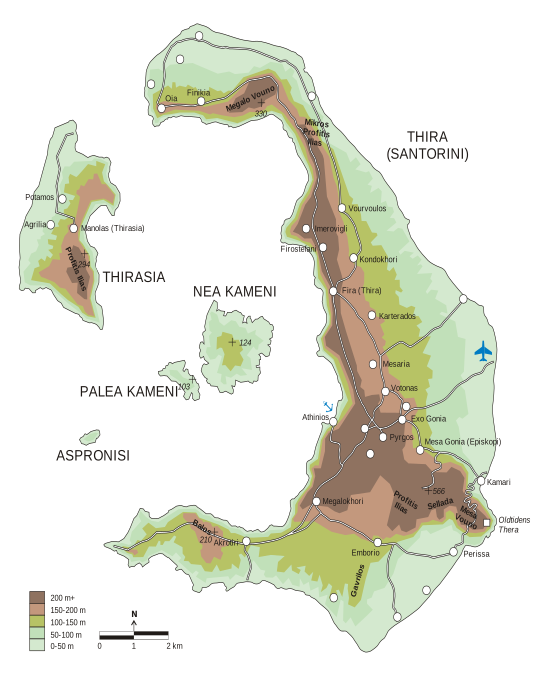
> I've tested some of the SVG files downloaded from the web on ECharts2 SVG
> parser.
> Some of them cannot be rendered correctly.
> For example:
> https://upload.wikimedia.org/wikipedia/commons/9/98/Santorini-topo.svg
> https://upload.wikimedia.org/wikipedia/commons/3/3a/Tehran_topo.svg
>
> If we use a "simple SVG parser" like ECharts2 did, we probably have to
> make some rules or restrictions about:
> "if the SVG file can be parsed and rendered correctly, it should be like
> this xxx, and should not contain xxx".
> but I think it is difficult for developers or designers to make an SVG
> file following the rules or restrictions.
>
> If we implement a "complete SVG parse", be able to parse any SVG file
> against the SVG specification,
> I am afraid it is probably a difficult job (?) and brings lots of code.
> If we can do that, we are actually implementing a SVG renderer, which
> seems should not be the job of
> ECharts, but the job of browsers.
>
>
> (2)
> > Render SVG directly into HTML is not friendly to other platforms.
>
> For the feature "getDataURL", I think it might be resolved by some trick.
> For headless rendering, generally, I think there is rarely scenario that
> using SVG in a
> headless environment that not support SVG. If so, it seems not the job of
> ECharts to
> give the resolution of "rendering an SVG on a headless environment that
> not support SVG".
>
> (3)
> About the user interaction, it is actually another topic. We can discuss
> them soon in another thread.
>
>
>
>
>
>
>
>
>
> ------------------------------
>  Su Shuang (100pah)
> ------------------------------
>
>
> 2018-05-04 17:08 GMT+08:00 沈毅 <[email protected]>:
>
>> Render SVG directly into HTML is not friendly to other platforms.
>> Cross-platform is always important when we choose the solution. That's
>> also
>> what we considered when implementing the rich text label.
>>
>> I can't get your concern about determining which shapes are needed to be
>> user
>> interactive. It's more about how we designing the interface. I don't think
>> it's relative to the underlying implementation.
>>
>> About the complexity, we've tried it in ECharts 2. I think it's not that
>> complex and it works fine to me.
>>
>> SHUANG SU <[email protected]> 于2018年5月4日周五 下午3:18写道:
>>
>> > But I doubt that parse an SVG file is probably a heavy workload if we
>> > implement a complete (not rough) parser. (?)
>> >
>> > And it probably difficult to determine which shapes are needed to be
>> user
>> > interactive if the SVG is very complicated.
>> > (for example, highlight when hovering).
>> >
>> > So I think could we render the SVG directly into HTML document?
>> > Meanwhile, if user interaction is required, the designer can provide a
>> > separate SVG file, which including only <path> elements,
>> > to specify all of the <path>s that are needed to be interactive.
>> >
>> > (This idea comes from Dingding, and TianYu agrees that).
>> >
>> >
>> >
>> >
>> > ------------------------------
>> >  Su Shuang (100pah)
>> > ------------------------------
>> >
>> >
>> > 2018-05-04 12:34 GMT+08:00 沈毅 <[email protected]>:
>> >
>> > > Use SVG directly means parse SVG file and rendered it with Canvas? I
>> > think
>> > > it's better because it can be resolution independent. Also we can
>> change
>> > > the style of each element to encode the data.
>> > >
>> > >
>> > > SHUANG SU <[email protected]> 于2018年5月2日周三 下午2:29写道:
>> > >
>> > > > Shen Yi,
>> > > >
>> > > > Using image as geo background, will cause distortion when zooming.
>> > > > May be, it is a better way to use SVG directly on the browser (make
>> a
>> > > > zrender/graphic/SVGImage) ?
>> > > >
>> > > >
>> > > >
>> > > >
>> > > >
>> > > >
>> > > >
>> > > >
>> > > >
>> > > >
>> > > >
>> > > > ------------------------------
>> > > >  Su Shuang (100pah)
>> > > > ------------------------------
>> > > >
>> > > >
>> > > > 2018-04-30 2:45 GMT+08:00 SHUANG SU <[email protected]>:
>> > > >
>> > > > >
>> > > > > (1)
>> > > > > > And if background image
>> > > > > > has SVG image source, will the node information in SVG been
>> parsed
>> > > and
>> > > > > > displayed?
>> > > > >
>> > > > > Does the simple way appropriate?
>> > > > > ```js
>> > > > > var img = new Image()
>> > > > > img.src = 'some.svg';
>> > > > > // drawImage to canvas.
>> > > > > ```
>> > > > >
>> > > > > There might be some compatible issue for old browser (
>> > > > > https://caniuse.com/#feat=svg-img) in this way,
>> > > > > but I think it might bring complexity if imclude SVG parsing code
>> to
>> > > > > echarts,
>> > > > > and not necessary if not need to interact with the inner shape of
>> a
>> > > SVG.
>> > > > >
>> > > > >
>> > > > > (2)
>> > > > > > Are background and backgroundCoord general properties for the
>> geo
>> > > > > > component? Can they be used with mapType property
>> > > > >
>> > > > > I think that both the `background` and `mapType` can be specified
>> on
>> > > > > option.
>> > > > > The view rect can be calculated by union the `backgroundCoord:
>> {x, y,
>> > > > > width, height}`
>> > > > > and the GeoJSON (specified by `mayType`, if the user needs it).
>> > > > >
>> > > > > But for this part, consider a scenario:
>> > > > > The background is a shopping mall map, and the user might need
>> some
>> > > > > polygons
>> > > > > to describe some area (which can be interactive, like, highlight
>> when
>> > > > > hovering).
>> > > > > If the polygons are described using GeoJSON, the option should be:
>> > > > >
>> > > > > ```js
>> > > > > echarts.registerMap('mall', thePolygonsGeoJSON);
>> > > > >
>> > > > > var option = {
>> > > > >     geo: {
>> > > > >         background: 'mall.png',
>> > > > >         backgroundCoord: {x: 0, y: 0, width: 1000, height: 600},
>> > > > >         mapType: 'mall'
>> > > > >     }
>> > > > > }
>> > > > > ```
>> > > > >
>> > > > > where the GeoJSON 'mall' and background image 'mall.png' are
>> > specified
>> > > in
>> > > > > different styles.
>> > > > > Is it a little strange?
>> > > > >
>> > > > > Or, another approach:
>> > > > > the users can describe the polygons not in GeoJSON (since it is a
>> > > little
>> > > > > difficult to make
>> > > > > GeoJSON), but using a custom series, or a series type 'polygon'
>> (or
>> > > > > 'lines', that already exists).
>> > > > >
>> > > > > ```js
>> > > > > var option = {
>> > > > >       geo: {
>> > > > >            background: 'mall.png',
>> > > > >            backgroundCoord: {x: 0, y: 0, width: 1000, height:
>> 600},
>> > > > >       },
>> > > > >       series: [{
>> > > > >           type: 'polygon',    // or type: 'lines'
>> > > > >           data: [
>> > > > >                  // points of a polygon
>> > > > >                  [[px0,py0], [px1,py1], ...],
>> > > > >                  // Or even a SVGPath ? (which is more convenient
>> for
>> > > > > designers?)
>> > > > >                  'path://M164,210.677v33.47l154
>> .656,66.356L468,243z',
>> > > > >                  ...
>> > > > >           ]
>> > > > >       }]
>> > > > > };
>> > > > >
>> > > > > Is it appropriate?
>> > > > > I am thinking that how to make it easier for designers to convert
>> the
>> > > SVG
>> > > > > or Adobe Illustrator path to the input of the echarts.
>> > > > > In echarts 2, special tag needed to be markd on a SVG shape if it
>> is
>> > > > > needed to be parsed and be interactive in echarts.
>> > > > > But adding special tags is not convenient I think.
>> > > > >
>> > > > >
>> > > > >
>> > > > >
>> > > > >
>> > > > > ------------------------------
>> > > > >  Su Shuang (100pah)
>> > > > > ------------------------------
>> > > > >
>> > > > >
>> > > > >
>> > > > > 2018-04-29 23:57 GMT+08:00 沈毅 <[email protected]>:
>> > > > >
>> > > > >> Some questions.
>> > > > >>
>> > > > >> Are background and backgroundCoord general properties for the geo
>> > > > >> component? Can they be used with mapType property? And if
>> background
>> > > > image
>> > > > >> has SVG image source, will the node information in SVG been
>> parsed
>> > and
>> > > > >> displayed?
>> > > > >>
>> > > > >> SHUANG SU <[email protected]> 于2018年4月29日周日 上午12:29写道:
>> > > > >>
>> > > > >> > Pissang and All,
>> > > > >> >
>> > > > >> >
>> > > > >> > Currently, geo coordinate system only supports GeoJson, which
>> is
>> > not
>> > > > >> > convenient in some scenario that the base map might be the
>> > shopping
>> > > > mall
>> > > > >> > map, airport map, airplane seat map, topographic map, etc.,
>> where
>> > > > using
>> > > > >> > image or SVG is an easy and conventional way.
>> > > > >> >
>> > > > >> > So, should we provide "echarts option" like the snippet below
>> for
>> > > this
>> > > > >> > feature?
>> > > > >> >
>> > > > >> >
>> > > > >> > ```js
>> > > > >> > var option = {
>> > > > >> >     geo: {
>> > > > >> >
>> > > > >> >         // Use as background image, which can be zoomed and
>> moving
>> > > in
>> > > > >> the
>> > > > >> > geo coordSys.
>> > > > >> >         background: 'shopping-mall.png', // or
>> 'shopping-mall.svg'
>> > > > >> >
>> > > > >> >         // Specify how the background is located in this geo.
>> > > > >> >         // Essentially the value is geo coords of the
>> background
>> > > rect.
>> > > > >> > the image width/height, where the geo
>> > > > >> >         backgroundCoord: {
>> > > > >> >             x: 0,
>> > > > >> >             y: 0,
>> > > > >> >             // Conventionally, we can use the image size as the
>> > geo
>> > > > >> coords
>> > > > >> > here.
>> > > > >> >             width: 1000,
>> > > > >> >             height: 600
>> > > > >> >         },
>> > > > >> >
>> > > > >> >         // In this case, we do not need to provide a GeoJSON
>> and
>> > > > spcify
>> > > > >> > "mapType" here.
>> > > > >> >
>> > > > >> >     },
>> > > > >> >     ...
>> > > > >> > };
>> > > > >> > ```
>> > > > >> >
>> > > > >> > In fact, this feature (using a roamable background image on
>> geo)
>> > can
>> > > > be
>> > > > >> > implemented
>> > > > >> > by the "custom series", but it is not convenient (after all, it
>> > > > require
>> > > > >> > users to provide a GeoJSON to specify the bounding rect).
>> > > > >> >
>> > > > >> > Or any other ideas?
>> > > > >> >
>> > > > >> >
>> > > > >> > ----------------------------
>> > > > >> > Su Shuang (100pah)
>> > > > >> > ----------------------------
>> > > > >> >
>> > > > >>
>> > > > >>
>> > > > >> --
>> > > > >> Yi Shen
>> > > > >> Senior Developer
>> > > > >> Baidu, Inc.
>> > > > >>
>> > > > >
>> > > > >
>> > > >
>> > >
>> > >
>> > > --
>> > > Yi Shen
>> > > Senior Developer
>> > > Baidu, Inc.
>> > >
>> >
>>
>>
>> --
>> Yi Shen
>> Senior Developer
>> Baidu, Inc.
>>
>
>