Hi Peter,
I hear that you sound offended. I'm sorry about that.
The business model being proposed by Rasdaman is different to all OSGeo projects before, and is resulting in the OSGeo community questioning the definition of what OSGeo supports.
I haven't heard anyone question the technical merit of Rasdaman enterprise. I haven't heard anyone question your right to license Rasdaman any way you wish.
People have been debating whether supporting Rasdaman's business model fits with OSGeo's principles. The general advise I'm hearing is that Rasdaman is not. These principles have been developed and refined by many people who have led successful open source projects, and are in place to ensure OSGeo projects have the best chance of being successful.
Advise you have received is provided as constructive criticism. I appreciate that it is not advise you want to year, however I'm hopeful that you consider and apply it.
Warm regards,
Cameron

On 24/05/2016 1:09 am, Peter Baumann wrote:
Wow. Now that OSGeo is going to evict our project, suddenly a bashing tornado
starts from the fundamentalist angle: "they don't obey, therefore we proclaim
their technology is bad. Burn their project!"

A technically oriented discussion, unbiased and out of sheer interest, I love to
conduct. But this thread is neither unbiased nor driven by genuine (technical)
interest, rather intending to damage an open-source project with hundreds of
expert person months invested and spinoff contributions to several other
open-source projects (such as GDAL, MapServer, OpenSSL). Appreciated by
large-scale data centers.

Based on a surprisingly superficial understanding of array databases in some
contributions, based on unproven assumptions, not taking time to read (nor
understand) the manifold publications in the community explaining details. Based
on a fundamentalist bias against business.

My 15-hours days are calling on me with other duties. So we continue awaiting
faithfully the final OSGeo verdict on incubation, whatever it is after 6 years.

-Peter


On 05/22/2016 03:23 PM, Edzer Pebesma wrote:
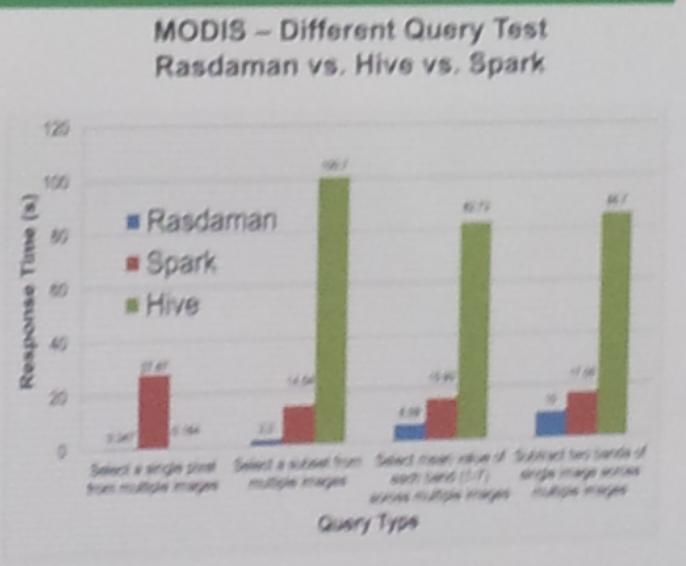
Cameron, my comment is in-line: On 21/05/16 14:06, Cameron Shorter wrote:Hi Edzer, Thank you for raising this topic questioning the value of radsaman community edition. It is pertinent considering recent discussions about Rasdaman incubation. Peter, your comments about programmers wanting to get paid for their work is valid, but does not provide justification for OSGeo promoting a proprietary business model. OSGeo is in the business of promoting open source software, and helping people who create open source software. Rasdaman's business model is in a grey zone. It provides a community edition and a proprietary edition. This is often referred to as an "open core" business model, or sometimes less favorably called "crippleware". I think Rasdaman is the only OSGeo (proposed) project which provides an open core model. All prior projects have been pure open source. Although a an open core model deviates from OSGeo's original principles, one could argue that Rasdaman community edition stands on its own as a valuable, quality open source geospatial application by itself, worthy of OSGeo promotion. Edzer's comments appear to counter this argument. Edzer, I understand you suggest Rasdaman community edition is of little value for real world problems?Yes; the example Peter mentions, http://planetserver.eu/ does solve a problem: providing a download service for large scale imagery, and it is good if rasdaman CE can do this for 20 Tb, with sufficient performance. There are however several other open source technologies that can also do this, potentially much simpler (e.g. thredds data server, maybe even gdal VRT). The problems where array data management systems really come into play is scalable computing: doing something useful with large data sets without having to download all the data first ("bringing the computations to the data, instead of data to the computations") - this is what much of the big data scalability fanfare is about, not about serving or downloading data. And this is where rasdaman CE does not scale - only EE seems to do so. The longer we (the open source community) wait with a good solution to this problem, the more ground we loose to Google Earth Engine, a very nice service that is bad for science. See also the last slide ("Google Earth Engine is Evil") in the excellent presentation by Jordi Inglada, held last week at the Living Planet Symposium: http://jordiinglada.net/stok/LivingPlanet/LandCoverSlides.pdf You might see this as a call to arms, and it is, but a new thread will be needed to follow up on this.Extending from this, OSGeo endorsement of Rasdaman should be questioned and potentially withdrawn. I'd be interested to hear opinions of others in the field as to whether Rasdaman community version is of value for real-world production systems by itself. A deeper question for the greater OSGeo community is should OSGeo endorse Open Core business models? Warm regards, Cameron On 21/05/2016 6:07 pm, Peter Baumann wrote:oh, just looking at the subject again: several service providers believe indeed rasdaman community does offer a significant advantage: - see the download figures on www.rasdaman.org - concretely, see www.planetserver.eu which is running rasdaman community on - I believe - about 20 TB of Planetary Science data. -Peter On 05/21/2016 09:56 AM, Peter Baumann wrote:Hm, first of all: this is opening a different thread, talking about functionality of rasdaman community. Next, it is based on assumptions - without details (because off topic): conclusions are wrong. But to respond to the core message emphasized in the first paragraph: I respectfully disagree. In particular, such a position does not benefit the open source community very much as I am trying to explain below. TL;DR: You have a strong expertise in Geoinformatics, I know something about Computer Science. This is where we can talk as professors and scientists. Your statement is about economics, industry etc. Having an opinion there (and articulate it) is fair, but in these fields our opinion weighs not more than anyone else's in the street. We should not attempt to attain importance through inapplicable roles. Let us look at a professor. They have a conveniently high salary which is paid by society, that is: tax payers. Nobody can influence what a professor does and how much return s/he generates for society. A single open source developer (or a small group, whatever) do not experience this convenience. They have a dream where they invest, they try to not make money for getting richer than a professor ;-) but merely for their economic survival. Some (in particular scientists) enjoy the money rain coming from publicly funded projects (again: the tax payer subsidizes), but most in the community have to struggle hard. They face reluctant customers, competition by the giants in the market, and many more obstacles. From the cosy place of a lifelong position with a secured salary and decent retirement funds it is easy to say that all software should be free like free beer (quote from below: "can be reproduced by other scientists without prohibitive license costs"). If the open source movement cannibalizes itself it will make it all so easy for the big players to maintain their dominance, they will silently applaud. Quoting Jeroen:NEVER IGNORE COMPANIES AGAIN IN OSGEO OR FOSS4G! THEY ARE NOT ATHREAT, THEY ARE A NECESSITY. That said: It is entirely ok to have the opinion you have. Others, though, may disagree. I am one of those. respectfully, Peter On 05/20/2016 09:30 AM, Edzer Pebesma wrote:As a scientist, I teach my students that for doing science it is a requirement to work with open source software, because only then workflows are fully transparent and can be reproduced by other scientists without prohibitive license costs. Currently, working with large amounts of earth observation (EO) or climate model data typically requires to download these data tile by tile, stitch them together, and go through all of them. Array databases may simplify this substantially: after ingesting the tiles, they can directly work on the whole data as a multi-dimensinal array ("data cube"). Computations on these array are typically embarassingly parallel, and scale up with the number of cores in a cluster. Rasdaman is an array data base that comes in two flavours, the open source community edition (CE) and the commercial enterprise edition (EE). The differences between the two are clear [1]. When I want to use rasdaman CE (open source) for scalable image analysis, I get stuck waiting for one core to finish everything [1]. This is not going to solve any problems related to computing on large data, and is not scalable. The bold claim that rasdaman.org opens with ("This worldwide leading array analytics engine distinguishes itself by its flexibility, performance, and scalability") is not true for the CE advertised. This has been mentioned in the past on mailing lists [2,3], but the typical answer from Peter Baumann diverts into other arguments. Also the benchmark graph (photo from an AGU poster) [4] that Peter sent this week [5] must refer to the enterprise edition, since Spark and Hive both scale, but rasdaman CE does not [3]. I assume that on the discussions on this list, ONLY the open source community edition is considered, compared, and discussed, as a potential future OSGeo project. OSGeo supports the needs of the open source geospatial community [6]. Given * the bold claims and continuing confusion about whether, and which, rasdaman is scalable, * the need for OSGeo to give good advice to prospective users about technologies that do scale EO data analysis, * the current (unfilled!) needs of scientists for good, open source software for such analysis, and * the potential conflict of interest of its creator [7], I wonder wether OSGeo should recommend rasdaman CE to the open source geospatial community. [1] http://rasdaman.org/wiki/Features [2] https://lists.osgeo.org/pipermail/incubator/2014-October/002540.html [3] https://groups.google.com/forum/#!topic/rasdaman-users/66XL3tmDDQI [4] https://lists.osgeo.org/pipermail/discuss/attachments/20160515/49200cd4/attachment.jpg [5] https://lists.osgeo.org/pipermail/discuss/2016-May/016099.html [6] http://www.osgeo.org/content/faq/foundation_faq.html [7] https://lists.osgeo.org/pipermail/discuss/2016-May/016045.html _______________________________________________ Discuss mailing list [email protected] http://lists.osgeo.org/mailman/listinfo/discuss-- Dr. Peter Baumann - Professor of Computer Science, Jacobs University Bremen www.faculty.jacobs-university.de/pbaumann mail: [email protected] tel: +49-421-200-3178, fax: +49-421-200-493178 - Executive Director, rasdaman GmbH Bremen (HRB 26793) www.rasdaman.com, mail: [email protected] tel: 0800-rasdaman, fax: 0800-rasdafax, mobile: +49-173-5837882 "Si forte in alienas manus oberraverit hec peregrina epistola incertis ventis dimissa, sed Deo commendata, precamur ut ei reddatur cui soli destinata, nec preripiat quisquam non sibi parata." (mail disclaimer, AD 1083)-- Dr. Peter Baumann - Professor of Computer Science, Jacobs University Bremen www.faculty.jacobs-university.de/pbaumann mail: [email protected] tel: +49-421-200-3178, fax: +49-421-200-493178 - Executive Director, rasdaman GmbH Bremen (HRB 26793) www.rasdaman.com, mail: [email protected] tel: 0800-rasdaman, fax: 0800-rasdafax, mobile: +49-173-5837882 "Si forte in alienas manus oberraverit hec peregrina epistola incertis ventis dimissa, sed Deo commendata, precamur ut ei reddatur cui soli destinata, nec preripiat quisquam non sibi parata." (mail disclaimer, AD 1083) _______________________________________________ Discuss mailing list [email protected] http://lists.osgeo.org/mailman/listinfo/discuss-- Cameron Shorter, Software and Data Solutions Manager LISAsoft Suite 112, Jones Bay Wharf, 26 - 32 Pirrama Rd, Pyrmont NSW 2009 P +61 2 9009 5000, W www.lisasoft.com, F +61 2 9009 5099
-- Cameron Shorter, Software and Data Solutions Manager LISAsoft Suite 112, Jones Bay Wharf, 26 - 32 Pirrama Rd, Pyrmont NSW 2009 P +61 2 9009 5000, W www.lisasoft.com, F +61 2 9009 5099 _______________________________________________ Discuss mailing list [email protected] http://lists.osgeo.org/mailman/listinfo/discuss