http://www.digitaltrends.com/cars/how-does-gms-fabled-ev1-stack-up-against-the-current-crop-of-electrics/
[images] How does GM’s fabled EV1 stack up against the current crop of
electrics?
By Stephen Edelstein  Feb 28 2013
[images
http://www.digitaltrends.com/wp-content/uploads/2013/02/1996-GM-EV1-1-medium.jpg
1996 General Motors EV1

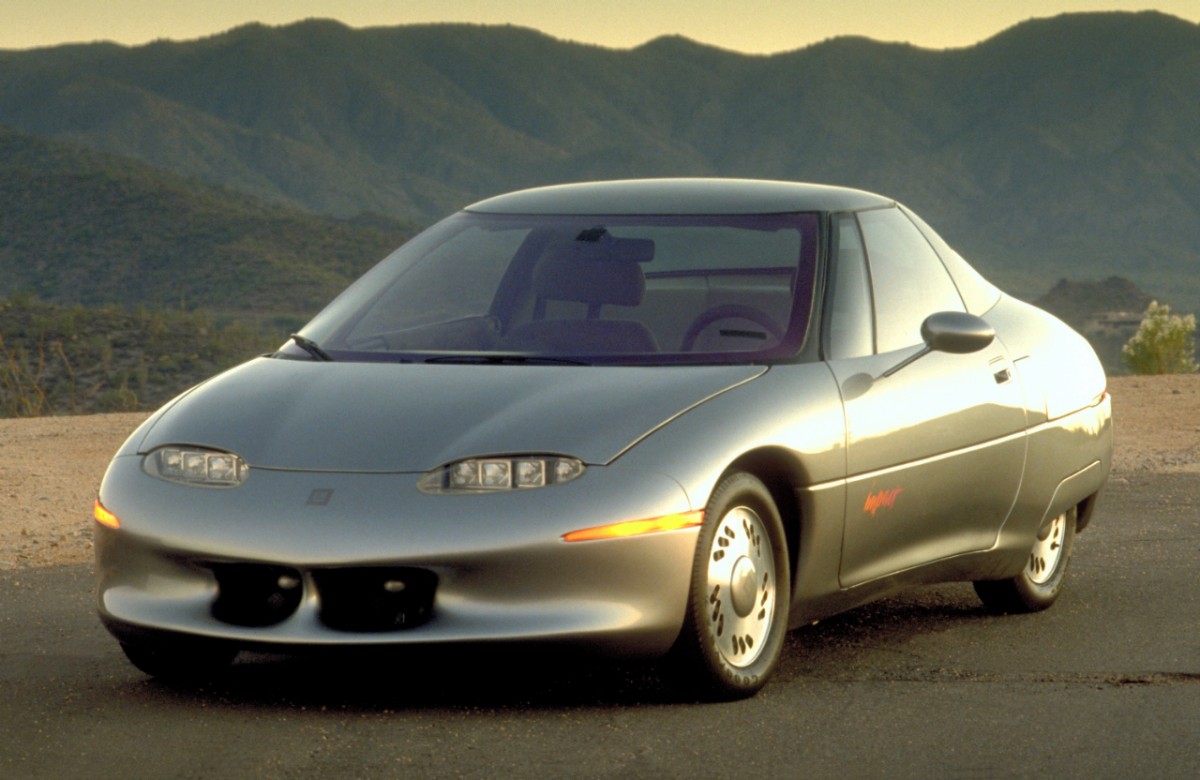
http://www.digitaltrends.com/wp-content/uploads/2013/02/1990-GM-Impact1-medium.jpg
1990 General Motors Impact conceptThe Car

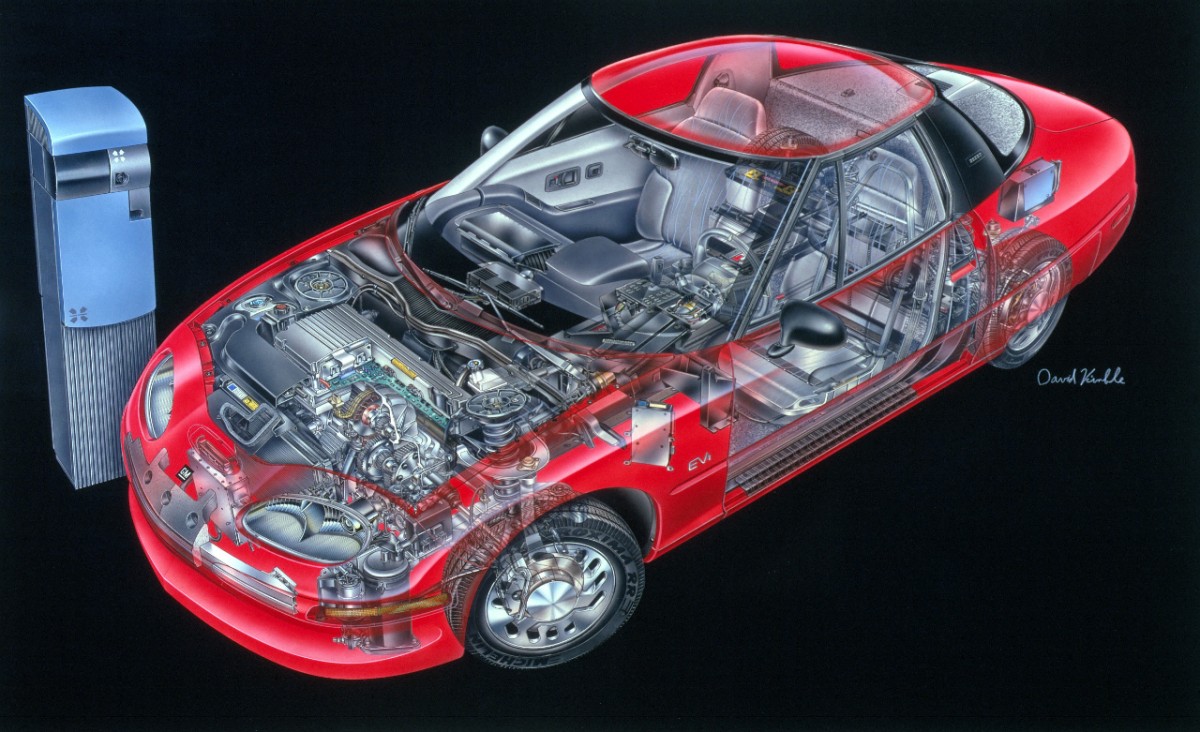
http://www.digitaltrends.com/wp-content/uploads/2013/02/1996-GM-EV1-2-medium.jpg
1996 General Motors EV1 cutawayPerformance

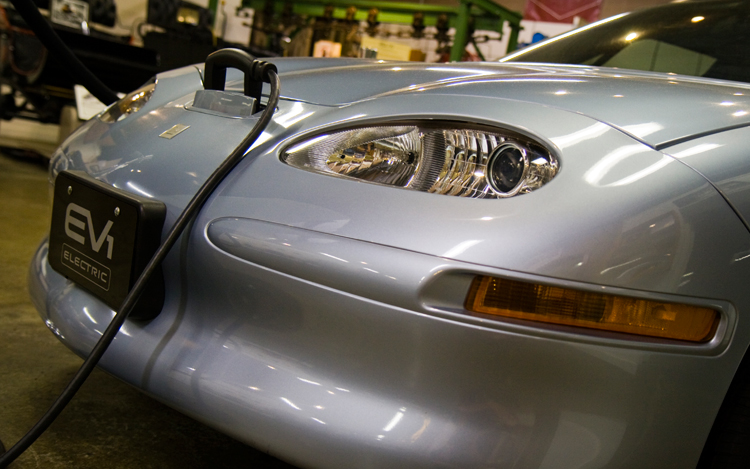
http://www.digitaltrends.com/wp-content/uploads/2013/02/28834870.jpeg
1996 General Motors EV1 charger
]

The electric car isn’t exactly thriving, but it’s a lot healthier than it
was in 2003. That’s the year General Motors terminated leases of its EV1
electric two-seater, setting in motion the events that would form the
backdrop of the documentary film, Who Killed the Electric Car?

When GM hauled its EV1 fleet off to the crusher amid protesting consumers,
the car became an automotive martyr and was used as evidence of a conspiracy
against EVs.

Ten years later, GM is building [plugins] instead of crushing them, and the
political and consumer climate has changed considerably. Filmmaker Chris
Paine even made a sequel: Revenge of the Electric Car.

What about the EV1, though? Some say it was the right car at the wrong time,
others say it just wasn’t good enough to be commercially viable. So, did
political machinations and consumer skepticism kill the EV1, or was it just
not a very good car?

The EV1 was the first serious modern attempt at an electric car by a major
manufacturer, but its short range and long charging times earned it a spot
on Time’s 2008 list of the “50 Worst Cars of All Time,” and a place of
dishonor in Richard Porter’s book Crap Cars.

The EV1 was somewhat of an outlier when it was actually on sale. Now,
though, there are other production EVs to compare it to, giving us an idea
of what the EV1 was like as a car, and whether EV technology really needed
10 years of maturation to be good enough for consumers.

The EV1 went into production in 1996 as a production successor to the
Impact, a 1991 concept car. It was compact two-seater roughly the size of a
contemporary Saturn SC2.

Unlike most current electric cars, the EV1 was almost entirely bespoke. It
featured an aluminum space frame, aluminum suspension components, and
plastic body panels, to keep weight down. It also had electric power brakes
and steering; the latter is a common feature on cars of 2013.

Although all EV1s look the same, they actually belong to two generations.
Gen I cars had a three-phase AC induction motor and a 16.5-kWh Delphi
lead-acid battery pack. In 1999, GM released Gen II cars with 18.7-kWh
Panasonic lead-acid batteries, and later upgraded them further with 26.4-kWh
nickel metal-hydride (NiMH) batteries, the same type used in the Toyota
Prius and most first generation hybrids.

The EV1 was so different that it became the first car in GM history to be
sold under the General Motors nameplate, instead of being assigned to one of
the company’s divisions (it was sold through Saturn dealers). That begs the
question: Would renaming the Chevrolet Volt the General Motors Volt really
increase its appeal?

Performance

While its lozenge-shaped body and digital dashboard suggested a futuristic
speed machine, the EV1 performed more like an average compact car. All
versions had the same electric motor, which produced 137 horsepower and 110
pound-feet of torque.

GM advertised the EV1’s range as 70 to 90 miles and while, we can’t drive
one of the cars to confirm this, it compares favorably with current EVs on
paper.

The EV1 could reportedly go from 0 to 60 mph in nine seconds, while Car and
Driver’s 2011 Nissan Leaf SL long-term test car did the same in 10 seconds.
If the Leaf is acceptably quick, then so is the EV1.

Top speeds are also pretty close. The EV1 was electronically limited to 80
mph, while the Leaf’s limiter is set at 92 mph. The EV1 also matches the
Mitsubishi i-MiEV’s top speed although, at 13.0 seconds to 60 mph, the
Mitsubishi takes a lot longer to get there.

Charging

One of the most shocking (no pun intended) aspects of the EV1 was its short
range and hours-long charging times. Ten years after the last EV1 left the
road, things have improved, but haven’t completely changed.

GM said the EV1 could go 70 to 90 miles on a charge, depending on
conditions, which mainstream EVs haven’t really bettered. The 2013 Nissan
Leaf gets a 75-mile range rating from the EPA, while the Mitsubishi i-MiEV
can only go 62 miles. The Honda Fit EV ekes out a slightly better
performance at 82 miles.

A Gen I EV1 took approximately 15 hours to recharge from a 110-volt
household outlet. GM’s 220-volt MagneCharge system could do the job in three
hours. By 2001, GM had installed over 1,000 MagneChargers in private homes
and public locations like malls, hotels, and airports. GM encouraged
customers to use the 220-volt system, and only plug into standard household
outlets as a backup.

This should sound familiar. Both Nissan and Tesla are working to build
national networks of public charging stations for their respective EVs.
Tesla has a handful of Supercharger stations in California and on the East
Coast, and hopes to open 100 by 2015. Nissan wants to have 400 of its DC
quick chargers ready by next year.

The performance of these new chargers is a vast improvement over the
MagneCharger. Tesla says the Supercharger can add 150 miles of range to an
85-kWh Model S in 30 minutes, while Nissan’s system can charge a Leaf to 80
percent capacity in the same amount of time.

A full charge at home still takes awhile, though. A 240-volt Level 2 charger
takes about four hours to charge most cars, so 2013 EV owners aren’t in a
much better position than 1996 Gen I EV1 lessees.

Price

In 1996, an EV1 stickered for around $35,000. That was somewhat nearer to a
BMW 328i ($32,900) and about the same as a Mercedes-Benz C280 ($35,250) at
the time. While that might seem like a lot for a front-wheel drive compact,
it’s not bad considering that the EV1 was basically hand built and shared
virtually no components with other GM vehicles.

In 2013, a Nissan Leaf costs $28,800, but last year it was $6,400 more. GM’s
own Chevrolet Spark EV will cost around $25,000 when it goes on sale later
this year. However, both 2013 EVs benefit from tax credits, including a
$7,500 federal credit.

Just like in the 1990s, EVs are generally more expensive than their
gasoline-powered counterparts. The Spark’s $25,000 base price may be low for
an electric car, but it’s almost $10,000 more than a loaded 2013 Spark 2LT.
The EPA consider the Leaf a midsize car, and Nissan’s own midsize Altima
starts at $21,760.

Did the EV1 deserve to die?

On paper (and pixels) the EV1 comes pretty close to the 2013 EV standard in
terms of performance and convenience. It’s impractical two-seat body and the
unknown long-term reliability of its batteries are the only major drawbacks.

A 70 to 90-mile range and minimum three hour charging time also sound like
drawbacks, but EV drivers in 2013 aren’t much better off. Two generations of
battery technology have eased, but not completely erased, range anxiety.

Today’s political climate may be friendlier toward EVs, but buyers still
have to decide if zero-emission motoring is worth a major sacrifice in
flexibility. So, for some, the EV1 may never have been a good car. It was a
good electric car though, so maybe it didn’t deserve to die.
[© 2013 Designtechnica Corporation  All rights reserved]


For all EVLN posts use:
http://electric-vehicle-discussion-list.413529.n4.nabble.com/template/NamlServlet.jtp?macro=search_page&node=413529&query=evln&sort=date

Here are today's archive-only EV posts:

EVLN: The electric vehicle is ready. Are you?
EVLN: World’s Fastest Electric Boat Skims Over the Sea ts:86Knots
EVLN: WA Lawmakers weigh penalties for ice blocking EVSE parking
EVLN: Loveland and Fort Collins, CO Mayors love EVs ...
EVLN: BBC to use THINK for electric drive round Europe
+
EVLN: Honda is taking it slow for now with their EV ambitions


{brucedp.150m.com}


--
View this message in context:
http://electric-vehicle-discussion-list.413529.n4.nabble.com/EVLN-How-does-the-martyred-GM-EV1-stack-up-against-today-s-EVs-tp4661616.html
Sent from the Electric Vehicle Discussion List mailing list archive at
Nabble.com.
_______________________________________________
UNSUBSCRIBE: http://www.evdl.org/help/index.html#usub
http://lists.evdl.org/listinfo.cgi/ev-evdl.org
For EV drag racing discussion, please use NEDRA
(http://groups.yahoo.com/group/NEDRA)