http://scitation.aip.org/content/aip/magazine/physicstoday/news/10.1063/PT.5.2021
So far… so far: My first four months with an electric car
Raymond Y. Chu  [November 25 2014]
[images
http://scitation.aip.org/docserver/fulltext/pt.5.2021figure1.jpg
The Nissan LEAF's 24-kWh battery pack is made up of 48 modules, each of
which contains four cells. CREDIT: Nissan USA

http://scitation.aip.org/docserver/fulltext/pt.5.2021figure2.jpg
Ten charging stations are available at FedEx Field, the stadium of
Washington's National Football League team. CREDIT: Pluginsites.org
]

A fully electric car is environmentally friendly and cheap to run, but what
is it like to drive?

My Toyota Prius [hev] has served me well for more than 230 000 miles during
the last 10 years. The Prius, the first popular hybrid car that uses both
gas and electricity, made me feel like a pioneer when I bought it in 2005.
In retrospect, it required hardly any adjustments from driving and fueling a
typical gas car. On accumulating that kind of mileage, I started to consider
my next vehicle purchase. I wanted to reduce my carbon footprint and the
Nissan LEAF [EV], a zero-emissions electric car, intrigued me ever since it
was introduced in 2011. Four months ago, I bought one. The following account
chronicles some of my experiences.

The LEAF runs on a battery with a driving range of about a fifth of the
range by typical and hybrid cars. At first, the published range of 75 miles
seemed too precarious to me for my 68-mile round-trip commute to work in
Maryland, since our personal driving experiences rarely matched the
published estimates. The American Center for Physics, where I work, does not
provide a place to charge an electric vehicle, and the thought of charging
the vehicle exclusively at home discouraged any serious consideration. For
me, more places to charge was the only way to mitigate the range anxiety.

Earlier this year, I watched a TV program highlighting the public charging
stations across Maryland and this persuaded me to find the charging stations
on an online map. The LEAF was back on my radar. The plan was to purchase
the LEAF primarily to commute to the office, and to keep the Prius for its
familiarity and cargo space (I sometimes pretend it is a pickup truck).

My research before purchasing the LEAF focused on the availability of
charging stations along my daily routes, the pricing of the vehicle, and an
assessment of my ability to adapt to a potentially new lifestyle.

Much of my charging station research was satisfied through a website called
Plugshare, which maps electric vehicle charge stations. Whereas we can find
gas stations simply by driving around for a few minutes, I have found that
maps for charging stations—which are less easily recognizable, and fewer in
number—are indispensable. I spent hours mapping out my routes and found
numerous places to charge electric vehicles near my workplace and on my way
home. I even found backup locations in case my primary chargers were
occupied or not functioning properly.

The high prices of electric cars ruled out all options for me, including a
new LEAF. I resorted to shopping for a more affordable used LEAF. While
browsing through the used car listings, I realized that used LEAFs tended to
have low mileage and were in great shape. The greater concern was battery
capacity loss—the older the battery, the less charge it held.

I found a couple of three-year-old LEAFs, priced around $16 000, nearby,
meaning that I could drive it home with one full battery charge. A new LEAF
required nearly $30 000 upfront and then a $7500 federal tax credit after
filing the next tax return. This nets to around $22 000, or less if your
state also gives a tax break. Used LEAFs do not qualify for tax breaks. (To
compare: I bought my Prius new for $24 000 in 2005.)

After test-driving both LEAFs, I requested that the dealers fully charge the
batteries. The dashboards indicated that both had full capacity. Both car
reports showed good maintenance records with no accidents. In the end, I
chose the car that handled more smoothly. I saved around $5000 compared to
the purchase of a new LEAF, and avoided the hassle of claiming the tax
credits.

During my research, I assessed my ability to adapt to an electric car in two
ways: I read the comments posted on the Internet by LEAF drivers and I
visualized my daily driving routine. I prepared myself for the expectation
that I might need to spend an hour or two at a charging station on my way
home if I was unable to charge the car during work hours and was short on
power. Overall, my planning prepared me to handle the daily driving routines
reasonably well. However, some unforeseen challenges popped up after I
bought my LEAF.

Unforeseen challenges
My daily routine involved unplugging the charger from my home wall socket,
driving to the public charging station near my office, plugging into that
charger, and walking a half mile to my office. After three hours, I walk
back to unplug, drive the car to and park in my office lot. At the end of
the workday, I drive home, and plug the charger in for ten hours, to be
ready for the next day.

To clarify the disparity between the three hours at the charger near my
office and the ten hours charging at home, I’ll explain the types of
charging stations. Charging at home or through a 120 V outlet is called
level one. My home wall socket takes about 10 hours to recharge my 34 miles
from work. Most public charging stations use the faster 220 V, or level two,
so the one near my office takes only three hours to replenish the 34 miles
from home. The fastest charger is the 440 V quick (or fast) charger at level
three, which takes a half hour to charge 80% of the battery. If there were a
level three charger near my office, it would take only a minute per mile, or
34 minutes, to replenish my ride home.

Two measurement methods gave me a sense of the cost of charging per mile.
The charging stations almost invariably have displays showing the number of
kWh per charging session. The one near my office regularly showed my session
charge of 10 kWh, the amount I used to go from home to work since I left
home with a full charge. If I assume that my overnight charge at home is
also 10 kWh, I can estimate that I used 440 kWh per month for my daily
commute.

The less precise method was to compare the difference between the kWh in
this year’s electric bill to the kWh of last year’s electric bill by month.
Of the three months owning the LEAF, I’ll use the largest difference (197
kWh in June) as a conservative measure for the monthly electricity required
to drive to work. Although the charger near my office was free to use, I can
assume a round-trip rate by doubling that difference to 394 kWh. With the
two measurements, I can say that the daily commute is within the 394 to 440
kWh, which translated to $54-$60 at my residential electricity rate. To be
conservative, I’ll say $60.

In addition to the home and work charging, I used the LEAF for other trips
that used other public charging stations and those charges appeared on my
credit card bills each month. My average public charger cost per month
during the three months of owning my LEAF was $28.

Therefore, my monthly electricity cost for my LEAF reached $88. With an
average of 2200 miles driven per month, the cost for my LEAF was about $0.04
per mile. For comparison, my Prius was getting about $0.08 per mile. If we
consider that some of the charging stations are free to use and that the
LEAF requires no engine-related maintenance, such as oil changes or spark
plugs, the cost of fueling and maintaining a LEAF is certainly cheaper for
me than fueling and maintaining gas or hybrid vehicles.

After getting comfortable with my daily routes, I started to drive the LEAF
to places unrelated to work activities, like dinner at a restaurant. If
there was a charging station near the restaurant and I needed a charge to go
home, the routine of charging while I ate was similar to my charging while I
work. If my event was more than a couple of miles from a charger, though,
things got tricky. If I was in an area with only a level-two charger, I
needed to account for the time to walk to and from the charger (unless I
could bum a ride from a friend). If there were a quick or fast charger
within a 15-minute drive from the restaurant, I could opt to leave earlier
to stop at the charging station, recharge about a half hour, and then go on
to my event. This inconvenience should be resolved when more charging
stations become available.

We arguably already have charging options in place with all the 120 V
sockets we currently use. Still, the situation is not elegant. If I wanted
to charge the car while visiting friends who lived in apartment buildings or
townhouses without designated places to charge, I would need a very long
extension cord traversing sidewalks or stairways, or hanging out third-floor
windows just to reach their 120 V sockets. Similarly, electric sockets at
most public places are not conveniently located for charging plug-in
vehicles.

Greater challenges surfaced when I experienced charging locations occupied
by gas cars, other plug-in vehicles, or both. In the first example, an
internal combustion engine (ICE) gas car parks in a spot in front of a
charging station, so that the charging cord cannot reach the electric
vehicle. In some places these spots are clearly marked with signage and
paint designating it solely for plug-in vehicles, but in others they are not
clearly designated. These spaces are very often close to the building,
because the farther out one places the charger, the higher the cost to dig
an electric line to connect the charger. The proximity to the building,
especially to shopping mall entrances, makes these spots desirable, and gas
vehicle drivers may take them, even when they are clearly marked. There is
not much recourse to fight this issue, since it is not illegal in most
jurisdictions for gas cars to park in electric vehicle spots, and most
facilities do not enforce this directive. Some locations place traffic cones
in the spot, and I think that this helps to discourage gas cars from
blocking.

Charging etiquette
Electric vehicles like the LEAF and Tesla are not the only cars using
charging stations. Plug-in vehicles, including the Chevy Volt and plug-in
Prius, occupy charging stations more often than offending gas cars. The
charging station near my workplace has two chargers. Once when I arrived
there, a LEAF was in one spot and a Chevy Volt that has a battery and gas
engine was in the other. I exercised the option of using an unoccupied
charging location less than a mile away. If I did not have any options
within the remaining range in my car, the etiquette according to Internet
posts suggested that it is acceptable to unplug any car that has finished
charging. The etiquette also suggested that if I urgently needed to charge,
it is acceptable to unplug to charge my car and plug it back to the original
car when finished. That brings up the additional challenge that the
next-in-line wait time could last up to three or four hours for level two
chargers. And there exists debate—both humorous and serious—among drivers
about whether to discriminate between plug-in hybrids and all electric
vehicles in prioritizing who uses the charger first.

The biggest challenge has been my travel between Maryland and New York. It
would be ideal if the trips only used fast charging stations, but they were
located in the wrong places and the trips required mixes of level two and
level three chargers. That means that all routes required at least one 3-4
hour recharging stop, making a four- to five- hour trip with a gas car into
a nine-hour trip with my LEAF. I also learned the hard way that if I am
unable to use one fast (30 minute) charger, the only option is to spend
three hours or longer to get the equivalent charge on a level two charger.
During both trips to New York, I was unable to use a fast charging station.
Furthermore, there are at least seven different charging station networks,
each requiring its own key fobs, RFID cards, or mobile phone apps to
activate the chargers. In one situation, the mobile app network was down and
the company was unable to remotely allow me to use the charger.

Inexplicably, LEAF owners can expect to be unpopular. One day, when I began
to pull out of an intersection, I was smothered by a cloud of exhaust fumes
spewed by the truck to my left. I was fortunate that my windows were up, or
my cabin would have been filled with black smoke. A friend later told me
that this was an intentional act called “rolling coal.” Some drivers target
their exhaust clouds toward fuel-efficient vehicles like the LEAF and Prius
as a backlash against environmentalists.

Except for this discouraging incident, the challenges I have faced should be
resolved when there are more convenient chargers available. More chargers
could even address the greatest challenge that I have encountered, which
comes from my would-be passengers. On two occasions, friends have refused to
ride in my LEAF for fear of being stranded or inconvenienced, even though
the rides were well within range. They offered to drive instead or pleaded
with me to use the Prius. I chose to use my LEAF.
[© 2014 AIP Publishing]


For EVLN posts use:
http://evdl.org/evln/
http://www.evdl.org/archive/index.html#nabble+template%2FNamlServlet.jtp%3Fmacro%3Dsearch_page%26node%3D413529%26query%3DEVLN%2Bbrucedp2%26days%3D0%26sort%3Ddate

http://evfleetworld.co.uk/news/2014/Nov/Renault-Nissan-sells-200000th-EV/0438017401
Renault-Nissan Alliance has sold its 200kth EV 4years after the launch of
the Nissan Leaf EV

https://transportevolved.com/2014/12/01/understanding-electric-hybrid-cars-mechanic-learn-order-work-car/
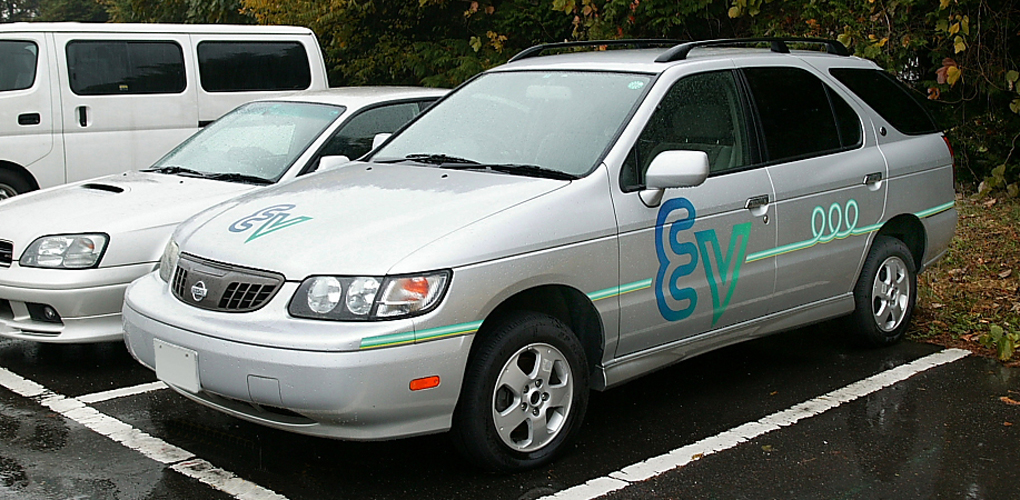
The Nissan Altra EV was the Leaf EV’s more staid older brother
...
http://upload.wikimedia.org/wikipedia/commons/c/c9/Nissan_R%27nessa_EV_001.JPG

http://thenewswheel.com/no-charge-to-charge-in-atlanta/
Atlanta GA is USA’s biggest Leaf EV market & free public EVSE access
+
EVLN: Free L2 EVSE @Petro-Canada Station In Tar-Sands-Land


{brucedp.150m.com}


--
View this message in context:
http://electric-vehicle-discussion-list.413529.n4.nabble.com/EVLN-My-first-four-months-with-a-Leaf-EV-review-tp4672904.html
Sent from the Electric Vehicle Discussion List mailing list archive at
Nabble.com.
_______________________________________________
UNSUBSCRIBE: http://www.evdl.org/help/index.html#usub
http://lists.evdl.org/listinfo.cgi/ev-evdl.org
For EV drag racing discussion, please use NEDRA
(http://groups.yahoo.com/group/NEDRA)