We have talked in the past about how you could, in concept, "dump
charge" rapidly in 10 minutes or so from a stationary pack. Then you
would run around for awhile. While you were gone, the dump pack has
recharged at some modest rate from the grid. Rinse and repeat. :-) Some
folks have tried it with limited success in racing. Now the Norwegians
have done it!
This ferry is"dump charging" daily and has proved that what we have
conjectured in the past works in reality. Buses and commuter trains are
next. Maybe even cars. No need for a pack swap. Just fast charge.
Can't wait to hear about the next implementation.

Bill D.

On 5/23/2015 5:29 AM, brucedp5 via EV wrote:
% Uses hydro-powered grid charged pier li-ion packs> charge li-ion e-ferry
pack at each side> only takes 10min > 60% savedon fuel co$t$ & huge
reduction on pollution %

http://www.maritime-executive.com/article/worlds-first-electrical-car-ferry-in-operation
[Photos] World's First Electrical Car Ferry in Operation
By MarEx 2015-05-19

[images
http://www.maritime-executive.com/media/images/article/Photos/Vessels_Small/Cropped/ampere%20with%20snow%2016x9.jpg
Electric Car Ferry

http://www.maritime-executive.com/media/images/ampere%20loading.jpg

http://www.maritime-executive.com/media/images/corvus%20batteries.jpg

http://www.maritime-executive.com/media/images/control%20panel.jpg
(EVSE)

http://www.maritime-executive.com/media/images/charging%20while%20waiting.jpg

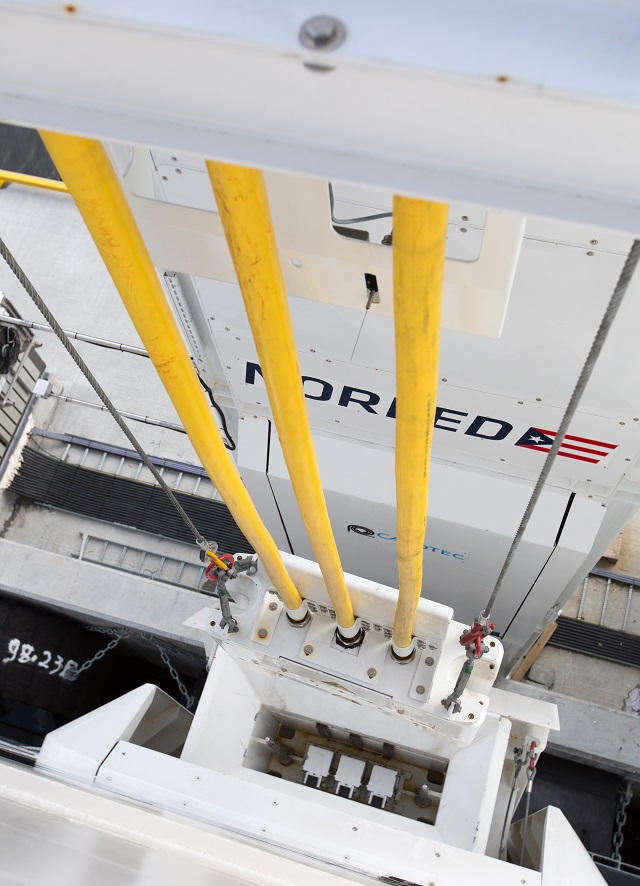
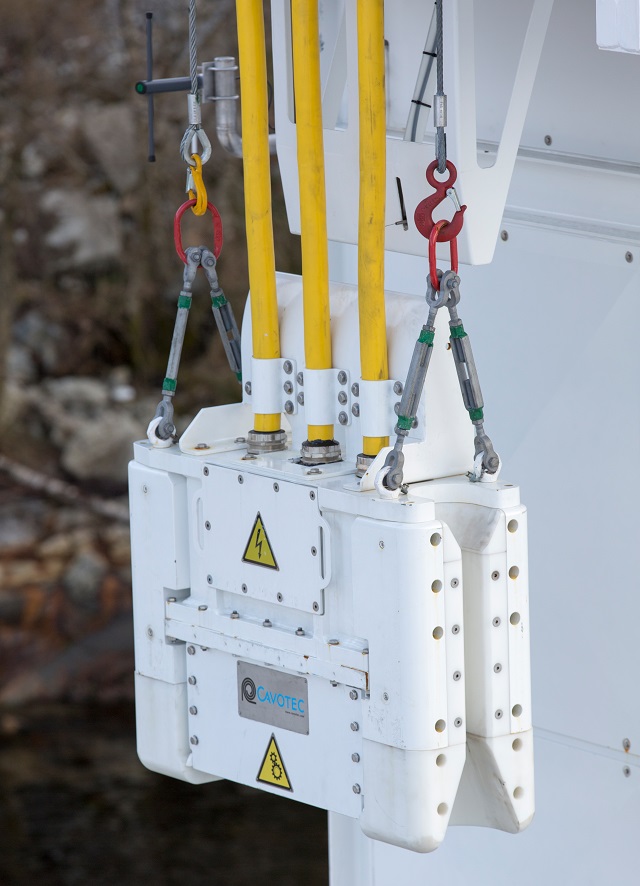
http://www.maritime-executive.com/media/images/charging%20wires.jpg
(coupler)
]

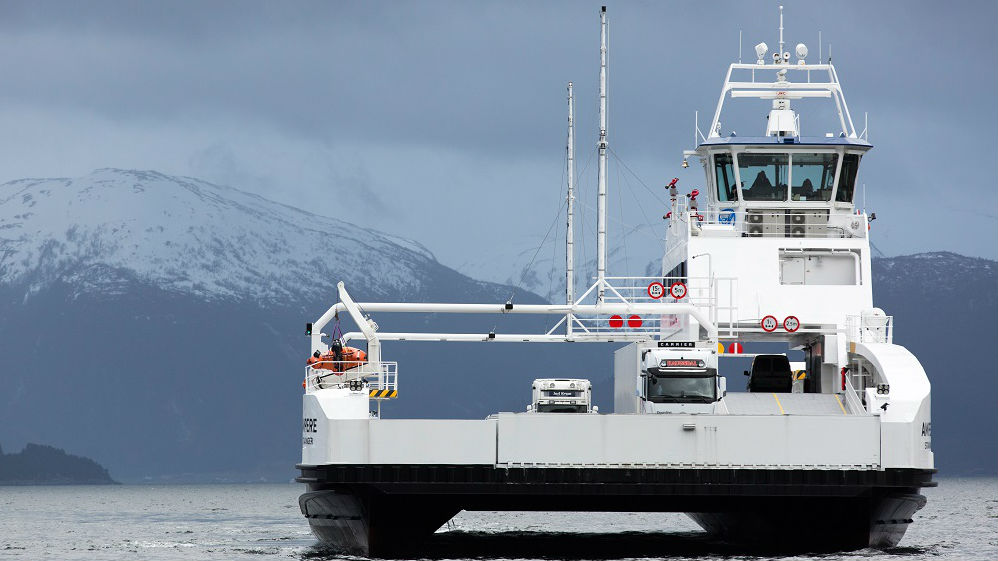
The world’s first electrical car and passenger ferry powered by batteries
has entered service in Norway. The ferry only uses 150 kWh per route, which
corresponds to three days use of electricity in a standard Norwegian
household.

Built in conjunction with shipbuilder Fjellstrand, Siemens installed the
complete electric propulsion system and put up charging stations with
lithium-ion batteries which are charged from hydro power. With the change to
battery, shipowner Norled is reducing the cost of fuel by up to 60 percent.

The Norled ferry Ampere represents a milestone on the road to operating
completely emission-free ferries along Norway’s long coastline, with at
least 50 other routes currently able to sustain battery-operated vessels.

Because the power grid in the region is relatively weak, Siemens and Norled
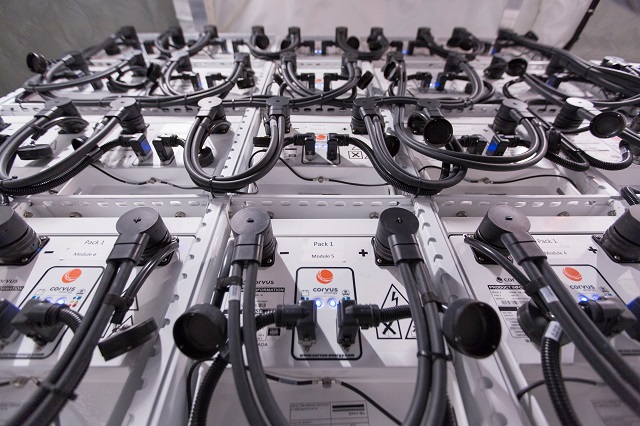
decided to install three battery packs: one lithium-ion battery on board the
ferry, and one at each pier to serve as a buffer. The 260-kWh-units supply
electricity to the ferry while it waits. Afterward, the battery slowly
recoups all of this energy from the grid until the ship comes back again to
drop off passengers and recharge.

Charging stations are housed in small buildings about the size of
newsstands. The ship’s onboard batteries are recharged directly from the
grid at night when the ferry is not in use. Each battery pack corresponds to
the effect of 1600 standard car batteries.

The Norled ferry will consume around two million kWh per year, whereas a
traditional diesel ferry consumes at least one million liters of diesel a
year and emits 570 tons of carbon dioxide and 15 metric tons of nitrogen
oxides.

“We are proud to operate the world’s first electric ferry”, says Sigvald
Breivik, Technical director of Norled. “Siemens has been a great partner in
finding innovative and sustainable solutions for our environment.”

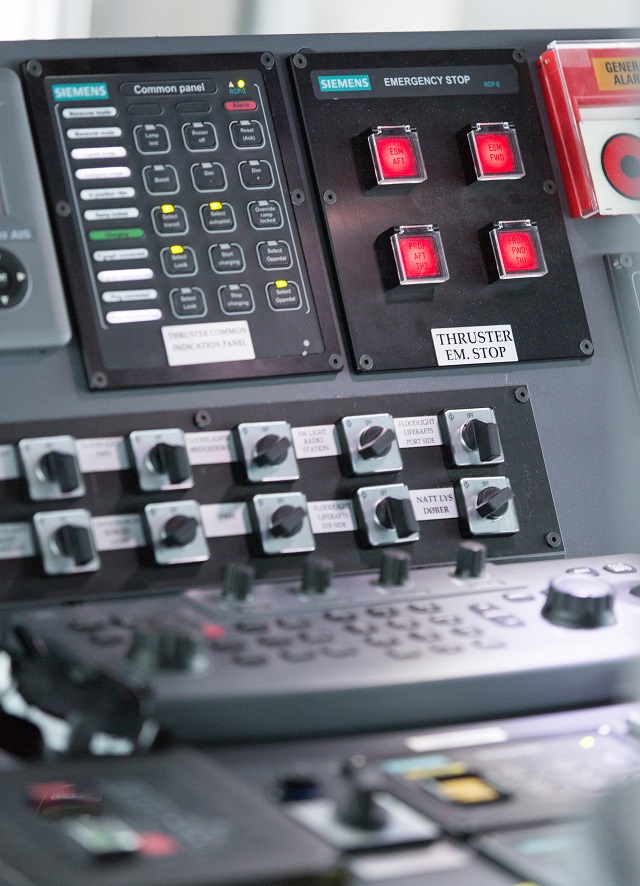
On board the ferry, Siemens installed its electric propulsion system
BlueDrive PlusC. It includes a battery and steering system, thruster control
for the propellers, an energy management system and an integrated alarm
system. The integrated automation systems control and monitor the
machineries and auxiliaries on the ferry and are connected via Profibus to
all other subsystems.

“We are both optimistic and excited about this technology and how it will
help shape the future of environmentally friendly maritime technology,” says
Mario Azar, CEO of the Siemens Business Unit Oil & Gas and Marine. “We were
pleased to apply our expertise in this field including electric propulsion
systems to such a worthwhile project.”

Unlike many electric cars, the emission-free ferry was developed from the
ground up. The ferry, which is 80 meters long and 20 meters wide, is driven
by two electric motors, each with an output of 450 kilowatts. It is made
exclusively of light aluminum rather than the steel normally used in
shipbuilding. This makes the ferry only half as heavy as a conventional
ferry, despite its ten ton batteries and a capacity for 360 passengers and
120 vehicles. An aluminum hull also has double the lifetime as steel hull,
which leads to lower maintenance costs.

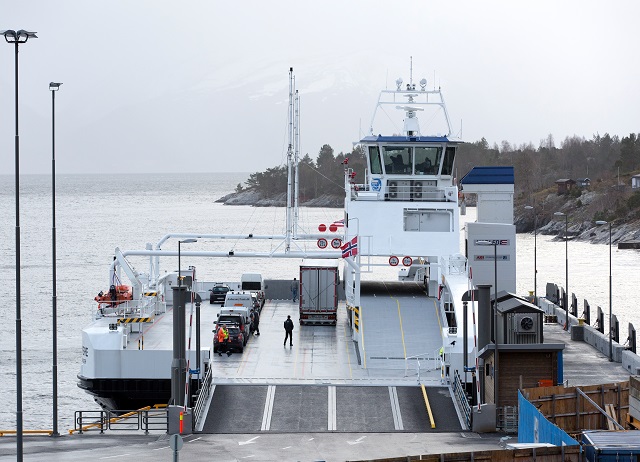
Ship owner Norled operates on the ferry link across Sognefjord between Lavik
and Oppedal, Norway. The fully electric ferry travels six kilometers across
the fjord 34 times a day, with each trip taking around 20 minutes.

The unique solution is a result of a competition that Ministry of Transport
and Communications and the Norwegian Public Roads Administration launched in
2010. Batteries are expected to become considerably more efficient and less
expensive in the next few years, which tip the scales further away from
diesel as the most popular fuel source.

The first electric car and passenger ferry in the world, equipped by Siemens
in cooperation with shipbuilder Fjellstrand, has been taken into operation.
With three battery packs, one on board and one at each pier, it functions
completely emission free.

With its 80 meter length and 20 meters width, the ferry transports up to 120
cars and 360 passengers. It is made exclusively of light aluminum rather
than the steel normally used in shipbuilding. This makes Ampere only half as
heavy as a conventional ferry.

The batteries are charged from hydro power. This battery pack onboard, like
the ones on each pier, corresponds to the effect of 1600 standard car
batteries. The charging at each peer takes only ten minutes.

The ship's genset, switchboard, propulsion and thruster control systems are
fully integrated to ensure seamless ship operation.

Charging stations are housed in small buildings about the size of
newsstands.

The charging system from Siemens includes a battery system, a variable
frequency drive, transformers for onshore electricity and high-voltage
systems, as well as software and signal system for the charging system. In
addition, the compony delivered a radio link system that will steer the flow
of signals between the ferry and its charging stations.

The 260-kWh battery units supply electricity to the ferry while it waits.
Afterward, the battery slowly recoups all of this energy from the grid until
the ship comes back again to drop off passengers and recharge.

Siemens put up charging stations with lithium-ion batteries which are
charged from renewable energy, namely hydro power. With the change to
battery, ship owner Norled is reducing the cost of fuel by up to 60 percent.
[© maritime-executive.com]
_______________________________________________
UNSUBSCRIBE: http://www.evdl.org/help/index.html#usub
http://lists.evdl.org/listinfo.cgi/ev-evdl.org
For EV drag racing discussion, please use NEDRA
(http://groups.yahoo.com/group/NEDRA)