http://evobsession.com/best-electric-car-for-the-average-american/
Best Electric Car For The Average American
September 9th  2015 by Zachary Shahan
[images
http://evobsession.com/wp-content/uploads/2015/08/Distance-Distribution-Car-Trips.jpg
(bar graph)  Distance-Distribution-Car-Trips

http://evobsession.com/wp-content/uploads/2015/08/Car-trip-distance-cumulative.jpg
(line graph)  Car-trip-distance-cumulative

http://evobsession.com/wp-content/uploads/2015/08/Daily-distance-car-distribution.jpg
(bar graph)  Daily-distance-car-distribution

http://evobsession.com/wp-content/uploads/2015/08/daily-distance-car-distribution_cumulative.jpg
(line graph)  daily-distance-car-distribution_cumulative
]

Ah, that mythical creature — the “average person” or “average American.”
What is the best electric car for the “average American?” It depends on what
you consider average, but I’ll present a few scenarios below.
1 + 1 = 2

First of all, the average number of cars per household is just above 2.
Generally speaking, that means that even if the household has one
short-range electric vehicle, they have another vehicle that can be used for
long-distance trips.

But for regular daily use, is a short-range electric car like the Nissan
LEAF (84 miles of range), BMW i3 (81 miles of range), VW e-Golf (83 miles of
range), or Kia Soul EV (93 miles of range) really adequate for the average
person?

Considering that ~99% of trips are under 50 miles (leaving plenty of room
for buffer) and ~90% of days have a total of just ~70 miles of driving (with
plenty of time between trips to charge — whether from a charging station or
a typical electricity outlet), I’d say it’s a given that >70 miles of range
is plenty for the average person’s regular, daily needs.

Show Me The Money
But what about cost? Last I checked, the average price paid for a new car in
the US was >$31,000. However, I think most people don’t buy cars new. Either
way, though, a new Mitsubishi i-MiEV ($22,995), Smart Electric Drive
($25,000), Chevy Spark EV ($25,995), VW e-Golf ($28,995), Nissan LEAF
($29,010), or Ford Focus Electric ($29,170) fall below the average new car
price… even before you subtract the $7,500 federal EV tax credit and any
other incentives available in your state or city. Alternatively, a used
version of one of these models (prices are really low right now) is an
option for used-car buyers.

If this “average American” wanted to stretch a little bit, or simply did the
math and realized they could chop the price down by $7,500 with the tax
credit alone, the Kia Soul ($33,700) would be in the running. If this person
was really smart and calculated in the projected gas savings, I imagine that
even the Mercedes B-Class Electric ($41,450 before incentives, $33,950 after
the US federal tax credit) and BMW i3 ($42,400 before incentives, $34,900
after the US federal tax credit) very easily come in below the average new
car price mentioned above (~$31,000).

So, basically, any electric option on the market is as cheap or cheaper than
the average new car bought in the US. If you want to focus on used cars,
non-Tesla electric cars have seen higher depreciation than gasmobiles, so
you can actually get better deals on used electrics right now.

Best Car Options/Features
So, now that we’ve determined that an average household can, in all
likelihood, very easily have an all-electric car as one of their two cars,
and also that basically all of the non-Tesla electric cars on the market are
as cheap or cheaper than the average new car, of these 100% electric cars,
which is the best electric car available today?

Of course, that depends on your preferences to some degree. Aesthetics is a
big part of the buying decision, as are issues such as interior space and
design. But when it comes to electric cars, there are a couple of things
that are quite important — the size of the car’s onboard charger and whether
or not the car has the capability to “fast charge” at CHAdeMO or SAE Combo
fast-charging stations.

Several of the electric cars noted above lack a fast-charging option, while
a couple of others have only a 3.3 kW onboard charger, which allows the car
to regain only ~10 miles of charge in one hour of level-2 charging. I would
cross all of these “compliance cars” off the list. Electric cars without
fast-charging capability include the following:

    Fiat 500e
    Ford Focus Electric
    Mercedes B-Class Electric
    Smart Electric Drive

Electric cars with fast-charging capability but with only a 3.3 kW onboard
charger include:

    Chevy Spark EV
    Mitsubishi i-MiEV

So, that leaves the:

    BMW i3
    Kia Soul EV
    Nissan LEAF
    Volkswagen e-Golf

Silver and black BMW i3 at EVS27 in Barcelona, Spain.(This image is
available for republishing and even modification under a CC BY-SA license,
with the key requirement being that credit be given to Zachary Shahan / EV
Obsession / CleanTechnica, and that those links not be removed.)

Now, we really getting into personal preferences. The BMW i3 has quicker
acceleration than any of the others here (7.1 second to 60 mph versus 11.8
seconds, 10.2 seconds, and 10.4 seconds, respectively), and also has a bit
more of a “luxurious” interior. Additionally, it uses more-expensive carbon
fiber, a lot of recycled materials, and some green materials like bamboo and
eucalyptus that are quite nice but not as cheap as plastic. This all adds a
bit of a luxury, performance, and green premium. (Note that the BMW i3 was
named “World Green Car of the Year” in 2014, “2015 Green Car of the Year” by
another ranking team, and is technically the most efficient car on the
entire US car market.) However, it only seats four and it has less interior
+ storage space than the other three cars on this final list.

On the whole the Soul EV, LEAF, and e-Golf have similar specs but very
different styles — check out their webpages (I just linked to them on their
names there) to compare he details and aesthetics for yourself. And here’s a
BMW i3 link for good measure.

Lastly (for this section), something that may be important to note is the
fast-charging standard that each of these cars use, and a certain charging
perk. The i3, Soul EV, and e-Golf all use the SAE Combo fast-charging
standard, while the LEAF uses the CHAdeMO fast-charging standard. Without a
doubt, CHAdeMO stations are more common these days, as they are generally
installed at Nissan dealerships. Additionally, in several states, Nissan has
a “No Charge to Charge” program that provides LEAF drivers with free
charging. I don’t know how important these factors are to the “average”
person — most people charge at home while sleeping the large majority of the
time — but it’s certainly something for any electric car buyer to consider.
(That said, though, the SAE Combo network will theoretically be built out to
approximately the same size and usefulness as the CHAdeMO network, and there
are free programs and charging stations for some people using SAE Combo
chargers as well.)

Best Electric Car For The Average American
So, we are back to the original question. In my personal opinion, I think
the case is well enough made that the i3 is the best electric car for the
hypothetical average American (people do like luxury and performance). But
if you want more space and seating, the Soul EV, LEAF, or e-Golf probably
is. If you want a normal-looking car, the e-Golf is surely your best option.
If you want better fast charging options, the LEAF is probably the best
electric car for you.

I think you get the point… it’s very much a personal decision at this stage.
And, for that matter, it’s a personal decision if fast-charging capability
is important for you. If not, the Mercedes B-Class Electric could well be
the best electric car offering on the table — if you’re charging at home 99%
of the time, or on level-2 charging stations because that’s all that is
available at your work or at other destinations you commonly frequent,
fast-charging capability may not matter at all to you, and the B-Class
Electric’s superior 10 kW onboard charger may be super useful.

Wait A Sec… What About Range Security?
As I already argued, the range of these cars is probably more than adequate
for at least one of the average household’s two cars. But sometimes humans
are very illogical. In fact, we often are. The large majority of people know
very little about electric cars, and they are generally probably nervous
about switching to the technology. Additionally, they could legitimately run
into significant speed bumps as they get used to it — like not realizing
that the “range remaining” estimate is not precise, and that they should
drive their cars down to “0 miles of charge remaining.” Also, there are
times when we suddenly have to drive more than we expected — for some reason
or another ...
[© evobsession.com]


For EVLN posts use:
http://evdl.org/evln/

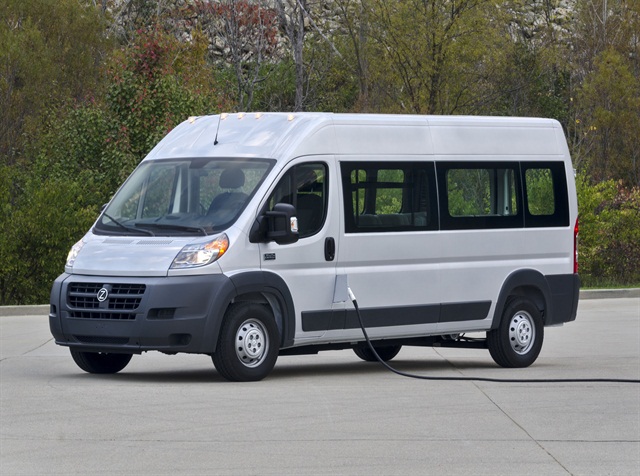
http://www.truckinginfo.com/news/story/2015/09/zenith-electric-vans-used-in-calif-municipalities.aspx
Calif. Cities Add Zenith's Electric Vans
http://www.truckinginfo.com/fc_images/news/m-gsk9924b-1-1-2.jpg

http://vtdigger.org/2015/09/06/new-electric-vehicle-charging-station-installed-at-the-essex-outlet/
L3&2 EVgo EVSE @Essex Outlet Essex_Junction-VT
+
EVLN: Watt a way to go> Electric Hearse


{brucedp.150m.com}


--
View this message in context:
http://electric-vehicle-discussion-list.413529.n4.nabble.com/EVLN-Best-Electric-Car-For-The-Average-U-S-American-tp4677608.html
Sent from the Electric Vehicle Discussion List mailing list archive at
Nabble.com.
_______________________________________________
UNSUBSCRIBE: http://www.evdl.org/help/index.html#usub
http://lists.evdl.org/listinfo.cgi/ev-evdl.org
For EV drag racing discussion, please use NEDRA
(http://groups.yahoo.com/group/NEDRA)