http://www.heraldscotland.com/news/13881017.Can_I_be_electric_too__81__of_teenagers_believe_their_first_car_will_run_on_electricity/#
Can I be electric too? 81% of teenagers believe their first car will run on
electricity
20 October 2015
[images
http://www.heraldscotland.com/resources/images/4323466.jpg?display=1&htype=0&type=mc3
Twizy EV
]

More than eight in 10 (81%) 14 year olds believe the first car they buy will
be electric, a survey has found.

Researchers polled 800 teenagers aged 14-17 and found that the popularity of
greener-fuelled cars increased as the interviewees became younger.

Some 88% of the young people surveyed felt that more motorists - regardless
of their age - should be driving an electric car.

The study was commissioned by Go Ultra Low, a government and industry-backed
campaign to increase sales of ultra-low emissions vehicles,

Poppy Welch, head of Go Ultra Low, said: "It's really encouraging to see how
popular electric cars have become among British teenagers - as the next
generation of first car buyers.

"Our research shows that younger consumers are more drawn towards
environmentally friendly purchases, including when planning which car
they'll drive when they get their licence."
[© heraldscotland.com]
...
http://www.express.co.uk/life-style/cars/613318/electric-car-hybrid-car-ultra-low-emissions
The next generation of motorists want to own more electric cars
Craig Thomas  Oct 20, 2015  The study found that 81% of 14-year-olds plan to
make the first car they buy an EV, as prospective drivers are more focused
on a low emission future and look to benefit from the increased availability
of used electric …


http://www.bloomberg.com/news/articles/2015-10-22/the-parking-company-getting-young-japanese-to-love-cars
The Parking Company Getting Young Japanese to Love Cars
Masatsugu Horie,Craig Trudell  October 21, 2015

[images  / Akio Kon/Bloomberg
http://assets.bwbx.io/images/iJgxiHad6GxU/v1/1200x-1.jpg
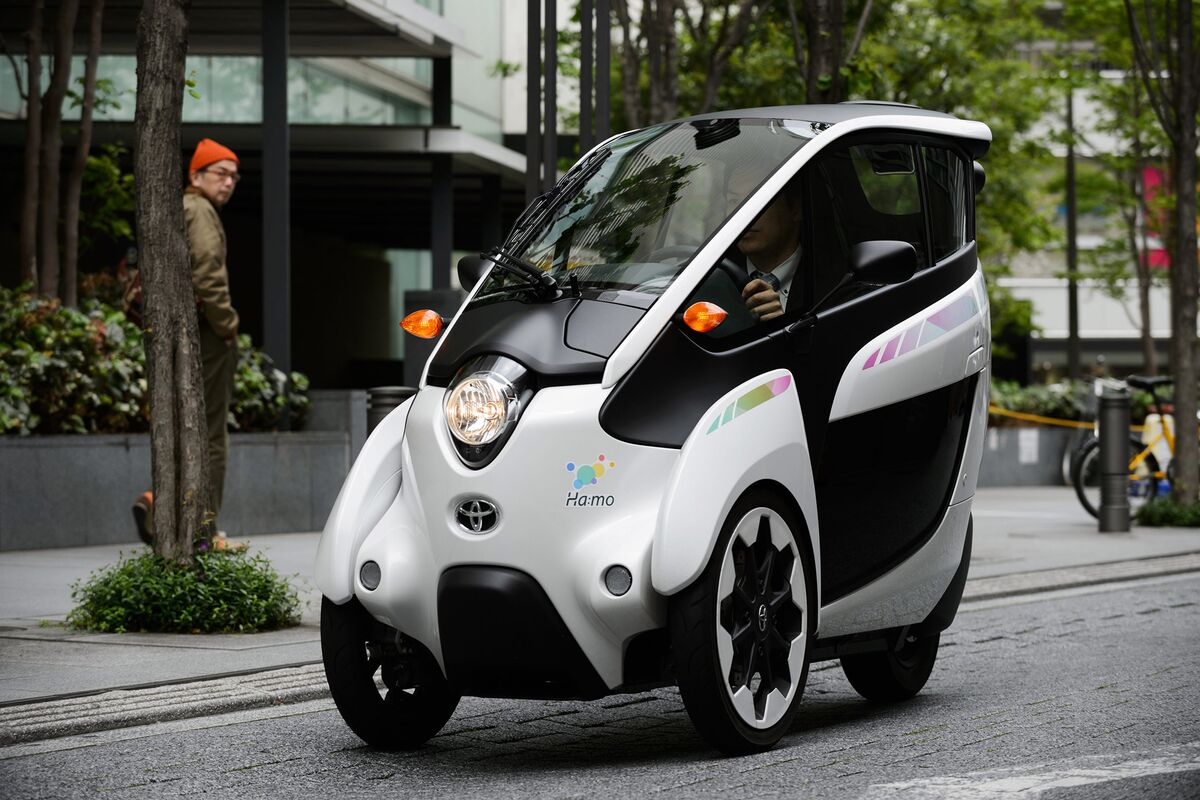
A Park24 employee drives a Toyota i-Road electric personal mobility vehicle
along a street in Tokyo.

http://assets.bwbx.io/images/iELV9freNPI0/v1/1200x-1.jpg
A Park24 employee unlocks a car with a key card

http://assets.bwbx.io/images/iHpkJkGIgAco/v1/-1x-1.png
(# of 20yrold jp DL's declining from 21%/2001 to 13%/2014)
]

Park24, which commands 70 percent of Japan’s car-share market, expects to
almost double its fleet by 2019.

What do you do when you’re the biggest parking company in a country where
new-car sales have been on a gradual decline for the past decade? Koichi
Nishikawa, the president of Japan’s Park24, decided to turn about 7,000 of
his company’s 16,435 garages and lots around the country into spaces to hold
vehicles available for short-term rental as part of a new car-sharing
service. For a monthly fee of 1,030 yen, or about $8, members who sign up
online or with a smartphone receive a member card that functions as a car
key. Vehicles are booked online or using Park24’s smartphone app.
Subscribers are charged in 15-minute increments. With 500,000 members, the
car-sharing service has become one of the world’s biggest.

What’s remarkable is that more than 50 percent of members are in their 20s
and 30s. In today’s Japan, many young people aren’t interested in cars
because they can’t afford them; they spend disposable income instead on
gadgets and smartphones. Twentysomethings accounted for about 13 percent of
all driver’s license holders in Japan last year, compared with 21 percent in
2001, according to National Police Agency data. The cheapest car for sale,
such as a Daihatsu or Suzuki basic minicar, costs about 800,000 yen
($6,670). The monthly fee for a parking spot in Tokyo runs from 30,000 yen
to 50,000 yen. Researcher IHS Automotive forecasts that annual Japanese auto
production will shrink to 8.4 million vehicles by 2022, from about 9.2
million last year.

Park24 is betting that young people still occasionally need to use cars for
shopping, weekend trips, or, perhaps, to impress a date. “In my college
days, you couldn’t ask a girl out without a car,” Nishikawa says of the
status once bestowed by a set of wheels. He also doesn’t charge college
students a monthly fee. The company owns 13,000 vehicles and plans to almost
double the size of its fleet, to 25,000, by 2019. It’s one of the biggest
buyers of new Japanese vehicles—more than 10,000 cars annually for the
sharing business and a car-rental venture it acquired in 2009. It commands
70 percent of Japan’s car-share market.

Yu Makisumi is a typical Japanese twentysomething, intent on looking for a
job and playing video games but with little interest in cars. “I have never
heard of anyone coming to school by car,” he says. He owns a secondhand
scooter and likes traveling with it. Four years ago, however, he joined
Park24’s service after he and a friend saw a roadside advertisement and his
friend encouraged him to sign up. He has a license and knows how to drive
(the minimum driving age in Japan is 18). He says Park24 is inexpensive and
convenient for taking longer trips with friends two to three hours away.

Shigeaki Kyotani joined Park24’s service in 2013 while a college student in
Toyama, 350 kilometers (217 miles) northwest of Tokyo. He was surprised it
was offered in a remote area and, because he had a license, decided to give
it a try. “It’s unrealistic to buy and own a car given my current salary,”
says Kyotani, who moved to Tokyo last year. With the high cost of keeping a
car there, he says Park24 better suits his needs for trips within the city
or to a local Ikea or Costco.

Nishikawa is convinced car-sharing will soon play a key role in urban
transportation and help his business, as well as Japanese automakers. To
prove it, he and Toyota Motor President Akio Toyoda signed off on a
feasibility study testing the use of short-range electric vehicles for
one-way car sharing (picking up at one location, dropping off at another),
previously unavailable in Japan.

The project, the first phase of which ended in September, will use two
Toyota cars: the electric three-wheel i-Road and four-wheel COMS. A cross
between scooters and small cars, each carries no more than two people and
can cruise short distances.

It’s important to get people driving early, Nishikawa says: “If you haven’t
experienced the fun of driving or cars while you’re young, you won’t desire
to buy a car when you’re older and have more money.”

The bottom line: Park24, which commands 70 percent of Japan’s car-share
market, expects to almost double its fleet by 2019.
[© 2015 Bloomberg]


For EVLN EV-newswire posts use:
http://evdl.org/evln/


{brucedp.150m.com}

--
View this message in context:
http://electric-vehicle-discussion-list.413529.n4.nabble.com/EVLN-88-of-young-14-17yrold-people-will-be-driving-an-EV-tp4678319.html
Sent from the Electric Vehicle Discussion List mailing list archive at
Nabble.com.
_______________________________________________
UNSUBSCRIBE: http://www.evdl.org/help/index.html#usub
http://lists.evdl.org/listinfo.cgi/ev-evdl.org
Read EVAngel's EV News at http://evdl.org/evln/
Please discuss EV drag racing at NEDRA (http://groups.yahoo.com/group/NEDRA)