http://www.voanews.com/content/battery-hungry-world-turns-to-south-americas-lithium-triangle/3255394.html
Battery-hungry World Turns to South America's 'Lithium Triangle'
March 25, 2016  Reuters
[images
http://gdb.voanews.com/B891A210-D6FD-4C8A-A16F-FA65DA4AC93E.jpg
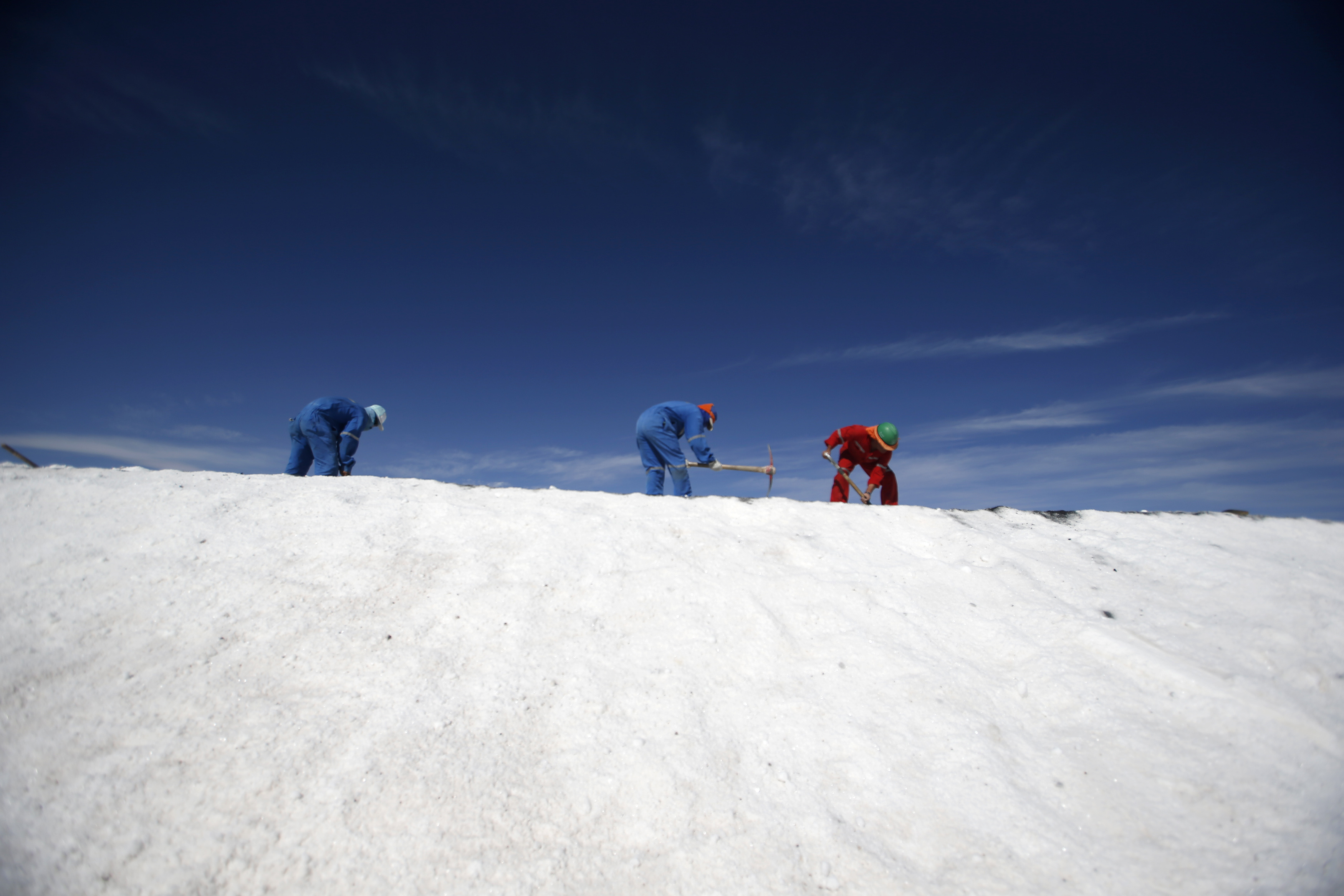
Laborers work at the Rockwood lithium plant on the Atacama salt flat, the
largest lithium deposit currently in production, in the Atacama desert of
northern Chile, Jan. 8, 2013

http://gdb.voanews.com/5BC03D22-1F74-45F6-B4C0-C0D30CDF8552.jpg
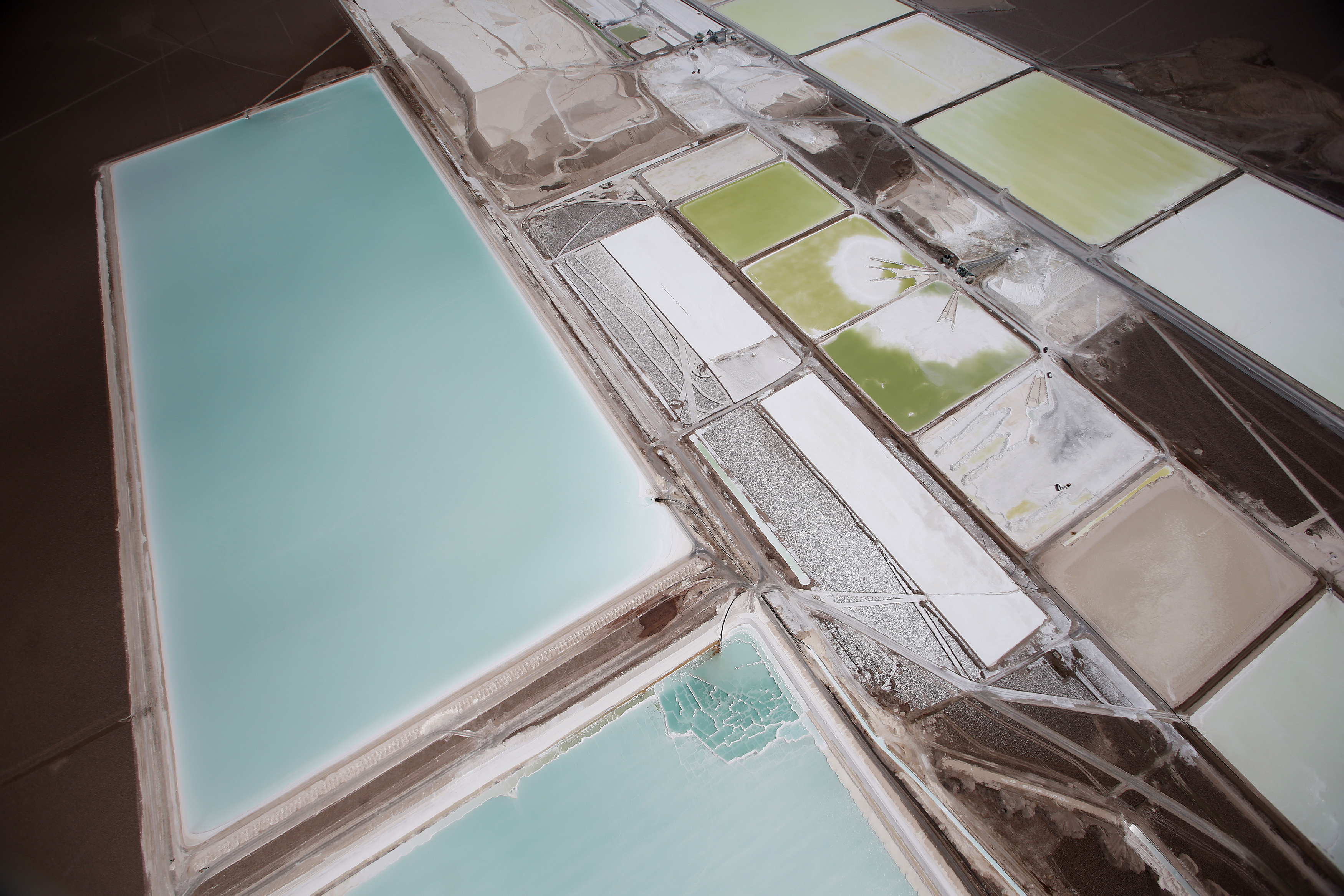
An aerial view of the brine pools and processing areas of the Rockwood
lithium plant on the Atacama salt flats, the largest lithium deposit
currently in production, in the Atacama desert of northern Chile, Jan. 10,
2013

http://gdb.voanews.com/CD78D48A-E0A7-497D-9E03-C371DC58A221.jpg
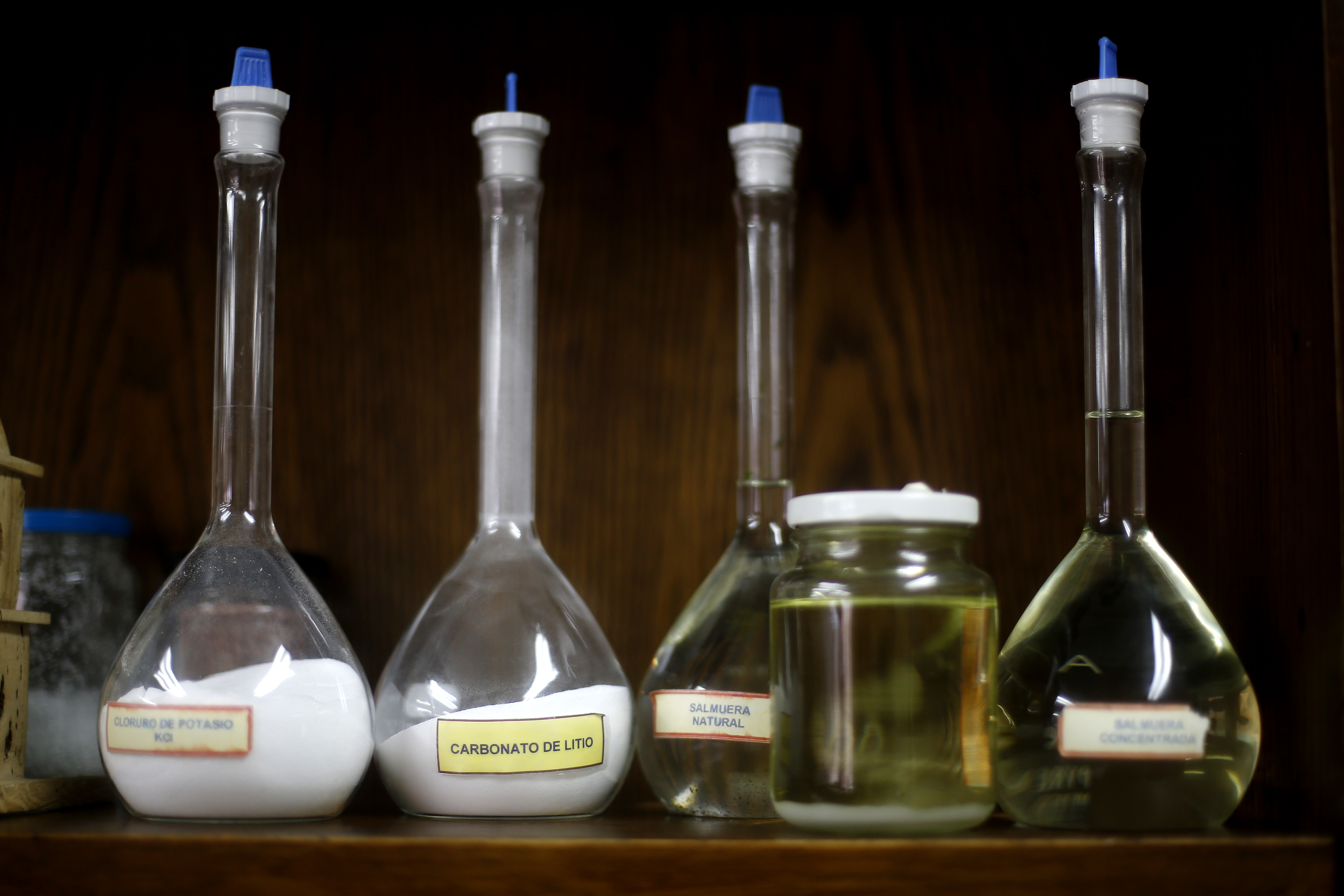
A sample with lithium carbonate is seen inside an office of Rockwood lithium
plant on the Atacama salt flat, the largest lithium deposit currently in
production, in the Atacama desert of northern Chile, Jan. 8, 2013
]

SANTIAGO/TORONTO—
Far from the soy and cattle that dominate its vast fertile pampas, Argentina
harbors another valuable commodity that is rocketing in price and demand and
luring newly welcomed foreign investors.

Lithium, the so-called "white petroleum," drives much of the modern world.
It forms a small but essentially irreplaceable component of rechargeable
batteries, used in consumer devices like mobile phones and electric cars. It
also has pharmaceutical and other applications.

Over half of the earth's identified resources of the mineral are found in
South America's "lithium triangle," an otherworldly landscape of
high-altitude lakes and bright white salt flats that straddles Chile,
Argentina and Bolivia.

Until recently, that was not great news for investors.
Argentina and Bolivia lacked predictability and a friendly business
environment, while Chile kept strict control over lithium output.

But that may be all about to change.
In Chile, a sale of state lithium deposits and a shake-up in the way the
country manages its resources has awakened interest from everyone from
early-stage mining companies to electric carmakers like Tesla.

In Argentina, already the world's no. 3 lithium producer after Chile and
Australia, investors are hopeful that the new Mauricio Macri government that
took over in December will herald a brighter future.

Business-friendly Macri has begun making sweeping changes in a bid to return
the country to economic orthodoxy, removing onerous capital controls and
sending a message that the country is open for business again after more
than a decade of protectionism.

"For 10 or 12 years, [Argentina] was a do-not-invest zone. The tone of doing
business has just swung 180 degrees," said Tom Hodgson, the chief executive
of Western Lithium, which is developing a project in the country due to
begin production next year.

Argentina now has a "major opportunity" to build a lithium export business,
Hodgson told Reuters earlier this month at a mining conference in Toronto.

Western Lithium is working with Korean steelmaker POSCO, whose chairman was
in Argentina last month to meet with Macri and begin the construction of a
new lithium plant, due to begin commercial production within a year. The
exploratory mining company Orocobre is also developing a project.

But the company perhaps best set to benefit from an Argentine lithium
revolution is U.S. agricultural and chemical conglomerate FMC Corp.

FMC is already producing lithium from the Salar de Hombre Muerto salt flat
in northern Argentina. Lithium provides a small but growing part of FMC's
revenues, with forecast sales of around $250 million this year.

"Now the [Argentine] administration is starting to change policy, it's
giving us even more confidence that it will be a predictable and
cost-effective operation," FMC Lithium Vice President Tom Schneberger said.
"We expect significant year-over-year improvement for lithium in 2016 and we
see that going clear to 2020."

Demand for lithium is set to outstrip supply by 2023, according to
specialist consultants Stormcrow Capital, with the lion's share coming from
rechargeable batteries.

Chile Climate 'Perfect'
Bolivia has more identified lithium resources than any other country, but
commercially it's likely to be "shunted to the side for an extended period,"
says Jon Hykawy, Stormcrow's president.

Bolivia has natural challenges - too much rain, other chemicals in the mix -
as well as a prickly investment environment.

Chile, though, is popular with investors for its free market credentials,
while the dry desert climate is "perfect" for lithium production, said Brian
Jaskula, a U.S. Geological Survey mineral commodity specialist.

The key lithium site in Chile is the vast Salar de Atacama salt flat, where
local firm SQM and foreign-owned Rockwood have operations.

SQM was privatized in the 1980s during General Augusto Pinochet's regime and
a former son-in-law of the late dictator owns a controlling stake.

But it is on uneasy terms with the current leftist government. In the last
two years, it has run afoul of authorities over market manipulation and
dubious tax invoices, and is in arbitration with economic development agency
Corfo over royalties.

Now U.S. specialty chemicals firm Albemarle Corp is muscling in on SQM's
turf. Having spent $6 billion last year to buy Rockwood, it then signed a
deal with Corfo in its drive to triple lithium output in Chile.

Chile's government said it sees public-private partnerships as the way
forward and is planning to put more deposits up for tender.

It denies favoring any particular company.
"Chile is willing to work with anybody who wants to explore and produce ore,
provided they comply with Chile's requirements and standards," Mining
Minister Aurora Williams told Reuters.

However, Corfo head Eduardo Bitran insisted private lithium investment must
be "sustainable" and in the interests of Chileans.

Albemarle and SQM declined to be interviewed for this story.
But SQM said in an investor conference call this month that it wanted to
increase lithium output in Chile, as well as look at unspecified
"opportunities around the world."

Securing Supplies
Industry insiders warn that, no matter how friendly the government, the
process of ramping up output is a complex one.

That leaves battery makers and other end users of lithium largely at the
mercy of the big providers.

In addition to Tesla, traditional car companies including Nissan and BMW
operate in the burgeoning electric vehicle industry. Germany's Daimler
recently announced that it would build a new lithium-ion battery factory,
while technology firms like Samsung and Foxconn are also key users.As prices
rise, they are keen to lock in deals.

Lithium carbonate is selling for $6,400 per ton, up from $5,180 in 2011.
Prices in the opaque Chinese market are reportedly higher.

Tesla and other car manufacturers have been to Chile to see if they could
ensure future lithium supplies, according to Ignacio Moreno, Chile's deputy
mining minister. Tesla declined to comment on talks, but said it has signed
three deals with exploratory companies outside Chile that would "not provide
all" its lithium.

Battery makers "are looking for any source across the world that they can
establish joint ventures with, no matter how risky they are," said Jaskula.
[© voanews.com]


For EVLN EV-newswire posts use:
http://evdl.org/evln/


{brucedp.150m.com}

--
View this message in context:
http://electric-vehicle-discussion-list.413529.n4.nabble.com/EVLN-Li-ion-Battery-hungry-World-Turns-to-South-America-s-Lithium-Triangle-tp4681291.html
Sent from the Electric Vehicle Discussion List mailing list archive at
Nabble.com.
_______________________________________________
UNSUBSCRIBE: http://www.evdl.org/help/index.html#usub
http://lists.evdl.org/listinfo.cgi/ev-evdl.org
Read EVAngel's EV News at http://evdl.org/evln/
Please discuss EV drag racing at NEDRA (http://groups.yahoo.com/group/NEDRA)