https://www.greencarreports.com/news/1116020_nissan-leaf-30-kwh-battery-decline-3-times-that-of-earlier-electric-cars-study
Nissan Leaf 30-kwh battery decline 3 times that of earlier electric cars:
study
Mar 30, 2018  John Voelcker
[images
https://images.hgmsites.net/med/2016-nissan-leaf-sl-hudson-valley-ny-dec-2015_100539558_m.jpg
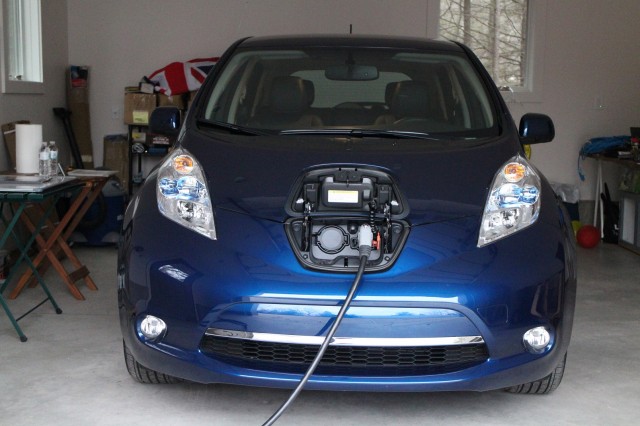
2016 Nissan Leaf SL, Hudson Valley, NY, Dec 2015

https://images.hgmsites.net/med/lithium-ion-cell-and-battery-pack-assembly-for-nissan-leaf-electric-car-in-sunderland-u-k-plant_100543634_m.jpg
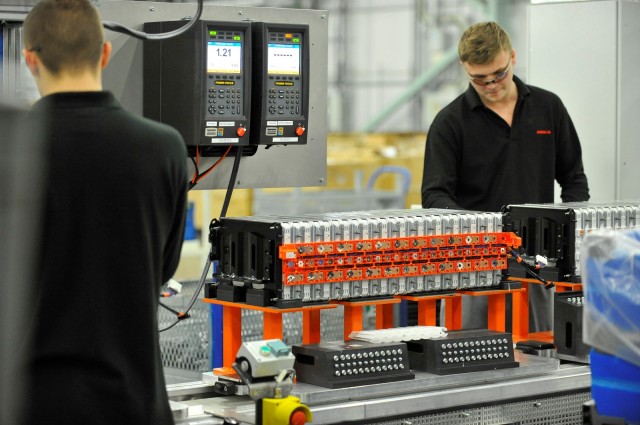
Lithium-ion cell and battery pack assembly for Nissan Leaf electric car in
Sunderland, U.K., plant

https://images.hgmsites.net/med/lithium-ion-cell-and-battery-pack-assembly-for-nissan-leaf-electric-car-in-sunderland-u-k-plant_100543636_m.jpg
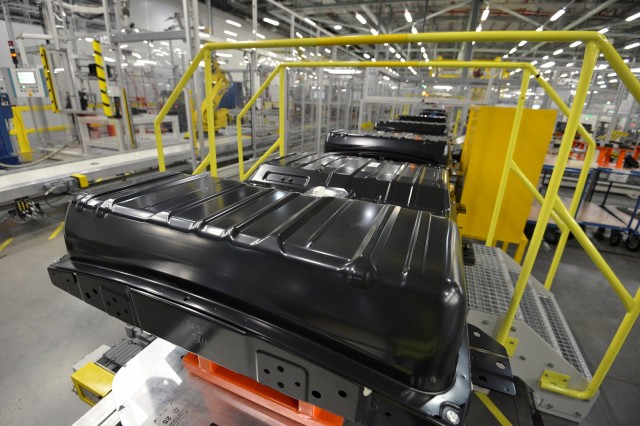
Lithium-ion cell and battery pack assembly for Nissan Leaf electric car in
Sunderland, U.K., plant
]

The Nissan Leaf, at least for the moment, remains the highest-volume
electric car produced in history, with more than 300,000 sold.

One of the measures that kept its cost down was the use of passive air
cooling for its battery pack, rather than the pricier liquid cooling used by
other makers to keep battery temperatures within limits.

Nissan has already changed the cell chemistry in its batteries once,
switching in 2015 to a so-called "lizard cell" said to be more resistant to
degradation caused by very high temperatures.

The following year, in 2016, Nissan offered a higher-capacity battery pack
in the Leaf, boosting its size from 24 kilowatt-hours to 30 kwh and
increasing its EPA-rated range from 84 to 107 miles.

Now a new study of 283 Leaf batteries, including 82 of the larger-capacity
pack, appears to indicate a higher rate of cell-capacity loss in the
upgraded 30-kwh battery packs than was observed in the first 24-kwh
batteries.

The paper, "Accelerated Reported Battery Capacity Loss in 30 kWh Variants of
the Nissan Leaf," was published on March 15. It has not been peer-reviewed.

The crucial sentences from the summary of their findings are these:

At two years of age, the mean rate of decline of [battery state of health]
of 30 kWh Leafs was 9.9 percent per annum (95 percent uncertainty interval
of 8.7 percent to 11.1 percent; n = 82).

This was around three times the rate of decline of 24 kWh Leafs which at two
years averaged 3.1 percent per annum (95 percent uncertainty interval of 2.9
percent to 3.3 percent; n = 201).

Numerous caveats can be applied to this study: the number of cars is low,
the cells used for the two capacities may have different but known
degradation curves, and it's unclear that the two sets of cars were
subjected to the same driving conditions.

It's worth reading the comments that follow the study's executive summary,
which raise questions on methodology and interpretation of the findings.

The researchers have responded to each of those concerns, giving further
details on what they know, how they modeled battery life, and what might
fruitfully be studied in more detail.

Nonetheless, the early data is at minimum something that owners of 2016 and
2017 Leafs may want to keep an eye on.

The study does not include any data for the redesigned 2018 Nissan Leaf,
which went on sale only last fall and has a further upgrade in battery
capacity, to 40 kwh from the 2016 and 2017 models' 30 kwh.

Green Car Reports reached out to Nissan North America for comment on the
study, and received the following statement from its EV communications
manager, Jeff Wandell.

“Nissan is aware that a limited number of customers have expressed concerns
with the previous generation of the Nissan Leaf 30-kwh battery," he wrote.

"Leaf owners are some of our most devoted customers.

"We take their concerns seriously, and have technical experts currently
investigating the issues raised.”
[© greencarreports.com]


+
https://cleantechnica.com/2018/04/02/as-demand-for-electricity-falls-utilities-look-to-electric-cars-to-save-them/
As Demand For Electricity Falls, Utilities Look To Electric Cars To ...
April 2nd, 2018  The bedrock of the utility industry is the belief that the
demand for electricity will increase forever. And for nearly a century, it
did. But then in the last years of the 20th century, things changed. The
change had nothing to do with renewable energy, natural gas, or electric
cars. It had to do with the basic presumption — ever ...
https://c1cleantechnicacom-wpengine.netdna-ssl.com/files/2018/04/Electricity-Demand-Vs-GDP-570x333.jpg


For EVLN EV-newswire posts use:
 http://evdl.org/archive/


{brucedp.neocities.org}

--
Sent from: http://electric-vehicle-discussion-list.413529.n4.nabble.com/
_______________________________________________
UNSUBSCRIBE: http://www.evdl.org/help/index.html#usub
http://lists.evdl.org/listinfo.cgi/ev-evdl.org
Please discuss EV drag racing at NEDRA (http://groups.yahoo.com/group/NEDRA)