https://thedriven.io/2019/04/15/is-there-a-dc-charger-i-can-use-with-a-dc-solar-panel-system/
Is there a DC car charger I can use with a DC solar panel system?
April 15, 2019  Bryce Gaton
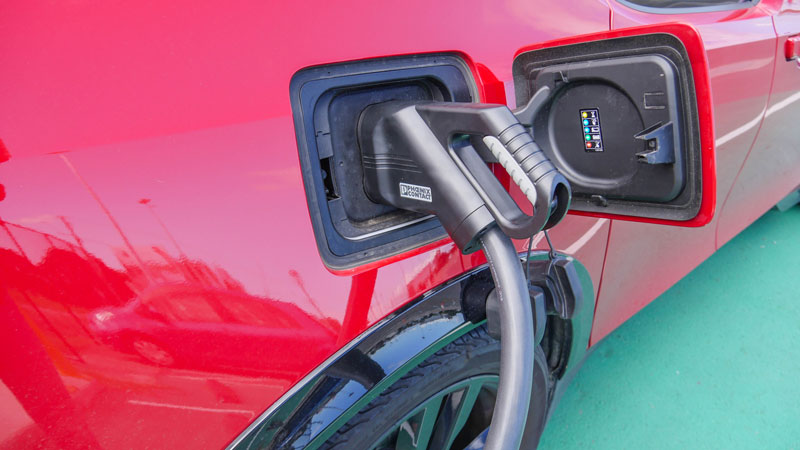
[image  / Bridie Schmidt
https://thedriven.io/wp-content/uploads/2019/04/charging-bmw-i3.jpg
 j1772
]

We are encouraging questions from readers about electric vehicles, and
charging, and whatever else you want to learn. So please send them through
and we will get our experts to respond, and invite other people to
contribute through the comments section.

Is there a DC charging system available that can be powered by a stand-alone
PV system?

I am aware that one could charge from a 240v AC system, but I would like to
avoid converting to AC and then having the charging system convert back to
DC. There must be a considerable loss of efficiency.
Thanks
Barry Lambooy


Hi Barry – that’s a good question – and the answer to it revolves around two
key issues:

    What are the purposes of AC vs DC charging and
    Would a direct DC to DC system for electric vehicle (EV) charging would
increase the overall efficiency of charging an EV with solar.

To begin with, DC charging is designed for rapid charging of the EV battery
at high currents and the control of the charging is principally carried out
by the EVSE (Electric Vehicle Supply Equipment) itself. The issues of using
the DC output of a home battery system I have previously looked at here.

AC charging in comparison is designed for trickle to overnight charging at
lower currents. This form of charging is principally controlled by the EV
on-board charger in ‘consultation’ with the EVSE (BTW: I have covered the
needs of charging an EV on solar outputs here and here).

At first glance – it would therefore seem that AC charging an EV would be
better suited to the limited output of a home solar system.

On the other hand, trying to charge an EV directly from a DC solar output
presents many layers of issues for any potential system design. To name a
few:

    You will need much more in the way of electronics to control the EVSE
and car charging as compared to an AC EVSE (making it more expensive);

    you still need electronic DC voltage regulation of the solar supply
output to the EV, as solar systems (a) have different output voltages
depending on the design of the system, and (b) have highly variable voltage
outputs related to the amount of solar radiation they receive. (eg in the
morning, evening, when clouds pass over, etc, etc, etc!). This means you are
still not eliminating conversion losses entirely as you will need a DC to DC
converter in place of a DC to AC inverter;

    even with a controlled voltage, you will still need to control the DC
charging current to provide a steady supply given solar systems have highly
variable outputs as the sun rises, clouds pass etc. This is at odds with the
design of current DC fast-charge systems (making it a special design EVSE
that is not currently made).

Moving on to the second part of your question: as you mention Barry, the
down-side to using an AC EVSE on a solar system is the potential losses
through doing the DC to AC and back to DC in the EV.

However such conversion systems are now very efficient – solar inverter (DC
to AC) efficiency is in the realm of 95-97%, and in-car charger efficiency
(AC back to DC) is also comfortably over 90%. Taken together, it means total
losses are actually not all that great.

Also, given that in a home solar DC to EV DC charge situation, you are
really only eliminating one step and not both – you will be gaining only a
little in efficiency overall.

Additionally (unlike DC EVSEs) there are already AC EVSEs on the market that
offer the ability to track solar power output and ramp EV charging current
up and down to not exceed it. (For a single phase system, AC EVSEs can
easily vary from 1.4kW through to 7.4kW and on-board EV chargers are
designed to comfortably cope with this).

In summary:

    Direct DC to DC EV charging from a solar supply is at odds with the
natures of both DC charging (being a ‘fast-charge’ system based on providing
high currents through a carefully controlled DC voltage), and solar supplies
(where current supply is limited and DC voltage varies considerably).

    Whilst losses do exist for DC to AC and back again exist, they are not
large and by doing a ‘direct’ DC to DC charge, you are still only
eliminating one step, not two;

    AC EVSEs by design are ‘trickle charge’ systems and far better suited to
home solar system outputs than DC charge systems;

    There are already AC EVSEs available that are optimised for use with
solar systems, whilst no direct DC to DC systems for home solar systems are
currently available.

Of course, all this is subject to change.

The EV charging world (and electricity world in general) are at the lower
end of their respective innovation curves: so it’s a matter of ‘watch this
space’ where it comes to battery storage system (and possibly even
vehicle-to-grid) developments.

However, if you currently want EV charging that maximises the use of the
solar output from an off-grid or grid-tied system – AC charging is currently
your only option for an efficient, cost effective off-the-shelf solution.
[© thedriven.io]


+ (Taos-NM utility offering free-daytime PV-powered hpwc-EVSE charging)
https://www.taosnews.com/stories/kit-carson-cooperative-to-unveil-electric-car-charging-ports,56473
Kit Carson Cooperative to unveil electric car-charging ports
April 19, 2019 ... the solar-powered Tesla hpwc charge ports were donated
... will have free charging during the daytime hours ...
https://cdn1.creativecirclemedia.com/taosnews/original/20190418-135046-85836.jpg


For EVLN EV-newswire posts use:
 http://evdl.org/archive/


{brucedp.neocities.org}

--
Sent from: http://electric-vehicle-discussion-list.413529.n4.nabble.com/
_______________________________________________
UNSUBSCRIBE: http://www.evdl.org/help/index.html#usub
http://lists.evdl.org/listinfo.cgi/ev-evdl.org
Please discuss EV drag racing at NEDRA (http://groups.yahoo.com/group/NEDRA)