https://www.dallasnews.com/business/business/2019/06/16/uber-wants-fast-forward-cities-future-starting-dallas
Uber wants to fast-forward to 'cities of the future,' starting in Dallas
2019/06/16  Melissa Repko
[images
https://dallasnews.imgix.net/1560542109-AFP_1HG84Q.jpg?auto=format

https://dallasnews.imgix.net/1560542113-AFP_1HG84Z.jpg?auto=format

https://dallasnews.imgix.net/1560541749-AFP_1HG8AG.jpg?auto=format

https://dallasnews.imgix.net/1560541795-AFP_1HG8A2.jpg?auto=format

https://dallasnews.imgix.net/1560541802-AFP_1HG7WL.jpg?auto=format
]

WASHINGTON — When Uber envisions the future, it not only wants to put urban
air taxis and drones in the skies. It also wants to transform how people
navigate cities and how they live in them.

Uber CEO Dara Khosrowshahi said the San Francisco-based tech company wants
to turn today's cities that are getting denser and more polluted into
"cities of the future that are fundamentally green and built for people." To
do that, he said, cities need transportation options that range from
cruising down the street on an electric scooter to commuting through the
skies.

"We want not just to be the Amazon of transportation but also the Google of
transportation," he said.

One of the first places Uber wants that to play out is Dallas-Fort Worth:
It's one of the first three markets for Uber Elevate, an initiative to
launch the aerial ride-sharing service.

Uber took that message — and its pitch for urban air taxis — to a new, and
potentially tougher, audience last week. It held a two-day conference about
the ambitious effort in Washington, D.C., the home turf of the regulatory
agencies and lawmakers that it must win over.

About 1,500 policymakers, tech executives and aviation officials attended
the conference. It featured lawmakers and federal officials, Texas Sen. Ted
Cruz, U.S. Secretary of Transportation Elaine Chao and Federal Aviation
Administration officials.

Uber gave a progress report and made splashy announcements at its third
annual Uber Elevate Summit. It announced the first international market for
the air service: Melbourne, Australia.

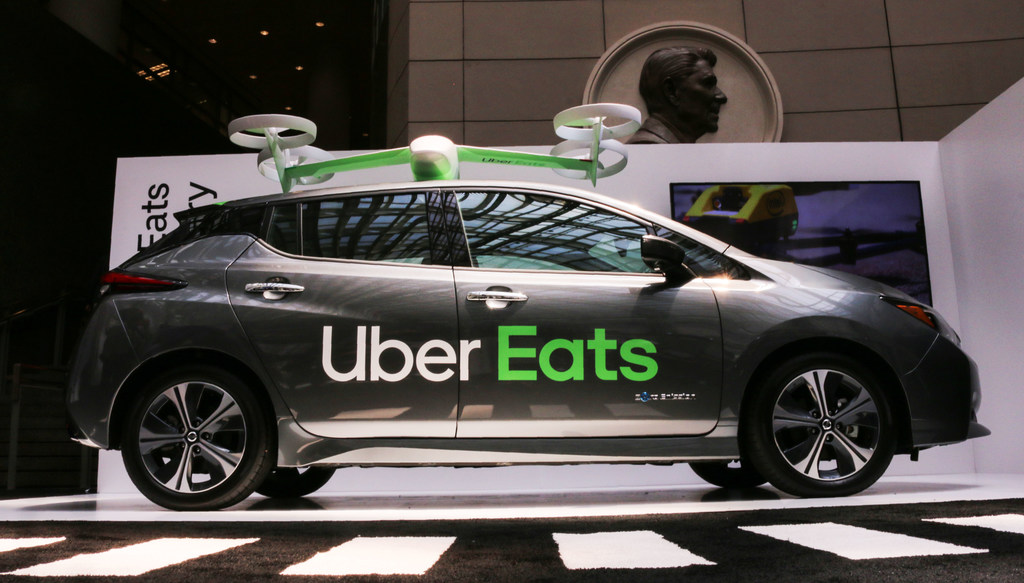
It revealed that Uber Eats is working with McDonald's to deliver Big Macs
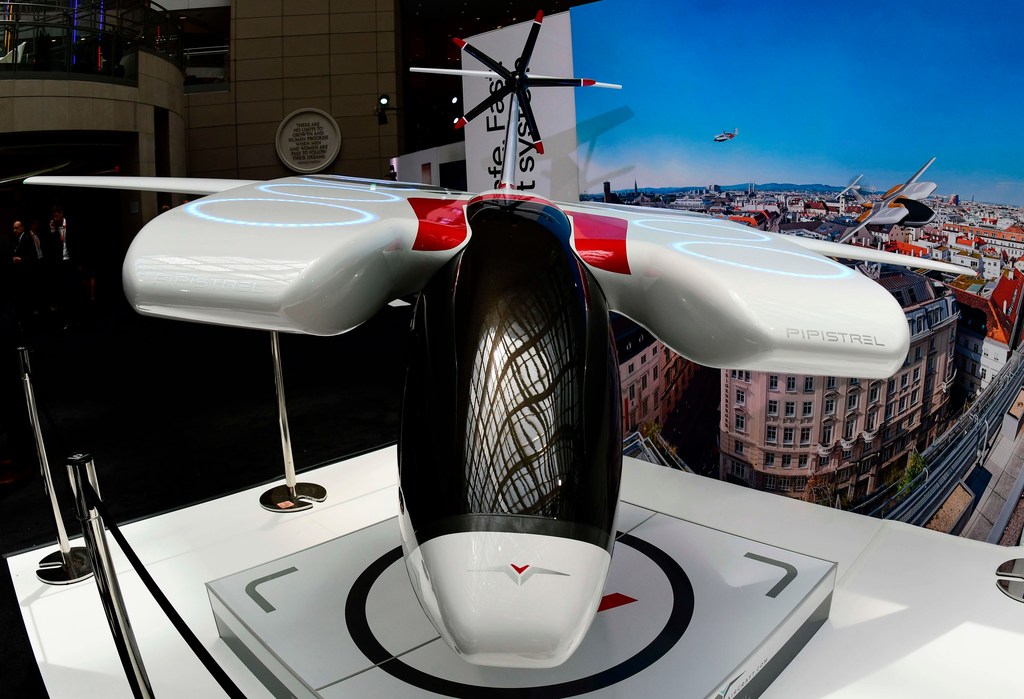
and fries by drone. It touted the progress of six aviation companies that
are designing the aircraft. And it dived into specifics, such as economics,
safety and FAA-required certification. It showed off its different modes of
transportation, from its new self-driving Volvo SUV to electric scooters.

Through splashy presentations and showroom floor exhibits, Uber and its
business partners tried to build the case that urban air taxi service is not
a far-fetched idea but one that's coming to fruition.

Uber went public in May. The tech giant's growth has been fueled by venture
capital, but it is spending billions of dollars and has yet to turn a
profit. That hasn't slowed development of its aerial ride-sharing service.
It expects to start flight demonstrations next year and launch commercial
service in a few cities, including Dallas, in 2023. Eventually, it wants the
urban air taxis to become autonomous.

Mark Moore, Uber's director of engineering for vehicle systems, said he's
already seen some of the aircraft take flight. He declined to name the
companies that are flight testing, saying they're keeping quiet for
competitive reasons.

"It's incredibly impressive," he said. "They're nothing like helicopters."

Flying cars
Three years ago, Uber published a white paper that declared its intentions
to make a Jetsons-like vision of flying cars real. It ratcheted up the
project by throwing its first Uber Elevate Summit in Dallas in 2017. It
invited engineers, aviation experts and technology executives and announced
that Dallas would be one of the service's first markets.

Since then, Uber has been the project's booster and coordinator. It has
enlisted companies it needs for the service to take flight, from real estate
developers to aircraft makers. There's no money changing hands at this
stage. Basically, Uber is forming partnerships based on a pact that if the
idea takes off, all involved will make money. Fort Worth-based Bell and five
other companies are building the vertical take-off and landing vehicles.

Uber has provided specifications for the vehicles. It wants them to be
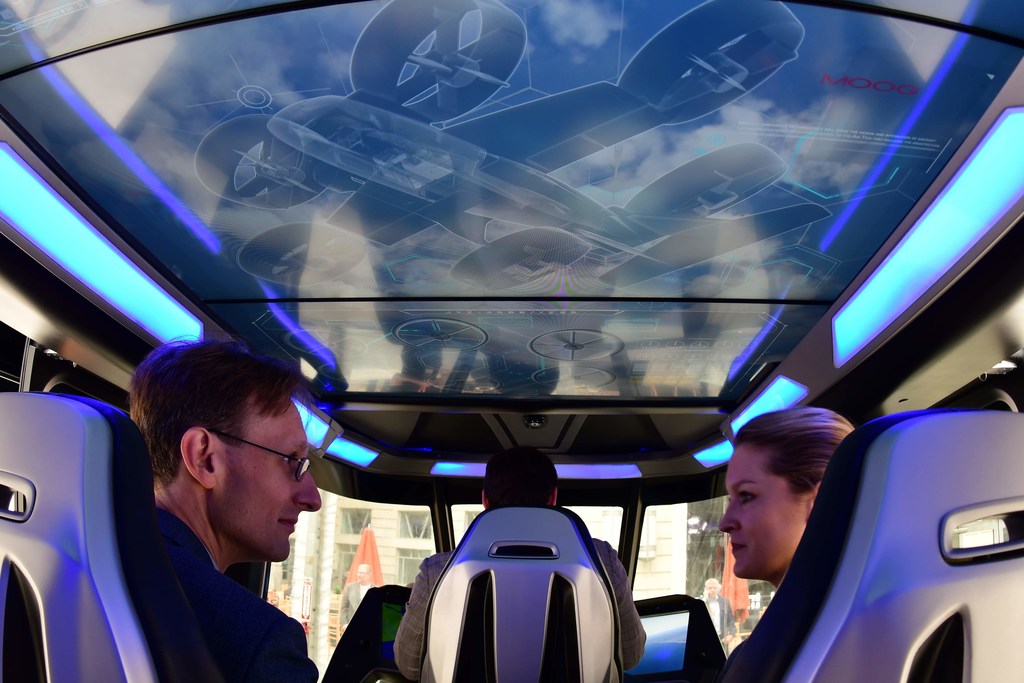
electric-powered with a pilot and four riders who share a vehicle, similar
to its Uber Pool ride-hailing service on the ground.

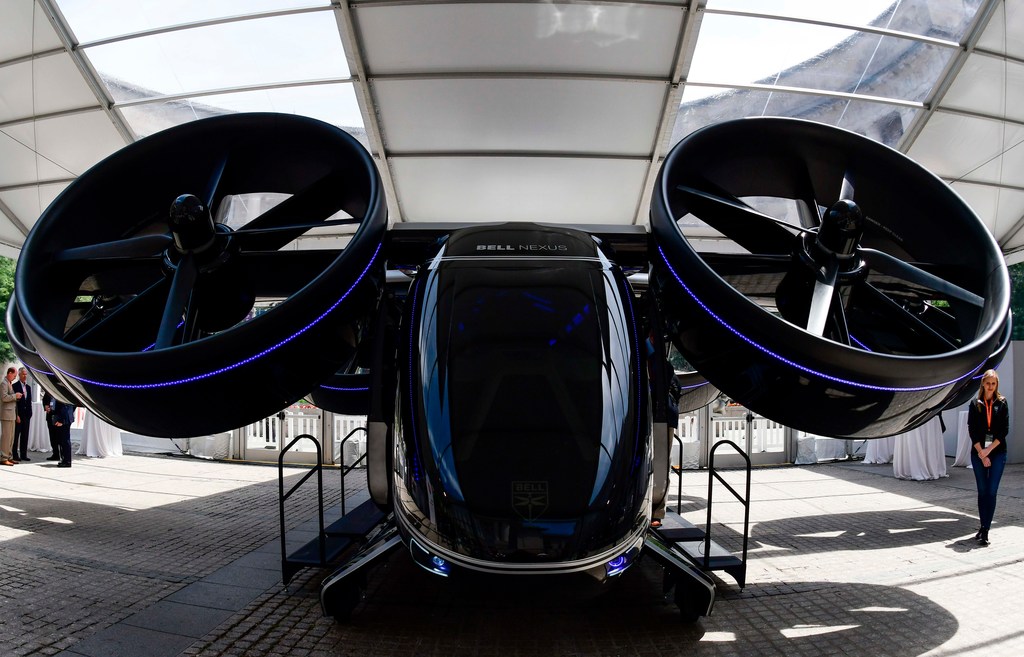
[image]  Fort Worth-based Bell is one of six companies that are designing a
vertical take-off and landing vehicle for Uber's urban air taxi service. It
showed off a prototype of its vehicle, the Nexus, at the Uber Elevate Summit
in Washington, D.C. (Eva Hambach/Agence France-Presse)

The urban air taxis are expected to travel between 150 and 200 mph at a
cruising altitude of 1,000 to 2,000 feet above the ground. That's slower and
lower than commercial airplanes, which cruise around 500 mph at 35,000 feet.

Uber will sign agreements for the vehicles to operate on its network as
companies prove out their technology and get FAA certification, Moore said.

Uber is also beginning to test what it will take to synchronize the aerial
ridesharing service. In July, it will launch Uber Copter, a luxury on-demand
helicopter service that will fly from Lower Manhattan to JFK International
Airport. The service, which will cost an average of $200 and $225 per
person, will be open only to customers who are in the top two tiers of
Uber's loyalty program. Uber will test how its algorithms match up riders
who must take flights together and also stitch together their trips — on the
ground, in the air and back on the ground again.

But with Uber Air, the company wants prices to be within reach of the
general public. At launch, Moore said the price per person will be similar
to an Uber Black. Eventually, it wants the urban air taxi to be so
affordable that it makes more sense for people to travel by urban air taxi
than to own their own cars.

The aircraft will differ from helicopters in other key ways, he said: It
will have built-in redundancies that keep it flying even if one part fails.
It will operate at a frequency that blends in better with the noise of
cities. And it will be less expensive to operate.

A twin-engine helicopter costs about $2,500 per hour to operate, he said.
Uber's goal is to have the vehicles cost $700 per flight hour.

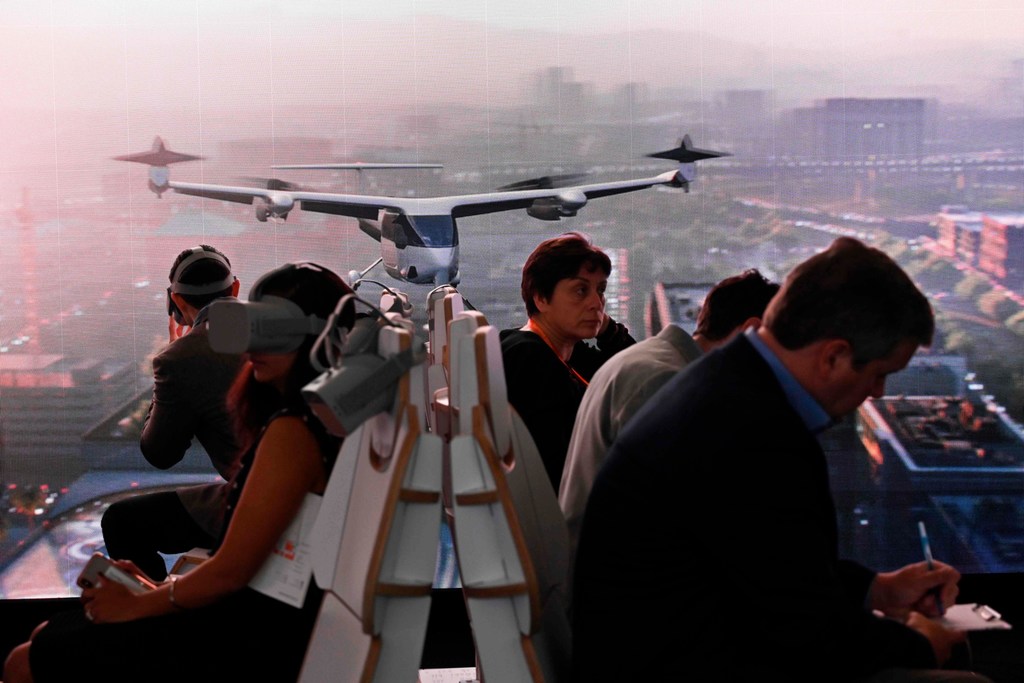
Attendees of the Uber Elevate Summit could test what it may feel like to fly
in an urban air taxi with a virtual reality experience. (Eva Hambach/Agence
France-Presse)

Dallas connections
Dallas is one of Uber's major markets and is home to several of its Uber
Elevate partners. Four architecture firms in the Dallas area — Beck, BOKA
Powell, Corgan and the Dallas office of Gensler — were tapped to design
skyports, the airports where the urban air taxis could take off and land.
Real estate developer Hillwood plans to develop skyports in North Texas,
including the first one that's under construction in Frisco. Bell showed off
a scale prototype of its aircraft, the Nexus, at the summit.

And this week, Uber announced that it will work with Dallas-based AT&T to
boost connectivity of drones and urban air taxis when they're operating at
low altitudes.

Dallas may soon become one of Uber's corporate hubs, too. A site in Deep
Ellum is a leading contender for an office that would bring thousands of
jobs, from engineering to finance. Uber officials declined to say who the
competition is for the hub. It said it will make a decision by late August.

Moore said the next four years will focus on demonstrations that "prove out
the safety, noise and performance" of the vehicles.

In 2023, he said it will launch to paying customers in Dallas — but with a
limited number of vehicles and limited operations. He said he expects five
aircraft per manufacturer at launch. That will grow to about 50 per
manufacturer in 2024. But, he said, some manufacturers may not be ready in
time.

In Dallas, the average trip is expected to be 20 to 25 miles, Moore said.

But one of the major questions is whether Uber can win over regulators and
the public. Unlike other tech innovations, early adopters won't just use a
new kind of technology. They'll fly in public, so that affects the people
driving, walking or living on the ground below, whether or not they choose
to opt in.

Widespread effects
Will the vehicles disrupt the quiet of communities? And could they lead to
disaster in the skies over Dallas, a dense, urban environment with two busy
airports?

Uber is already laying the groundwork to win public acceptance in the Dallas
area. It started a task force of local stakeholders. It measured noise
levels at more than 120 sites in Dallas-Fort Worth to study the best
locations for skyports and design aircraft that better match city
soundscapes.

Uber's head of vehicle engineering, Rob McDonald, said the vehicles must
fade into the rumble of highway traffic and allow people to still hear the
chirps of birds in the suburbs.

"Uber is obsessed with making these vehicles as quiet as possible," he said.

The Federal Aviation Administration's acting administrator, Dan Elwell, said
he's enthusiastic about urban air taxis but acknowledged that their
development gives him more to worry about.

"Everyone is riveted by this, especially me, but then I put on my FAA
regulator hat and I got a whole new bucket of stuff to lose sleep over," he
said in a speech at the summit. "What you see is the ideal way to
transporting people across cities. When I look at it, I see car-sized
vehicles with multiple rotors hanging over dense urban populations."

He said his agency is eager to work with companies like Uber, but safety
will be paramount ...

Along with persuading customers to board urban air taxis, Uber will also
have to add skyports to cities. Dallas-based architecture firm Corgan was
one of eight firms that showed off slick renderings of what they might look
like.

[image]  Dallas-based Corgan is one of eight architecture and engineering
firms that presented renderings of skyports at the Uber Elevate Summit. In
its renderings, it put public amenities like green space and a food hall
below the flight deck. (Courtesy of Corgan and Uber)

... In Corgan's design, the skyport is built over a highway. Urban air taxis
take off and land from a flight deck on a rooftop. Below, there's a
coworking space and features for the public, like a food hall and
pedestrian-friendly area. Uber-owned Jump offers bikes and scooters parked
nearby.

Flores said skyports must add to neighborhoods and become an attraction for
everyone, whether or not they board a flight.

"If we are dropping these into our communities, we need to better enhance
them," she said.
[© dallasnews.com]


+
https://www.ubergizmo.com/2019/06/tesla-now-selling-used-model-3-vehicles-online/
Tesla Now Selling Used Model 3 Vehicles Online
06/16/2019  Tesla wasn’t selling used Model 3 cars online, until now. The
company has started selling used units of its entry-level ...
https://i1.wp.com/www.ubergizmo.com/wp-content/uploads/2019/02/model-3-tesla.jpg?resize=640%2C302&ssl=1


For EVLN EV-newswire posts use:
 http://evdl.org/archive/


{brucedp.neocities.org}

--
Sent from: http://electric-vehicle-discussion-list.413529.n4.nabble.com/
_______________________________________________
UNSUBSCRIBE: http://www.evdl.org/help/index.html#usub
http://lists.evdl.org/listinfo.cgi/ev-evdl.org
Please discuss EV drag racing at NEDRA (http://groups.yahoo.com/group/NEDRA)