https://www.gpsworld.com/tesla-model-s-and-model-3-vulnerable-to-gnss-spoofing-attacks/
Tesla Model S and Model 3 vulnerable to GNSS spoofing attacks
June 28, 2019
[image
https://www.gpsworld.com/wp-content/uploads/TeslaModel3.jpg
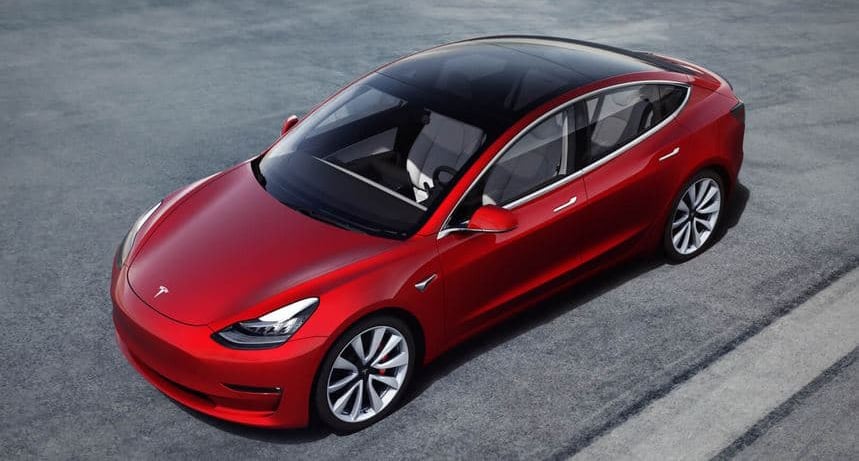
Tesla Model 3. (Photo: Tesla)
]

Autopilot Navigation Steers Car off Road, Research from Regulus Cyber Shows

Tesla Model S and Model 3 — electric cars built for speed and safety — are
vulnerable to cyberattacks aimed at their navigation systems, according to
recent research from Regulus Cyber.

During a test drive using Tesla’s Navigate on Autopilot feature, a staged
attack caused the car to suddenly slow down and unexpectedly veer off the
main road. Regulus Cyber, the first company to deal with smart-sensor
security across a wide range of applications including automotive, mobile,
and critical infrastructure, initially discovered the Tesla vulnerability
during its ongoing study of the threat that easily accessible spoofing
technology poses to GNSS receivers.

The Regulus Cyber researchers found that spoofing attacks on the Tesla GNSS
receiver could easily be carried out wirelessly and remotely, exploiting
security vulnerabilities in mission-critical telematics, sensor fusion, and
navigation capabilities.

Regulus Cyber experts traveled to Europe last week to test-drive the Tesla
Model 3 using Navigate on Autopilot. An active guidance feature for its
Enhanced Autopilot platform, it’s meant to make following the route to a
destination easier, which includes suggesting and making lane changes and
taking interchange exits, all with driver supervision.

While it initially required drivers to confirm lane changes using the turn
signals before the car moved into an adjacent lane, current versions of
Navigate on Autopilot allow drivers to waive the confirmation requirement if
they choose, meaning the car can activate the turn signal and start turning
on its own. Tesla emphasizes that “in both of these scenarios until truly
driverless cars are validated and approved by regulators, drivers are
responsible for and must remain ready to take manual control of their car at
all times.”

Designed to reveal how the semi-autonomous Model S and Model 3 would react
to a spoofing attack, the Regulus Cyber test began with the car driving
normally and the autopilot navigation feature activated, maintaining a
constant speed and position in the middle of the lane.

Although the car was three miles away from the planned exit when the
spoofing attack began, the car reacted as if the exit was just 500 feet away
— abruptly slowing down, activating the right turn signal, and making a
sharp turn off the main road. The driver immediately took manual control but
couldn’t stop the car from leaving the road.

The testing revealed another unexpected finding that significantly amplified
the threat—a link between the car’s navigation and air suspension systems.
This resulted in the height of the car changing unexpectedly while moving
because the suspension system “thought” it was driving through various
locations during the test, either on smooth roadways, when the car was
lowered for greater aerodynamics, or “off-road” streets, which would
activate the car elevating its undercarriage to avoid any obstacles on the
road.

Yoav Zangvil, Regulus Cyber CTO and co-founder, explains that GNSS spoofing
is a growing threat to ADAS and autonomous vehicles. “Until now, awareness
of cybersecurity issues with GNSS and sensors has been limited in the
automotive industry. But as dependency on GNSS is on the rise, there’s a
real need to bridge the gap between its tremendous inherent benefits and its
potential hazards. It’s crucial today for the automotive industry to adopt a
proactive approach towards cybersecurity.”

The Regulus Cyber testing is designed to assess the impact of spoofing with
low-cost, open source hardware and software, the same kind of technology
that is accessible to anyone via e-commerce websites and open source
projects on GitHub. Taking control of Tesla’s GPS with off-the-shelf tools
took less than one minute.

The researchers were able to remotely affect various aspects of the driving
experience, including navigation, mapping, power calculations, and the
suspension system. Under attack, the GNSS system displayed incorrect
positions on the maps, making it impossible to plot an accurate route to the
destination.

Prior to the Model 3 road test, Regulus Cyber provided its Model S research
results to the Tesla Vulnerability Reporting Team, which responded with the
following points at that time:

Any product or service that uses the public GPS broadcast system can be
affected by GPS spoofing, which is why this kind of attack is considered a
federal crime. Even though this research doesn’t demonstrate any
Tesla-specific vulnerabilities, that hasn’t stopped us from taking steps to
introduce safeguards in the future which we believe will make our products
more secure against these kinds of attacks.

The effect of GPS spoofing on Tesla cars is minimal and does not pose a
safety risk, given that it would at most slightly raise or lower the
vehicle’s air suspension system, which is not unsafe to do during regular
driving or potentially route a driver to an incorrect location during manual
driving.

While these researchers did not test the effects of GPS spoofing when
Autopilot or Navigate on Autopilot was in use, we know that drivers using
those features must still be responsible for the car at all times and can
easily override Autopilot and Navigate on Autopilot at any time by using the
steering wheel or brakes, and should always be prepared to do so.

“This is a distressing answer by a car manufacturer that is the
self-proclaimed leader in the autonomous vehicle race,” Zangvil comments.
“As drivers and safety/security experts, we’re not comforted by vague hints
towards future safeguards and statements that dismiss the threats of GPS
attacks.” He offers the following counterpoints in response:

    Attacks against any GPS system are indeed considered a crime because
their effects are dangerous, as we’ve shown, yet the same devices we used to
simulate the attacks are legally accessible to any person, online via
e-commerce sites

    Taking steps to “introduce safeguards for the future” indicates that
spoofing is, in fact, a major issue for Tesla, which relies heavily on GNSS

    In the case of cars, a spoofing attack is confusing in the best case,
and a threat to safety in more severe scenarios

    The more GPS data is leveraged in automated driver assistance systems,
the stronger and more unpredictable the effects of spoofing becomes

    The fact that spoofing causes unforeseen results like unintentional
acceleration and deceleration, as we’ve shown, clearly demonstrates that
GNSS spoofing raises a safety issue that must be addressed

    In addition, the spoofing attack made the car engage in a physical
maneuver off the road, providing a dire glimpse into the troubled future of
autonomous cars that would have to rely on unsecure GNSS for navigation and
decision-making

    Given that the trust of the public still has to be earned as the
automotive industry moves towards autonomy, the leading players are
accountable for a responsible deployment of new technology

    As Tesla clearly stated, drivers are responsible for overriding
autopilot under a spoofing attack, so it appears its auto pilot system can’t
be trusted to function safely under a spoofing attack.

    Because every GNSS/GPS broadcast system can be affected by GNSS/GPS
spoofing, the issue is everyone’s problem and shouldn’t be ignored;
furthermore, governments and regulators that have a mandate to protect the
public’s safety must engage in proactive measures to ensure only safe GNSS
receivers are used in cars.

“According to Tesla, they’ll soon be releasing completely autonomous cars
utilizing GNSS, which means that, in theory, an attacker could remotely
control the car’s route planning and navigation,” Zangvil said. “We’re
obligated to ask what steps they’re taking to address this threat, and
whether new safeguards will be implemented in its next generation of
entirely autonomous cars.”

Although Regulus Cyber researchers tested only the Model S and Model 3, they
concluded that the “disturbing vulnerability” of Tesla’s GNSS system is most
likely company-wide, as the same chipsets are used across the Tesla fleet.

“Just a few months ago we saw that during a spoofing incident in a car show
in Geneva, seven different car manufacturers complained that their cars were
being spoofed. This incident proves that many other automotive companies
that are working on the next generation of autonomous cars are also
vulnerable to these attacks. As an industry, to win public trust and
succeed, every car manufacturer should be proactive and prepare against
these threats,” Zangvil said.
[© gpsworld.com]


For EVLN EV-newswire posts use:
 http://evdl.org/archive/


{brucedp.neocities.org}

--
Sent from: http://electric-vehicle-discussion-list.413529.n4.nabble.com/
_______________________________________________
UNSUBSCRIBE: http://www.evdl.org/help/index.html#usub
http://lists.evdl.org/listinfo.cgi/ev-evdl.org
Please discuss EV drag racing at NEDRA (http://groups.yahoo.com/group/NEDRA)