https://www.houstonchronicle.com/business/energy/article/As-EVs-threaten-gas-stations-owners-turn-to-14291843.php
As EVs threaten gas stations, owners turn to Amazon lockers, fast food
Aug. 9, 2019  Marissa Luck
[images
https://s.hdnux.com/photos/01/04/66/46/18049444/3/gallery_large.jpg
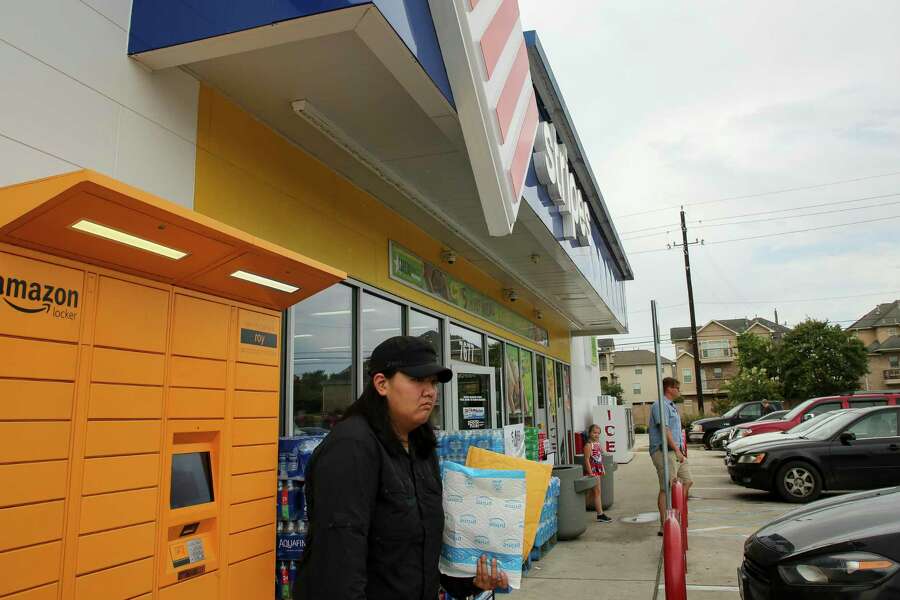
Victoria Pham picks up a package from an Amazon locker located at the Sunoco
gas station on the 7600 block of Gessner Road Sunday, July 28, Photo:
Godofredo A Vásquez

https://s.hdnux.com/photos/01/04/66/46/18049443/3/940x0.jpg
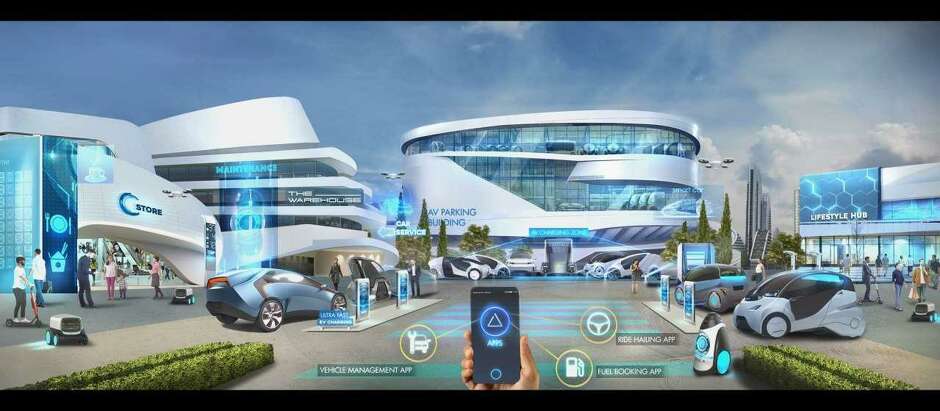
As cars become more fuel efficient and electric vehicles threaten to eat
into gasoline demand further, gas stations will have to evolve to Photo:
Courtesy Boston Consulting Group
]

Roll up to a Sunoco station in Houston and you may notice a relatively new
offering. Not a new type of gasoline or deal on Coca Cola, but an Amazon
locker to keep your packages safe from porch pirates.

At a Sunoco station on Gessner Road in Houston, store manager Gabriel
Blalock said the Amazon locker is one of several products and services the
station’s owners are using to keep the gas station and convenience store
busy.

“It definitely increases foot traffic,” Blalock said. “Some (customers) just
go get the package and get in their car and leave, but some of the regular
customers I know, they come in and get there food and drinks first, and then
go to the locker.”

Although Amazon lockers at gas stations are still unusual, they represent
one of dozens of new strategies gas station owners are experimenting with as
they plan for a future of diminishing fuel demand as cars become more
fuel-efficient and electric vehicles more prevalent. More gas stations are
expanding food offerings to compete with fast food chains and some are
adding electric vehicle charging hook-ups alongside the gas pump ...

Analysts say thousands of gas stations are at a risk of closing in the next
20 years as electric vehicles, autonomous cars and ride sharing increasingly
push down demand for gasoline. A new report from the consultancy firm Boston
Consulting Group estimates that up 60 to 80 percent of gas stations are at
risk of closing by 2035 if they don’t take serious measures to change their
business models.

Boston Consulting Group didn’t extrapolate its projections to estimate the
number of gas stations that would close. But applying their metric to the
2,559 gas stations in Houston, that means 1,500 to 2,000 stations could be
unprofitable in the next 25 years.

Tony Portera, managing director of Boston Consulting Group in Dallas, said
the 60 to 80 percent closure estimate represents an extreme scenario that
would happen only in markets where electric vehicles and autonomous vehicles
catch on in the next two decades. But even in a scenario in which fossil
fuel cars still dominate, Boston Consulting Group projects between 25 to 30
percent stations will be at risk of going out of business as profits
collapse.

“We’re likely going to have a lot of closures,” Portera said. “The ones that
evolve and change will be able to survive.”.

Stations could disappear
Gas stations are facing a threat to their business models as American
mobility is in the middle of a fundamental transformation, analysts say. By
2035, a quarter of the American car fleet will have some form of electric
engine under their hood, according to estimates from the Boston Consulting
Group. By then up to a third of all new car sales will be partly or fully
electric.

The rise of self-driving cars could accelerate that trend. Boston Consulting
Group estimates that by 2035 nearly 25 percent of new cars sold in the U.S.
will be self-driving and most of those cars will be electric. EVs will start
to affect fuel demand sometime between 2025 to 2027.

U.S. gasoline demand has stayed relatively flat for the past decade,
hovering around 9 million barrels a day with occasional fluctuations,
according to the U.S. Energy Department. But by 2035 electric vehicles could
cut gasoline demand roughly in half, Boston Consulting Group projects.

Increasing electrification is hitting at a time when ride sharing apps such
as Uber and Lyft are cutting into the car ownership aspirations of younger
generations. Self-driving, ride-hailing electric cars won’t need to stop for
fuel, and they certainly won’t need to run into a convenience store to buy a
Coke or bag of chips.

That means there needs to be a fundamental shift in how gas stations plan
for the future, Portera said ...

“For these stores to survive,” he said, “they need to focus on the mobility
more broadly and what customers need while traveling beyond just fuel.”

Portera said he’s already meeting with gas station owners about ways to
adapt to the future reality. Gas station chains such as Texas darling
Buc-ee’s are often held up examples of ways to adapt by selling more retail,
clothes, outdoor equipment and expanding freshly-made meal options and
coffee sales.

BCG expects gas stations of the future could become service hubs for
autonomous vehicle fleets or mini-warehouses where station owners can
partner with online retailers to offer “last-mile delivery” services to
hasten the speed of delivery of products to customers’ final destinations.

As with the transition from fossil fuels to renewable energy, the shift from
gas stations to something else is likely to happen gradually, said Patrick
DeHaan, head of petroleum analysis at GasBuddy, which tracks gasoline prices
nationwide. Conventional cars still dwarf electric vehicles.

Of the 272 million registered cars in the United States, only about 1.1
million of those cars are electric, according to the U.S. Department of
Transportation and the International Energy Agency. Electric vehicles still
only make up less than 2 percent of new car sales in the United States,
according to the IEA.

“EVs have hardly moved the needle (for gas stations),” DeHaan said. “We're
still years away from starting to see noticeable impacts to the traditional
gas station."

More bananas
The number of U.S. gas stations in the has drifted down from about 200,000
in the 1990s to about 135,000 stations today, DeHaan estimated. Gas stations
took a major hit just over a decade ago when crude oil topped $140 a barrel
and the price of gas spiked above $4 per a gallon in 2008, forcing customers
to cut back and many stations to close. That pushed many stations to look to
other ways to generate cash, with many expanding into the prepared food
market - adding sandwiches, wraps, restaurant style meals and fresh food
items like bananas to their convenience store shelves.
[© houstonchronicle.com]


+
https://www.bxtimes.com/stories/2019/32/32-hpfoodhub-2019-08-09-bx.html
A statewide greenmarket food hub will soon take root in
the south Bronx
August 10, 2019 ... Hub’s eco-friendly design includes a combo solar and
green roof, an electric truck charging station ... will fortify rural
communities by paying farmers fairly for the food they produce ... will
distribute food throughout NYC and increase access to affordable, healthy
foods and fresh produce in underserved communities ...
https://www.bxtimes.com/assets/photos/2019/32/32-hpfoodhub-2019-08-09-bx01_s.jpg


For EVLN EV-newswire posts use:
 http://evdl.org/archive/


{brucedp.neocities.org}

--
Sent from: http://electric-vehicle-discussion-list.413529.n4.nabble.com/
_______________________________________________
UNSUBSCRIBE: http://www.evdl.org/help/index.html#usub
http://lists.evdl.org/listinfo.cgi/ev-evdl.org
Please discuss EV drag racing at NEDRA (http://groups.yahoo.com/group/NEDRA)