https://insights.globalspec.com/article/12331/how-the-world-s-first-large-scale-electric-excavator-works
How the world’s first large-scale electric excavator works
July 29, 2019  Eric Olson  eric.olson @ieeeglobalspec.com
[images  / Pon Cat
https://insights.globalspec.com/images/assets/331/12331/cat323f_z-line-hl.png
How the world’s first large-scale electric excavator works The Cat 323F
Z-line excavator

https://insights.globalspec.com/images/assets/331/12331/cat323f_z-line.png
The Cat 323F Z-line excavator

https://insights.globalspec.com/images/assets/331/12331/cat323f_z-line_inside2.png
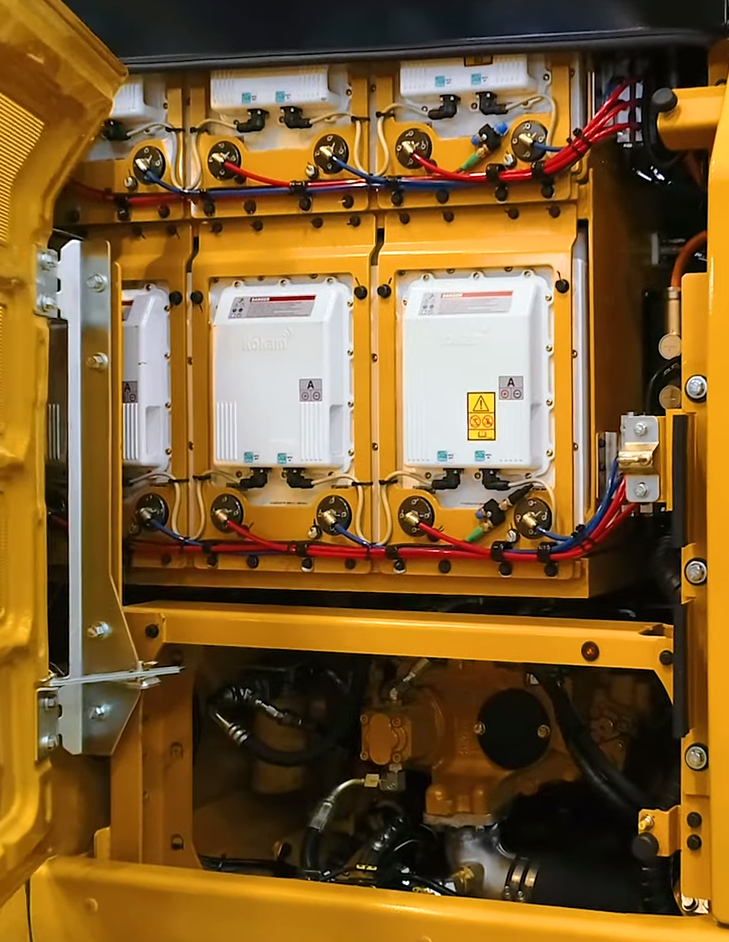
Behind the hatch of the Cat 323F Z-line. The hydraulic pump is seen below a
large stack of batteries

https://insights.globalspec.com/images/assets/331/12331/cat323f_z-line_operation-fullsize.png
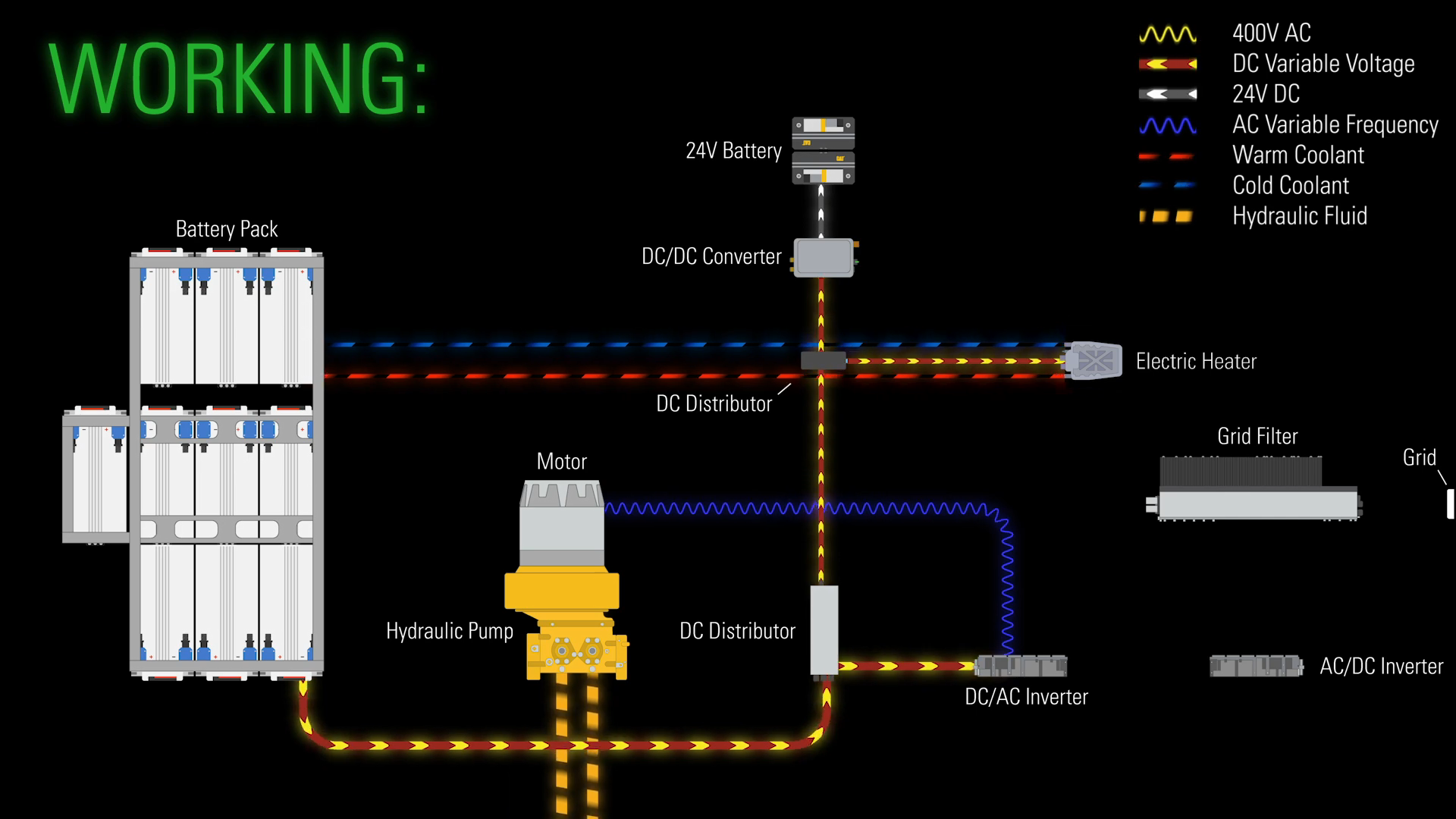
(working)  Operational power flow schematic for the 323F Z-line electric
excavator

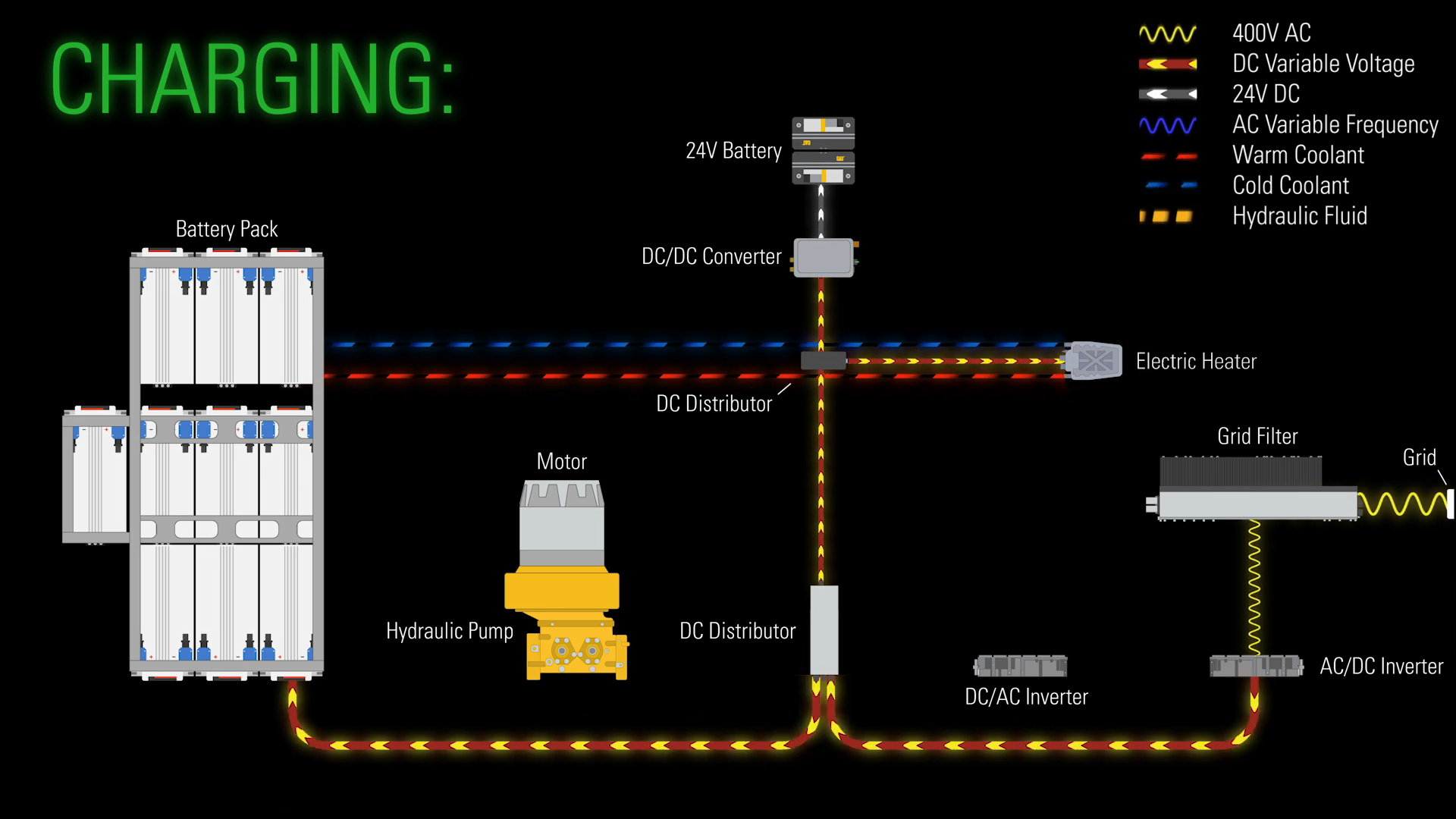
https://insights.globalspec.com/images/assets/331/12331/cat323f_z-line_charging.png
(charging)  Power flow schematic for the 323F Z-line electric excavator as
it recharges from the grid

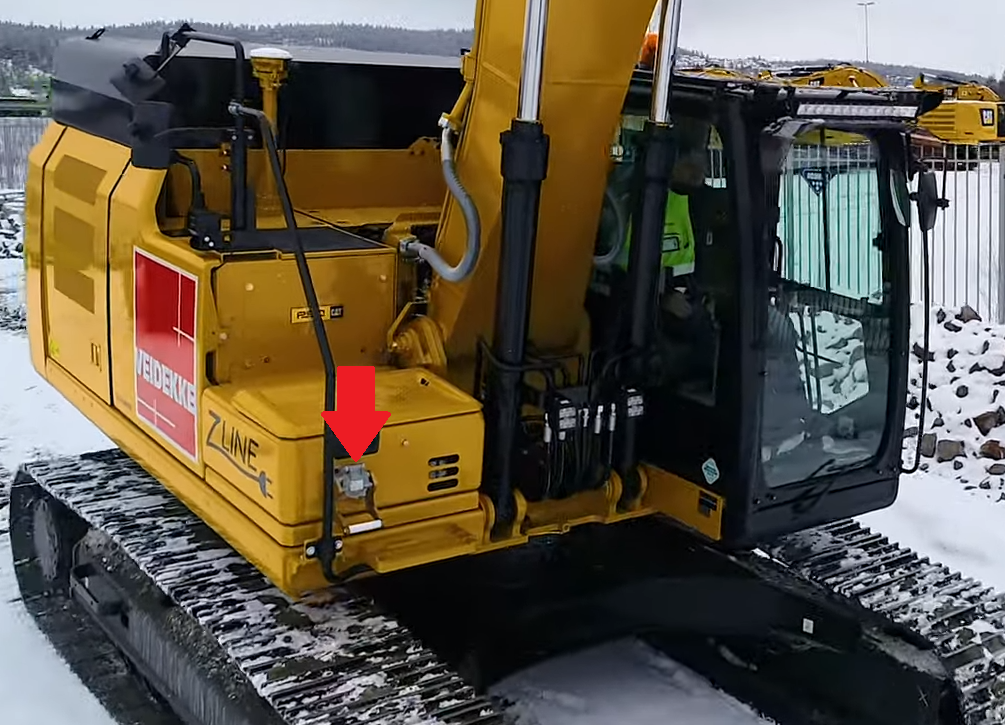
https://insights.globalspec.com/images/assets/331/12331/cat323f_z-line_charging_port.png
The charging port is located on the front of the excavator’s house on the
opposite side of the operator’s cabin

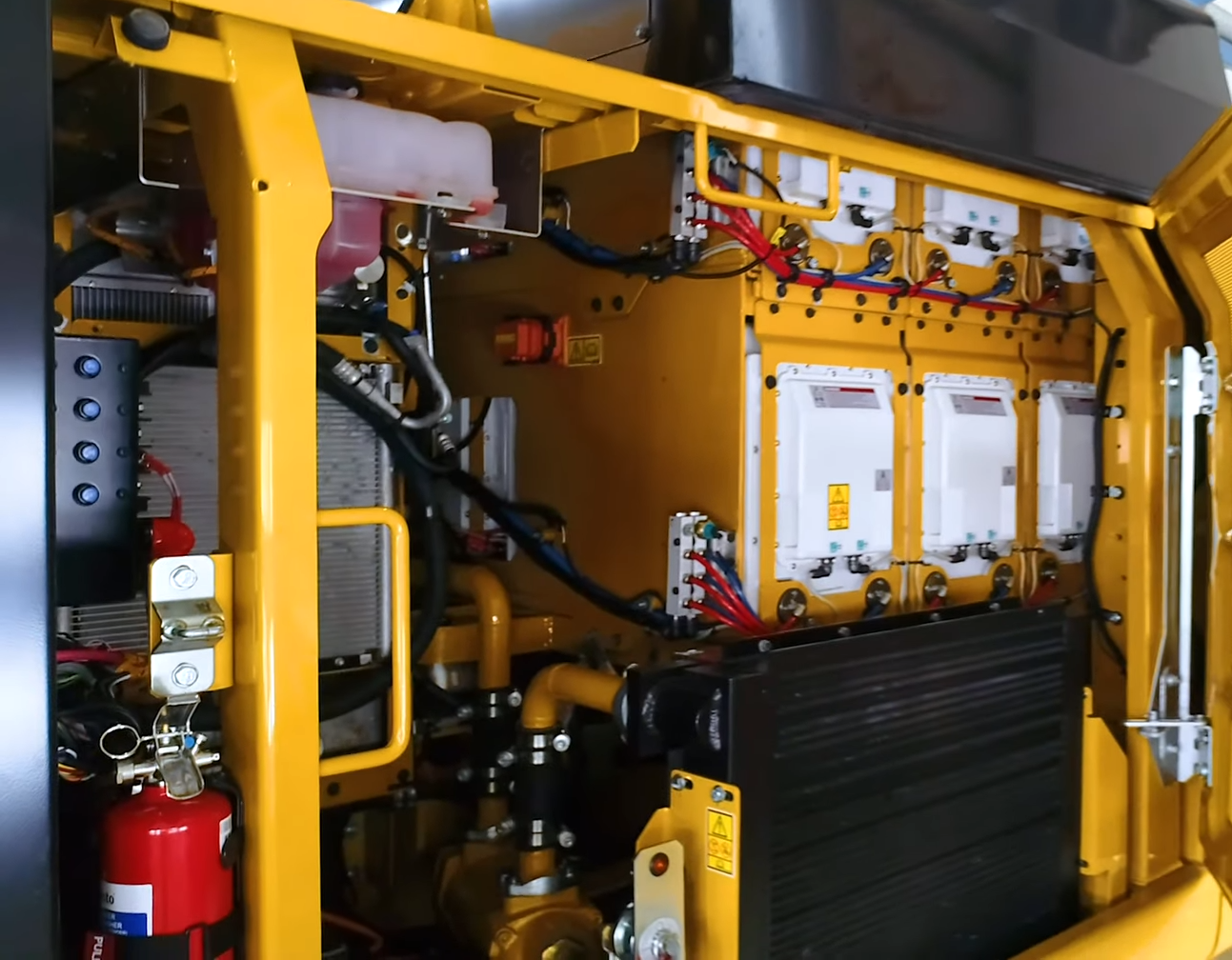
https://insights.globalspec.com/images/assets/331/12331/cat323f_z-line_inside1.png
Behind the hatch of the Cat 323F Z-line on the same side of the vehicle as
the cabin entrance. A stack of batteries is mounted above a heat exchanger
for the hydraulic system
]

In the construction vehicle market, large-scale mobile machinery has largely
been powered by internal combustion engines. But as electric powertrain
technologies including motors and batteries advance, heavy construction
machinery powered by electricity is becoming a reality.

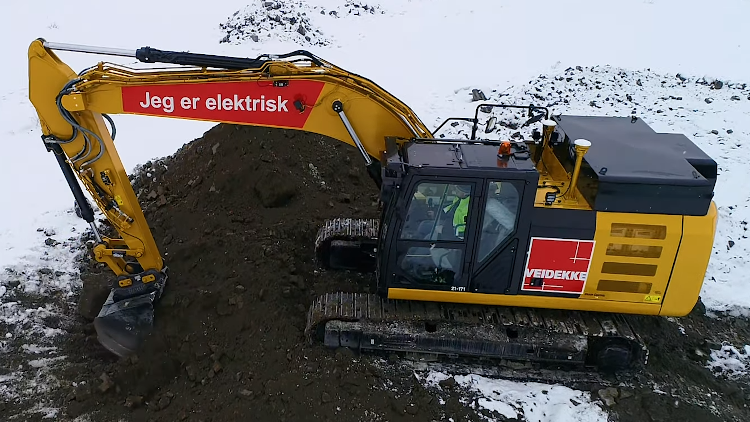
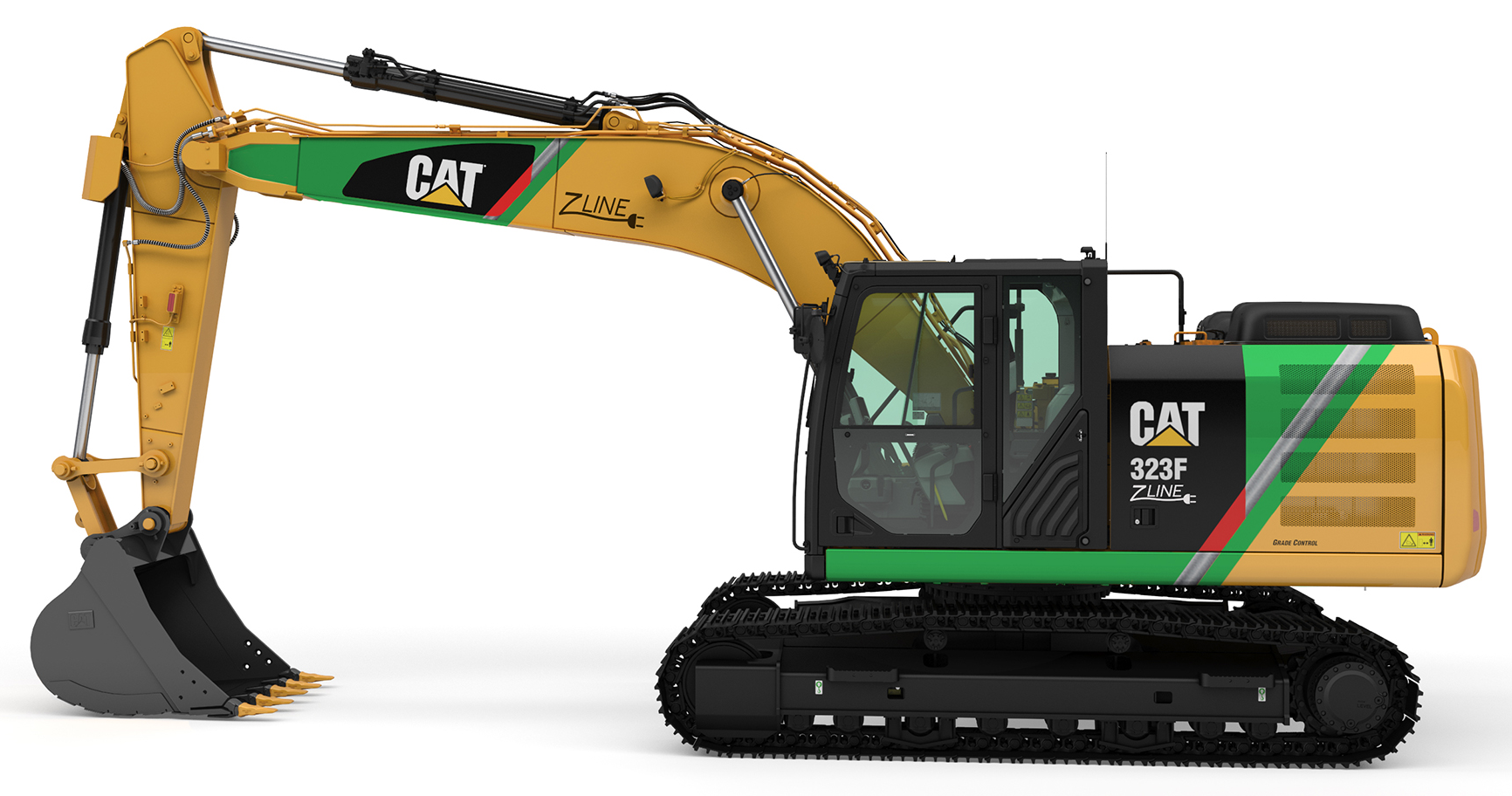
The world’s first large-scale electric excavator, the 25 tonne Cat 323F
Z-line, operates on battery power alone without the help of a diesel engine.
The excavator is nearly identical to the diesel-powered Cat 323F excavator,
except its diesel engine has been replaced with an electric powertrain.

The conversion was carried out by Pon Equipment, the official Caterpillar
dealer in Norway, Sweden, Denmark and the Netherlands. The company was
spurred by Norway’s pledge to become carbon neutral by 2030 along with a
push by the country’s capital city, Oslo, for zero-emission construction
sites ...

Powertrain specs
The electric excavator’s powertrain system — provided by Danfoss Editron, a
subsidiary of Danfoss Power Solutions — eliminates the noisy, dirty diesel
engine in the 323F and replaces it with a battery pack and electric motor to
power the excavator’s hydraulic system.

The electric powertrain enables the 323F Z-line excavator to operate
emission-free without sacrificing power or performance compared to the
diesel version. With no combustion engine, the electric excavator also
consumes no diesel fuel, produces no direct CO2 emissions and generates much
lower noise than its diesel counterpart.

A key element of the powertrain is the 300 kWh battery pack that powers the
122 kW electric motor. On a full charge, the battery provides enough power
for five to seven hours of excavator operation. The machine can also operate
continuously if plugged into an external power source ...

Weighing 3.4 tonnes, the battery pack has three times more capacity than the
largest battery available for Tesla vehicles. The significant weight of the
batteries required a redesign of the ballast block that balances the weight
of the digging arm; the ballast was downsized from the massive 6 tonne
version in the diesel excavator to a smaller steel block.

The batteries are ruggedized, heavy-duty storage cells rated for use in
maritime applications, ensuring they can withstand the harsh vibrations and
shocks of the construction environment. The batteries are also designed for
longevity, rated to retain 80% of their charging capacity after 10,000 hours
of operation.

One hour of charge over a 400 V mains connection provides one hour of
operation. A fast-charge option fills the battery completely within two
hours from a 1,000 V source.

How it works
In operation, the 323F Z-line electric excavator is powered by electricity
according to the following steps:

  - A DC distributor routes DC power from the battery pack to a DC/AC
inverter.
  - The inverter converts the DC voltage to AC voltage to power an electric
motor.
  - The electric motor drives a hydraulic pump that pressurizes hydraulic
fluid for operation of the excavator’s arm, attachments and tracks.
  - The main DC distributor also routes DC power from the battery pack to a
second DC distributor.
  - This second DC distributor directs DC power to an electric heater that
warms a coolant fluid that circulates around the battery pack to regulate
its temperature.
  - The second DC distributor also sends DC power to a DC/DC converter that
converts the voltage to 24 V DC to charge a 24 V battery that provides
onboard power.

To recharge its battery pack, the 323F Z-line electric excavator draws power
from the grid according to the following steps:

  - The excavator is connected to grid power by attaching a power cable to a
large power jack on the front of the excavator.
  - 400 V AC power from the grid is filtered and routed to an AC/DC
inverter, which converts it to DC voltage.
  - The main DC distributor routes DC power to the batteries to charge them.
  - The main DC distributor also sends power to the second DC distributor,
which powers the electric heater to regulate battery temperature.
  - The second DC distributor also sends power to the DC/DC converter to
charge the 24 V battery.

Will it sell?
As the world’s first large-scale electric excavator, the Cat 323F Z-line has
a price tag that reflects its innovative electric powertrain and sizable
dimensions. The excavator costs approximately $680,800 (620,000 euros),
around three times more than the diesel-powered Cat 323F.

The asking price is high, but the benefits offered by the vehicle are
significant: no use of diesel fuel, no direct CO2 emissions, much lower
noise and less maintenance than a diesel excavator. If electric excavators
prove popular on the market, technology improvements and economies of scale
could lower production costs, increasing their affordability.

In the meantime, regulations like those in Norway are driving adoption of
environmentally friendly construction machinery. Norwegian construction
company Veidekke has purchased eight of the electric excavators. The company
estimates each 323F Z-line excavator will prevent the release of 52 tonnes
of CO2. Replacing all of Norway’s approximately 2,500 excavators would
offset carbon emissions equivalent to taking 60,000 cars off the road ...
[© insights.globalspec.com]


+ (www.evap.com.ph EVAP promoting e-tuks.ph)
https://news.mb.com.ph/2019/08/01/e-vehicle-group-backs-manila-mayors-move-to-reset-e-trike-routes/
E-vehicle group backs Manila mayor's move to reset e-
trike routes
August 1, 2019  The Electric Vehicle Association of the Philippines (EVAP)
is supporting Manila Mayor Isko Moreno's initiative to reorganize the routes
for electric tricycles (e-trikes) in the city ...
...
https://www.philstar.com/nation/2019/07/30/1939023/manila-lifts-ban-e-trikes
Manila lifts ban on e-trikes
July 30, 2019 ... Moreno lifted his ban on electronic tricycles and allowed
280 e-trike drivers to resume plying their routes ...


For EVLN EV-newswire posts use:
 http://evdl.org/archive/


{brucedp.neocities.org}

--
Sent from: http://electric-vehicle-discussion-list.413529.n4.nabble.com/
_______________________________________________
UNSUBSCRIBE: http://www.evdl.org/help/index.html#usub
http://lists.evdl.org/listinfo.cgi/ev-evdl.org
Please discuss EV drag racing at NEDRA (http://groups.yahoo.com/group/NEDRA)