https://www.almanacnews.com/news/2019/08/15/woodsides-electric-duo
Woodside's electric duo
Aug 15, 2019  Matthew Vollrath
[image  / Sadie Stinson
https://www.almanacnews.com/news/photos/2019/august/13/29344_full.jpg
Martin Eberhard and Marc Tarpenning, from left, at Konditorei, a Ladera cafe
the friends visit weekly
]

How two locals built a brand that started the electric vehicle revolution

At first glance, they seem like your typical Woodsiders. One is an
electrical engineer; the other is a software guy. They're both dads who were
active in their kids' schools. And every Wednesday, they get coffee together
at Konditorei [
https://www.yelp.com/biz/konditorei-portola-valley
], a small cafe in the Ladera Country Shopper [
https://inmenlo.com/2009/08/08/ladera-a-bit-of-menlo-a-bit-of-portola-valley/
].

One not-so-typical thing about them: 16 years ago last month, they launched
a little company known as Tesla Motors.

Contrary to popular belief, it wasn't Elon Musk, but Martin Eberhard and
Marc Tarpenning who first built the brand that ignited the electric vehicle
revolution.

It all began around the year 2000. Eberhard and Tarpenning, who had worked
together in Silicon Valley since the 1980s, had just sold their previous
venture making one of the earliest e-readers. Now, they wanted to do
something that would help reduce America's dependence on oil.

"We were both very aware of two things in the world," Eberhard explained in
a recent interview with The Almanac. "One was the coming obviousness of
climate change. (The other was) that the wars we were involved in in the
Middle East had something to do with oil."

So Eberhard began crunching numbers. He filled Excel spreadsheets with data
on every way he could think of to power a vehicle, trying to determine which
was the most efficient. But even then, an electric car wasn't his first
thought, he said.

"Back (in) 2002, the world's impression of an electric car was two things:
They suck, and they're dead," Eberhard asserted. "(People thought) it was a
little fiberglass box that was very slow and had short range. Nobody wanted
it."

But Eberhard's math was clear. Electric cars were "far better than anything
else" in terms of energy efficiency—vastly superior to the hydrogen fuel
cells that were then in vogue.

And even more strikingly, electric motors were anything but wimpy. "Electric
cars have one thing that just whales on gasoline cars, and that's
performance," Tarpenning said. In terms of acceleration and torque, an AC
induction motor—first invented by Nikola Tesla in 1887, hence the company's
name—outpaced all but the most high-end gas-powered sports cars.

And thus, the idea for the Tesla Roadster, the first all-electric sports
car, was born.

Hitting the road

As the two men got to work, they soon encountered a major challenge: the
battery. From their work on e-books, they knew they wanted to use the
lithium-ion cells that powered portable gadgets like laptops. The plan was
to use these same miniature cells, only instead of stringing together three
or four, they'd wire up around 7,000.

Nothing like this had been done before. "(It's) much more complicated than
you might imagine," said Tarpenning. Each cell had to be managed with
additional hardware and software, which the pair would have to design
themselves. And they'd have to make sure it was all "automotive grade," with
built-in safeguards for every contingency. "It was the highest-risk thing
that we did," Tarpenning said.

But after drafting the battery design on the back of a napkin, they decided
it was possible. In the summer of 2003, Tesla Motors was incorporated.
Eberhard and Tarpenning moved into their first office on Menlo Park's Oak
Grove Avenue, polished up their pitch, and headed to Sand Hill Road in hopes
of landing some capital.

At first, many investors were less than enthusiastic. Why weren't they using
hydrogen cells? How would the hefty $100,000 price tag pay for itself? And
how, exactly, were they planning to sell these cars without a dealer?

But then, the Tesla guys took them for a ride—literally, of course. By 2005,
they had rigged up a "mule car"—a Lotus Elise with the Tesla battery under
the hood. Once venture capitalists experienced zero-to-60 acceleration in
under four seconds, their fears were often assuaged.

Tarpenning remembers one potential investor who called him from the parking
lot after a drive in the prototype. "He's like, 'What have you done to my
car?'" Tarpenning recalled. Thinking someone had hit the man's car,
Tarpenning began to apologize. "'No, no!'" the prospective investor said.
"'My Porsche was so fast, and so fun to drive, and now it sucks!'"

Hanging up in a huff, the man declared, "'I'm in.'"

Enter Elon

In those first two years, many other deep-pocketed individuals would help
bring Eberhard and Tarpenning's idea to fruition by saying the same two
words. One of them, of course, was Elon Musk.

Musk had recently made a name for himself as the founder of PayPal, the
online payment service that jump-started sites like eBay. But what put him
on the Tesla guys' radar was his other venture: a startup called SpaceX,
which had the stated goal of making space travel affordable enough for
humans to colonize Mars. Compared with that, the duo hoped, electric cars
would be a relatively easy sell.

They were correct.

"I went down to Los Angeles to pitch him, and he got it right away, (which
was) refreshing," Eberhard said.

"He believed in the mission immediately," Tarpenning agreed. "He really
wanted to change the energy equation of the planet."

Musk joined Tesla in April 2004, becoming chairman of the board with an
investment of $6.35 million. Popular belief is that he became heavily
involved in the design of the Roadster, but Eberhard says this is a myth.
"He was not involved in any of the design of the vehicle in any way, at
all," he said.


Then in 2008, the year the Roadster finally launched, Musk became the CEO
and public face of Tesla. That same year, both Eberhard, the former CEO, and
Tarpenning, the former vice president of engineering, left the company they
co-founded.

Eberhard didn't care to rehash the details, which have been covered in
several publications including Business Insider. He was clear on one thing,
though. "I was pushed out hostilely, yes," he said.

In 2007, the Musk-controlled board voted to remove Eberhard as CEO, for "a
bunch of different reasons that were all kind of bogus," he asserted. A
Forbes article claims that Musk was frustrated with Eberhard for being "late
and over budget and inexperienced."

Unsurprisingly, Eberhard and Musk aren't on outstanding terms. In 2009,
Eberhard sued Musk for slander, including for claiming to be a co-founder of
Tesla. He later dropped the suit, and Musk is now allowed to call himself a
co-founder.

Then, just last month, Musk lashed out at Eberhard on Twitter, seemingly
unprovoked. "Tesla is alive in spite of Eberhard, but he seeks credit
constantly and fools give it (to) him," Musk wrote. He later deleted the
tweet, and then temporarily deleted his entire Twitter account. "I think he
realized he'd just violated my non-disparagement agreement with him," said
Eberhard, adding that his lawyers have sent Musk a letter to that effect.

A Tesla representative said the company had no comment to Eberhard's
assertions.

Tarpenning says his relationship with Musk is better, if only slightly.
"Elon's done a good job. He's a mixed bag, but everybody's a mixed bag," he
said. "I occasionally exchange emails with him. Rarely."


Driving on

Since leaving Tesla, Eberhard and Tarpenning have parted ways career-wise.
But they're still good friends, grabbing coffee together every week.

Eberhard launched a new startup last year: a company called Tiveni which
will provide "intelligent EV battery systems" [
https://www.google.com/search?q=Tiveni+intelligent+EV+battery+systems
], to California car manufacturers. "The battery on an electric car is the
single most expensive, most dangerous, least reliable part," he explained.
"If you're not designing the car around the battery, you're doing it wrong.
And I think most (companies) still do it wrong."

Tarpenning could only say that he's "doing some angel investing" at an
undisclosed venture firm. He has been somewhat in the local eye, however, as
a nine-year member of the Woodside Elementary School District Board of
Trustees. (Tarpenning chose not to run for re-election when his term expired
last year.)

"It was incredibly cool to see how local government works—and that it does
work," Tarpenning said. "Individuals showing up can change the direction of
government in a profound way."

Though Eberhard admires his ex-partner's public service, he has no plans to
follow in his footsteps. "I think Marc's personality is way better suited to
that kind of thing than mine," he laughed.

The two men still have a few remnants of their time at Tesla. Tarpenning
owns one car made by his former company, and Eberhard has three. Both also
have "a little bit" of Tesla stock, they say.

Ultimately, though, it's not the cars or the cash that matter to them most.
"That little car, which only sold a few thousand, completely changed the
world's view of what an electric car could be," Eberhard said. "We set off
to start a revolution, and the revolution is continuing."
[© almanacnews.com]


+
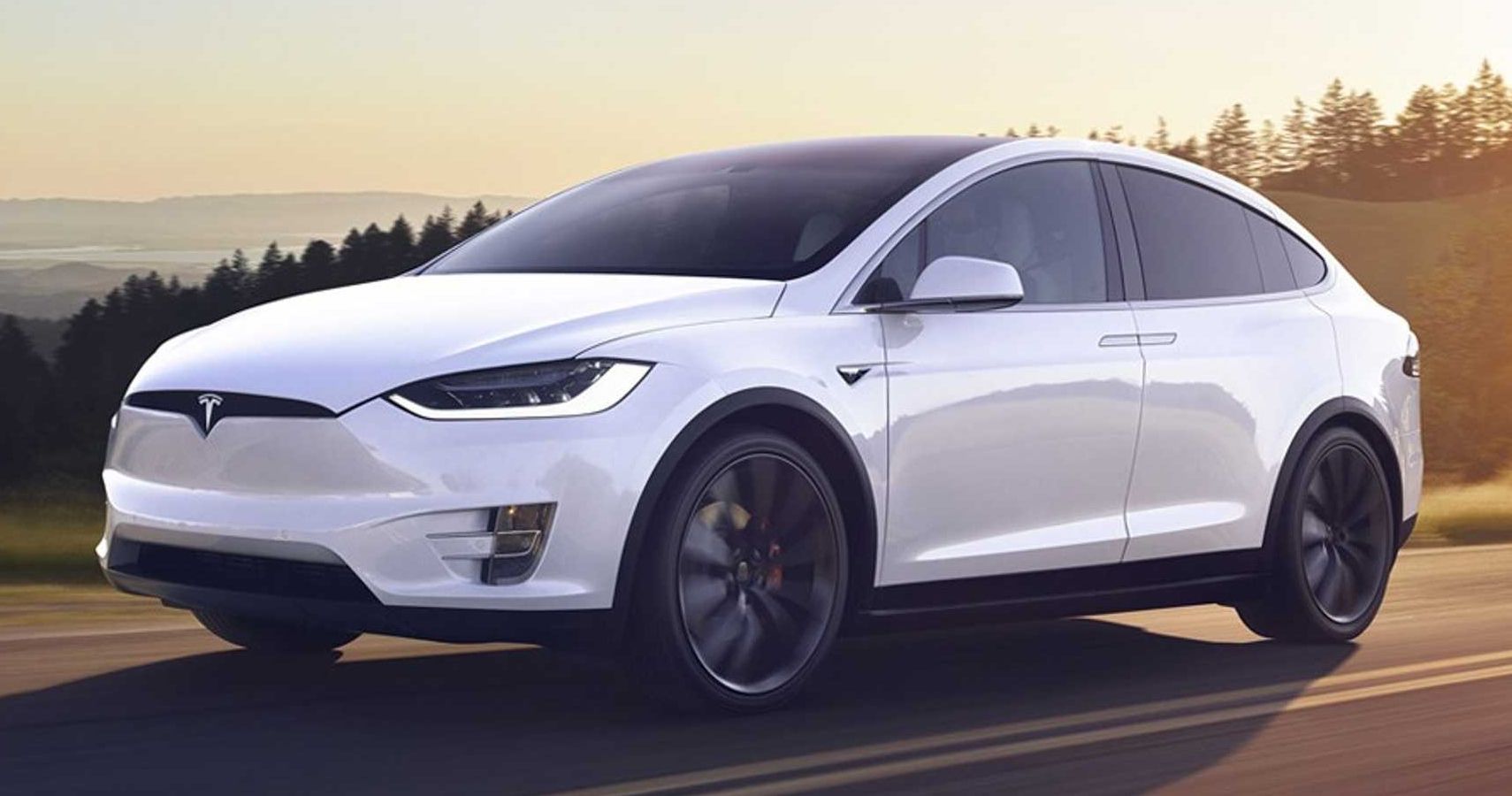
https://www.hotcars.com/things-didnt-know-about-teslas/
10 Things You Didn't Know About Teslas
A dream that consisted of electric vehicles and renewable energy sources.
... the names of Martin Eberhard and Marc Tarpenning founded Tesla to reduce
the ...
https://static3.hotcarsimages.com/wordpress/wp-content/uploads/2019/08/0-1-1-1.jpg


For EVLN EV-newswire posts use:
 http://evdl.org/archive/


{brucedp.neocities.org}

--
Sent from: http://electric-vehicle-discussion-list.413529.n4.nabble.com/
_______________________________________________
UNSUBSCRIBE: http://www.evdl.org/help/index.html#usub
http://lists.evdl.org/listinfo.cgi/ev-evdl.org
Please discuss EV drag racing at NEDRA (http://groups.yahoo.com/group/NEDRA)