https://www.thedetroitbureau.com/2019/09/toyota-testing-solar-powered-electric-prius/
Toyota Testing Solar-Powered Electric Prius
Sep 12, 2019  Michael Strong
[images
https://www.thedetroitbureau.com/wp-content/uploads/2019/09/Solar-power-Prius-front.jpg
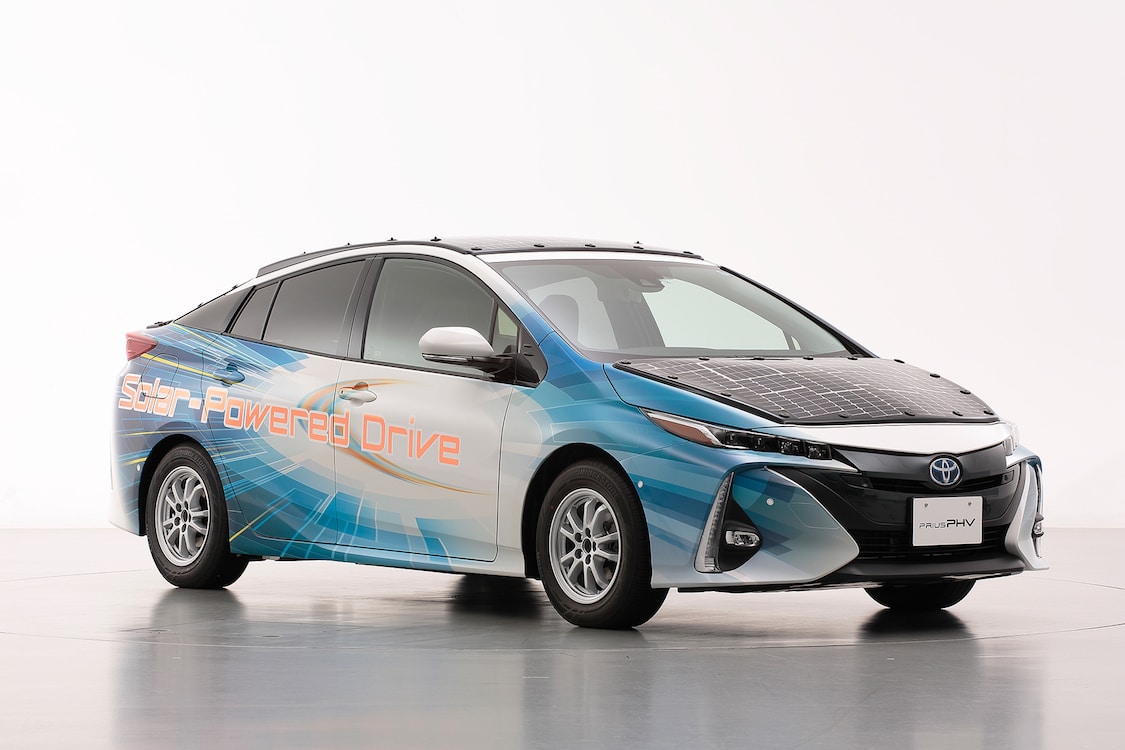
Toyota is working with Sharp to use solar panels to produce electricity for
the Prius

https://www.thedetroitbureau.com/wp-content/uploads/2019/09/Solar-power-Prius-top.jpg
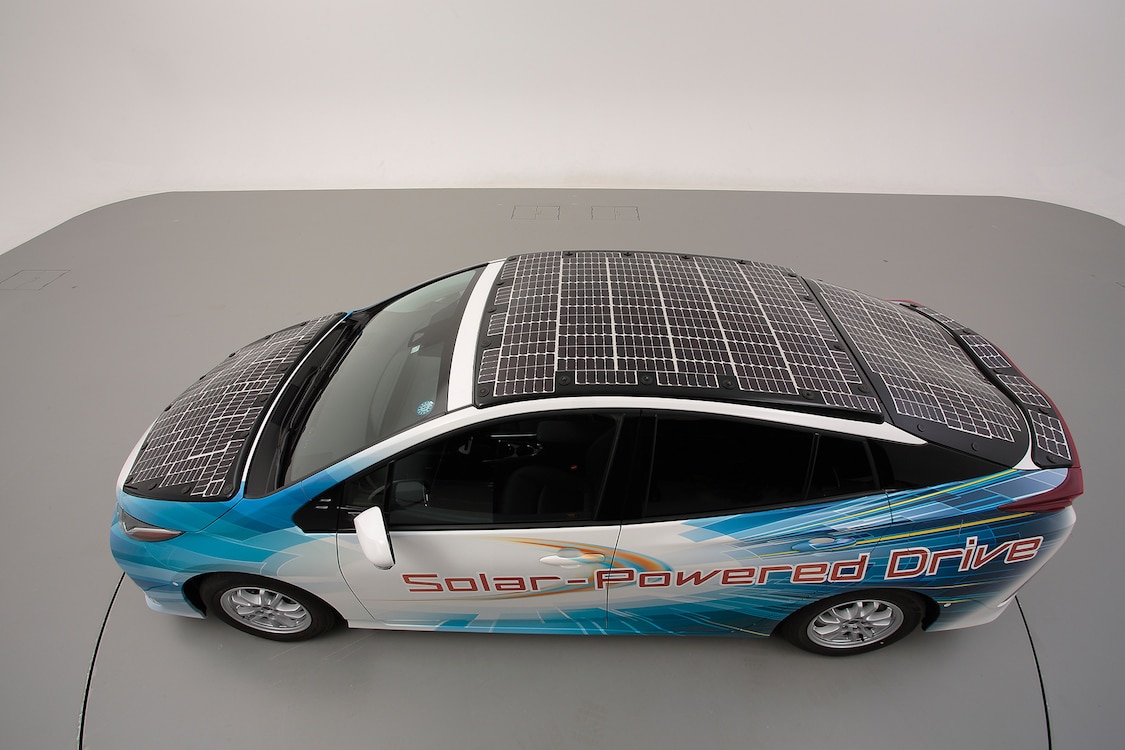
Toyota’s solar-powered Prius can travel 35 miles under ideal conditions, but
if its cloudy or too hot, it will not perform as well

https://www.thedetroitbureau.com/wp-content/uploads/2019/09/Solar-power-Prius-trunk.jpg
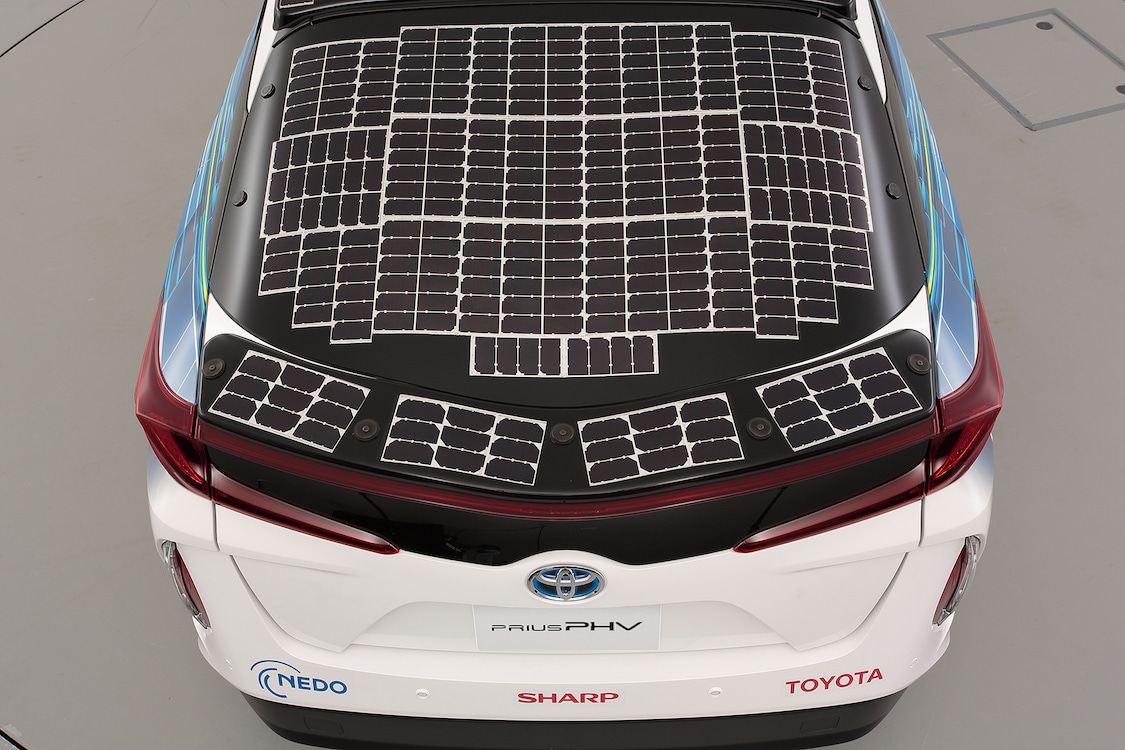
The solar panels used by Toyota and Sharp are just 1 centimeter thick
]

Under ideal conditions, car can travel 35 miles.

Not long ago, Tesla CEO Elon Musk suggested the company would re-introduce
its “solar roof,” which could power part of the vehicle, such as the HVAC to
keep the interior of the car at an ideal temperature.

It seems now that Toyota is investigating the possibility of answering the
obvious question: If you can power the roof, why not the whole car?

Initially the answer was that the solar panel roof couldn’t generate enough
power to do that, but now technology has advanced significantly. The
Japanese automaker is tinkering with ultra-thin solar panels used for
satellites to produce a solar-powered Prius.

(Toyota Sprinkles TRD Magic on Camry and Avalon for 2020)

Ideally, the panels would eliminate the need for this special Prius to plug
in and charge up. The program is part of a demonstration project funded by
the Japanese government. Using panels designed by Sharp Corp. [
sharp-world.com ], Toyota engineers fitted them to the hood, roof, rear
window and spoiler in hopes of generating enough power to push the Prius
down the road.

The electricity from the panels travels directly to the drive battery,
allowing the Prius to charge while driving or parked. The results have been
encouraging. The car has been charged up to travel as far as 35 miles, which
considering the after commute for a U.S. driver is less than 30 miles, this
could be viable transportation for some motorists.

However, the performance of the panels drops off quickly if it is cloudy or
even when it’s too hot out. If used in real-world driving in those
conditions, the Prius would have to be plugged in to recharge, the company
notes.

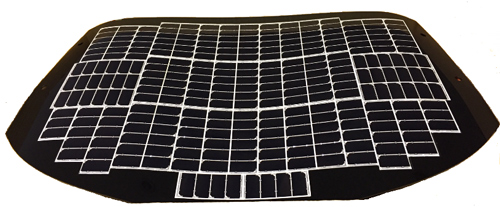
The Sharp-produced panels are extremely thin at just 0.03 millimeters.
Additionally, because they’re so thin, they can be easily shaped to the
curves of the Prius. However, the engineers needed to create a buffer
between the car and the cells to protect them, so the actual solar panel
modules are closer to a centimeter thick ...

Even though the panels are super thin, the truck of the Prius is weighted
down with an extra 180 pounds of batteries that are charged by the solar
panels. This isn’t Toyota’s first go-round with this concept. In 2017, the
company tested its Prius PHV model.

By enhancing the solar battery panel’s efficiency and expanding its onboard
area, Toyota was able to achieve a rated power generation output
approximately 4.8-times higher than the commercial model Prius PHV equipped
with a solar charging system.

In addition to substantially boosting its power generation output, the demo
car employs a system that charges the driving battery while the vehicle is
parked and also while it’s being driven, a development that is expected to
lead to considerable improvements in electric-powered cruising range and
fuel efficiency.

Toyota is conducting the trials under various driving conditions in Toyota
City, Aichi Prefecture, Tokyo, and other areas. While the updated test
version has produced impressive upgrades, Toyota officials are issuing some
familiar refrains when it comes to the current viability of the concept ...

Making the entire package lighter and bringing down the extremely high costs
are among the biggest challenges for the technology, said Satoshi Shizuka,
Toyota’s lead engineer on the project, adding that commercialization likely
remained “years away”.
[© thedetroitbureau.com]


+
[dated]
http://www.sharp-world.com/corporate/news/190704-a.html
NEDO, Sharp, and Toyota to Begin Public Road Trials of Electrified Vehicles
Equipped with High-efficiency Solar Batteries
July 4, 2019  Testing the potential of solar batteries toward CO2 emissions
reductions in the transport sector ...
http://www.sharp-world.com/corporate/news/images/190704-a-1.jpg


For EVLN EV-newswire posts use:
 http://evdl.org/archive/


{brucedp.neocities.org}

--
Sent from: http://electric-vehicle-discussion-list.413529.n4.nabble.com/
_______________________________________________
UNSUBSCRIBE: http://www.evdl.org/help/index.html#usub
ARCHIVE: http://www.evdl.org/archive/index.html
INFO: http://lists.evdl.org/listinfo.cgi/ev-evdl.org
Please discuss EV drag racing at NEDRA (http://groups.yahoo.com/group/NEDRA)