Some graphs
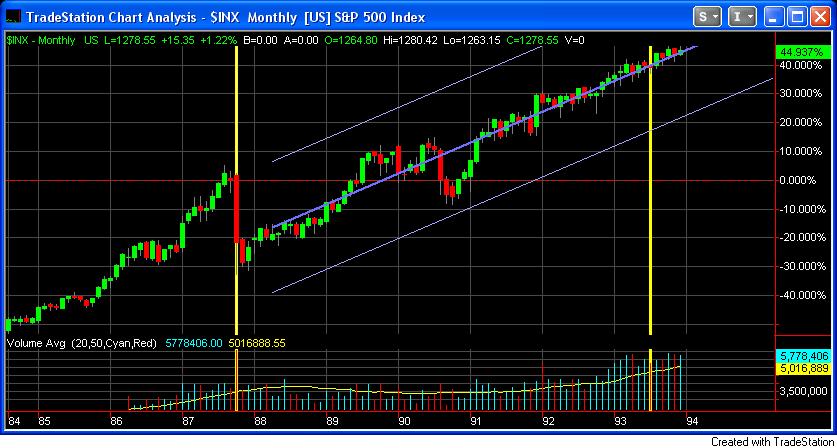
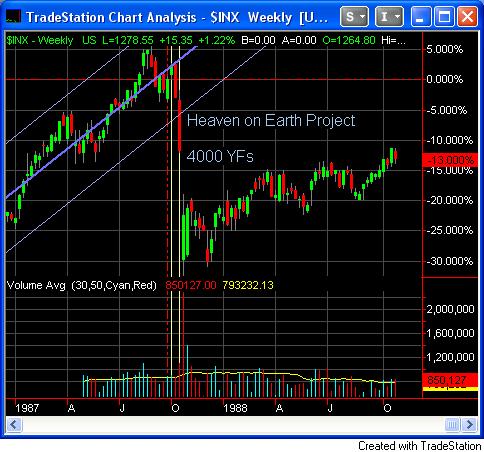
HoE
http://photos1.blogger.com/blogger/6830/3460/1600/Long%20Run%20Heaven%20on%20Earth.jpg

http://photos1.blogger.com/blogger/6830/3460/1600/Heaven%20on%20Earth%20Wk.jpg

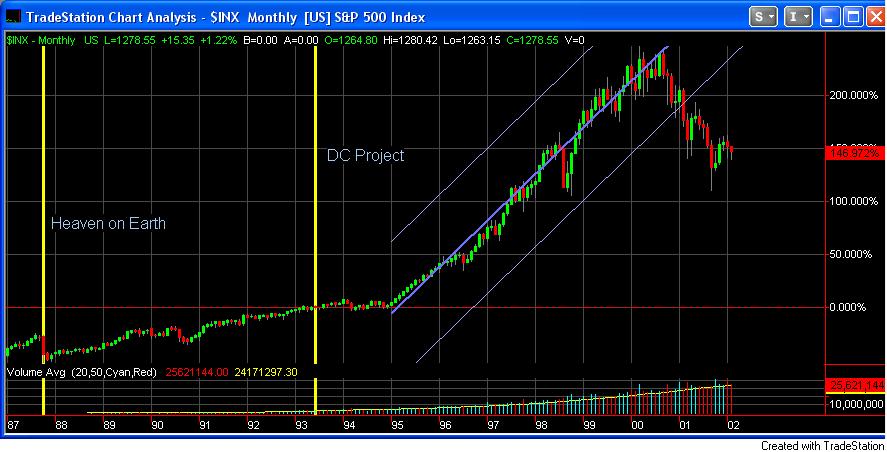
DC
http://photos1.blogger.com/blogger/6830/3460/1600/Long%20Run%20DC.jpg

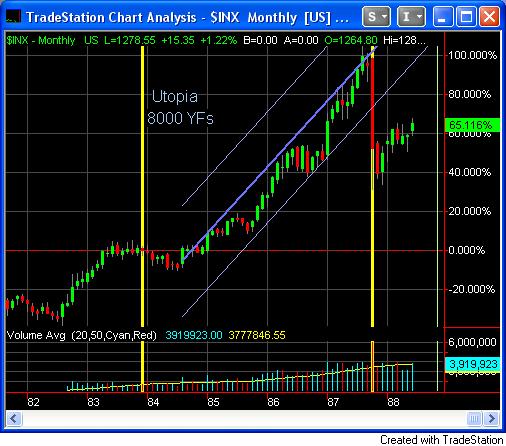
Utopia
http://photos1.blogger.com/blogger/6830/3460/1600/Long%20Run%20Utopia.jpg


--- In [email protected], new.morning <[EMAIL PROTECTED]> wrote:
>
> --- In [email protected], off_world_beings <no_reply@>
> wrote:
> >
> > --- In [email protected], new.morning <no_reply@>
> > wrote:
> > > The utopia course (I think it was that one) coincided with the
> > largest
> > > stock market crash since 29. >>>
> >
> > I don't recall that was the case.
> > I think you are thinking about the crash of 1987, at which time
> > there was no big course going on as far as I know.
>
> You recall incorrectly. As I did the name of the course. It was Heaven
> on Earth.
>
> See my blog for some graphs and analysis. (while the blog needs to be
> updated, the last post details correlative effects of major courses.)
>
> http://2006-course-effects.blogspot.com/
>
>
> Here is a summary of courses and S&P 500.
>
>
> The substantive effects of the three prior large ME projects took some
> time to mature and manifest. The immediate short-run effects indeed
> were negative.
>
> Three patterns or phases (P1,P2,P3 ) emerge upon examining short-run
> ME effects on financial markets:
>
>     * market trends flatten or reverse DURING the project
>     * 2-14 months after the project market trends are flat or remain
> within a trading range.
>     * after this flat period, trends become positive.
>
> These pattern phases might be seen as analogous to:
>
>     * major medical procedure -- the patient experiences a type of
> shock from the major intervention, sytems flatten or reverse.
>     * a recouperation phase where the patient rests and heals from a
> major medical procedure
>     * a healthy rebound, beyond past levels of vigor, after the
> patient is fully healed.
>
> DC Project
> The market remained in a trading range during the DC project,
> interupting the prior year's sharply rising market trend. Thus the DC
> project exhibits P1 -- it changed from a strong two year upward trend
> -- and stopped in its tracks during the project. The DC project also
> exibits P2 --for 14 months after the project the market remained
> within a trading range -- though a volitle one. Three times it rallied
> and declined, trying to break through the lower and upper boundaries
> of its range. After 14 months, it finally broke through its upper
> bound and transformed into into an upward trend, consistent with P3.
>
> Heaven on Earth
> For at least a year prior to the Heaven on Earth project to
> demonstrate the Maharish Effect (4000 YFs), the S&P 500 experienced a
> strong upward trend. Precisely during theHoE, project, the S&P 500
> experienced "Black Monday" -- its largest decline, over 30%, in many
> decades, a strong demonstration of P1. After this significant market
> crash, the market remained for several months in a mild trading range,
> charactersitic of P2. And after several months of the project and
> crash, the market assumed an upward trend, characteristic of P3.
>
> Utopia
> Prior to the Utopia(8000 YFs) project, the market was in a trading
> range for three months, after a strong positive trend in the
> preceeding year. During the project, there was a 4% "pop' -- which may
> have been due to a "January effect" -- a hypotheses found valid by
> several studies by financial econometricians. However, during the
> later stages of the project (needs to be validated exact end of
> project) , during january and early februrary 1984, the market
> experienced a sharp decline of over 10% , characteristic of P1. Over
> the next five months the market was in a flat of slightly declining
> range, characteristic of P2. After five months, the market began a
> strong positive upward trend, characteristic of P3.
>


To subscribe, send a message to:
[EMAIL PROTECTED]

Or go to:
http://groups.yahoo.com/group/FairfieldLife/
and click 'Join This Group!'
Yahoo! Groups Links

<*> To visit your group on the web, go to:
    http://groups.yahoo.com/group/FairfieldLife/

<*> Your email settings:
    Individual Email | Traditional

<*> To change settings online go to:
    http://groups.yahoo.com/group/FairfieldLife/join
    (Yahoo! ID required)

<*> To change settings via email:
    mailto:[EMAIL PROTECTED]
    mailto:[EMAIL PROTECTED]

<*> To unsubscribe from this group, send an email to:
    [EMAIL PROTECTED]

<*> Your use of Yahoo! Groups is subject to:
    http://docs.yahoo.com/info/terms/