This article from NYTimes.com
has been sent to you by carol starr [EMAIL PROTECTED]

fluxlist


carol starr
[EMAIL PROTECTED]

/-------------------- advertisement -----------------------\


Celebrate Summer with a NYTimes.com Photo Screensaver
NYTimes.com's latest
screensaver captures the unforgettable
moments from Coney Island amusement park.
Enjoy these
images every day on your computer, absolutely free.

http://www.nytimes.com/partners/screensaver/index.html?eta2

\----------------------------------------------------------/

An Art World Figure Re-Emerges, Unrepentant

September 3, 2000
By  AMY NEWMAN

In 1971, Philip Leider, the founding editor of Artforum, walked away
at the magazine's peak of influence. During his almost 30-year
disengagement from an art world that grew up during the same
period, Mr. Leider never spoke publicly about his Artforum years,
nor did he agree to be interviewed about them. His involvement with
"Challenging Art: Artforum 1962-1974," a book coming out this month
from Soho Press, parallels a resumption of his writing  in American
art periodicals. In 1994, he began a dialogue with the book's
author, Amy Newman, a former editor of Artnews. Following are
excerpts from a recent conversation about the professional
decisions he has made and about his views of contemporary art.


 NEWMAN.  Where are you these days?

 LEIDER.  As in where are you physically or as in "where are you
at?"

 NEWMAN.  Well, let's start with physically.

 LEIDER.  I live in Jerusalem. I just finished my last of 10 years
of teaching here at the Bezalel Academy of Fine Arts.

 NEWMAN.  And where are you at?


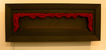
 "Sound for a Silent Movie"
by Nahum Tevet (1986)

 LEIDER.  Two places, actually, both pretty interesting.

The
first place is the Chestnut Tree Cafe, with the rest of the ghosts,
drinking Victory Gin and trying to make out what's passing the
darkening window.

 The second is something like where John Lennon was when he wrote
that song about "I don't beLEEVE in Beatles, I don't beLEEVE in
Zimmerman," etc., etc.

Sometimes the two places are different, sometimes they seem the
same.

 NEWMAN.  Explain.

 LEIDER.  Well, in the Chestnut Tree Cafe we spend most of our time
pondering what it's like to have fallen behind: you get in free
when you've arrived at the certain conclusion that you have fallen
behind. Then the waiters keep filling your glass without your
asking. The TV is on but without sound, and you usually sit with
your back to it. There's no fax, no e-mail. The waiters pat you on
the back and say, "You guys don't need that stuff."

 Falling Behind turns out to be a stage in one's career as real as
the stages of Paying Your Dues, Getting In, Being on Top of Things,
the nice period of Instant Comprehension when you don't need anyone
to tell you what's going on, then a kind of Unconscious Withdrawal,
then a kind of Conscious Withdrawing, with snarling and anger and
the certainty that everything has turned to nonsense. And then, if
you're still alive, there's Falling Behind.

 In the realm I work in, when the smoke cleared, it turned out
you'd fallen behind if you hadn't "gotten" Masaccio.

You'd fallen behind if you hadn't gotten Manet and Cézanne.
You'd fallen behind if you hadn't gotten Picasso and Braque,
Pollock and Newman, Stella and Smithson.  You were wrong, they were
right.  Now I don't get anyone from Julian Schnabel to Matthew
Barney and realize that it's much more likely that I've fallen
behind than that what I thought was real art simply ended, like at
a certain point mosaics or stained glass simply ended.

 I mean by that the possibility that it isn't set in stone that
what I consider art is something that people will always make. It's
possible that sometime or other someone will hold up a paintbrush
and say, "What's this?" But when I look around the Chestnut Tree
Cafe and see all those ghosts around me who all saw the end of art,
from Clement Greenberg back to John Ruskin,  I figure the
probabilities, and the probabilities favor Jeff Koons and Kiki
Smith and all the other artists I don't get.


 An untitled installation by Zvi Goldstein.

 NEWMAN.  Why don't
you just take the position that it's a bad time for art, a bad
period?

 LEIDER.   That's what you say before you take the pledge and
confess you've Fallen Behind. First you say it's bad, then you say
you're "out of sympathy," and then you say you're out of it,
period.


 NEWMAN. Can you identify what happened to get you here?

 LEIDER.
I think the most important thing that happened was the death of
Smithson in 1973. It's possible he was the one carrying the ball at
that moment, the way Pollock was around 1946, or Goya was in 1800.
If Pollock had died in 1946 or Goya in 1800 . . . well, you'd just
see a void.

And around the same time, all the good people just walked away:
the better critics, the better artists. The void got filled with
Warholism.

 NEWMAN.  What's Warholism?

 LEIDER.  Shorthand for everything I've fallen behind of. About the
only thing I get, in all this art I don't get, is the sense that it
all goes back to Warhol.

 NEWMAN.  Didn't you admire Warhol at one time?

 LEIDER.   Sure I
did, early on.

I may have taken him more seriously than anyone else.  I'm sure I
was the first to put him on the cover of an art magazine, and I
think I wrote one of the earliest appreciations of his influence.
But it turned out that Warhol didn't care about art; he really was
into what he called "glamour." And the decline in his art
registered that pretty quickly.  But the worse his actual work got,
the more people he seemed to attract.  It was weird.  For example,
I have the notion that all these "utterance" artists came out of
Warhol.  At some point people seemed to have the idea that his
frequently quoted utterances were art, and started making
utterances themselves:  Barbara Kruger, Jenny Holzer. They never
seem to achieve that banal brilliance that made Warhol so amusing.
Anyway, that's what I mean by Warholism. Is that crazy?

 NEWMAN.  It could be seen that way.


 LEIDER.  Well, there you
are.

Falling Behind isn't easy: you keep relapsing into thinking you
have a handle on things.  You sort of have to keep repeating the
Vow, like people in rehab programs. I DON'T GET IT.  I REALLY DON'T
GET IT. I REALLY REALLY DON'T GET IT.  And you've got to believe
it, not just pretend.  Hard work requires constant vigilance
against backsliding.

 NEWMAN.  Is this where John Lennon comes in?

 LEIDER.  Yeah.


What we've been talking about is passive Falling Behind.  Active
Falling Behind is sort of like when Winston sneaks behind the
television   screen and starts writing DOWN WITH BIG BROTHER over
and over again in his notebook. Sometimes I find myself writing:

 I don't beLEEVE in Andy

 I don't beLEEVE in Haring.

 I don't
beLEEVE in Fischl.

 I don't beLEEVE in Koons.

 I don't beLEEVE in Kelly.

 I don't beLEEVE in Holzer.

 I don't
beLEEVE in Schnabel.

 I don't beLEEVE in Salle.

 I don't beLEEVE in Finley.

 I don't beLEEVE in Kiki.

 I don't
beLEEVE in Vaisman.

 I don't beLEEVE in Taaffe.

 I don't beLEEVE in Levine.

 I don't beLEEVE in Sherman.

 I
don't beLEEVE in Scharf.

 I don't beLEEVE in Basquiat.

 I don't beLEEVE in Kruger.

 I don't beLEEVE in Longo.

 I don't
beLEEVE in Halley.

 I don't beLEEVE in Barney.

 I don't beLEEVE in Bleckner.

 I don't beLEEVE in Gober.

 I
don't beLEEVE in . . .


 NEWMAN.  If I understand you properly, you are saying that you
have no understanding of American art and dismiss French, English
and German art out of hand.

 LEIDER.   With regard to German art (or literature or anything), I
don't just dismiss it out of hand; I dismiss it a priori, before
it's even painted or written.

I simply will not entertain the idea that a nation can destroy its
culture utterly and then grow it again in less than 50 years.

 Can't be.

Human actions have to have some consequence.

 The
French are easy: across the board, in literature, film, philosophy,
politics, linguistics, confronting terrorism, they are windbags,
who turn and run at the slightest run-in with real life.

 Derrida's cowardly obfuscation in the de Man affair is mirrored
exactly in French foreign policy, for example. And, since as far as
I know they don't make art any more, it's easy to try to forget
they're even there.

 The English are a little bit harder because there are real
exceptions:   George Orwell, Anthony Powell, Philip Larkin, Rachel
Whiteread, and there are others. "Out of hand" isn't quite good
enough.

 With the English, one would have to explain, I think, why the kind
of operatic overkill of the Bacon-Freud-Formaldehyde art line can't
work.

 Look, these are my opinions, and I wish I were more confident of
them than I am. I don't have nearly as broad an acquaintance with
this stuff as I should have to sound off this way.

NEWMAN.  What about the remark about "all the good people" walking
away?

 LEIDER.  I guess what I was really referring to there was the
breakup of Artforum, or I guess I should say, my Artforum. There
was a scene happening, unexpected, unpredictable and unpredicted,
but there and real.

The scene was the emergence of a coherent group of very, very good
artists at the core of which were Smithson, Serra, Heizer, Saret,
Sonnier.  They were connected with something new in film -- Michael
Snow -- and something new in music -- Philip Glass. It was very
exciting, and I couldn't get any of the writers I cared about to
get interested in it.  So I picked up my marbles, like a little
kid. I hired someone, John Coplans, whom I felt would not be able
to run the magazine, who would not be able to hold the staff
together -- in fact, whom I felt was the worst person for the job
as I conceived it -- so I could walk away singing, "Na-na-na-na,
Na-na-na, Na-na-na-na, Good-BYE!" So they would all say, "This
would never have happened if we'd been more receptive to Philip's
urging, more willing to take a look, even a second look, at the
scene he kept insisting he wanted us to cover." In retrospect, of
course, it was irresponsible, but it felt pretty good at the time.

 NEWMAN.  And that's why you quit?

 LEIDER.  No. I quit, as
always in these situations, for a complex of reasons, including
what I think Norman Mailer once said always includes some "shoddy
motive." The shoddy motive I'm aware of was a creeping feeling that
I  wasn't on top of things anymore, that I was beginning to ask,
"What's that about?" and not really understanding stuff. I remember
first becoming conscious of this during a visit to Keith Sonnier's
studio, when I wasn't even sure where the art was!  But there were
other things. I was tired and felt the magazine was going downhill.


And my life also has seemed to assume a pattern of making major
changes every 10 years or so. And I was afraid for my kids in New
York. Lots of stuff. But primarily, I'm sure, was that I couldn't
get a staff to take the magazine where I wanted it to go.

 NEWMAN.  Was everyone you knew influenced by Greenberg?

 LEIDER.
Oh, sure.

At the beginning the artists loved Greenberg's criticism because it
was directed against 10th Street -- second-generation Abstract
Expressionism -- and the reaction against 10th Street was what all
the new artists had in common. And all the better writers praised
Greenberg because he posed such a clear alternative to Harold
Rosenberg, whose art writing was simply unbearable.  Greenberg
provided everyone with a language both for not painting like 10th
Street and not writing like Rosenberg.

 NEWMAN.  You too?

 LEIDER.  My experience with Greenberg was singular. He was bugged
by the magazine since the second or third issue. When the magazine
moved to New York from California, we met and didn't take to each
other, but it was to our mutual interest to bury the hatchet. He
wanted the adulation of the writers, and the writers liked writing
for Artforum.

So he relented and sort of put his imprimatur on the magazine,
though he never wrote much for it.

 The end between  Greenberg and me happened over something quoted
in a posthumously printed interview with Ad Reinhardt that we
published.

 Greenberg wrote me a letter calling me a "rat" (he also called
Reinhardt a "cur") and would never speak to me again.

At the same time, lots of others were having their hands chopped
off the boat -- Michael Fried, Rosalind Krauss, Barbara Rose,
others -- all for different reasons. I think it was best for them;
I don't know of anyone who profited from a long-term friendship
with Greenberg.  NEWMAN.      Did you stay in touch with the
magazine?  LEIDER.  Never exchanged another word with Coplans or
anyone else until Jack Bankowsky, the current editor, wrote to ask
me to participate in the 30th-anniversary issue.

 NEWMAN.  So what was your reaction when you were asked to
participate in a book on the early years of Artforum?

 LEIDER.  Normal motive: You came recommended by the most decent
guy in the world, Irving Sandler, so I knew you'd probably have no
ax of your own to grind, and that you'd be fair. Shoddy motive: Oh,
boy, now I can savage all those people I hate.

 NEWMAN.  You had been teaching at the University of California at
Irvine after you left.

 LEIDER.    I discovered I was good at teaching and for a while
even liked it.

And my writing got better:  I wrote some good stuff during that
period.

 NEWMAN.  Like what?

 LEIDER.  Well, "Stella Since 1970," and the introductory essay to
Smithson's writings, for example.

 NEWMAN.  Why did you leave?

 LEIDER.  Well, once again 10 years seemed to have passed and about
the biggest change in me during that time was the increasing
seriousness of my Zionism.

One year Stella was invited to Bezalel and dropped the word that I
might be interested in taking a year off there.  One thing led to
another, and I was there as a visiting professor in 1983.  I loved
the students.

 NEWMAN.  Why?

 LEIDER.  No junk in their heads.

They were also older, it being the custom to go to college after
the army and after a kind of Wanderjahr where they
characteristically go to the weirdest, most dangerous places on
earth.  I also found them surprisingly good artists, for the most
part.  Anyway, after 1983 all my thoughts were in the direction of
getting back to Bezalel.  The problems were mostly financial:  I
couldn't really swing working for about 20 percent of what I was
making at U.C.I. until 1989.

 NEWMAN.  So you didn't go off on a religious kick?

 LEIDER.  Oh,
nonsense!

 NEWMAN.  Are you involved in the Israeli art scene?

 LEIDER.  Well, I'm not sure "involved" is quite the word.

I'm
very interested in it and keep seeing parallels between what's
going on here and what was going on in America in, say, the early
40's. I mean the overwhelming imperative in America then to make an
American art is sort of paralleled  by the feeling I sense in
Israeli art that the only really worthwhile problem is to find some
way to give expression to Jewish experience. I may not "sense" this
so much as project it.  In any event, it's no surprise that I look
at Israeli art more seriously than at any other, for better or
worse.  For what it's worth -- and there may be too much bias
involved to make it worth much -- I think I could put together a
group of about 7 to 10 Israeli artists spanning two or three
generations that I think as good as any similar group in the world.


 NEWMAN.  Care to name them?

 LEIDER.  Why not?  Leah Nikel, an abstract expressionist who gets
better as she gets older.

Zvi Goldstein, who makes wonderful work from the strangest
combination of off-the-wall politics, alienation and frustration.
Nahum Tevet, whose work simply sparkles with intelligence.

 Among the younger artists, Amnon BenAmi, Judith Sasportas, Etti
Abergel, Judith Appleton, Dalit Sharon, Osnat Avital. They are not
a "school"; none of their work resembles the work of any other.

They don't sell.  They exchange work, buy friends' work.  Have
small openings in which nothing happens.  There's no art press to
speak of, no criticism of any weight.

 Very much like the New York of the mid-40's, with even less hope
than those guys had.

 NEWMAN.  Why is that?

 LEIDER.  Well, even the occasional American or European curator or
dealer who is impressed by their work thinks twice about a show of
Israeli artists.

Who wants to hire security for an art show?  Who wants to worry
about a bomb through the window? On the other hand, maybe that's
not so bad: I can't think of anything that would destroy this
developing art world more than sudden acclaim from Europe or
America.


The New York Times on the Web
http://www.nytimes.com

/-----------------------------------------------------------------\


Visit NYTimes.com for complete access to the most authoritative
news coverage on the
Web, updated throughout the day.

Become a member today! It's free!

http://www.nytimes.com?eta

\-----------------------------------------------------------------/

HOW TO ADVERTISE
---------------------------------
For information on advertising in e-mail newsletters
or other creative advertising opportunities with The
New York Times on the Web, please contact Alyson
Racer at [EMAIL PROTECTED] or visit our online media
kit at http://www.nytimes.com/adinfo

For general information about NYTimes.com, write to
[EMAIL PROTECTED]

Copyright 2000 The New York Times Company