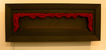
Latest submission to the Fluxus registry...

>From: [EMAIL PROTECTED]
>Date: Mon, 11 Feb 2002 08:51:16 EST
>Subject: register me
>To: [EMAIL PROTECTED]
>CC: [EMAIL PROTECTED]
>X-Mailer: AOL 6.0 for Windows UK sub 10510
>X-Loop-Detect: 1
>
>Hi,
>my name is Fabrice Joseph Arfi. I am a servile creep as well as a derivative
>artist who would do anything to get noticed. Richard Demarco said that I was
>Fluxus so,  I decided to join up your group in order to invite lots of people
>to my private view at the City Gallery, Leicester, UK, on March 22nd 2002 at
>6.00 PM.
>You can reach me on [EMAIL PROTECTED]
>PS: I'm sending a few attachment as I feel that they give a few clues about
>my work.
>Cheers,
Attachments:

---------------------------------------------------
Fabrice Joseph Arfi

Artist�s Statement

My work stands at a crossroad between performance, installation and
painting. Its goal is to challenge the traditional role of the artist in
the west as a maker of objects rather than images and situations. I came
from a double background, both culturally and artistically and I tried to
take different traditions into account and to break boundaries between
purported art genres and cultures.

This piece originally started as a humorous and poetic photography
exhibition where the public was confronted with images of graffiti and
other landscape abnormalities and then encouraged to produce their own
graffiti.

This time, the artist acts as an officiant and guide, a performer of
cathartic ritual who operates as a catalyst of forces between the public
and the work, responding to the public�s intervention by modifying the
space and covering the walls with paint.

This show is dedicated to the memory of Professor Nicholas Zurbrugg.

Contact:

Fabrice Joseph Arfi                     tel: 0116 2545221
9, Saxon Street                 mob: 07810781825
Leicester                       e-mail: [EMAIL PROTECTED]
LE3 0BL

----------------------------------------

I Want a Life�III
Mapping the Mind

The I Want a Life� project has been running since last February and
normally operates in two parts; half photography and half
performance/installation.

The two parts do not need to work together and so the photographic part
finally took a life  of its own and has already been exhibited in Leicester
and at Canas de Senhorim, in Portugal. The performance part was
successfully crash-tested at the Ales Wagon, in Leicester at the end of
2001 and was, effectively, the second avatar of the show. The version I am
currently planning for the City Gallery will be its third.
  The piece is more a reaction to the world as a social and philosophical
entity rather than influenced by any artist, piece or genre as such, though
it bears connotations if not direct references to other artists and
movements, such as fluxus or beuys, Jimmy Durham or even Bobby Baker.

It is fair to say that this piece of work was born out of frustration and
lack of means to produce art at a time when I badly needed a life, IE: a
way to produce art, though I was at a financial dead end. Maybe lack of
means and material allows a concentration process which can be very
productive. Anyhow, no matter how little you have left, you still have
yourself, your own body, your mind and the input of others, which is
already a lot as well as a highly versatile, enjoyable and direct way to
make art. I feel that far too few people think about it but, as an artist,
you are, as an entity, the first and most obvious medium as well as, for
many in my case, also the best and most expressive.
It is made to propose a different and more poetic approach to urban
environment and to encourage the public to interact with it and with each
other at the same time.

The project is time/process based and deals with organising and building
and environment for a performance as it is actually taking place. In other
words the performance deals precisely with building the space for the
performance; you interact with the world as you actually act the world; you
create it, as you are precisely what it is made of. (Danton: �We didn�t
make the revolution, the revolution made us.��Or is it vice-versa? -
Bhchner, Danton�s Death, II;1)

It is set in a square brightly lit white room. As the public pears through
the only opening, the floor has already been covered with tabloid newspaper
as if the room has been prepared to be painted.

Here, the artist acts as an officiant and operates as a catalyst of forces
between the public and the work and responds to the public�s intervention
by modifying the space and covering the wall with paint in three different
colours. Indeed, only three colours are needed to colour a map, though it
is, in this case, the map of the mind of the people present at that point
in time, which will be fixed on the walls with paint.

The surrealists likened the role of the artist to that of a medium; here,
the artist is the medium in every sense of the term. In other words, the
artist doesn�t only stand in between what Plato would call the sensitive
and the sensible world but also in between the public and the piece as the
brush does in between the painter and the canvas. The artist, then, becomes
effectively the medium of the performance/installation in the way that he
or she becomes at the same time tool and material, indispensable to the
creation of the piece.