Dear Friends & Fellow Workers
a friend just sent this to me
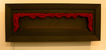
at the Juneau Station Post Office (corner of Jackson and Juneau in Milwaukee, Wisconsin, usa)--
a very good work by the Riverwest Artits Association (RAA)--
last year they lost there gallery space--
so decided to hold a show in the space they had left--a medium sized post office box--
it is now on display traveling through the post offices of Milwaukee through this year--
it is the post office box--and inside, chair, small persons, paintings on walls, objects, mini-sculptures
not Mail Art so to speak--but a lovely cousin!
onwo/ards!!!!
"En avant Dada"
ZADA-
david baptiste
>
>Anarchists and the fine art of torture
>
>Spanish art historian says they put enemies in disorienting cells
>
>Giles Tremlett in Madrid
>Monday January 27, 2003
>The Guardian
>
>A Spanish art historian has uncovered what was alleged to be the
>first use of modern art as a deliberate form of torture, with the
>discovery that mind-bending prison cells were built by anarchist
>artists 65 years ago during the country's bloody civil war.
>
>Bauhaus artists such as Kandinsky, Klee and Itten, as well as the
>surrealist film-maker Luis Bunuel and his friend Salvador Dali, were
>said to be the inspiration behind a series of secret cells and
>torture centres built in Barcelona and elsewhere, yesterday's El
>Pais newspaper reported.
>
>Most were the work of an enthusiastic French anarchist, Alphonse
>Laurencic, who invented a form of "psychotechnic" torture, according
>to the research of the historian Jose Milicua.
>
>Mr Milicua's information came from a written account of Laurencic's
>trial before a Francoist military tribunal. That 1939 account was
>written by a man called R L Chacon who, like anybody allowed to
>publish by the newly installed dictatorship, could not have been
>expected to feel any sympathy for what Nazi Germany had already
>denounced as "degenerative art".
>
>Laurencic, who claimed to be a painter and conductor in civilian
>life, created his so-called "coloured cells" as a contribution to
>the fight against General Franco's rightwing rebel forces.
>
>They may also have been used to house members of other leftwing
>factions battling for power with the anarchist National
>Confederation of Workers, to which Laurencic belonged.
>
>The cells, built in 1938 and reportedly hidden from foreign
>journalists who visited the makeshift jails on Vallmajor and
>Saragossa streets, were as inspired by ideas of geometric
>abstraction and surrealism as they were by avant garde art theories
>on the psychological properties of colours.
>
>Beds were placed at a 20 degree angle, making them near-impossible
>to sleep on, and the floors of the 6ft by 3ft cells was scattered
>with bricks and other geometric blocks to prevent prisoners from
>walking backwards and forwards, according to the account of
>Laurencic's trial.
>
>The only option left to prisoners was staring at the walls, which
>were curved and covered with mind-altering patterns of cubes,
>squares, straight lines and spirals which utilised tricks of colour,
>perspective and scale to cause mental confusion and distress.
>
>Lighting effects gave the impression that the dizzying patterns on
>the wall were moving.
>
>A stone bench was similarly designed to send a prisoner sliding to
>the floor when he or she sat down, Mr Milicua said. Some cells were
>painted with tar so that they would warm up in the sun and produce
>asphyxiating heat.
>
>Laurencic told the military court that he had been commissioned to
>build the cells by an anarchist leader who had heard of similar ones
>used elsewhere in the republican zone during the civil war, possibly
>in Valencia.
>
>Mr Milicua has claimed that Laurencic preferred to use the colour
>green because, according to his theory of the psychological effects
>of various colours, it produced melancholy and sadness in prisoners.
>
>But it appears that Barcelona was not the only place where avant
>garde art was used to torture Franco's supporters.
>
>According to the prosecutors who put Laurencic on trial in 1939, a
>jail in Murcia in south-east Spain forced prisoners to view the
>infamously disturbing scene from Dali and Bunuel's film Un Chien
>Andalou, in which an eyeball is sliced open.
>
>El Pais commented: "The avant garde forms of the moment - surrealism
>and geometric abstraction - were thus used for the aim of committing
>psychological torture.
>
>"The creators of such revolutionary and liberating [artistic]
>languages could never have imagined that they would be so
>intrinsically linked to repression."
>