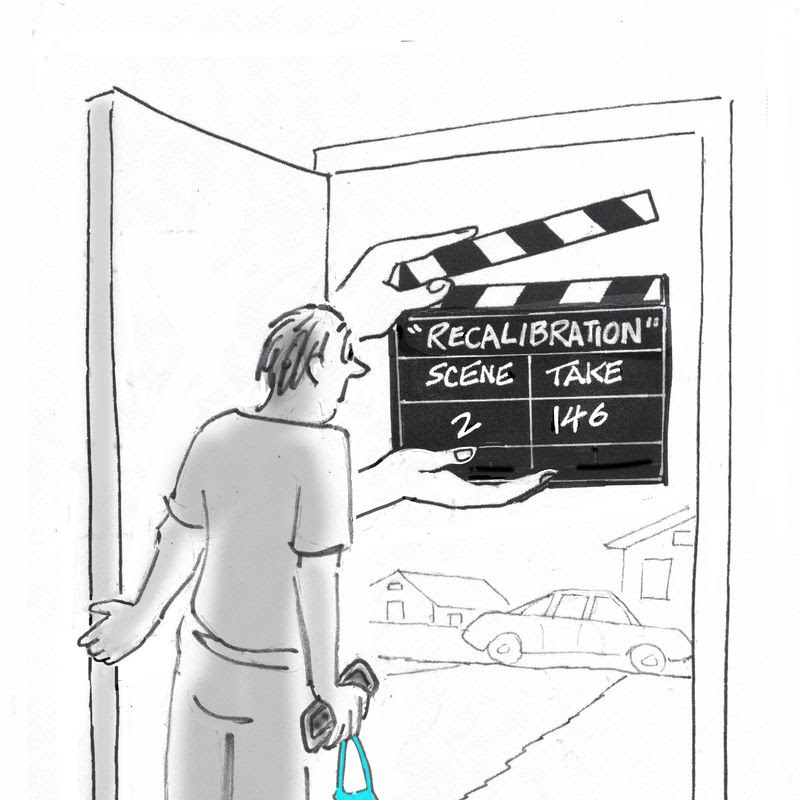
https://ci6.googleusercontent.com/proxy/WIh-Gk1rAQfagUkW9j9Vfb0_18xPkJI9b1Ci41loQI3r9dukFTKHgoziO3lN0wOTZC0Ljzi_99okKnJguPbjqM1MsxcKNSZXjsr0sqZuILrrSGtAx5iavd5wxkfRdqOXYXQB=s0-d-e1-ft#https://media.newyorker.com/photos/5f72193f672e2c76463652e6/1:1/w_800/A24713.jpg
Do you have to have a Google account to see that?

---
Frank C. Wimberly
140 Calle Ojo Feliz
Santa Fe, NM 87505

505 670-9918
Santa Fe, NM

On Mon, Sep 28, 2020, 3:35 PM Steve Smith <[email protected]> wrote:

> Eric -
>
> Great "wander" from the main thread...   Your "wander" through the
> rhetoric of Adam Smith and the abuses of the *ideal* of a free market leads
> me to (re) offer up the tome written by Tomas Bjorkman:  "The World we
> Create: From God To Market" <http://www.tomas-bjorkman.com/#books>.
>
> As a young man I was seduced by the illusions implicit in the "card
> carrying Libertarian" mode.   I was perhaps myself, seduced by the minor
> (or at least obscured) edge the Libertarian rhetoric seems to give to those
> with some kind of advantage, the opportunity (inevitability?) to parlay
> that into dominance.   Coming out of childhood where my parents, older
> sibling, teachers, older classmates, bosses, authorities, etc.  all had a
> range of advantage up to complete dominance over my life, I was focused a
> bit more on wiggling out  from under those thumbs than I was perhaps aware
> that *I* was going to become someone else's thumb, and in fact very likely
> already was, merely by being a member of varied overlapping communities of
> privilege.   Some of the conversations here, including what I interpret
> from Glen (at least) and others having gone through some of those illusions
> and come out the other side, have helped me understand how "yet more" I was
> seduced by those idea(l)s and continue to benefit from them
> unconsciously.   For example, as I consider myself part of the "dominated"
> 99% by the "dominating" 1% (wealth) in our culture, I have to recognize
> that I am at least part of the dominating 10% (wealth, military, political)
> in the world over the 90% (each of us can pick our own ratio).
>
> I also appreciate your analysis of "originalism", as I have lived under
> the specter of the differences between letter and spirit or letter and
> intent of various laws/rules/etc.    I eventually (again, some help from
> some of the discussions here) had to acknowledge (more and more) that
> simply discarding the letter *for* the intent/spirit has risks and
> challenges in the same way as blindly (or belligerently?) following the
> letter can.    I regretfully agree that the upcoming Senate hearings to
> consider (rubber-stamp?) confirmation of ACB, *might* (but won't) offer a
> forum to discuss publicly the larger issues of how the three branches of
> government were considered to provide checks and balances to runaway
> accumulations of power, at least in our political and governance systems.
>
> My own personal "answer" to the lack of "an algorithm to track
> externalities" is to scope my transactions more and more local, and
> re/up-cycle    As of a month ago, I only eat eggs layed in my own back
> yard.   When I have my farming shit together, I mostly only eat vegetables
> (including beans and dried corn and squash) grown on the land near my home,
> with water pumped from the aquifer underneath my home by (if I had my
> solar/wind shit together better) energy obtained from the sun/wind flux in
> my immediate environs.   I can virtue-signal in concentric rings out from
> there to include the wood I burn for supplemental heat to come from the
> trees growing nearby,  and the car I drive (up to 40mi RT/day) being
> electrified by the same solar flux as the water pumped).
>
> The point isn't to (just) virtue signal but to experiment with how much I
> *really* need to ask people all over the world to defer to my
> financial/military/political dominance (laundered through my government and
> the huge corporations it enables) and first-world privilege squanderage.
> I still regularly eat avocados shipped (with fossil fuels) 1000 miles or
> more, often from Mexico and drink coffee shipped similar differences and
> cultivated/picked by people making a tiny fraction of what I live on while
> very wealthy middle-persons (or corporations) get wealthier from their
> labor (and likely what was formerly their ancestor's landscape) and my
> excess spending power.   The computer (12 year old macbook pro) I type on
> definitely started life as a pure externality as did the stupid-big battery
> in my (already used-up by the former owner's perspective) electric car (did
> that lithium come from Mongolia, or just the Neodymium in the
> motor-generators?),  and the cement in the mortar I'm using to face the
> stem-wall (and the concrete block OF the stem wall) of my sunroom is
> another externality (in material AND energy) I have no trouble (usually)
> treating as "no big deal".  And I still ask my UPS/FedEx/USPS driver to
> haul her 10,000 GVW delivery vehicle down my lane to my house to idle while
> she unloads whatever bit of electronic/digital junk I thought  I needed
> while browsing Amazon/aliExpress/NewEgg/??? last week, albeit only once a
> week (using Amazon Day, etc.).  I don't know *where* the bitumen in the
> asphalt of the highway those trucks and I speed down (all electric!!!)
> every day or so comes from, or how it gets there.   There are no end of the
> externalities to ignore.
>
> I'm convinced that if the global industrial-transportation system doesn't
> collapse out from under us, only the most rabid of freegans can even begin
> to pretend that their externalities are strictly local.   My personal
> attempts to contract in this way may be entirely ideosyncratic and thin
> unto empty, but every time I try to recognize who and what I'm harming,
> where, I get a brief glimpse of a local optimization I *can* do, and listen
> for the screams of those who have to absorb them.
>
> This might provide a fair segue back into the questions of the kinds of
> optimization that free markets might offer:   *Economies of Scale*,
> *Synergy* amongst qualitatively different goods/services, and the
> *Annealing* that the push-and-shove of competitive markets *can*
> provide.   Are these real things, or just tricks and illusions the(we?)
> power/wealth mongers caste to keep the rest of us(them?) feeding their
> greed?   The thought of an algorithm (facilitated how?) to help keep track
> of if/when/where/how these things come to play and where they are just an
> obfuscation to exploiting Gaia and her (human and other animal) children.
>
> - Steve
> On 9/28/20 11:17 AM, David Eric Smith wrote:
>
> Yeah, agree with Pat, agree with Glen.
>
> I will say it in a way that seems inevitably to be ruder, though I don’t wish
> to be rude.  I find libertarian thinking, in any forms I have encountered
> that have agency in the world, to be willfully disingenuous about the things
> that actually cause problems.
>
> A lot of this would not occur in a world where people have to build something
> that operationalizes whatever they say in words.  Nod to Marcus’s comments
> about the virtue of cashing out thoughts in algorithms.
>
> For years I wanted to write a paper called “There’s no such thing as a free
> market”, but I couldn’t find anything new to say that wasn’t already quite
> well said, and deliberately ignored, in extant discourse.  Define a “free
> market”, with the intended Chicago-economists’ notion of “free of coercive or
> more generally intrusive power”, which I will hold them to since they want to
> invoke Arrow’s and Hahn’s and Debreu’s existence proofs of optimal
> allocations.  Build me the social algorithm by which every action that I
> take, in each small moment of any day, that will ever have effects on me or
> anybody else anywhere, has all those consequences fully known to us all, and
> fully and fairly negotiated, before the next action I take (turn on the tap,
> throw a piece of plastic in the trash, start the engine of the car, eat food
> produced in a way that degrades land, use a battery with materials mined in
> Mongolia.)  The absurdity of the concept is so overwhelming that I can’t help
> but respond to people who treat it as existing as if they mean to be
> dishonest.  Everything else that isn’t within that perfect-costless-contract
> model is “externalities”.  Those include, ignorance, power,
> non-responsibility for consequences, non-existence or unenforcibility of
> laws, and on and on and on.
>
> That, to me, is where the problems occur, and a good-faith conversation
> engages with all the clarity we don’t have to deal with them.
>
> I also think Adam Smith’s name is taken in vain, again in a sleight of hand
> that switches intents of words that sound the same.  One can read his
> arguments, made in the context of his time and the power structures most
> active then, as an argument that decentralized optimization can do many
> things that centralized planning can’t, or that deliberately oppressive power
> structures such as churches or church/state complexes actively degrade.  As I
> understand it, Smith made all sorts of conditions about morally grounded
> societies, some kind of mechanism for regulation against abuses, etc.  Not to
> mention it was mostly agrarian, pre-financial, and the power all but the
> fewest people could accumulate was extremely limited.  Much of Smith’s
> argument has a similar flavor, as a problem-solving analysis, to Walter
> Bagehot’s later writing in Lombard Street, about the better performance of
> decentralized banking with fractional-reserve lending.  In context, they make
> a lot of sense.  Quoted as scripture in contexts where the words would
> represent quite different choices, they can be given all sorts of meanings
> that a counterpart to Smith, suffering under today’s abuses, would not
> espouse.
>
> I bother to write that because, with the question of how to handle the Coney
> Barrett appointment, there is a thing I don’t know how to A) think through,
> or B) express properly, and I don’t know which of those it is.
>
> By the accounts of people who follow such things professionally, she is a
> capable jurist and a decent person.  I can believe that.  Interestingly,
> having had some of the old interviews of Scalia and Ginsburg played for me in
> the past week (great watching if you want to hear an advocacy of originalism
> and living-text made by people with skin and brain in the game), Scalia seems
> to stand for many not only sensible, but even decent positions.
>
> However, in the creep that destroys the world, what are the arguments about
> how it should play out and how it does?
>
> I can see one argument for “originalism” as being that those who ratified the
> constitution in 1788 had suffered more, risked more, and thought more, than
> an average modern judge, and what they intended things to mean should not
> lightly be discarded by whoever comes along in each new generation.  I think
> that would be Scalia’s argument, to the effect that the power of judges to
> re-architect the country should be limited by the constitution, which it is
> the job of congress to amend (come back to that in a minute).
>
> But then how does that work?  There was all kinds of stuff that didn’t exist
> in 1788.  So how does it work out that the right-aligned jurists consistently
> come down on the side of rulings that give those who have excessively
> concentrated power the collaboration of the law in concentrating that power —
> I take this to be Pat’s assertion, and I agree — no matter how destructive
> the means (here I mean citizens united, nullification of the pre-reporting
> requirement in the voting rights act, whatever that was, but probably lots
> more that I would know if I knew this area), while those who do not have
> concentrated power do not have the law as protection from oppressive use by
> those who do have it?  I don’t see how one gets from “originalism” to
> Citizens United.
>
> And to the extent that ACB is considered a studious adherent to Scalia’s
> originalism, but with less than Scalia’s originality in recognizing important
> times to deviate, she is expected to be more mechanical in driving the style
> of decisions people expected from him.  But the mismatch between the
> rhetoric, and the cumulative effects on the role of law in the society, seem
> drastic after these many decades.
>
> Which brings us to the wider question (which a scientist would not pursue,
> knowing that he needs to focus on refining the accuracy of one point of
> data):  What the hell is taking place in the large-scale play of power in
> this country around this period?
>
> Here are some things I have heard that seem valid, granting that I don’t have
> expertise to judge.
>
> 1.  For a party to control congress requires the coordination or coercion of
> some 260 or so people, which even the more corrupt and authoritarian
> societies can struggle to achieve.
> 2. An organ like SCOTUS has 9 people and votes by majority.  The control role
> may be more limited, but the numbers are certainly a lot smaller.
> 3. I heard yesterday from Durbin that the senate passed 22 pieces of law last
> year.  Certainly none of them addressing important ways in which our society
> has changed since 1788 that would reflect a new role for law.  I think the
> big one was the tax cut for the rich.  There were probably also some farm
> bill things, which from my reading of the farm columns involve some
> extraordinary debt-financed bailouts to try to buy republican votes for this
> election.  MMcC calls himself “the grim reaper”, to boast that he allows
> nothing to be done.
> 4. So it seems to me not unfair to say that the R position these days is to
> do no work themselves, and to block any work the Ds try to do, so that the
> congress does as close to nothing as possible.
> 5. This means that legislating has now been bounced to the courts, with
> SCOTUS as the court of last appeal.  Rather than write laws to address needs,
> the judges are asked to issue “interpretations” of ancient law for modern
> problems, and thus de facto define what the modern law is, bypassing congress.
> 6. No wonder it is such an ultra-high priority for Rs to stack every court
> they can, and perhaps also explicable that it is less of a priority for Ds,
> since they wouldn’t mind using the congress to do things, and so are not so
> exclusively focused on SCOTUS as a locus of control.   What “the voters”
> think is not something I find organic, as there is a highly sophisticated
> machinery to install what “the voters” think.
>
> So if one wanted a senate hearing on the ACB appointment that meant no
> disrespect to the person, but was about the substance of both her judicial
> method, and the context of power dynamics in which it will be applied, the
> above list seems to me to be where the causality lies.
>
> Even if there were politicians who could speak plainly (rather than in the
> ultra-sterilized talk that is required these days), I can’t imagine a
> conversation’s being transacted in that frame.  Yet, short of that frame, I
> don’t see what else meaningfully addresses important sources of
> near-existential problems for the governance of the US.
>
> I guess that wandered off the strict thread.
>
> Eric
>
>
>
> On Sep 28, 2020, at 11:42 AM, uǝlƃ ↙↙↙ <[email protected]>
> <[email protected]> wrote:
>
> Pat's comments are interestingly powerful as a response to EricC's comments.
> I don't remember getting this sense from the recent thread on meritocracy.
> But my main objection to the existence of meritocracy is its assumption of
> linearity/orthogonality, a lack of friction between the various sliding
> dimensions of life. EricC talks mainly [⛧] about disagreeing with individual
> sentences, regardless of Fix's compoisitonal *narrative*. And the other
> thread about economic mobility assumes the same materially open, formally
> closed, permanent underclass required by capitalism.
>
> It all seems to point to this tendency/ability of libertarians to "separate
> concerns" ... e.g. one's attendance to a PTA meeting is assumed to be
> decoupled from one's status as a wage slave ... or the artificial separation
> between, say, one's ability to vote despite not being able to take the day
> off. Or even questioning why Joe Sixpack would prefer to watch The Voice and
> drink Budweiser over inventing mouse traps in his basement, after having
> spent the last 8 hours being ordered around by someone half his age in a
> flourescent lit cubicle.
>
> I don't agree that libertarianism is nonsense. But the sense it does make is
> false, at odds with reality, primarily because reality is replete with
> cross-terms and couplings ignored by its assumptions.
>
>
> [⛧] I think the "free-market thinking promotes power relations" is a mere
> lemma in the argument. The thesis seems to be that free market thinking
> limits market freedom. That paradox is what makes it so insidious.
>
> On 9/27/20 8:43 PM, Patrick Reilly wrote:
>
> In my experience, Libertarian ideas when offered at any level above the most
> basic are almost always justifying the interests of those who control wealth.
> The key myth of Libertarianism is that those who control wealth on any given
> day MUST be morally worthy of this control.  Which is nonsense.
>
> The model that any action to disempower the powerful, i.e., the wealthy, and
> redistribute their power, i.e., share wealth that essentially has fallen
> under the control of a small group of "elites" little regard to justice, is
> morally bankrupt is advanced only by ideologues who are (often intentionally)
> blind to actual economic history.
>
> Just one case in point, the standardization of computer Operating Systems was
> inevitable. Gates was a clever and hard working industrialist, but the key
> business opportunity that he rode to billions was almost purely created by
> his ruthlessness married with both an unforeseen timing of technology
> development and conditions not of his making.  In other words, if he had
> failed to be an ambitious and smart creep, he would have been defeated by a
> smarter creep . . . someone had to end up in the lead position in this
> "winner take all" nature that we still find ourselves in . . .
>
> Libertarianism is nonsense.
>
> ----   Pat
>
> On Sun, Sep 27, 2020 at 7:51 PM Eric Charles <[email protected]
> <mailto:[email protected]> <[email protected]>>
> wrote:
>
>    This article is absolutely fascinating! I think that if we just took each
> sentence individually, I would disagree with around 60% of them. That is
> being generous and assuming the author is accurately reporting what other
> authors are saying. If you allow for my disagreeing with those cited (while
> not disputing the citation itself), that could easily bring me as high as
> disagreeing with 80% of the individual sentences. That is making it very hard
> for me to assess what I think of the overall argument. It seems quite
> plausible that "free-market thinking promotes power relations" in a
> particular historic context, which seems to be one of the main theses of the
> argument... but the author is covering at least a dozen deep topics that are
> in no way necessary to make that argument, and is not demonstrating a deep
> understanding of any of them.
>
>    Here are some example sentences from throughout the paper that seem
> confused. Some might merely be massive overgeneralizations, but even that
> seems pretty problematic in the context of the argument being made:
>
>      * Free-market ideology claims that to help society, we must help
> ourselves. If we all act selfishly, the thinking goes, the invisible hand
> will make everyone better off. So here we have an ideology that promotes
> selfishness in the name of group benefit. It’s a Machiavellian lie that
> should be caustic to social cohesion.
>      * According to the theory of multilevel selection, there is /always/ a
> disconnect between the interests of a group, and the interests of individuals
> within the group.
>      * So for groups to be successful, they must suppress the selfish
> behavior of individuals. There are many ways of doing this, but the most
> common is probably /punishment/. To encourage altruistic behavior, groups
> punish self-serving individuals.
>      * But while punishing deviance is universal to all social organisms,
> humans have developed a method for suppressing selfishness that is unique. To
> promote prosocial behavior, we harness the power of ideas. We /lie/ to
> ourselves.
>      * According to evolutionary theory, Rand’s Machiavellian lie ought to be
> caustic to group cohesion.
>      * /power relations/ qualify as a type of altruism. In a power relation,
> one person submits to the will of another. Bob submits to Alice. By doing so,
> Bob sacrifices his own fitness for the benefit of Alice. That’s altruism. But
> if Bob’s subservience only benefited Alice, it would be an evolutionary dead
> end. The Bobs of the world would die out, having given all their resources to
> the Alices. Since power relations have not died out, something more must be
> going on.
>      * On the face of it, freedom and power seem to be opposites.
>      * Business firms, you may have noticed, don’t use the market to organize
> their internal activities. They use hierarchy. Firms have a chain of command
> that tells employees what to do. Given this fact, the growth of large firms
> is as much an assault on the free market as is the growth of government.
>      * To measure the growth of private hierarchy, I’ll use the size of the
> management class — the portion of people employed as ‘managers’. Here’s my
> reasoning. Managers work at the tops of hierarchies.
>      * Anthropologists Carla Handley and Sarah Mathew recently found that
> cultural variation between human groups is far greater than genetic
> variation. Put simply, this means that ideas matter. What we /think/ probably
> affects our behavior more than our genes.
>      *
>
>        The reason is that human life is marked by a fundamental tension. We
> are social animals who compete as groups. For our group’s sake, it’s best if
> we act altruistically. But for our /own/ sake, it’s better to be a selfish
> bastard. How to suppress this selfish behavior is the fundamental problem of
> social life.      The solution that most cultures have hit upon is to lie.
>
>      * The alternative is that free-market ideas /do/ promote altruism … just
> not the kind we’re used to thinking about. They promote altruism through
> power relations. And they do so through doublespeak. Free-market ideology
> uses the language of ‘freedom’ to promote the accumulation of power.
>
>    Just for a taste of why this all seems so weird: "Free market ideology" is
> not the promotion of selfishness writ large, it is the idea that people
> should look for beneficial deals when buying and selling goods. Like, if you
> could buy a car for $15,000, or get an equivalent car for $12,000, you should
> buy the cheaper one; but if you are selling, and you could sell for $12,000
> or $15,000, you should sell for the higher price. That's it. Free market
> ideology has nothing to do with whether you should support the local PTA or
> whether you should invest in your children beyond the time-corrected dollar
> value you expect them to give you in return. And similarly, my manager's
> ability to tell me what to do at work has little to do with whether I buy
> rice in bulk at the asian grocery where it is cheaper.  (And if you want to
> talk about Ayn Rand as promoting selfishness writ large, then we would need a
> separate conversation about what "selfish" means in an "Objectivist" context,
> and
>    how that has only a loose relation with "free market ideology".)
>
>
>    Eric C
>    <mailto:[email protected]> <[email protected]>
>
>
>    On Sun, Sep 27, 2020 at 5:24 PM ⛧ glen <[email protected]
> <mailto:[email protected]> <[email protected]>> wrote:
>
>        Why Free Market Ideology is a Double Lie
>
> https://linkprotect.cudasvc.com/url?a=https%3a%2f%2fevonomics.com%2fwhy-free-market-ideology-is-a-double-lie%2f&c=E,1,d2TnMVUh7KVPhp7lLOjPS60gXNNEZz6qiD8G3plDleoUYApuONZKAEuZlWeuhTTYFPFEb1-lRiWwHFw2gWpRDcvIRibx9tM6OuExB8uwHyCGDI8ucukQCaEx&typo=1
>        "So yes, free-market thinking is a lie. But it’s not the lie you think
> it is."
>        --
>        glen ⛧
>
>        - .... . -..-. . -. -.. -..-. .. ... -..-. .... . .-. .
>        FRIAM Applied Complexity Group listserv
>        Zoom Fridays 9:30a-12p Mtn GMT-6  bit.ly/virtualfriam
> <https://linkprotect.cudasvc.com/url?a=http%3a%2f%2fbit.ly%2fvirtualfriam&c=E,1,KGzu2APwbRTafgbyuDendLu2FlO7a7iPaI-2HeDHn6NdQPs16C_DfFYpEy0i8RZUva6WJ7kViY_MqMK0yvSedxvfyo49921ta9IJPsq5ngJLjME0bS-aVu4,&typo=1>
>
> <https://linkprotect.cudasvc.com/url?a=http%3a%2f%2fbit.ly%2fvirtualfriam&c=E,1,KGzu2APwbRTafgbyuDendLu2FlO7a7iPaI-2HeDHn6NdQPs16C_DfFYpEy0i8RZUva6WJ7kViY_MqMK0yvSedxvfyo49921ta9IJPsq5ngJLjME0bS-aVu4,&typo=1>
>        un/subscribe
> https://linkprotect.cudasvc.com/url?a=http%3a%2f%2fredfish.com%2fmailman%2flistinfo%2ffriam_redfish.com&c=E,1,LvXwopHMaxW94USa-apUEe2BCCuXO4GLm60UzqExS9H-4VzxMkLpOqH9_tNOZIXnu3RdsDNlx2vRGbdqehIlT9ujWcN-XlfiDOYRzmBGzVsO&typo=1
>        archives: http://friam.471366.n2.nabble.com/
>        FRIAM-COMIC <http://friam.471366.n2.nabble.com/FRIAM-COMIC>
> <http://friam.471366.n2.nabble.com/FRIAM-COMIC>
> https://linkprotect.cudasvc.com/url?a=http%3a%2f%2ffriam-comic.blogspot.com%2f&c=E,1,KgYk_nt2N2JXaYLtuV9964RM6BZVeZF7orcPxgjF7uD6HCP1D6tQCIOMLdj2IlUVWWwot6vsQ_mno420RHS7wjHZ8eJwhVS1SocjaELEA145jmnNXSy4zQ,,&typo=1
>
>    - .... . -..-. . -. -.. -..-. .. ... -..-. .... . .-. .
>    FRIAM Applied Complexity Group listserv
>    Zoom Fridays 9:30a-12p Mtn GMT-6  bit.ly/virtualfriam
> <https://linkprotect.cudasvc.com/url?a=http%3a%2f%2fbit.ly%2fvirtualfriam&c=E,1,BtXiikeFFnvUvkzxt5_XgQYZ_7Rp1xaTxE770BDoILHHW5w-OCcxAXdD99pg_bgDqpbj4Ma5NpZk1q9-WkcCVM86-1yY1B8VPCkSmIv_rV-8MYw,&typo=1>
>
> <https://linkprotect.cudasvc.com/url?a=http%3a%2f%2fbit.ly%2fvirtualfriam&c=E,1,BtXiikeFFnvUvkzxt5_XgQYZ_7Rp1xaTxE770BDoILHHW5w-OCcxAXdD99pg_bgDqpbj4Ma5NpZk1q9-WkcCVM86-1yY1B8VPCkSmIv_rV-8MYw,&typo=1>
>    un/subscribe
> https://linkprotect.cudasvc.com/url?a=http%3a%2f%2fredfish.com%2fmailman%2flistinfo%2ffriam_redfish.com&c=E,1,KmZpy-Z04yp2LD4Rviyza0kZsG_PaO08Jy_HwG2M7kA7OvqDwcMcEemASY84rBH-IwgZGLjpRQUcfKwQs8RcYk7cpKmG9fveOgQFXJoJ&typo=1
>    archives: http://friam.471366.n2.nabble.com/
>    FRIAM-COMIC
> https://linkprotect.cudasvc.com/url?a=http%3a%2f%2ffriam-comic.blogspot.com%2f&c=E,1,1SflVgqAR21wXioXL4OP2Ku_EB0S4Gw8JY0Kx_09hP8wWZcx9581bjkbPD8frsQ8R6Bm94bwyJkPGB5VgvAMrOl6CyTRtpUyo-BJoionpCvthycwWu5Togk0&typo=1
>
>
>
> --
> The information contained in this transmission may contain privileged and
> confidential information.  It is intended only for the use of the person(s)
> named above. If you are not the intended recipient,  you are hereby notified
> that any review, dissemination, distribution or duplication of this
> communication is strictly prohibited. If you are not the intended recipient,
> please contact the sender by reply email and destroy all copies of the
> original message. To reply to our email administrator directly, please send
> an email to [email protected]
> <mailto:[email protected]> <[email protected]>.
>
> - .... . -..-. . -. -.. -..-. .. ... -..-. .... . .-. .
> FRIAM Applied Complexity Group listserv
> Zoom Fridays 9:30a-12p Mtn GMT-6  bit.ly/virtualfriam
> un/subscribe <http://bit.ly/virtualfriamun/subscribe>
> https://linkprotect.cudasvc.com/url?a=http%3a%2f%2fredfish.com%2fmailman%2flistinfo%2ffriam_redfish.com&c=E,1,8HxwR5TfpAHdrZ9zW4gHL0YL2NNUR3np5sGRR8NmDIIwgl_JSrs07ZbM01Api_spDKAsj0MxcYusBYM5HEoEwpKSia2Soirl9t48ApztlEbZ&typo=1
> archives: http://friam.471366.n2.nabble.com/
> FRIAM-COMIC
> https://linkprotect.cudasvc.com/url?a=http%3a%2f%2ffriam-comic.blogspot.com%2f&c=E,1,3Nr2gLeFcNTTDygx7K9fHe-R-EBEv1kvLwUtrQNEz9qsjAUYLkmklMMv2xggTCtRf3DI1_TRIGMNqkIiYRjqI2l3lR8MEFby5wD-o7KA4hM1&typo=1
>
>
> --
> ↙↙↙ uǝlƃ
> - .... . -..-. . -. -.. -..-. .. ... -..-. .... . .-. .
> FRIAM Applied Complexity Group listserv
> Zoom Fridays 9:30a-12p Mtn GMT-6  bit.ly/virtualfriam
> un/subscribe <http://bit.ly/virtualfriamun/subscribe>
> https://linkprotect.cudasvc.com/url?a=http%3a%2f%2fredfish.com%2fmailman%2flistinfo%2ffriam_redfish.com&c=E,1,s94HZm4FBlutY5QQnOUtWVaTkL44uf-jQKyvh_1qQEp21vBQEdUb94GcO25s_mD1ykk_pRBnSeFtyGYxt8XrJjBFZzxOyNkmWRazQHmIEQnKxk4wPUs,&typo=1
> archives: http://friam.471366.n2.nabble.com/
> FRIAM-COMIC
> https://linkprotect.cudasvc.com/url?a=http%3a%2f%2ffriam-comic.blogspot.com%2f&c=E,1,1XgHsBPh3R2GYxOxsKSPhofjYSNUdB0RelCmVp0ST8xFKC28Wns24fdbKwF2sS4I8fvzSa-_6SsKMg3hZCtcEoVapxgU_jeGW6WdiDvB&typo=1
>
>
>
> - .... . -..-. . -. -.. -..-. .. ... -..-. .... . .-. .
> FRIAM Applied Complexity Group listserv
> Zoom Fridays 9:30a-12p Mtn GMT-6  bit.ly/virtualfriam
> un/subscribe <http://bit.ly/virtualfriamun/subscribe>
> http://redfish.com/mailman/listinfo/friam_redfish.com
> archives: http://friam.471366.n2.nabble.com/
> FRIAM-COMIC http://friam-comic.blogspot.com/
>
> - .... . -..-. . -. -.. -..-. .. ... -..-. .... . .-. .
> FRIAM Applied Complexity Group listserv
> Zoom Fridays 9:30a-12p Mtn GMT-6  bit.ly/virtualfriam
> un/subscribe http://redfish.com/mailman/listinfo/friam_redfish.com
> archives: http://friam.471366.n2.nabble.com/
> FRIAM-COMIC http://friam-comic.blogspot.com/
>
- .... . -..-. . -. -.. -..-. .. ... -..-. .... . .-. .
FRIAM Applied Complexity Group listserv
Zoom Fridays 9:30a-12p Mtn GMT-6  bit.ly/virtualfriam
un/subscribe http://redfish.com/mailman/listinfo/friam_redfish.com
archives: http://friam.471366.n2.nabble.com/
FRIAM-COMIC http://friam-comic.blogspot.com/