I remember my zip code (all numbers) from Ithaca New York (Cornell
University), over 40 years ago.  I found it odd to have letters and numbers
in Canada.  Slowly got used to it and now remember my own zip code at home
without a problem.
From: Keith Hudson [mailto:[email protected]]
Sent: Sunday, February 10, 2013 2:42 AM
To: RE-DESIGNING WORK, INCOME DISTRIBUTION, EDUCATION; Arthur Cordell
Subject: Re: [Futurework] Quiet innovator who set international standards


Presumably, Karlin's research also influenced the use of all-digit zip-codes
in America -- e.g. 12345-1234.

Which is amusing because similar research in England at about the same time
(at Oxford I seem to remember) came to the opposite conclusion -- that mixed
letter and digit codes are more memorable. For example, my zip-code is BS31
3BQ. The "BS" stands for Bristol, and "BS31" is one segment of a very large
area around Bristol.

Keith


At 17:49 09/02/2013, Arthur wrote:


John E. Karlin, Who Led the Way to All-Digit Dialing, Dies at 94


.      by MARGALIT FOX
.      Feb. 8, 2013 ny times
.

John E. Karlin, a researcher at Bell Labs, studied ways to make the
telephone easier to use.

A generation ago, when the poetry of PEnnsylvania and BUtterfield was about
to give way to telephone numbers in unpoetic strings, a critical question
arose: Would people be able to remember all seven digits long enough to dial
them?

And when, not long afterward, the dial gave way to push buttons, new
questions arose: round buttons, or square? How big should they be? Most
crucially, how should they be arrayed? In a circle? A rectangle? An arc?

For decades after World War II, these questions were studied by a group of
social scientists and engineers in New Jersey led by one man, a Bell Labs
industrial psychologist named John E. Karlin.

By all accounts a modest man despite his variegated accomplishments (he had
a doctorate in mathematical psychology, was trained in electrical
engineering and had been a professional violinist), Mr. Karlin, who died on
Jan. 28, at 94, was virtually unknown to the general public.

But his research, along with that of his subordinates, quietly yet
emphatically defined the experience of using the telephone in the mid-20th
century and afterward, from ushering in all-digit dialing to casting the
shape of the keypad on touch-tone phones. And that keypad, in turn, would
inform the design of a spate of other everyday objects.

It is not so much that Mr. Karlin trained midcentury Americans how to use
the telephone. It is, rather, that by studying the psychological
capabilities and limitations of ordinary people, he trained the telephone,
then a rapidly proliferating but still fairly novel technology, to assume
optimal form for use by midcentury Americans.

"He was the one who introduced the notion that behavioral sciences could
answer some questions about telephone design," Ed Israelski, an engineer who
worked under Mr. Karlin at Bell Labs in the 1970s, said in a telephone
interview on Wednesday.

In 2013, the 50th anniversary of the introduction of the touch-tone phone,
the answers to those questions remain palpable at the press of a button. The
rectangular design of the keypad, the shape of its buttons and the position
of the numbers - with "1-2-3" on the top row instead of the bottom, as on a
calculator
<http://us.123rf.com/400wm/400/400/denisnata/denisnata1011/denisnata10110007
9/8280436-big-black-calculator--keypad-background.jpg>
<http://www.readability.com/articles/amctpres#rdb-footnote-1> 1 - all sprang
from empirical research conducted or overseen by Mr. Karlin.

The legacy of that research now extends far beyond the telephone: the keypad
design Mr. Karlin shepherded into being has become the international
standard on objects as diverse as A.T.M.'s, gas pumps, door locks, vending
machines and medical equipment.

Mr. Karlin, associated from 1945 until his retirement in 1977 with Bell
Labs, headquartered in Murray Hill, N.J., was widely considered the father
of human-factors engineering in American industry.

A branch of industrial psychology that combines experimentation, engineering
and product design, human-factors engineering is concerned with easing the
awkward, often ill-considered marriage between man and machine. In seeking
to design and improve technology based on what its users are mentally
capable of, the discipline is the cognitive counterpart of ergonomics.

"Human-factors studies are different from market research and other kinds of
studies in that we observe people's behavior and record it, systematically
and without bias," Mr. Israelski said. "The hallmark of human-factors
studies is they involve the actual observation of people doing things."

Among the issues Mr. Karlin examined as the head of Bell Labs' Human Factors
Engineering department - the first department of its kind at an American
company - were the optimal length for a phone cord (a study that involved
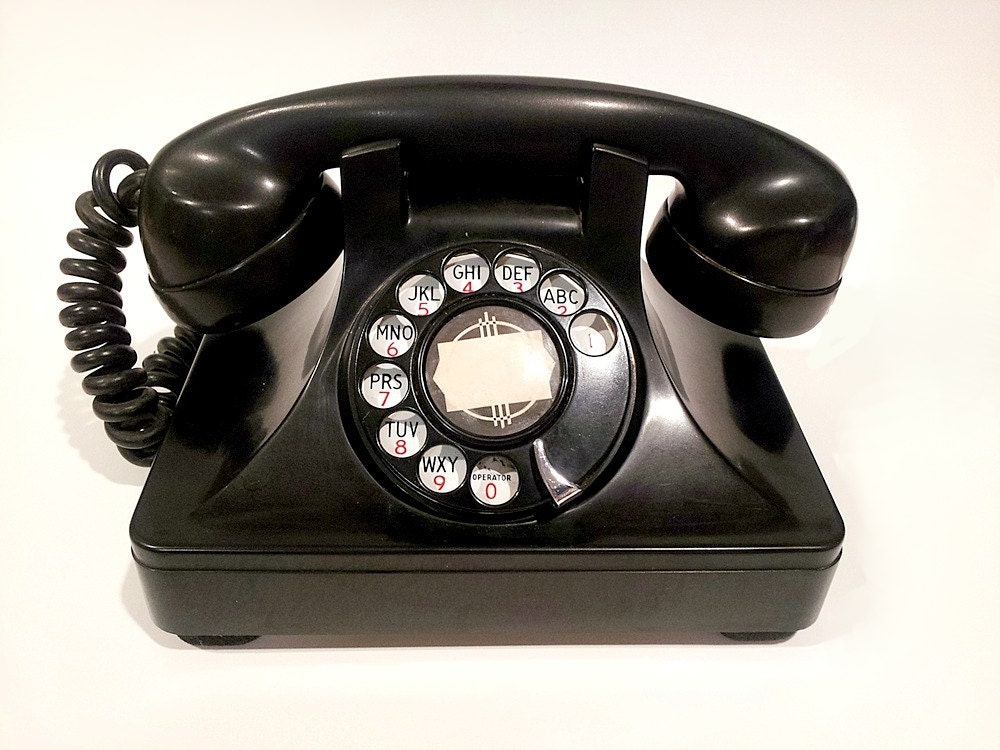
gentle, successful sabotage) and the means by which rotary calls could be
made efficiently after the numbers were moved from inside the finger holes
<http://img2.etsystatic.com/004/0/6620830/il_fullxfull.366687750_ermg.jpg>
<http://www.readability.com/articles/amctpres#rdb-footnote-2> 2, where they
had nestled companionably for years, to the rim outside the dial
<http://www.rotarydialphones.com/red_phone.jpg>
<http://www.readability.com/articles/amctpres#rdb-footnote-3> 3.

John Elias Karlin was born in Johannesburg on Feb. 28, 1918, and reared
nearby in Germiston, where his parents owned a grocery store and tearoom.

He earned a bachelor's degree in philosophy, psychology and music, and a
master's degree in psychology, both from the University of Cape Town.
Throughout his studies he was a violinist in the Cape Town Symphony
Orchestra and the Cape Town String Quartet.

Moving to the United States, Mr. Karlin earned a Ph.D. from the University
of Chicago in 1942. Afterward, he became a research associate at Harvard; he
also studied electrical engineering there and at the Massachusetts Institute
of Technology.

At Harvard, Mr. Karlin did research for the United States military on
problems in psychoacoustics that were vital to the war effort - studying the
ways, for instance, in which a bomber's engine noise might distract its crew
from their duties.


In 1945 he joined Bell Labs, then the jointly owned research and development
arm of the American Telephone & Telegraph and Western Electric Companies.
(It is now owned by Alcatel-Lucent.) The first research psychologist on the
labs' staff, Mr. Karlin spent his early years there working on problems in
telephone acoustics.

Before long, he later said, he realized that the dynamics of using a
telephone involved far more than speaking and hearing. In 1947 he persuaded
Bell Labs to create a unit, originally called the User Preference department
and later Human Factors Engineering, to study these larger questions; Mr.
Karlin became its head in 1951.

An early experiment involved the telephone cord. In the postwar years, the
copper used inside the cords remained scarce. Telephone company executives
wondered whether the standard cord, then about three feet long, might be
shortened. Mr. Karlin's staff stole into colleagues' offices every three
days and covertly shortened their phone cords, an inch at time. No one
noticed, they found, until the cords had lost an entire foot.

>From then on, phones came with shorter cords.

Mr. Karlin also introduced the white dot
<http://2guystalkingmetsbaseball.com/wp-content/uploads/2012/11/black-rotary
-phone.jpg>   <http://www.readability.com/articles/amctpres#rdb-footnote-4>
4 inside each finger hole that was a fixture of rotary phones in later
years. After the phone was redesigned at midcentury, with the letters and
numbers moved outside the finger holes, users, to AT&T's bewilderment, could
no longer dial as quickly.

With blank space at the center of the holes, Mr. Karlin found, callers no
longer had a target at which to aim their fingers. The dot restored the
speed.

Mr. Karlin's biggest challenge was almost certainly the advent of the
push-button phone
<http://www.youtube.com/watch?feature=player_embedded&v=5t5na44D0Dw>
<http://www.readability.com/articles/amctpres#rdb-footnote-5> 5, officially
introduced on Nov. 18, 1963, in two Pennsylvania communities, Carnegie and
Greensburg.

In 1946, a Bell Labs engineer, Rudolph F. Mallina, had patented an early
model, with buttons arranged in two horizontal rows
<http://www.google.com/patents?id=MmxUAAAAEBAJ&pg=PA1&dq=2,394,926&source=gb
s_selected_pages&cad=2#v=onepage&q&f=false>
<http://www.readability.com/articles/amctpres#rdb-footnote-6> 6: 1 through 5
on top, 6 through 0 below. It was never marketed.

By the late 1950s, when touch-tone dialing - much faster than rotary -
seemed an inevitability, Mr. Karlin's group began to study what form the
phone of the future should take. Keypad configurations examined included Mr.
Mallina's, one with buttons in a circle, another with buttons in an arc, and
a rectangular pad.

The victorious design, based on the group's studies of speed, accuracy and
users' own preferences, used keys half an inch square. The keypad itself was
rectangular, comprising 10 keys: a 3-by-3 grid spanning 1 through 9, plus
zero, centered below. Today's omnipresent 12-button keypad, with star and
pound keys flanking the zero, grew directly from this model.

Putting "1-2-3" on the pad's top row instead of the bottom (the
configuration used, then as now, on adding machines and calculators) was
also born of Mr. Karlin's group: they found it made for more accurate
dialing.

Mr. Karlin's first marriage, to Jane Daggett, ended in divorce. Survivors
include his second wife, the former Susan Leigh, whom he married in 1963; a
daughter from his first marriage, Bonnie Farber; three stepchildren,
Christopher, Stuart and Susan Leigh, who confirmed her stepfather's death,
at his home in Little Silver, N.J.; six grandchildren; and three
great-grandchildren. A son from Mr. Karlin's first marriage, Christopher
Karlin, died in 1968.

Throughout his career, Mr. Karlin was happy to work out of the limelight, a
stance doubtless reinforced by this cautionary tale of all-digit dialing:

By the postwar period, telephone exchanges that spelled pronounceable words
were starting to be exhausted. All-digit dialing would create a cache of new
phone numbers, but whether users could memorize the seven digits it entailed
was an open question.

Mr. Karlin's experimental research, reported in the popular press, showed
that they could. As a result, PEnnsylvania and BUtterfield - the stuff of
song <https://www.youtube.com/watch?v=m_muFwwTSMs>
<http://www.readability.com/articles/amctpres#rdb-footnote-7> 7 and story
<https://www.youtube.com/watch?v=cO2b1UfHDso>
<http://www.readability.com/articles/amctpres#rdb-footnote-8> 8 - began to
slip away. By the 1960s, those exchanges, along with DRexel, FLeetwood,
SWinburne and scores of others just as evocative, had all but disappeared.

This did not please traditionalists, and thanks to the papers they knew the
culprit's name.

"One day I was at a cocktail party and I saw some people over in the
corner," Mr. Karlin recalled in a 2003 lecture. "They were obviously looking
at me and talking about me. Finally a lady from this group came over and
said, 'Are you the John Karlin who is responsible for all-number dialing?' "


Mr. Karlin drew himself up with quiet pride.

"Yes, I am," he replied.

"How does it feel," his inquisitor asked, "to be the most hated man in
America?"


References


1.      ^ <http://www.readability.com/articles/amctpres#rdb-footnote-link-1>
as on a calculator
<http://us.123rf.com/400wm/400/400/denisnata/denisnata1011/denisnata10110007
9/8280436-big-black-calculator--keypad-background.jpg>  (us.123rf.com:80) (
http://us.123rf.com/400wm/400/400/denisnata/denisnata1011/denisnata101100079
/8280436-big-black-calculator--keypad-background.jpg )
2.      ^ <http://www.readability.com/articles/amctpres#rdb-footnote-link-2>
inside the finger holes
<http://img2.etsystatic.com/004/0/6620830/il_fullxfull.366687750_ermg.jpg>
(img2.etsystatic.com:80) (
http://img2.etsystatic.com/004/0/6620830/il_fullxfull.366687750_ermg.jpg )
3.      ^ <http://www.readability.com/articles/amctpres#rdb-footnote-link-3>
to the rim outside the dial <http://www.rotarydialphones.com/red_phone.jpg>
( www.rotarydialphones.com:80 <http://www.rotarydialphones.com:80> ) (
http://www.rotarydialphones.com/red_phone.jpg )
4.      ^ <http://www.readability.com/articles/amctpres#rdb-footnote-link-4>
the white dot
<http://2guystalkingmetsbaseball.com/wp-content/uploads/2012/11/black-rotary
-phone.jpg>  (2guystalkingmetsbaseball.com:80) (
http://2guystalkingmetsbaseball.com/wp-content/uploads/2012/11/black-rotary-
phone.jpg )
5.      ^ <http://www.readability.com/articles/amctpres#rdb-footnote-link-5>
the advent of the push-button phone
<http://www.youtube.com/watch?feature=player_embedded&v=5t5na44D0Dw>
(www.youtube.com:80) ( http://www.youtube.com/watch?feature=player_embedded
<http://www.youtube.com/watch?feature=player_embedded&v=5t5na44D0Dw>
&v=5t5na44D0Dw )
6.      ^ <http://www.readability.com/articles/amctpres#rdb-footnote-link-6>
with buttons arranged in two horizontal rows
<http://www.google.com/patents?id=MmxUAAAAEBAJ&pg=PA1&dq=2,394,926&source=gb
s_selected_pages&cad=2#v=onepage&q&f=false>  (www.google.com:80
<http://www.google.com/> ) ( http://www.google.com/patents?id=MmxUAAAAEBAJ
<http://www.google.com/patents?id=MmxUAAAAEBAJ&pg=PA1&dq=2,394,926&source=gb
s_selected_pages&cad=2#v=onepage&q&f=false>
&pg=PA1&dq=2,394,926&source=gbs_selected_pages&cad=2#v=onepage&q&f=false )
7.      ^ <http://www.readability.com/articles/amctpres#rdb-footnote-link-7>
song <https://www.youtube.com/watch?v=m_muFwwTSMs>  (www.youtube.com:443) (
https://www.youtube.com/watch?v=m_muFwwTSMs )
8.      ^ <http://www.readability.com/articles/amctpres#rdb-footnote-link-8>
story <https://www.youtube.com/watch?v=cO2b1UfHDso>  ( www.youtube.com:443
<http://www.youtube.com:443/> ) (
https://www.youtube.com/watch?v=cO2b1UfHDso )


Original URL:


http://www.nytimes.com/2013/02/09/business/john-e-karlin-who-led-the-way-to-
all-digit-dialing-dies-at-94.html?nl=todaysheadlines
<http://www.nytimes.com/2013/02/09/business/john-e-karlin-who-led-the-way-to
-all-digit-dialing-dies-at-94.html?nl=todaysheadlines&emc=edit_th_20130209&_
r=1&> &emc=edit_th_20130209&_r=1&

*       Facebook
<http://www.facebook.com/sharer.php?u=http://www.readability.com/articles/am
ctpres&t=John%20E.%20Karlin,%20Who%20Led%20the%20Way%20to%20All-Digit%20Dial
ing,%20Dies%20at%2094>
*       Twitter  <http://www.readability.com/articles/amctpres>
*       Email
*       Unarchive
<http://www.readability.com/articles/amctpres/ajax/archive>
*       Tags

Did this article display correctly? Yes No
We ran into trouble. Mind trying again?


Submitting your feedback.


Thank you for your feedback

Thank you! Your feedback greatly helps us improve Readability.
Describe the issue:


*       Tags:


_______________________________________________
Futurework mailing list
[email protected]
https://lists.uwaterloo.ca/mailman/listinfo/futurework
_______________________________________________
Futurework mailing list
[email protected]
https://lists.uwaterloo.ca/mailman/listinfo/futurework