Indonesian Palm Oil Billionaire Goes on TrialCorruption and money
laundering in land procurement for plantations
Our Correspondent <https://substack.com/profile/6437716-our-correspondent>
19 min ago
<https://www.asiasentinel.com/p/indonesia-palm-oil-billionaire-goes-trial/comments>
<https://substackcdn.com/image/fetch/f_auto,q_auto:good,fl_progressive:steep/https%3A%2F%2Fbucketeer-e05bbc84-baa3-437e-9518-adb32be77984.s3.amazonaws.com%2Fpublic%2Fimages%2Ff36538a1-5452-4d58-b74f-410436369a76_910x580.jpeg>
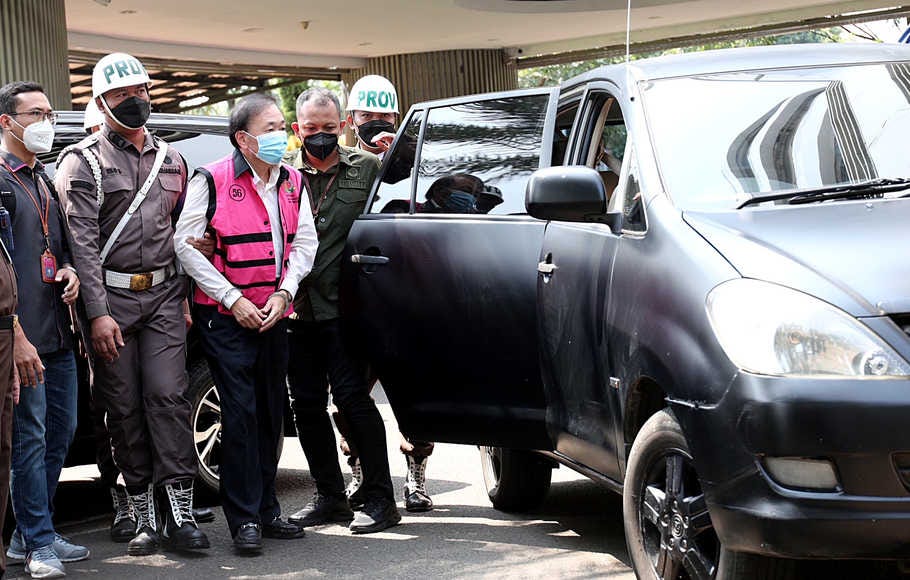
A tycoon once named one of Indonesia’s richest has gone on trial for
alleged corruption estimated to have cost the state the equivalent of
US$5.25 billion and caused major environmental damage from the destruction
of vast amounts of virgin forest. If the charges are proven, the case would
involve the largest state losses ever recorded in the country.

Surya Darmadi, the 71-year-old boss of PT Darmex Agro Group, a palm oil
processing consortium, is charged with bribing government officials to make
it easier to permit the expansion of its oil palm plantations. And, while
these alleged losses are significant, the environmental damage to
Indonesian forests as other oil palm producers have converted primary
forest to plantations has been enormous, pushing the country into the top
ranks of global fossil fuel emitters.

At least 30 large groups of national and multinational companies control
Indonesia’s plantations, pushing their beneficial owners onto the country’s
rich lists and opening the potential for fraud. The joint environmental
organization Eyes on the Forest
<https://betahita.id/news/lipsus/6248/riau-kebun-sawit-ilegal-dalam-angka-.html?v=1633183361>,
in a detailed analysis of forest area in Riau, the Sumatra-island province
directly across the Malacca Strait from Singapore, found that of 3.3
million hectares of oil palm plantations, only 14 percent are legal. The
remaining 86 percent don’t have right-of-exploitation permits, known by the
Indonesian language initials HGU, and are located in protected forests,
production forests, and conservation areas.

Indonesia Corruption Watch and Aidenvironment in 2015 found that illegal
forest encroachment has long-term consequences related to changes in land
use, conflicts between communities and investors, and the potential for
damage to ecosystems in the forest. The potential loss to the state is also
huge.

*Darmex*

Founded in 1987, Darmex is one of the largest oil palm cultivation,
production, and export companies in Indonesia with eight factories spread
across Pekanbaru, Jambi, and Kalimantan. The five subsidiaries in the
consortium produce 36,000 metric tons of crude palm oil every month, most
of it reprocessed into derivative products such as cooking oil, noodles,
and soap. In 2018, Surya was named by Forbes as the 28th richest person in
Indonesia with an estimated wealth of US$48 billion.

The first of two cases relates to allegations that Surya had bribed the
former Regent of Indragiri Hulu, Thamsir Rachman, to grant a forest
management permit for an oil palm plantation covering 37,095 hectares in
Riau Province. The Attorney General's Office, the agency currently handling
the case estimates that misappropriation since 2003 until now has cost the
state more than Rp78 trillion (US$5.243 billion). Surya and Thamsir have
been named as suspects.

The second case relates to allegations that Surya paid former Riau Governor
Annas Maamun Rp3 billion to smooth out a proposal to revise the conversion
of forest functions to the Ministry of Forestry in 2014. In 2019, the
Corruption Eradication Commission (KPK) issued a travel ban on Surya, who
apparently promptly fled to Singapore.

He didn’t return until August 15, after the Attorney General's Office named
him a suspect in the initial corruption and money laundering case. In
previous attempts to coax him out of hiding, the attorney general
confiscated Surya assets including 40 plots of land, six palm oil mills,
six buildings, three apartments, two hotels in Bali, a helicopter unit, and
trillions of rupiah in cash kept in an Indonesian bank account, with the
total assets confiscated reaching Rp11.7 trillion (US$787.85 million). The
Prosecutor's Office has also barred Surya's family from traveling abroad
amid plans to continue holding the trial in absentia —a trial without the
presence of the accused.

On September 8, the prosecutor said during the Jakarta trial that Surya,
also known as Apeng, met with Indragiri RegentThamsir several times in 2003
to ask him to approve land clearing in the Indragiri Hulu area. Thamsir
issued a business license, even though Surya didn’t have a forest area
release permit from the Ministry of Forestry or HGU issued by the National
Land Agency.

Surya was also charged with not bothering with other licensing documents
such as environmental impact analysis, environmental management efforts, or
environmental monitoring efforts. Prosecutors also said that Surya didn’t
comply with regulations requiring companies to allocate at least 20 percent
of plantation area under management to be managed by local farmers.

The alleged illegal land occupation resulted in state financial losses
because the state did not get its rights in the form of income from
payments from the reforestation fund, provision of forest resources, and
leases for use of forest areas.

"The losses consist of environmental (ecological) loss costs, environmental
economic loss costs, and recovery costs to activate the lost ecological
functions," the prosecutor said in the trial.

Apart from corruption, Surya was also charged with money laundering from
the proceeds of corruption in his palm oil business of around Rp. 7.7
trillion to purchase land and buildings both domestically and abroad,
carried out stock transactions, purchased ships, and transferred funds to
his various subsidiaries. He was charged with corruption and money
laundering, which carries a maximum sentence of life imprisonment, and the
possibility of recovering state losses.

Surya denied knowing Thamsir and said the accusation that he had cost the
country tens of trillions of rupiah was unreasonable. He said the value of
his plantation assets was only Rp 4 trillion, but the prosecutor said that
he had cost the state more than Rp 78 trillion.

"I saw the numbers, I'm half crazy!" Surya said after the trial. "My hotel,
property, boat, everything is blocked. They want to destroy my company!"

However, the Attorney General's Office said that the total state losses in
the Surya case consisted of state financial losses of Rp4.7 trillion and
US$7.8 million, and state economic losses of Rp73.9 trillion. The loss was
calculated since the five Surya Group companies operated illegally over a
span of 19 years from 2003 to 2022. The calculation involved the Financial
and Development Supervisory Agency (BPKP), environmental experts, and
economists from Gadjah Mada University.


https://www.asiasentinel.com/p/indonesia-palm-oil-billionaire-goes-trial

--
Anda menerima pesan ini karena Anda berlangganan grup "GELORA45" dari Google
Grup.
Untuk berhenti berlangganan dan berhenti menerima email dari grup ini, kirim
email ke [email protected].
Untuk melihat diskusi ini di web, kunjungi
https://groups.google.com/d/msgid/gelora1945/CAGjSX2BQbURdmtyZ3Sv%2BhOBdXpQmzOy7pzhURoNRxzVBGyLJ2w%40mail.gmail.com.