Bung Chan,
Baru terima artikel ini dari teman, berkenaan dengan terbitnya memoir dari
Robert Kuok.
Katanya sudah dapat dibeli di Bukazine di Hong Kong.
Saya kira minggu depan sudah masuk di Nederland.
Di artikel pendek ini tidak ditulis sebab adanya emigrasi besar2an waktu
itu, yaitu ketika dynasti Qing kalah dalam perang Candu. Dalam perjanjian
perdamaian, dynasti Qing harus banyak membayar kerugian perang. Di samping
itu harus mengijinkan warganya beremigrasi dengan keluarganya, sehingga
kekurangan tenaga kerja akibat dihapusnya perbuakan dapat diganti oleh
emigrant2 pekerja kontrak. Setelah revolusi industri, modal yang dimiliki
kaum kapitalis luar biasa besar, yang membutuhkan banyak sekali tenaga
kerja,untuk mengembangkan usahanya.
Salam,
KH
---------- Forwarded message ----------

http://www.scmp.com/week-asia/opinion/article/2121085/
chinese-most-amazing-economic-ants-earth-robert-kuok-memoirs


Chinese – the most amazing economic ants on earth: the Robert Kuok memoirs


In the fourth extract of Robert Kuok’s memoir, he considers Chinese
immigrants. Not only are these unsung heroes hungry, eager and willing to
‘eat bitterness’ – they have cultural strength in the marrow of their bones


By Robert Kuok


UNSUNG HEROES

The overseas Chinese made enormous contributions to Southeast Asia. They
are the unsung heroes of the region: the poor men and women who migrated
and blazed trails into the jungle, accessing the timber wealth; Chinese
workers who planted and tapped rubber, who opened up the tin mines, who ran
the small retail shops. It was the Chinese immigrants who tackled these
Herculean tasks, and created a new economy around them. The British were
good administrators. Many of them in private enterprise were absentee
landlords, sitting in boardrooms or plush offices in London, Singapore or
Kuala Lumpur. It was the Chinese who helped build up Southeast Asia. The
Indians also played a big role, but the Chinese were the dominant force in
helping to build the economy.

The transplanted Chinese were born entrepreneurs. The bulk of the overseas
Chinese in Southeast Asia have their roots in the coastal towns and
villages of Fujian and Guangdong provinces – and these have been blessed
with some of the best entrepreneurial genes in the world. They came very
hungry and eager as immigrants, often barefooted and wearing only singlets
and trousers. They would do any work available, as an honest income meant
they could have food and shelter. Chinese entrepreneurs are efficient and
cost-conscious. When they search for foreign hardware and expertise, they
know how to drive hard bargains. They work harder than anyone else and are
willing to “eat bitterness”, as the Chinese say. The Chinese are simply the
most amazing economic ants on earth.

The Chinese are simply the most amazing economic ants on earth

In the Ming dynasty, the Chinese traded and explored around the South China
Sea and the Indian Ocean. But, until the middle or latter part of the
nineteenth century, the movement of people was only a trickle. Colonisation
opened up Southeast Asia. The Europeans brought a semblance of law and
order to the region and opened up rubber, mining and trading operations.
Millions of Chinese, a tsunami of human migration, went south in search of
better opportunities. The majority of overseas Chinese are moral and
ethical people who practice fair play and possess a sense of proportion. I
will concede that if they are totally penniless, they will do almost
anything to get their first seed capital. But once they have some capital,
they try very hard to rise above their past and advance their reputations
as totally moral, ethical businessmen.

[image:
https://cdn2.i-scmp.com/sites/default/files/images/methode/2017/11/26/551e5694-cf52-11e7-986f-48a2e310a482_972x_092239.JPG]
<https://cdn3.i-scmp.com/sites/default/files/images/methode/2017/11/26/551e5694-cf52-11e7-986f-48a2e310a482_image_hires_092239.JPG>Wee
Cho Yaw, chairman emeritus of Singapore's United Overseas Bank, one of the
flagship institutions representing the economic influence of overseas
Chinese in Southeast Asia. File photo

I have not come across any people as loyal as the Chinese. The Japanese
have a kind of loyalty, but it’s an uncritical, bushido type of loyalty:
they are loyal even if the boss is a skunk. Unlike the Japanese, every
Chinese is highly judgmental, from the most educated to the uneducated. In
every Chinese village and community, moral values are drilled into each
child during his or her family upbringing. They are a very clueful people.
They may have lived in a village or small town in China and come to
Southeast Asia totally ignorant of the world, but they picked up ideas and
strategies very quickly.

They [the Chinese] don’t need expensive equipment or the trappings of
office. They just deliver

If there is any business to be done on earth, you can be sure that the
Chinese will be there. They will know whom to see, what to order, how best
to save, how to make money. They don’t need expensive equipment or the
trappings of office; they just deliver.

If you look at the present generation of achievers in Hong Kong – men like
Li Ka-shing of Cheung Kong, Cheng Yu-tung of New World, Li Shau-kee of
Henderson Land, the late Kwok Takseng of Sun Hung Kai Properties – they all
came from the school of hard knocks. Not one of them went to college. Since
I was mainly brought up in the English-speaking world, I am almost an
outside observer of the ways of China-born Chinese businessmen who are
steeped in the Chinese language and culture.

Good Chinese business management is second to none; the very best of
Chinese management is without compare

I can tell you that Chinese businessmen compare notes every waking moment
of their lives. There are no true weekends or holidays for them. That’s how
they work. Every moment, they are listening, and they have skilfully
developed in their own minds – each and every one of them – mental sieves
to filter out rubbish and let through valuable information. Good Chinese
business management is second to none; the very best of Chinese management
is without compare. I haven’t seen others come near to it in my 70-year
career.

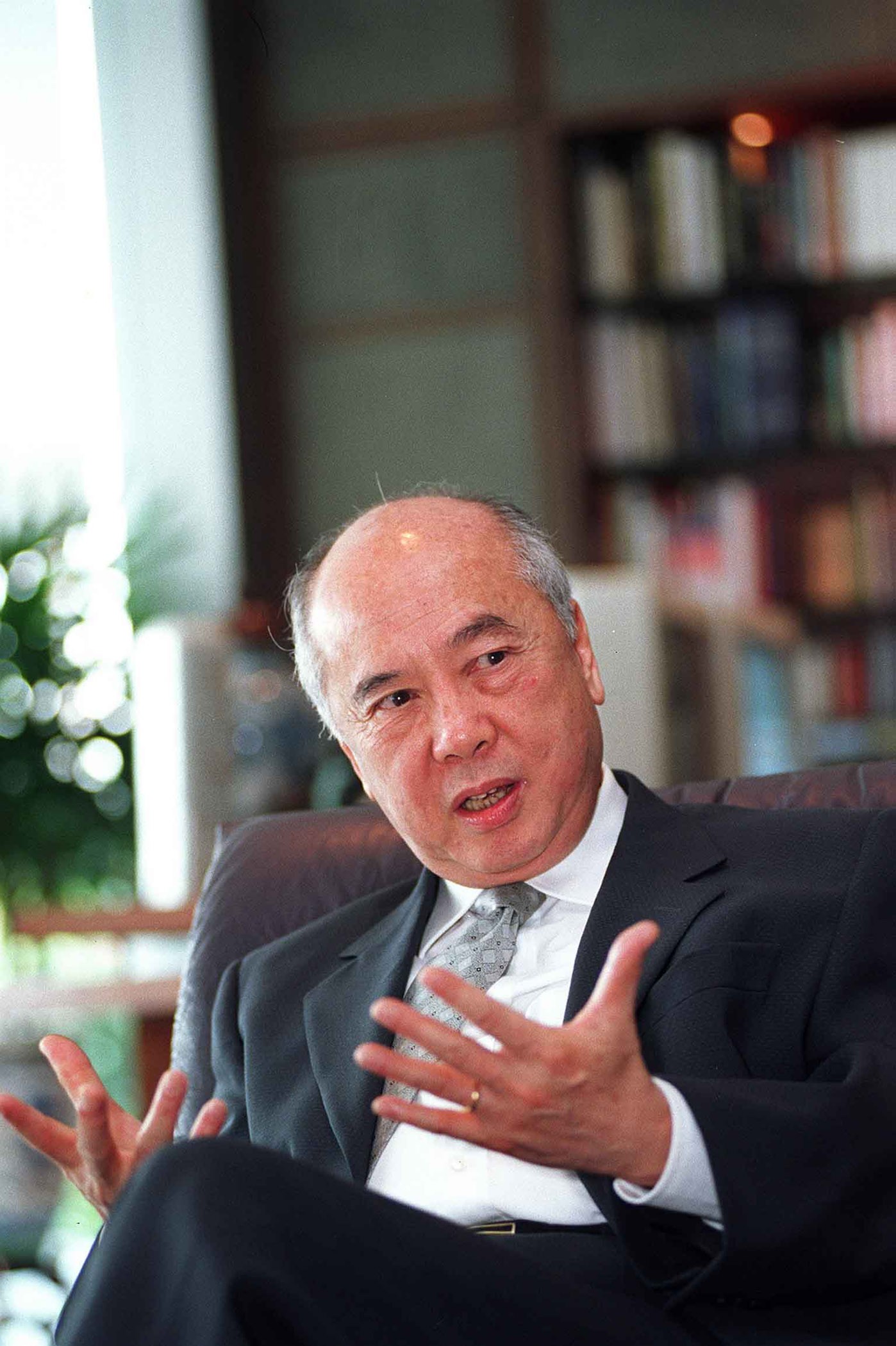
[image:
https://cdn3.i-scmp.com/sites/default/files/images/methode/2017/11/26/6be91590-cf60-11e7-986f-48a2e310a482_1320x770_092239.JPG]Robert
Kuok.

This doesn’t mean to say that Chinese firms are the wealthiest or the
biggest in the world. If you take companies such as GE, or businessmen like
Bill Gates or Warren Buffett, their successes and wealth dwarf that of
Chinese businesses. But Americans operate in the largest economy in the
world, caressed by political and social stability, a strong legal system
and generally sound institutions. The overseas Chinese in Southeast Asia
operate in a much less benevolent environment. Moreover, they flourish
without the national, political and financial sponsorship or backing of
their host countries. In Southeast Asia, the Chinese are often maltreated
and looked down upon. Whether you go to Malaysia, Sumatra or Java, the
locals call you Cina – pronounced Chee-na – in a derogatory way.

Li Ka-shing, Cheng Yu-tung, Li Shau-kee, Kwok Tak-seng all came from the
school of hard knocks

Around the world, I have seen benevolent governments sponsor and even
financially aid their nations’ businessmen so that they can compete
overseas. It’s true in the US, Britain, France, Germany, Japan, Korea and
Taiwan. National banks come to their citizenry’s aid; import-export banks
subsidise their exports. In the commodity trade, the French and British
governments and banks stand proudly behind their commodity brokers, who
have lines of credit that I can only dream of. If the commodity traders’
capital is US$20 million, they receive US$200 million of credit; while if
we have US$20 million of paid-up capital, we can barely hope for credit of
US$20 million.
Malaysia-Singapore Airlines, Siamese twins set for separation: the Robert
Kuok memoirs
<http://www.scmp.com/week-asia/opinion/article/2121067/malaysia-singapore-airlines-siamese-twins-set-separation-robert>

When I invested in Sucre et Denree in Paris, I was astonished at the
enormous trade facilities Serge Varsano was receiving from the French
banks. The Chinese have no fairy godmothers (I exclude here the type of
Chinese who connive with leaders peddling cronyism, and therefore rise and
fall with such leaders.) Yet, despite facing these odds, the overseas
Chinese, through hard work, endeavour and business shrewdness, are able to
produce profits of a type that no other ethnic group operating in the same
environment could produce.

When they left their homeland, the Overseas Chinese retained the culture of
China in the marrow of their bones

A GREAT CULTURAL STRENGTH

Why did the overseas Chinese survive, adapt and flourish in Southeast Asia?
I say the answer lies in the great cultural strength of the Chinese. When
they left their homeland, the overseas Chinese retained the culture of
China in the marrow of their bones. I remember my father had coolies who,
after humping numerous bags of rice, stank of sour sweat; their clothes
were not properly laundered and they couldn’t afford to bathe with perfumed
soap. But they were decent human beings at heart and they knew moral
values. As a child of three or four years old, I would sometimes sit on
their laps and they would regale me with stories of their days in China.
Recollecting those stories, I would say they were very cultured people.
They knew what was right and what was wrong. Even the most uneducated
Chinese, through family education, upbringing and social environment,
understands the ingredients and consequences of behaviour such as
refinement, humility, understatement, coarseness, bragging and arrogance.

Even the most uneducated Chinese, through family education, upbringing and
social environment, understands the ingredients and consequence

I remember being invited to a brainstorming seminar in Jakarta sponsored by
their Centre for Strategic and International Studies, headed by General Ali
Mutorpo, Suharto’s head of intelligence. Jakarta was just beginning to
stand on its own feet under Suharto. I was interested in further developing
my business in Indonesia, and here was a chance to get to know the leaders
and to take the economic and political pulse of Indonesia. So I attended.

[image:
https://cdn4.i-scmp.com/sites/default/files/images/methode/2017/11/26/c61af010-cf51-11e7-986f-48a2e310a482_1320x770_092239.JPG]Indonesian
President Suharto with Vice Prime Minister of The People's Republic of
China Zhu Rongji. Photo: Reuters

About thirty of us sat around a big oval table. From Malaysia, there was
Ghazali Shafie and myself. From Singapore, there was Devan Nair, who later
became President of Singapore. The topic of one session was economic
development. When it came to my turn, I spoke into the microphone in front
of me: “Gentlemen, I have heard a lot already today from my peers about how
Indonesia should develop. Many of you say that we should bring in the
multinationals of the world and draw upon their strength to bring up the
nation. I beg to differ. European and American multinationals, with their
bulldozer-type attitude and mentality, will succeed. I have no doubt of
that. But they will also import high inflation and inflationary practices
that will enter your bloodstream, into the very marrow of your bones. You
will never shake it off! This nation is very poor and cannot afford that
style of management.”

I continued, “I want to speak today about the Southeast Asian Chinese. The
vast majority of overseas Chinese are decent Chinese. If you go into the
smallest Malay kampongs in my country, Malaysia, you will find that a
Chinese shopkeeper has set up a tiny provision store. His whole shop may be
only 200-300 square feet, but it will be stocked with all the necessities
required by that community. If it’s a fishing village, there will be many
tins of biscuits and canned foods, flashlights and batteries – the food and
essentials to keep a fisherman provisioned out at sea for a few days.”
“These men are playing sterling roles everywhere.” I stressed. “They are
entrepreneurs blessed with business brains, though many of them lack
financial backing. The mark-up on the goods they sell is very small; thus,
they play a vital role in the chain of distribution.”

I returned to the subject of Indonesia: “Should not the leaders of this
brand-new Indonesian nation harness more of the Chinese entrepreneurs’
energies to develop the country? The Chinese can do it, and they will do it
economically, not the bulldozing, multinational way. Use the overseas
Chinese, shoestring-economy style and build up your economy like that.
That’s my plea.”

Lee Kuan Yew’s left hand and Lee Kuan Yew’s right hand” neutered ‘crooks’
among overseas Chinese in Singapore

A FEW BAD APPLES

I concluded with this: “Now, before I finish, I want to state one strong
caveat. Some of these overseas Chinese will become very big crooks, and if
you let them run rampant they could ruin your nation. Therefore, it is
vital that you also build up an executive monitoring arm, one armed with
teeth. What I am saying is that in a laissez-faire economy, you must let
business develop freely; but at the same time you must have a very
well-trained and highly disciplined monitoring arm. Where there is abuse
and crimes being committed, you must come down very fast and very hard and
punish the crooks severely. You should make examples of them so that the
honest Chinese will help your country and the dishonest ones will be
deterred.”
China’s communists, devils to friends for Malaysian PM Tunku: the Robert
Kuok memoirs
<http://www.scmp.com/week-asia/opinion/article/2121058/devils-friends-how-chinas-communists-won-over-malaysian-pm-tunku>

[image:
https://cdn4.i-scmp.com/sites/default/files/images/methode/2017/11/26/bcadf73e-cf5b-11e7-986f-48a2e310a482_1320x770_092239.JPG]Singapore's
founding father Lee Kuan Yew. Photo: AFP

Later, when I went out to the washroom, I passed a room adjoining our
meeting room in which tape recorders were whirring. So what I said – what
everyone said – was recorded. In the ensuing years, Indonesia (and most
other countries in the region) didn’t heed my warning about the need for
watchdog institutions with bite. The decent Chinese have helped to build up
Indonesia, Malaysia, Thailand and the Philippines, and made these countries
what they are today. But you also had the rise of the unscrupulous and
ruthless Chinese, who in turn have devastated many parts of Southeast Asia.

Why were these people allowed to wreak havoc? It is because the leaderships
have been weak. If the leaders were strong, all these devils would have
disappeared overnight. Singapore had the same number of Chinese crooks, but
you try and find one today. They are all hidden, camouflaged, or dormant.
The crooks were held on steel leashes by two hands: Lee Kuan Yew’s left
hand and Lee Kuan Yew’s right hand. With the unsavoury elements under
control, look what Singapore has been able to accomplish by harnessing the
energies of the overseas Chinese. ■

Related articles

*Robert Kuok, A Memoir will be available in Hong Kong exclusively at
Bookazine and in Singapore at all major bookshops from November 25. It will
be released in Malaysia on December 1 and in Indonesia on January 1, 2018*
Robert Kuok <http://www.scmp.com/author/robert-kuok>


![https://cdn3.i-scmp.com/sites/default/files/images/methode/2017/11/26/6be91590-cf60-11e7-986f-48a2e310a482_1320x770_092239.JPG]Robert](https://cdn3.i-scmp.com/sites/default/files/images/methode/2017/11/26/6be91590-cf60-11e7-986f-48a2e310a482_1320x770_092239.JPG]Robert)
![https://cdn4.i-scmp.com/sites/default/files/images/methode/2017/11/26/c61af010-cf51-11e7-986f-48a2e310a482_1320x770_092239.JPG]Indonesian](https://cdn4.i-scmp.com/sites/default/files/images/methode/2017/11/26/c61af010-cf51-11e7-986f-48a2e310a482_1320x770_092239.JPG]Indonesian)
![https://cdn4.i-scmp.com/sites/default/files/images/methode/2017/11/26/bcadf73e-cf5b-11e7-986f-48a2e310a482_1320x770_092239.JPG]Singapore](https://cdn4.i-scmp.com/sites/default/files/images/methode/2017/11/26/bcadf73e-cf5b-11e7-986f-48a2e310a482_1320x770_092239.JPG]Singapore)