*https://www.dri.edu/climate-intervention/
<https://www.dri.edu/climate-intervention/>*
*June 14, 2023*

*RENO, NEV.*

*By Elyse DeFranco*

Climate Change
Climate Engineering
*DRI researchers are examining the potential for climate intervention
techniques to help cool communities – and the planet *

Disastrous wildfires and prolonged droughts; stronger hurricanes and
cyclones; severe flooding and sea level rise: these are just some of the
impacts of a warming climate already occurring all around us. Scientists
warn that climate change will continue to increase the frequency and
intensity of extreme weather events, with impacts ranging from flooded
communities and ocean acidification to food shortages.

To prevent the worst climate change impacts, experts say that humanity
needs to rein in global carbon emissions and limit planetary warming to 1.5
degrees Celsius above pre-industrial levels. Crossing this seemingly minor
threshold could mean a world without coral reefs, a meter in sea-level
rise, and frequent ice-less summers in the Arctic. More than 100 countries
have committed to this goal by signing the international climate compact,
the Paris Agreement, but studies now show
<https://www.ipcc.ch/report/ar6/wg1/chapter/summary-for-policymakers/> that
this threshold is likely to be surpassed within the next decade.

With governments struggling to effectively reduce emissions of
planet-warming greenhouse gases, some scientists have proposed exploring
ways to actively cool the planet. Sometimes referred to as “geoengineering”
or “climate engineering,” these methods seek to enhance the atmosphere’s
natural ability to reflect solar radiation back into space, remove
greenhouse gases from the atmosphere, or release some of the energy heating
up the planet.

“Once we reach the threshold laid out in the Paris Agreement, we’re in a
more dangerous climate situation,” says David Mitchell
<https://www.dri.edu/directory/david-mitchell/>, Ph.D., an atmospheric
scientist at DRI. “There are feedback cycles in the climate system that
could potentially guarantee the world will get warmer, and if so, it would
be hard to get back to a more stable climate at that point. That’s the
rationale for climate intervention research.”

Mitchell is part of a team of DRI researchers examining the potential for
climate intervention strategies to reduce global warming impacts. The
two-year project, *“Local to Global Approaches to Mitigate Near-Term
Climate Impacts,*” relies on computer simulations and data analysis, rather
than real-world experiments, and is expected to wrap up by September 2024.
The research includes climate intervention strategies that operate at
different scales, from increasing the reflectivity of rooftops to cool
urban communities, to the potential for thinning cirrus clouds in the polar
regions to decrease temperatures globally.
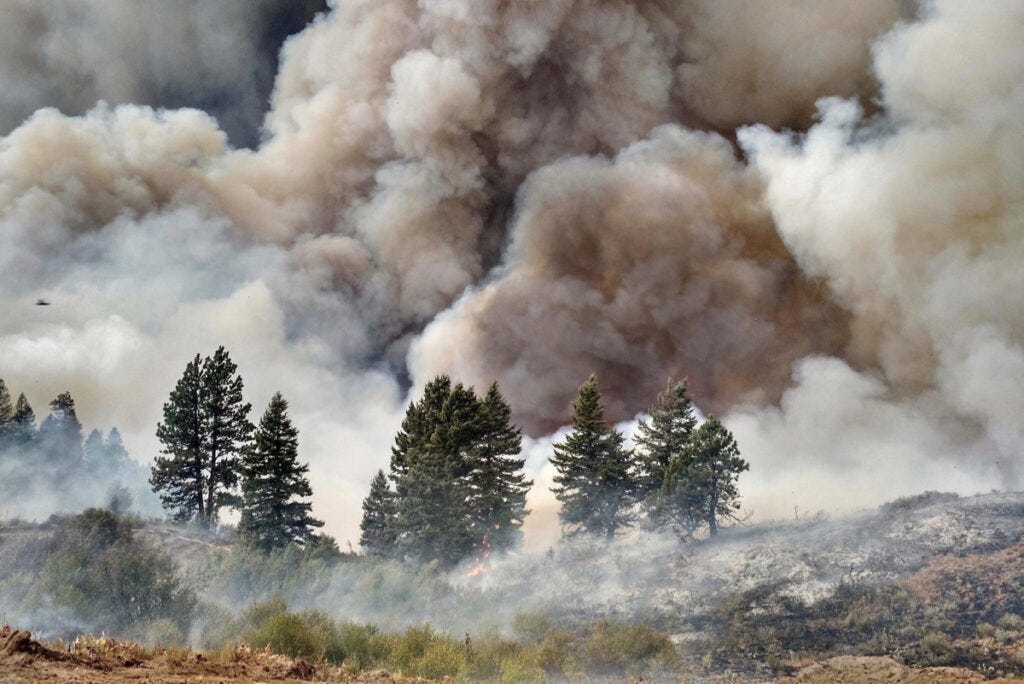
[image: wildfire smoke engulfs a stand of pine trees]
<https://substackcdn.com/image/fetch/f_auto,q_auto:good,fl_progressive:steep/https%3A%2F%2Fsubstack-post-media.s3.amazonaws.com%2Fpublic%2Fimages%2F7de52d96-4217-47f0-9a87-ff6b7797a7b0_1024x684.jpeg>

*Large, severe wildfires are only one impact of a changing climate in the
Western U.S.*

*Credit: DRI*

*Cirrus cloud thinning*

Cirrus-cloud thinning (CCT) is an idea first proposed in 2009 by Mitchell
and William Finnigan, in a ground-breaking study
<https://iopscience.iop.org/article/10.1088/1748-9326/4/4/045102> published
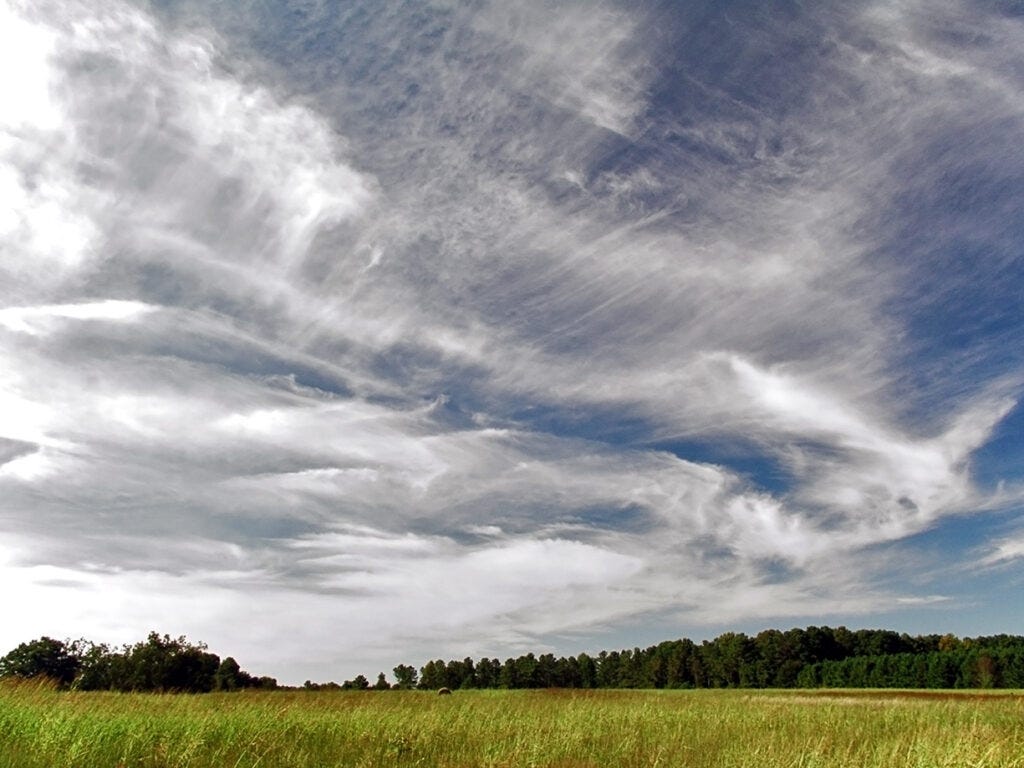
in Environmental Research Letters. Cirrus clouds are wispy, high-altitude
clouds that occur around the world. Unlike other clouds, they have an
overall warming effect on the climate, trapping thermal radiation near the
surface that outweighs the solar radiation they reflect.

Thinning the clouds would allow more heat to escape Earth’s atmosphere,
like cracking the windows in a car on a sunny day. This involves using
cloud-seeding
strategies <https://www.dri.edu/making-it-snow/> much like the ones already
commonly used around the world to increase precipitation, whereby dust is
released into targeted clouds to facilitate ice formation. These dust
particles form the nucleus of an ice crystal in a cloud, which can pull
together tiny water droplets to form larger, heavier ice crystals that
gravity can bring to Earth’s surface. This is the natural phenomenon that
produces all precipitation, but for decades, scientists have used this
process to supplement natural rain and snowfall. By converting some of the
moisture in the cloud into precipitation, the remaining cloud is thinner,
trapping less heat below.

There are a few differences between the cloud-seeding now occurring and
proposals for cirrus cloud-thinning. One is the use of a different compound
as the introduced dust particle. Traditional cloud-seeding often uses
silver iodide (AgI), whereas Mitchell says that bismuth tri-iodide (BiI3)
would effectively target cirrus clouds without impacting other clouds. This
has to do with the temperature that each compound is most effective at
producing ice nucleation. Cirrus cloud-thinning would be most effective at
reducing global temperatures if directed to the polar regions when there is
little sunlight, because this would maximize the amount of heat released.
In fact, one preliminary study has shown that this strategy could cool the
planet by about 1.4 degrees Celsius – *enough to cancel out the current
global impact of all greenhouse gases produced by industrialization. *
[image: wispy cirrus clouds over a green landscape]
<https://substackcdn.com/image/fetch/f_auto,q_auto:good,fl_progressive:steep/https%3A%2F%2Fsubstack-post-media.s3.amazonaws.com%2Fpublic%2Fimages%2Ffe02a759-7ef0-4a3e-bdaa-0f70f32351aa_1024x768.jpeg>

*Above: Wispy cirrus clouds. Photo by PiccoloNamek
<https://en.wikipedia.org/wiki/User:PiccoloNamek>, CC by SA 3.0*

“The idea is that you would seed the Arctic when the sun angle is low in
the sky, during the winter and fall,” Mitchell says. “Then, when the sun
angle reaches a certain threshold, you would switch to seeding in the
southern hemisphere, where it’s fall, and repeat this process.” Targeting
the polar regions “produces the most bang for your buck,” Mitchell says,
because these are the regions most affected by global warming. The more the
polar regions heat up and their sea ice melts, the more global warming
increases from the loss of ice’s natural ability to reflect solar energy
back into space.

The proposal is far from being ready for implementation, as it would
require a massive commitment of time and money from societies around the
world. Clouds in the polar regions would need to be seeded continuously
during the darkest months, using airplanes or drones to distribute the dust
particles to targeted regions. This method also doesn’t address the problem
of growing amounts of carbon dioxide in the Earth’s oceans, which makes the
water more acidic and creates challenges for sea life. Despite these
obstacles, Mitchell says that recent scientific and technological advances
have enabled him to understand the potential for CCT better than ever.

“Using this satellite known as CALIPSO <https://www-calipso.larc.nasa.gov/>,
we can see a vertical distribution of cirrus clouds in the Arctic. For the
first time, we’ve been able to retrieve ice particle concentration and ice
mass content, as well as the average size of ice particles,” he says. “With
these three things, we can evaluate the ice nucleation process that would
allow CCT to be effective.”

*Above: The low sun angle in the Arctic during the fall season. *

*Credit: Chris Linder Photography*

This information can then be plugged into global climate models, which are
used to simulate the regional and global effects of climate change.
However, like all simulations, their utility requires accurate
representations of the factors impacting the scenario in question (much
like the quality of each ingredient will influence the outcome of a
recipe). The climate is such a fantastically complex system that there are
still many questions about the details of ice particle formation and growth
in the atmosphere, particularly with cirrus clouds.

“By utilizing the new CALIPSO satellite findings by our group, we plan to
improve the representation of cirrus cloud ice nucleation in a global
climate model,” says Ehsan Erfani,
<https://www.dri.edu/directory/ehsan-erfani/> Ph.D., assistant research
professor of cloud microphysics at DRI and member of the research team.

Cirrus cloud-thinning doesn’t have long-lasting effects the way that other
proposed climate-intervention techniques, like stratospheric sulfur
injection <https://www.science.org/doi/10.1126/science.aan3317>, would. If
unforeseen issues arose, scientists could simply stop seeding the clouds.
“Unlike greenhouse gases that stay in the atmosphere for hundreds of years,
cloud-seeding doesn’t have lingering impacts,” Mitchell says.

“Reducing greenhouse gas emissions is still the number one most important
thing to do,” he continues. “But a lot of people have a misunderstanding,
because even if we get to zero carbon emissions now, that won’t cool the
planet. It will just keep things from getting worse.”

The risks of large-scale geoengineering techniques should not be
underestimated, as there are many unknown variables and impacts that global
climate models are unable to predict. But this is exactly why this research
is needed, Mitchell and others claim. There is a need to determine if there
are credible approaches that offer a net positive impact to prevent future
decision-makers (who may become more desperate for climate impact
mitigation over time), from employing uninformed, risky, or ineffectual
approaches.

“If we reach a global tipping point where climate change is causing
widespread devastation, there could be groups who will turn to these
methods in an emergency,” Mitchell says. “If they grab at the first straw
they find, we could be in trouble. But if we know something about what the
consequences of these intervention methods could be – and the benefits as
well – then we’re in a relatively safer situation.”

*Above: An early morning moonset at DRI’s cloud-seeding field site near the
Ruby Mountains. Credit: Jesse Juchtzer/DRI*

*Using cloud-seeding to protect the solar-reflecting power of snow*

The research team is also examining the potential for cloud-seeding to
protect mountain snowpacks, which are a critical source of fresh water
across the Western U.S. White snow has a natural ability to reflect the
sun’s energy, providing a modest cooling to local climates and delaying
snowmelt. Although cloud-seeding is already commonly used to enhance
snowfall, adding to overall water availability, this new research seeks to
better understand ways that cloud-seeding can deposit fresh, white snow on
top of snowpacks that have been dusted with grit from smoke and soot.
Darker materials, including charcoal from past wildfires, can act like a
black sweater on the snow, enhancing the melting effect of sunny days. An
extra layer of white snow could help protect the reflective capacity of the
snowpack, postponing snowmelt and protecting water storage capacity. DRI
research
<https://www.dri.edu/spring-sunny-heat-waves-caused-record-snow-melt-in-2021-adding-to-severe-water-supply-impacts-across-the-western-us/>
has shown that when snowpacks melt quickly due to winter and spring
heatwaves, the reduced water availability during the driest months of the
year exacerbates drought impacts and can increase the risk of wildfires.

 “DRI has studied and utilized cloud-seeding techniques for more than 50
years, so it only makes sense for us to use our expertise to examine ways
that it could help mitigate local impacts that may be worsening due to
climate change,” says Naresh Kumar
<https://www.dri.edu/directory/naresh-kumar/>, Ph.D., executive director of
atmospheric sciences at DRI and one of the project’s lead researchers.

As with the cirrus-cloud thinning research, this study will use computer
simulations to assess how effective this method could be, as well as the
conditions for maximizing its potential. The research team of cloud
physicists and climate modelers is also deploying remote weather stations
in mountain regions around the Western U.S. to improve weather
forecasting.

*Above: A bird’s eye view of Las Vegas at night. Miles of asphalt and
building roofs absorb heat from the sun and heat up urban communities. *

*Reducing heat in urban communities*

Cities across the world experience enhanced warming because of the way
manmade surfaces, like asphalt, pavement, and buildings, absorb and radiate
heat. Known as the “urban heat-island effect,” this warming is particularly
acute in southwestern cities such as Las Vegas and Phoenix, creating
hazardous conditions for everyone, but particularly for outdoor workers
<https://www.dri.edu/for-outdoor-workers-extreme-heat-poses-extreme-danger/>.
Altering urban surfaces to reflect, rather than absorb, the sun’s energy
could help reduce local temperatures.

A subset of the research team led by DRI climatologist John Mejia
<https://www.dri.edu/directory/john-mejia/>, Ph.D., is assessing the
ability of lighter-colored, reflective rooftops and pavement to cool urban
communities, as well as how this cooling could bring wider benefits.
Conventional roofs can reach temperatures of 150°F on a summer day,
trapping and radiating heat into the home beneath. The cumulative effect of
heated roofs can also increase air temperatures in the community. According
to the U.S. Department of Energy
<https://www.energy.gov/energysaver/cool-roofs#:~:text=A%20cool%20roof%20is%20designed,a%20sunny%20summer%20afternoon%2C%20sun.>,
reflective roofs can stay 50°F cooler under the same conditions.

Considering how our architecture and planning impacts our exposure to heat
can bring broader benefits. Cooler temperatures could reduce energy use by
lowering demand for air conditioning, one of the largest sources of summer
electricity use. This applies not only to municipal energy systems, but
also to vehicles which burn more fuel when running A.C., further
contributing to the greenhouse gas emissions of the region and creating a
cycle of warming. The research team will also examine how cooling urban
communities with reflective surfaces impacts urban forestation efforts, a
practice which can help provide shade for city dwellers, but which has
tradeoffs with ongoing water conservation efforts.

*Above: An illustration of the urban heat island effect. Credit: NASA/JPL*

*Moving Forward Under Uncertainty*

 DRI’s research will help answer questions about how each of these climate
interventions could work, helping to prepare humanity for an uncertain
future.

 “All three of these research areas are interlinked,” Kumar says, “because
they all deal with climate intervention. Cirrus cloud-thinning is on a more
global scale, whereas cloud-seeding and heat island impacts are very local,
but they are interrelated. Because there are a lot of things that are still
unknown about these potential climate mitigation strategies, we wanted to
combine them into a single project to investigate some of the remaining
questions.”

Of course, striving to understand the physics of how climate intervention
techniques could work is only one part of a much larger and more complex
conversation. Even once researchers feel confident that they understand the
potential benefits and risks, humanity would need to address thorny
questions about ethics and authority. When it comes to concerns of global
importance, who has decision-making power, and how do we ensure that this
group has accountability to humanity at large? Science can act as one
guiding light on the path to addressing climate change, but these questions
will require cooperation and partnership on an unprecedented scale.

——————————–

This research is supported by funding from NOAA, through the U.S.
Department of Commerce, grant number NA22OAR4690640.

*Working to solve our most challenging environmental problems. *

More than 400 highly-skilled scientists, engineers, technicians, students,
and staff work collaboratively within and across three research divisions
<https://www.dri.edu/research-divisions/>*, *focused on understanding and
answering critical science questions about global climate change, water
quality and availability, air quality, the sustainability of desert lands,
life in extreme environments, education, and more.

© Desert Research Institute

--
You received this message because you are subscribed to the Google Groups
"geoengineering" group.
To unsubscribe from this group and stop receiving emails from it, send an email
to [email protected].
To view this discussion on the web visit
https://groups.google.com/d/msgid/geoengineering/CAHJsh98SDSeqRMDLYzmvGEFadDJE4YT9ZrY3pqJ0hXNizYRYfQ%40mail.gmail.com.