*SOLAR GEOENGINEERING WEEKLY SUMMARY (22 APRIL - 28 APRIL 2024)*

Subscribe to our newsletter to receive monthly updates on Solar
Geoengineering:
Solar Geoengineering Updates
<https://solargeoengineeringupdates.substack.com?utm_source=substack&utm_campaign=publication_embed&utm_medium=email>
Monthly news summaries about solar geoengineering. Links to scientific
papers, news articles, jobs, podcasts, and videos.
<https://solargeoengineeringupdates.substack.com?utm_source=substack&utm_campaign=publication_embed&utm_medium=email>
By Andrew Lockley
<https://solargeoengineeringupdates.substack.com?utm_source=substack&utm_campaign=publication_embed&utm_medium=email>
------------------------------
RESEARCH PAPERSOn Nucleation Pathways and Particle Size Distribution
Evolutions in Stratospheric Aircraft Exhaust Plumes with H2SO4 Enhancement
<https://pubs.acs.org/doi/full/10.1021/acs.est.3c08408>
Yu, F., Anderson, B. E., Pierce, J. R., Wong, A., Nair, A., Luo, G., &
Herb, J. (2024). On Nucleation Pathways and Particle Size Distribution
Evolutions in Stratospheric Aircraft Exhaust Plumes with H2SO4
Enhancement. *Environmental
Science & Technology*.

*Abstract*

Stratospheric aerosol injection (SAI) is proposed as a means of reducing
global warming and climate change impacts. Similar to aerosol enhancements
produced by volcanic eruptions, introducing particles into the stratosphere
would reflect sunlight and reduce the level of warming. However,
uncertainties remain about the roles of nucleation mechanisms, ionized
molecules, impurities (unevaporated residuals of injected precursors), and
ambient conditions in the generation of SAI particles optimally sized to
reflect sunlight. Here, we use a kinetic ion-mediated and homogeneous
nucleation model to study the formation of H2SO4 particles in aircraft
exhaust plumes with direct injection of H2SO4 vapor. We find that under the
conditions that produce particles of desired sizes (diameter ∼200–300 nm),
nucleation occurs in the nascent (t < 0.01 s), hot (T = 360–445 K), and dry
(RH = 0.01–0.1%) plume and is predominantly unary. Nucleation on chemiions
occurs first, followed by neutral new particle formation, which converts
most of the injected H2SO4 vapor to particles. Coagulation in the aging and
diluting plumes governs the subsequent evolution to a narrow (σg = 1.3)
particle size distribution. Scavenging by exhaust soot is negligible, but
scavenging by acid impurities or incomplete H2SO4 evaporation in the hot
exhaust plume and enhanced background aerosols can matter. This research
highlights the need to obtain laboratory and/or real-world experiment data
to verify the model prediction.

The Potential of Stratospheric Aerosol Injection to Reduce the Climatic
Risks of Explosive Volcanic Eruptions
<https://agupubs.onlinelibrary.wiley.com/doi/10.1029/2023GL107702>

Yu, F., Anderson, B. E., Pierce, J. R., Wong, A., Nair, A., Luo, G., &
Herb, J. (2024). On Nucleation Pathways and Particle Size Distribution
Evolutions in Stratospheric Aircraft Exhaust Plumes with H2SO4
Enhancement. *Environmental
Science & Technology*.

*Abstract*

Sulfur-rich volcanic eruptions happen sporadically. If Stratospheric
Aerosol Injection (SAI) were to be deployed, it is likely that explosive
volcanic eruptions would happen during such a deployment. Here we use an
ensemble of Earth System Model simulations to show how changing the
injection strategy post-eruption could be used to reduce the climate risks
of a large volcanic eruption; the risks are also modified even without any
change to the strategy. For a medium-size eruption (10 Tg-SO2) comparable
to the SAI injection rate, the volcanic-induced cooling would be reduced if
it occurs under SAI, especially if artificial sulfur dioxide injections
were immediately suspended. Alternatively, suspending injection only in the
eruption hemisphere and continuing injection in the opposite would reduce
shifts in precipitation in the tropical belt and thus mitigate
eruption-induced drought. Finally, we show that for eruptions much larger
than the SAI deployment, changes in SAI strategy would have minimal effect.

On thin ice: Solar geoengineering to manage tipping element risks in the
cryosphere by 2040
<https://essopenarchive.org/users/770775/articles/847057-on-thin-ice-solar-geoengineering-to-manage-tipping-element-risks-in-the-cryosphere-by-2040>

Smith, W., Bartels, M., Boers, J., & Rice, C. (2024). On thin ice: Solar
geoengineering to manage tipping element risks in the cryosphere by 2040.

*Abstract*

Tipping elements are features of the climate system which can display
self-reinforcing and non-linear responses if pushed beyond a certain
threshold (the “tipping point”). Models suggest that we may surpass several
of these tipping points in the next few decades, irrespective of which
emissions pathway humanity follows. Some tipping elements reside in the
Arctic and Antarctic and could potentially be avoided or arrested via a
solar geoengineering program only at the poles. This paper considers the
utility of proactively developing the capacity to respond to emergent
tipping element threats at the poles as a matter of risk management. It
then examines both the air and ground infrastructure that would be required
to operationalize such capability by 2040 and finds that this would require
a funded launch decision by a financially credible actor by roughly 2030.

------------------------------
CONFERENCE PAPERSAerosols complex refractive indices determination from far
infrared to UV: application to dust and residual ashes of biomass burning
<https://meetingorganizer.copernicus.org/EGU24/EGU24-10689.html>

Chehab, M., Herbin, H., Gosselin, S., Bizet, V., & Petitprez, D.
(2024). *Aerosols
complex refractive indices determination from far infrared to UV:
application to dust and residual ashes of biomass burning* (No.
EGU24-10689). Copernicus Meetings.

*Abstract*

Due to their ability to absorb and scatter solar radiation, major
injections of aerosols can have a significant effect on the atmosphere
including impacts on the radiation balance of the Earth and changes in
temperature. Given the variability and spatial heterogeneity of their
concentration, size and chemical composition, it is important to quantify
these aerosols, from remote sensing techniques, in order to better identify
their sources and understand their environmental impact from regional to
global scale. Satellite instruments, such as the Infrared Atmospheric
Sounding Interferometer (IASI) and the Atmospheric Infrared Sounder AIRS
for the thermal IR region and FORUM for the far infrared, can give us
information about chemical composition (Alalam et al. 2022) and
microphysical parameters of the aerosols such as the effective radius,
concentration and mass (Deguine et al. 2023). Nonetheless, these techniques
require accurate information about the optical properties, specifically the
complex refractive index (CRI) .CRI databases available in the literature
however, span over limited wavelength ranges and provide mainly reflectance
measurements on bulk materials or pressed pellets. In particular, the
latter can have several limitations such as the modification of the
microphysical properties of the particles (size distribution and
morphology). Furthermore, in pellet samples, the particles are present in a
compressed matrix causing modifications of the vibrational modes. For bulk
measurements, there is strong underestimation of the scattering signal.
Therefore, the optical constants coming from such techniques are not fitted
for aerosols and atmospheric applications (McPheat et al. 2002).

We present an improved retrieval methodology combining an experimental
setup that allows simultaneously the measurement of high
spectral-resolution extinction spectra (up to 0.5 cm-1) from far infrared
(FIR) (50 µm /200 cm-1) up to UV (0.25 µm /40,000 cm-1) and the recording
of the size distribution of both fine and coarse particles (Hubert et al.
2017). Introducing these experimental measurements in a numerical iterative
process, the real and imaginary parts of the CRI are retrieved using an
optimal estimation method (OEM) associated to scattering theories and the
single subtractive Kramers-Kronig (SSKK) relation (Herbin et al. 2017).

Kaolinite, one of the main clays found in dust, has been used as a first
application of this methodology. For the first time, homogenous values of
CRI have been retrieved continuously from FIR to UV for suspended
particles. This methodology is also being used to retrieved CRI of biomass
burning aerosols (BBA). Preliminary result obtained from residual ashes
will be present, showing IR extinction spectra as well as chemical analysis.

------------------------------
WEB POSTSSolar geoengineering to cool the planet: Is it worth the risks?
<https://phys.org/news/2024-04-solar-geoengineering-cool-planet-worth.html>
(Phys.Org)Geoengineering Versus Natural Climate Solutions
<https://web.ncf.ca/fs766/Collins_PMApril2024_GEOvsNCS.pdf> (Peace
Magazine)Geoengineering
could save the ice sheets – but only if we start soon
<https://www.newscientist.com/article/2427681-geoengineering-could-save-the-ice-sheets-but-only-if-we-start-soon/>
(New Scientist)New scientific interventions are here to fight climate
change. But they aren’t silver bullets
<https://www.latimes.com/environment/story/2024-04-22/new-scientific-interventions-are-here-to-fight-climate-change-but-they-arent-silver-bullets>
(Los Angeles Times)Talking About Tipping Points
<https://www.harvardmagazine.com/2024/04/climate-tipping-elements> (Harvard
Magazine)Controversial methods to cool the Earth by reflecting sunlight
gain traction as global temperatures rise
<https://abcnews.go.com/US/controversial-methods-cool-earth-gain-traction-global-temperatures/story?id=109349797>
(abc NEWS)Silver Lining in the Clouds: Will the US Geoengineer?
<https://www.e-ir.info/2024/04/28/silver-lining-in-the-clouds-will-the-us-geoengineer/>
(E-International Relations)
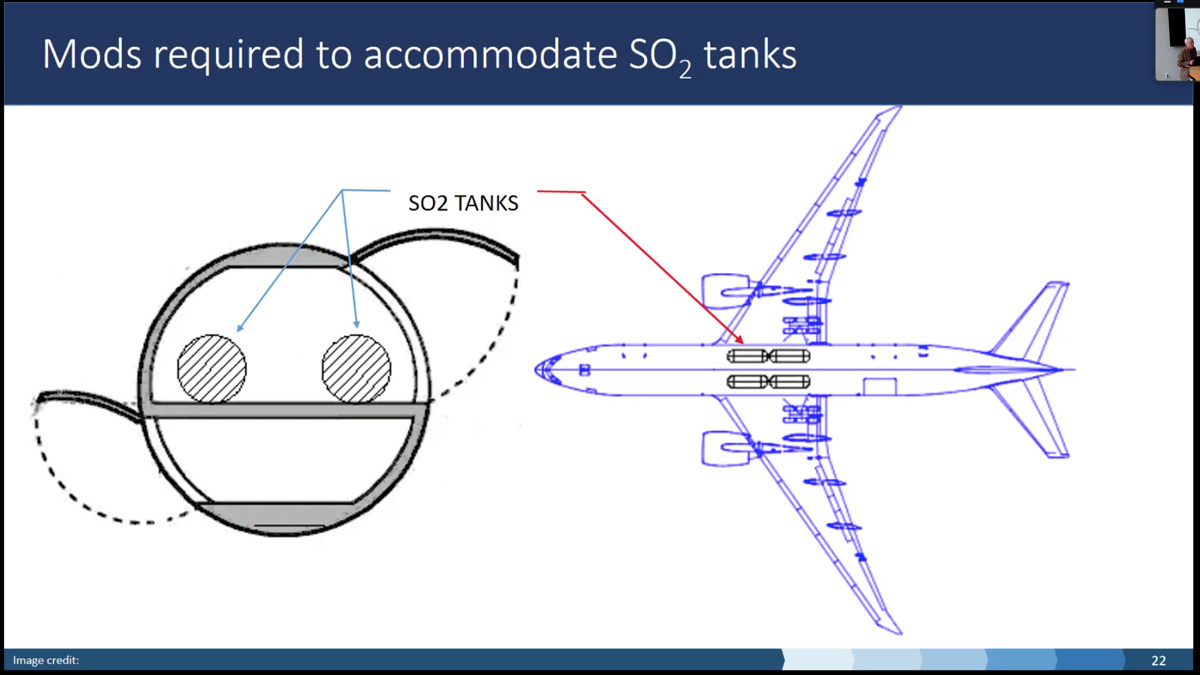
[image: Mods required to planes]
<https://substackcdn.com/image/fetch/f_auto,q_auto:good,fl_progressive:steep/https%3A%2F%2Fsubstack-post-media.s3.amazonaws.com%2Fpublic%2Fimages%2F3f29348d-9450-4497-8ec5-a78df23d8776_1200x675.jpeg>
Talking
About Tipping Points
<https://www.harvardmagazine.com/2024/04/climate-tipping-elements> (Harvard
Magazine)
------------------------------
THESISMessing with Nature? Environmental Ethics and the Challenge of
Geoengineering <https://etheses.whiterose.ac.uk/34732/>

*Abstract*

This thesis argues that at least some forms of large-scale intentional
modification of the climate (geoengineering) are compatible with core
environmental ethics perspectives. Though environmental ethics has
typically presumed against drastic alterations of the natural world, I
argue that many core positions within the environmental ethics discipline
do not provide grounds for a blanket rejection of geoengineering.
Additionally, I argue that perspectives which do categorically reject
geoengineering lack compelling reasons for acceptance. Recognising this
allows environmentalists (those who would accept environmental ethics
arguments) greater scope to participate in geoengineering project design;
allowing them a seat at the table which they can occupy without a
fundamental breach of their core ethical beliefs. I end with a discussion
of principles that could govern a specifically environmentalist
geoengineering.

------------------------------
JOB OPPORTUNITYPhD Studentship: Machine learning strategies for Marine
Cloud Brightening at the Centre for Climate Repair (CCR) and the Data,
Vibration and Uncertainty (CVU) group, University of Cambridge
<https://www.climaterepair.cam.ac.uk/job-opportunities>
------------------------------
PODCASTSTerrapunks & Geoengineering w/ Luke Iseman | Redacted Islands
<https://shows.acast.com/redacted-island/episodes/9-terrapunks-geoengineering-w-luke-iseman>

"Luke Iseman joins to talk about his project Make Sunsets, an ambitious
solar geoengineering startup that aims to cool the planet by launching
reflective clouds into the stratosphere.

In this episode, we chat about creating clouds, sci-fi author Neal
Stephenson, living off-grid in Mexico,doomersding, spearfishing, Y
Combinator, the Great Carbon Credit Tree Scam, volcano ash reflecting
sunlight, wtf is solar geoengineering, how weather balloons work, reducing
global temperatures, cooling credits, the difference between solarpunk and
terrapunk, “propaganda of the deed”, greenwashing, combating climate
doomerism, nervous scientists in ivory towers, cutting red tape, Kiribati,
St. Lucia, citizenship by investment, how countries are reacting to
geoengineering, NOAA, and the ethics of climate capitalism."

Startups want to cool Earth by reflecting sunlight. There are few rules and
big risks | npr
<https://www.npr.org/2024/04/28/1247702994/solar-geoengineering-is-gathering-steam-in-the-tech-world-as-a-climate-solution>

"Solar geoengineering — increasing the sunlight reflected back into space
to cool the planet — is gaining the attention of people looking for climate
solutions. But critics say it comes with risks."

------------------------------
YOUTUBE VIDEOSSolar Climate Intervention Virtual Symposium 10 (Dr. Ilaria
Quaglia & Dr. Wake Smith) | Solar Climate Intervention Talks
<https://www.youtube.com/watch?v=ZgfmVLX9tc4>

"Dr. Ilaria Quaglia (Cornell University, USA): "The potential of
Stratospheric Aerosol Injection to reduce the climatic risks of explosive
volcanic eruptions."

Dr. Wake Smith (Yale University, USA): "Frosted Tips: An Alternative
Rationale for Stratospheric Aerosol Injection."

E is for Earth Day, H is for Hope, B is for Books | Andrew Revkin
<https://www.youtube.com/watch?v=gBXU72elRvY>

"Three climate journalists lay out the state of the SRM sunblocking
technofix, touch on methane capture and more."

Solar geoengineering: Can it solve the climate crisis? | Global News
<https://www.youtube.com/watch?v=ZVVlgdtSdRM>

"On top of cutting down on emissions, solar geoengineering is being touted
as an alternative approach to slow global warming — but it is also an
unproven technology.

Debate is especially growing about stratospheric aerosol injection, a type
of solar geoengineering which could someday help slow the effects of
climate change.

Eric Sorensen explains the science, benefits and concerns of this potential
solution to the climate crisis."

--
You received this message because you are subscribed to the Google Groups
"geoengineering" group.
To unsubscribe from this group and stop receiving emails from it, send an email
to [email protected].
To view this discussion on the web visit
https://groups.google.com/d/msgid/geoengineering/CAHJsh98fuRNRy5KQD2MwKxi9mRegJtLa4G_Ac1nZXrudV2QUxw%40mail.gmail.com.