SOLAR GEOENGINEERING WEEKLY SUMMARY (28 OCTOBER - 03 NOVEMBER 2024)
<https://substack.com/app-link/publications/1346479/drafts/44265810-0fe9-4e2e-bc46-0c57d70d1c95?publication_id=1346479&post_id=151188335&utm_source=post-email-title&utm_campaign=email-post-title&isFreemail=false>
Subscribe to our newsletter to receive monthly updates on Solar
Geoengineering:
Solar Geoengineering Updates
<https://solargeoengineeringupdates.substack.com?utm_source=substack&utm_campaign=publication_embed&utm_medium=email>
Monthly news summaries about solar geoengineering. Links to scientific
papers, news articles, jobs, podcasts, and videos.
<https://solargeoengineeringupdates.substack.com?utm_source=substack&utm_campaign=publication_embed&utm_medium=email>
By Andrew Lockley
<https://solargeoengineeringupdates.substack.com?utm_source=substack&utm_campaign=publication_embed&utm_medium=email>
------------------------------
RESEARCH PAPERSCan the Artificial Release of Fluorinated Gases Offset
Global Cooling Due to Supervolcanic Eruptions?
<https://www.mdpi.com/2073-4433/15/11/1322>

Xu Y, Ribar NP, Sachnik J, Schade GW, Lockley AJ, Zhang YG, Yu P, Hu J,
Velders GJM. (2024). Can the Artificial Release of Fluorinated Gases Offset
Global Cooling Due to Supervolcanic Eruptions? *Atmosphere*. 15(11):1322.

*Abstract*

Large volcanic eruptions, such as the prehistoric Yellowstone eruption,
induce abrupt global cooling—by some estimates at a rate of ~1 °C/year,
lasting for more than a decade. An abrupt global cooling of several °C—even
if only lasting a few years—would present immediate, drastic stress on
biodiversity and food production. This cooling poses a global catastrophic
risk to human society beyond the immediate and direct impact of eruptions.
Using a simple climate model, this paper discusses the possibility of
counteracting large volcanic cooling with the intentional release of
greenhouse gases. Longer-lived compounds (e.g., CO2 and CH4) are unsuitable
for this purpose, but selected fluorinated gases (F-gases), either
individually or in combinations, could be released at gigaton scale to
offset large volcanic cooling substantially. We identify candidate F-gases
(e.g., C4F6 and CH3F) and derive radiative and chemical properties of
‘ideal’ compounds matching specific cooling events. Geophysical constraints
on manufacturing and stockpiling due to mineral availability are
considered, alongside technical and economic implications based on
present-day market assumptions. The effects and uncertainty due to
atmospheric chemistry related to aerosol injection, F-gases release, and
solar dimming are discussed in the context of large volcanic perturbation.
The caveats and future steps using more complex chemistry–climate models
are discussed. Despite the speculative nature of the magnitude and
composition of F-gases, our conceptual analysis has implications for
testing the possibility of mitigating certain global catastrophic cooling
risks (e.g., nuclear winter, asteroid impact, and glacier transition) via
intentional intervention.

Disaggregating the Governance Dimensions of Solar Geoengineering
<https://media.rff.org/documents/LANGSHAW_POWER_paper.pdf>

Power, B. L. Disaggregating the Governance Dimensions of Solar
Geoengineering.

*Abstract*

Recent discussions of the governance of solar geoengineering have
emphasized the potential of a polycentric architecture. Specifically,
recent contributions have recognized the importance of both international,
top-down, structures, and the important role of national and potential
sub-national governance entities that reflect diverse, bottom-up
perspectives. Viewing solar geoengineering governance through a multi-level
lens requires consideration of which governance tasks may be addressed at
various levels, and whether formal or informal mechanisms hold utility in
addressing these problems. This in turn requires attention be paid to
disaggregating governance functions and matching those functions to
appropriate governance levels. By disaggregating the key characteristics of
governance concern, it may be possible to implement many smaller regulatory
mechanisms which can be integrated into a globally effective policy regime,
as anticipated under polycentric approaches. This paper is a first step
towards mapping key characteristics of concern for the governance of solar
geoengineering, and the relevant levels and type of governance institution,
thereby developing the first components of a polycentric framework for the
governance of solar geoengineering.

Demographics shape public preferences for carbon dioxide removal and solar
geoengineering interventions across 30 countries
<https://www.nature.com/articles/s43247-024-01800-1>

Sovacool, B. K., Evensen, D., Baum, C. M., Fritz, L., & Low, S. (2024).
Demographics shape public preferences for carbon dioxide removal and solar
geoengineering interventions across 30 countries. *Communications Earth &
Environment*, *5*(1), 642.

*Abstract*

Climate intervention technologies such as carbon dioxide removal and solar
geoengineering are becoming more actively considered as solutions to global
warming. The demographic aspects of the public serve as a core determinant
of social vulnerability and the ability for people to cope with, or fail to
cope with, exposure to heat waves, air pollution, or disruptions in access
to modern energy services. This study examines public preferences for 10
different climate interventions utilizing an original, large-scale,
cross-country set of nationally representative surveys in 30 countries. It
focuses intently on the demographic dimensions of gender, youth and age,
poverty, and income as well as intersections and interactions between these
categories. We find that support for the more engineered forms of carbon
removal decreases with age. Gender has little effect overall. Those in
poverty and the Global South are nearly universally more supportive of
climate interventions of various types.

The Impact of Abrupt Sunlight Reduction Scenarios on Renewable Energy
Production <https://www.mdpi.com/1996-1073/17/20/5147>

Varne, A. R., Blouin, S., Williams, B. L. M., & Denkenberger, D. (2024).
The impact of abrupt sunlight reduction scenarios on renewable energy
production. *Energies*, *17*(20), 5147.

*Abstract*

To combat global warming, energy systems are transitioning to generation
from renewable sources, such as wind and solar, which are sensitive to
climate conditions. While their output is expected to be little affected by
global warming, wind, and solar electricity generation could be affected by
more drastic climatic changes, such as abrupt sunlight reduction scenarios
(ASRSs) caused by nuclear war (“nuclear winter”) or supervolcanic eruptions
(“volcanic winter”). This paper assesses the impacts of an ASRS on global
energy supply and security in a 100% renewable energy scenario. National
generation mixes are determined according to roadmaps for a global
transition to renewable energy, with wind and solar contributing a combined
94% of the global energy supply. Wind and solar generation are determined
for a baseline climate and an ASRS following a large-scale nuclear
exchange. While effects vary by country, overall wind and solar generation
are expected to reduce by 59% in the first year following an ASRS,
requiring over a decade for full recovery. Ensuring sufficient energy for
everyone’s critical needs, including water, food, and building
heating/cooling, would require international trade, resilient food
production, and/or resilient energy sources, such as wood, geothermal,
nuclear power, tidal power, and hydropower.

Building a comprehensive library of observed Lagrangian trajectories for
testing modeled cloud evolution, aerosol-cloud interactions, and marine
cloud brightening
<https://egusphere.copernicus.org/preprints/2024/egusphere-2024-3232/>

Erfani, E., Wood, R., Blossey, P., Doherty, S. J., & Eastman, R. (2024).
Building a comprehensive library of observed Lagrangian trajectories for
testing modeled cloud evolution, aerosol-cloud interactions, and marine
cloud brightening. *EGUsphere*, *2024*, 1-52.

*Abstract*

As marine low clouds’ evolution is sensitive to the current state of the
atmosphere and varying meteorological forcing, it is crucial to ascertain
how cloud responses differ across a spectrum of those conditions. In this
study, we introduce an innovative approach to encompass a wide array of
conditions prevalent in low marine cloud regions by creating a
comprehensive library of observed environmental conditions. Using
reanalysis and satellite data, over 2200 Lagrangian trajectories are
generated within the stratocumulus deck region of the Northeast Pacific
during summer 2018–2021. By using 8 important cloud-controlling factors
(CCFs), we employ Principal Component Analysis (PCA) to reduce the
dimensionality of data. This technique demonstrates that two principal
components capture 43 % of the variability among CCFs. Notably, PCA
facilitates the selection of a reduced number of trajectories (e.g., 54)
that represent a diverse array of the observed CCF, aerosol, and cloud
variability and co-variability. These trajectories can then be used for
process model studies, e.g., with Large-Eddy Simulations (LES), to evaluate
the efficacy of Marine Cloud Brightening. Two distinct cases are selected
to initiate two-day-long, high-resolution, large-domain LES experiments.
The results highlight the ability of our LES to simulate observed
conditions. Although perturbed aerosols delay cloud breakup and enhance
cloud radiative effect, the strength of such effects is sensitive to
“precipitation-aerosol feedback”. The first case is precipitating and shows
the potential for “precipitation-driven” cloud breakup due to positive
precipitation-aerosol feedback. The second case is non-precipitating with
classic cloud breakup of “deepening-warming” type, highlighting the impact
of entrainment.

------------------------------
WEB POSTSThe Solar Geoengineering Updates Newsletter (October'2024)
Solar Geoengineering Updates
The Solar Geoengineering Updates Newsletter (October'2024)
<https://solargeoengineeringupdates.substack.com/p/the-solar-geoengineering-updates-f59?utm_source=substack&utm_campaign=post_embed&utm_medium=email>
If you find this work valuable, consider supporting us with a paid
subscription. We put a lot of time and effort into it…
Read more
<https://solargeoengineeringupdates.substack.com/p/the-solar-geoengineering-updates-f59?utm_source=substack&utm_campaign=post_embed&utm_medium=email>
3 days ago · 3 likes · Andrew Lockley
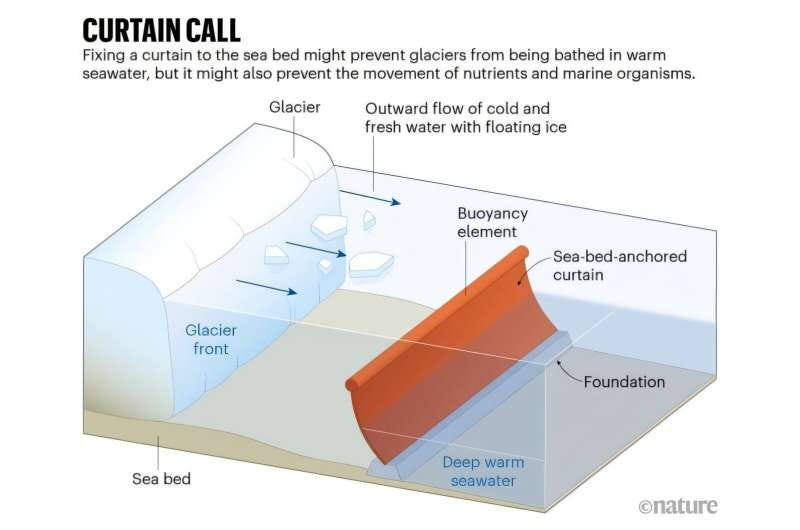
'Doomsday' Antarctic glacier melting faster than expected, fueling calls
for geoengineering
<https://phys.org/news/2024-11-doomsday-antarctic-glacier-faster-fueling.html>
(Phys.org)Plans to cool the Earth by blocking sunlight are gaining momentum
but critical voices risk being excluded
<https://theconversation.com/plans-to-cool-the-earth-by-blocking-sunlight-are-gaining-momentum-but-critical-voices-risk-being-excluded-236882>
(The Conversation)Facing Reality: The Need for Brutal Honesty in the
Climate Conversation
<https://medium.com/@honegger.matthias/facing-reality-the-need-for-brutal-honesty-in-the-climate-conversation-47bfc7baa2ab>
(Medium) Hacking the Planet Needs Guardrails and Guidelines
<https://www.bloomberg.com/opinion/articles/2024-10-31/climate-crisis-hacking-the-planet-needs-guardrails-and-guidelines?embedded-checkout=true>
(Bloomberg) Why Billionaires Love A ‘Bonkers’ Solar Engineering Climate
Solution
<https://www.forbes.com/sites/maevecampbell/2024/10/31/why-billionaires-love-a-bonkers-solar-engineering-climate-solution/>
(Forbes) University of Chicago launches groundbreaking new institute to
confront climate change <https://www.eurekalert.org/news-releases/1063221>
(Eurek Alert)
[image: 'Doomsday' Antarctic glacier melting faster than expected, fueling
calls for geoengineering]
<https://substackcdn.com/image/fetch/f_auto,q_auto:good,fl_progressive:steep/https%3A%2F%2Fsubstack-post-media.s3.amazonaws.com%2Fpublic%2Fimages%2F1b76d1f4-0861-45e7-9333-d350e9bee59e_800x530.jpeg>
'Doomsday'
Antarctic glacier melting faster than expected, fueling calls for
geoengineering
<https://phys.org/news/2024-11-doomsday-antarctic-glacier-faster-fueling.html>
(Phys.org)
------------------------------
*PODCASTS*SRM ethics - Hofbauer | Reviewer 2 Does Geoengineering

SRM ethics - Hofbauer

Reviewer 2 does geoengineering

38:52
<https://podcasts.apple.com/us/podcast/srm-ethics-hofbauer/id1529459393?i=1000675100652&uo=4>

"Benjamin Hofbauer discusses 3 papers from his PhD, on the ethics of Solar
geoengineering. Hofbauer, B. (2023). Systemic risks and solar climate
engineering research. Integrating technology ethics into the governance of
systemic risks. Journal of Risk Research, 26(12), 1383–1395.
https://doi.org/10.1080/13669877.2023.2288010

Hofbauer, B. (2023). Normative Uncertainty in Solar Climate Engineering
Research Governance. Ethics, Policy & Environment, 1–20.
https://doi.org/10.1080/21550085.2023.2216148

Benjamin Hofbauer. Techno-moral change through solar geoengineering: How
geoengineering challenges sustainability. Prometheus. 2022. Vol. 38(1).
DOI: 10.13169/prometheus.38.1.0082"

Solar Radiation Management to Buy Time for Climate | Climate on the Edge

Solar Radiation Management to Buy Time for Climate

Climate on the Edge

1:39:21
<https://podcasts.apple.com/us/podcast/solar-radiation-management-to-buy-time-for-climate/id1766353019?i=1000675061950&uo=4>

"As a climate investor focused on energy transition and carbon dioxide
removal, I've spent years understanding and supporting technologies that
drive decarbonization. But lately I've grown concerned that our progress
isn't happening fast enough. The urgency of our situation. Which has become
very apparent has left me curious about what else is out there.

That's why I was so excited to speak with Kelly Wanser, Executive Director
of SilverLining. SilverLining is a nonprofit organization dedicated to
addressing climate risks through advancing research and equitable
governance around solar radiation management. Kelly is an absolute
powerhouse here and a true pioneer in this field. Our conversation will get
into how SRM might work, where it's at today, what's needed to advance the
field and why organizations like SilverLining and its backers believe that
it should advance.

We'll explore the economic and practical aspects, including concerns about
SRM's affordability and the actual, very real logistical challenges of
deploying any form of SRM responsibly on a global scale. Kelly is one of
the world's most influential figures on SRM and climate intervention beyond
emissions reduction. I hope this conversation is as thought-provoking for
you as it was for me."

Silicon Valley Elites Want to Block the Sun. Not Everyone’s On Board | Big
Take

Silicon Valley Elites Want to Block the Sun. Not Everyone’s On Board

Big Take

13:52
<https://podcasts.apple.com/us/podcast/silicon-valley-elites-want-to-block-the-sun-not/id1578096201?i=1000675103779&uo=4>

"It sounds like science fiction, but it’s real: Venture capitalists,
startup founders, and Silicon Valley elites are pouring money into a
controversial technology called solar radiation modification that could
cool the planet by blocking the sun.

Today on the show, host Sarah Holder talks to Bloomberg reporter Sophie
Alexander about the international coordination needed for something like
this to work, and why funding for it is ramping up even as researchers
express concerns about the possible consequences."

------------------------------
UPCOMING EVENTS(NEW) Climate Geo-engineering—Navigating the Landscape of
Climate Change Solutions at World Future Forum by Allied4Future
<https://www.allied4future.world/wff-event-sessions/climate-geo-engineering>
| 05 November 2024 | Oeiras (In-person & Online)*Climate Repair Seminar
Series - Autumn 2024
<https://www.tickettailor.com/events/centreforclimaterepair1/1253490>*

*Ethics and Governance (title TBA) | 06 November 2024**Good COP, Bad COP: a
post-COP29 assessment | 27 November 2024*

*(NEW) Solar Radiation Modification: A Conversation on Governance and
Research at COP29 by The Degrees Initiative
<https://www.linkedin.com/posts/degrees-initiative_cop29-activity-7254472667154571265-6jsH>
| 11 November | Baku, Azerbaijan **(NEW) Solar Climate Intervention Virtual
Symposia # 14 <https://sites.google.com/view/solargeo-symposium/home> | 15
November 2024 | Online**Integrative synthesis workshop focusing on
identifying gaps in current governance & ethics
<https://apply.knowinnovation.com/climateintervention/>| 18 November 2024 |
Online*(NEW) Solar Geoengineering UNEA Simulation by FASS at Air University
& DSG
<https://docs.google.com/forms/d/e/1FAIpQLSeX-kcvWoB-vLWC9dLIGUfA2OrmpPe1o71oQB04P4UIOCUOFw/viewform>
| 26 November 2024 | Islamabad, Pakistan*(NEW) SRM Discussion: A Measured
Analysis on a Potential Avenue for Combatting Climate Change by Duke Law
School
<https://law.duke.edu/events/srm-discussion-measured-analysis-potential-avenue-combatting-climate-change>
| 04 December 2024 | North Carolina **2025 Solar Radiation Management
Annual Meeting by Simons Foundation
<https://www.simonsfoundation.org/event/solar-radiation-management-annual-meeting-2025/>
| 24-25 April 2025 | New York **The 2025 Degrees Global Forum
<https://substack.com/redirect/8521c00b-652a-4d78-822f-7ae393c57068?j=eyJ1IjoiMjJrMHl3In0.wQQsFypG52typ8FI2nhnJ8eUoUIIkdCkuhmzxNYKtgE>
|
12-16 May 2025 | Cape Town, South Africa**Artic Repair Conference 2025 by
University of Cambridge & Center for Climate Repair
<https://substack.com/redirect/90f81f14-d09c-4418-8d97-c6621d753433?j=eyJ1IjoiMjJrMHl3In0.wQQsFypG52typ8FI2nhnJ8eUoUIIkdCkuhmzxNYKtgE>
|
26-28 June 2025 | Cambridge UK*

Solar Geoengineering Events Calendar <https://teamup.com/ks64mmvtit583eitxx>
------------------------------
YOUTUBE VIDEOSCould India Help the World Address Extreme Climate Change? |
Kelly Wanser | TEDxGateway | TEDx Talks
<https://www.youtube.com/watch?v=bST_hl0yBKg>

"Kelly Wanser highlights India's expertise in technology and space
exploration, along with its vulnerability to climate risks and how this
positions it as a key player in advancing research in emergency climate
interventions. She calls for informed decisions, global cooperation, and a
role for India in shaping a safer future. Kelly Wanser is an innovator and
the Executive Director of SilverLining, an organization dedicated to
addressing climate change."

Dr Dante McGrath: Breaking the wall of the melting Arctic | Department of
Engineering, University of Cambridge
<https://www.youtube.com/watch?v=KKPbJGCS8BE>

"Winner of the Falling Walls Lab Cambridge 2024, Dr Dante McGrath,
#Research Associate in Marine Cloud Brightening at the Centre for #Climate
Repair, University of Cambridge, pitched his proposal for interventions
such as marine cloud brightening that may limit the impact of global
warming on Earth’s ecosystems."

Annual Solar Geoengineering: Mitigating Yearly Global Warming Increases |
Heat Pollution <https://www.youtube.com/watch?v=Ml18d9Ryzbw>

"This talk overviews at a basic level my paper published in the Journal
climate with same name as the title. Key ideas are:-Annual Solar
Geoengineering we reduce just enough solar radiation (Sunlight) to stop
yearly global warming increases."

------------------------------
DEADLINES*NOAA request for comments on potential solar radiation
modification research regulation
<https://groups.google.com/g/geoengineering/c/rDVllJ4FaNI>* | Deadline 19
November 2024(NEW) Call for Proposals for 2025 Degrees Global Forum
Conference
<https://www.cognitoforms.com/TheDegreesInitiative/DegreesGlobalForumSubmissionFormSessionsAndPresentations>
| 08 December 2024*Call for Proposals—Exploring Climate Cooling
<https://www.aria.org.uk/exploring-climate-cooling/> | Deadline: 09
December 2024**Submit your recent research on Solar Radiation Management to
new ES: Atmospheres collection
<https://substack.com/redirect/af9e032d-e856-4ef4-a71c-2c359687818d?j=eyJ1IjoiMjJrMHl3In0.wQQsFypG52typ8FI2nhnJ8eUoUIIkdCkuhmzxNYKtgE>
|
Deadline: 31 January 2025*Call for Proposals-Solar Radiation Management
<https://www.simonsfoundation.org/grant/solar-radiation-management/> |
Deadline to apply: 27 February 2025

--
You received this message because you are subscribed to the Google Groups
"geoengineering" group.
To unsubscribe from this group and stop receiving emails from it, send an email
to [email protected].
To view this discussion visit
https://groups.google.com/d/msgid/geoengineering/CAHJsh9-1nVs9iXJ1oehjz%2BSZtQVC5McRsRQaGGWZ2fg-4zCPvw%40mail.gmail.com.