From: b sabha <[email protected]>
http://www.ndtv.com/opinion/this-is-how-goa-is-being-destroyed-1270131?pfrom=home-opinion
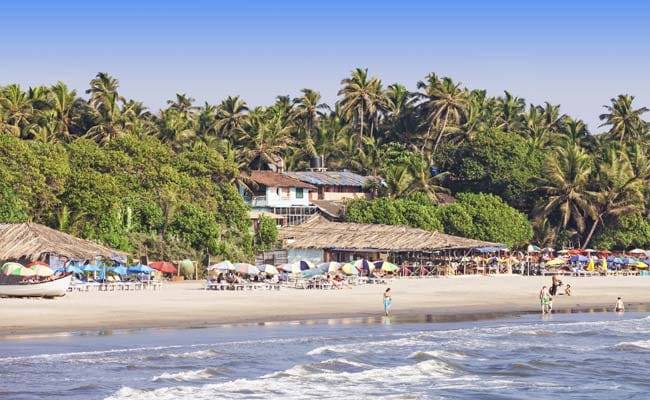
[http://i.ndtvimg.com/i/2016-01/goa-istock-650_650x400_61453784578.jpg]<http://www.ndtv.com/opinion/this-is-how-goa-is-being-destroyed-1270131?pfrom=home-opinion>

Opinion: This Is How Goa Is Being
Destroyed<http://www.ndtv.com/opinion/this-is-how-goa-is-being-destroyed-1270131?pfrom=home-opinion>
www.ndtv.com
Every single project conceived by government or by companies or compradors have
chewed up some part of Goa or another.


The naturally well-endowed state of Goa occupies less than 1% of India's
landmass. Yet, the charm of the place and the hospitable nature of its local
inhabitants now draw some 3-4 million people to enjoy its sheer beauty. Nothing
of that awesome handsomeness has been constructed by any government. Almost all
of it has come from the labours of a community expert in the maintenance of
rice fields, paddies, khazan systems, and a low intensive life-style that is
underscored by the spirit of soscegad  (taking it easy) - the key component of
a tourist industry. The result of these efforts over decades is that the Goa
region looks like a painting and the local artists who created it have really
never bothered about how many people came to see it and enjoy it.

The government of Goa, however, has remained unimpressed. Over the years, it
has tried zealously not to build on those assets, but to grind them to dust.
Not surprising, every single project conceived by government or by companies or
compradors have chewed up some part of Goa or another. The forests have been
assaulted by mining, led by Vedanta, headquartered in England. But almost every
5-star hotel on the beach has been put up by operators and chains from outside
the state. Each has taken down parts of the pristine beach system and crammed
it with their imported fantasias in concrete, disdainful of local architectural
designs.

Not unnaturally, the Goans have protested and continued to protest. Those
promoting wholesale industrialisation of the state cavil and complain that
environmental agitations are the greatest disincentive to a better economy for
the state. They forget that even with the closure of mining, Goa's GDP, over
the past three years, averaged 9%, higher than the rest of India's. Not wanting
to get their image tarred by being associated with those bulldozing the
environment for inappropriate development, the best names in industry have
remained aloof from Goa. Alas, that has brought in those with undoubted
capacity to do harm.

The state's land-use is controlled by the statutory Regional Plan, notified
under the Town and Country Planning Act. Village level planning and land use is
kept with Panchayats under the 73rd Constitutional Amendment. Both have
significant inputs from the same villagers whose ancestors created the natural
wealth and endowments of the state. Few of them want that to be dismembered.
The oppositions have never ceased, since the government has no other wish but
to impose. One former Chief Minister told the media that his word was law
because he had been elected by a formal election, and therefore, he would do
what he wanted, whatever the opposition.

It has been obvious to the Goa government that its hukum (authority)
nonetheless is circumscribed with all the notifications and regulations all
sourced to itself, and unless these are changed, done away with or bypassed,
nothing will move. For example, it had to cancel more than one dozen SEZs in
one single day. It had to scrap the statutory Regional Plan of 2011 in toto and
go for a redesign from scratch because the public demanded so. It had to cancel
DuPont. It is unable to allow promoters to put up yet more hotels. One hotel
resort proposed by one more Delhi company has been unable to lay a brick on its
properties on a south Goan beach because the local villagers refuse to have it
there.

Instead of dealing with this issue with care and compassion, the almighty
government, quite clearly riled beyond tolerance, has decided instead to take
back all those rights and powers it had granted to the local communities and
local statutory bodies by simply bypassing them altogether.

So first, the government amended the Industrial Development Act and removed all
industrial estates from the jurisdiction of the Panchayats. Next, it announced
a Goa Investment Policy (August 2014) and followed this up with the Goa
Investment Promotion Act. This Act is designed to provide a "single-window"
clearance in lieu of clearances under the Regional Plan, the Land Revenue Code,
any notified development plans, and even the Panchayat Raj Act. In fact, the
Act ominously states: "All provisions in Government of Goa Acts and Statutes
cease to apply" in all those areas declared "Investment Promotion Areas." The
Act is to be implemented through the Goa Investment Promotion and Facilitation
Board (GIPFB). Interesting, the composition of the Board comprises the same
bunch of officials and individuals who have been singular failures in the past:
the CM is chairperson; there are three VPs (the Ministers of Industry, Tourism
and IT), two Secretaries of Industry and Tourism, six persons associated with
industry associations and industry.

The Board's task is to give an omnibus clearance, notwithstanding all local
laws, to any project proponent who "promises" investment of Rs. 5 crores and
above, and local employment. How such an unconstitutional policy can become the
basis of any development in the state is difficult to fathom. It is bound to
get knocked down by the courts one day or another.

The Goa Investment Promotion Act has been followed by changes in the Town and
Country Planning Act. The amendments to the Act now allow those owning lands in
excess of 20,000 sq.mts in eco-sensitive zones notified by the Ministry of
Environment, Forests and Climate Change to put up ecotourism projects in 5% of
the area. Obviously, no aam aadmiin Goa owns that much land, only khaas aadmis
do. Neither has the MoEF&CC finally notified the zones. But the Goa government
is already rushing in anticipation to ensure that the people who have acquired
large tracts of lands will not be inconvenienced in any way by the
declarations. The purpose of declaring an area as an eco-sensitive zone is to
protect it. However, here we have a situation where law is being amended even
before the notification is issued, so that powerful actors can gird themselves
to do the necessary damage.

These changes in the Town Planning Act have been put as well outside the scope
of the Regional Plan and the Land Revenue Code.

This process of exclusion of the rights of people to a planned environment and
as members of local bodies is being extended to trees as well. The coconut tree
has been recently defined out of existence to enable industries and real estate
developers to engage in mass slaughter of palms.

If you wish to understand how these profoundly undemocratic laws are
interlinked and enmeshed with each other, take the case of Vani Agro in South
Goa. The plot on which this new alcohol plant is proposed has a thousand
coconut trees and 500 cashew trees. The proposal has been approved by the
GIPFB, which means the restrictions governing the statutory land use in the
Regional Plan do not apply, and there is no need of getting any approval from
the local authority either for the construction licence. The final nail on the
coffin: the coconut and cashew trees can be felled with impunity, almost with a
vengeance. That's pretty much how Goa is being governed nowadays.

Most of this population is literate. One prominent Goan, Keith Vaz, occupies
high posts in the UK government. Another Goan origin resident of Portugal has
recently become its Prime Minister. Writers like Sudhir Kakkar and Amitav Ghosh
reside here, together with Patricia Sethi, Maria Aurora Couto and Wendell
Rodricks.

The government of Goa, however, remains unimpressed.

In the last year and week, it has moved rapidly to introduce draconian super
laws that allow decision-making contrary to the requirements of basic
democratic canons of consultation and transparency.  Either it does not trust
the voters who pitched it to power, or it does not think they are worthy of any
consultation. It considers Goan citizens as simply irrelevant to the entire
business of governance.

In just one day in the Goa Assembly, the government got a bill passed that
amended the Goa Preservation of Trees Act, 1984. The amendment moves the
coconut tree outside the zone of protection and permits anyone to fell it
freely, as often as one wishes.

It has determined that the hoary coconut tree and the cashew as well, both
intimately linked with every Goan soul, are obstacles to development. Both have
been offloaded from the botanical train in order to make way for development.

If that were not bad enough, it brought in an amendment the same day to the
Town and Country Planning Act. The amended Act will entertain applications from
persons or developers in possession of 20,000 sq.mts and above for ecotourism
resorts in the ecologically fragile areas. The areas are yet to be declared
ESAs by the Ministry of Environment, Forests and Climate Change. However,
advance preparations for introducing eco-resorts in such areas are already
underway.

In 2014, the same government came up with another draconian Act, called the
Public Investment Act. This Act enabled anyone ready to make an investment of
Rs. 5,000 crores and above to get any area he wished as "industrial area".
After that was done, no State laws including the Planning Act, the Panchayat
Act or the Land Revenue Code would apply.

(Claude Alvares is an environmentalist based in Goa.)

Disclaimer: The opinions expressed within this article are the personal
opinions of the author. The facts and opinions appearing in the article do not
reflect the views of NDTV and NDTV does not assume any responsibility or
liability for the same.
First Published: January 26, 2016 10:27 IST