Dylan Beaudette wrote:

> >  There is a USGS technical report from the mid-1980s that's the standard on
> > projections. While it is becoming more rare to locatate, see if you can find
> > a copy.
>
> I think that Rich is referring to this USGS document, #1395
>
> http://pubs.er.usgs.gov/usgspubs/pp/pp1395
>
> Definitely worth the price if you want to become an expert in map projections.
According to that page, it's no longer available in hardcopy; however,
you can download it as a PDF.

> >  Interesting. NH is a tall, narrow state so one would assume it would be
> > within a single zone. Regardless, yes there is a way to reproject locations
> > in one zone on the other, but it's non trivial and I've not done it.
>
> I wouldn't recommend it. The desirable properties of the UTM system
> (i.e. the fairly good compromise between distortion, preservation of
> angles, and preservation of area) only occur within a zone's
> boundaries. The farther you move from the central meridian of the UTM
> zone, the more distortion you will encounter-- therefore 'projecting'
> UTM z10 data into UTM z11 is technically possible, but not a great
> idea.

That doesn't stop Norway doing it ;)

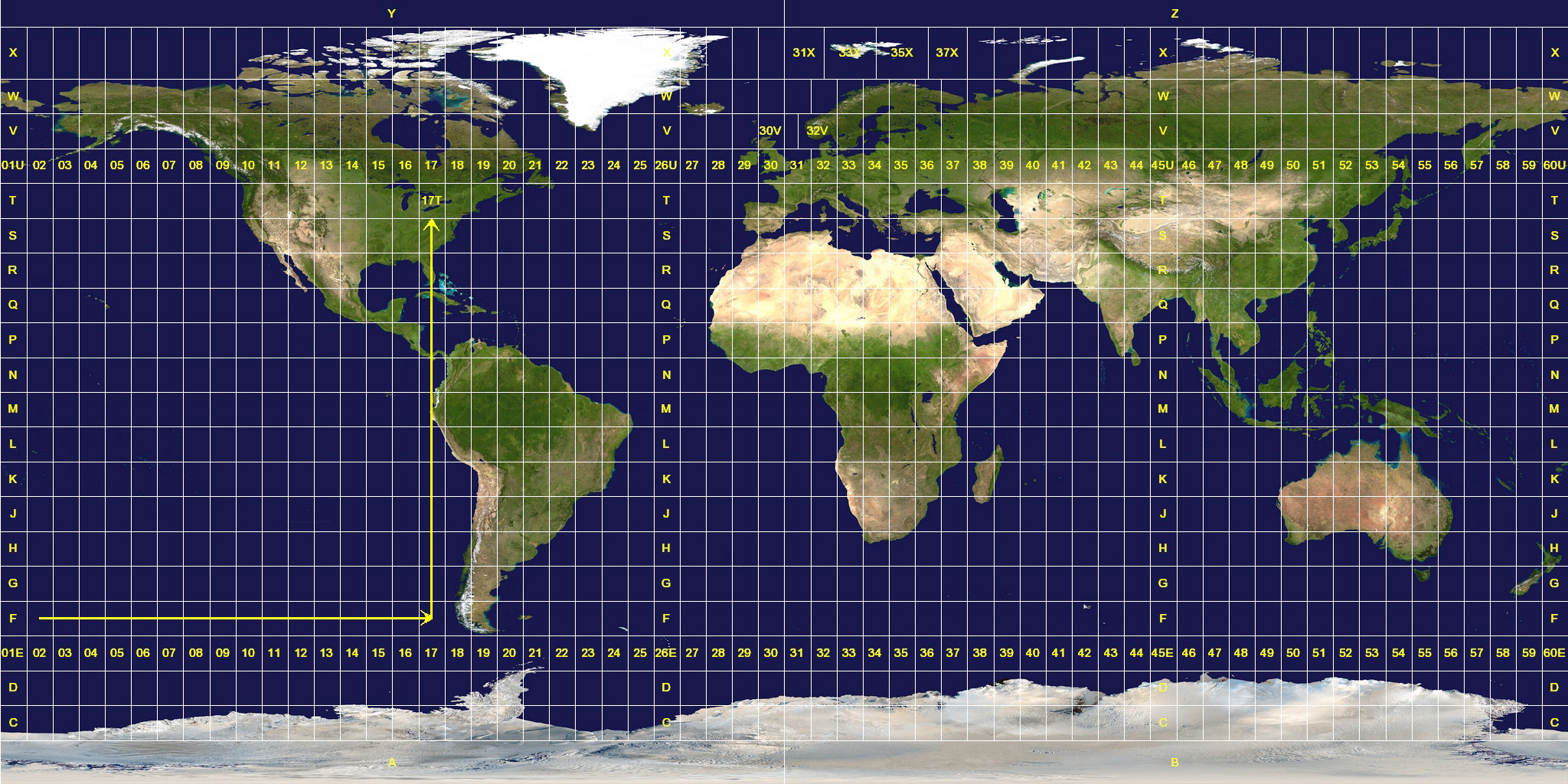
http://upload.wikimedia.org/wikipedia/commons/e/ed/Utm-zones.jpg

See 32V and 31X/33X/35X/37X.

The SW fragment of NH which is in zone 18 is only around half a
degree; projecting that into zone 19 isn't really an issue. Or you
could just use a custom transverse Mercator projection with the
central meridian at e.g. 71d30'W.

--
Glynn Clements <[email protected]>
_______________________________________________
grass-user mailing list
[email protected]
http://lists.osgeo.org/mailman/listinfo/grass-user