*Death of the University, Indian Style*

*By starving varsities of funds, to imposing CCS Rules in JNU, and now the
move to invoke ESMA in Delhi varsity, the BJP govt is trying to turn higher
learning institutions into govt departments.*
Subhash Gatade <https://www.newsclick.in/author/Subhash%20Gatade>
20 Oct 2018

<https://www.facebook.com/sharer/sharer.php?u=http://www.newsclick.in/death-university-indian-style>

<https://twitter.com/intent/tweet?text=Death%20of%20the%20University,%20Indian%20Style!&url=http://www.newsclick.in/death-university-indian-style>
<?subject=Death%20of%20the%20University,%20Indian%20Style!&body=NewsClick%20-%20http://www.newsclick.in/death-university-indian-style>
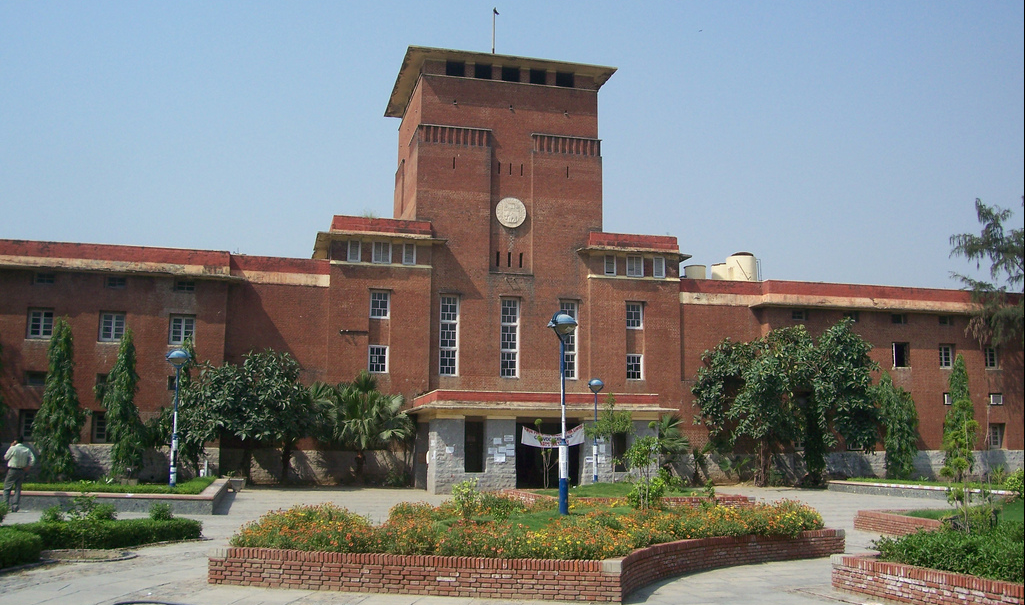
[image: DU]
<https://www.newsclick.in/sites/default/files/2018-10/arts_faculty_0.png>
Image for representational use only. Image Courtesy: University of Delhi
website

Are public colleges/universities being  left to die at the cost of private
universities in the US?

A cursory glance at the case study
<https://www.jacobinmag.com/2017/05/yale-university-connecticut-state-budget-cuts>
of
Yale University, which also includes other Ivy League universities -
namely, Cornell, Harvard, Princeton, Brown etc. - done by a young scholar
serves as an eye-opener

Describing how Yale ‘..[s]its on a mountain of money, and yet receives more
and more from public funds ‘and how the government itself ..[s]ubsidizes
the immensely wealthy Ivy League schools’ and how the federal and state
governments spent over $40 billion on the Ivy League schools in tax
exemptions, contracts, grants, and direct gifts’, the study relates how in
the same state of Connectinut ‘twelve community colleges and four public
universities — are starved to death by austerity and neoliberalism’.

Browsing the article, one was reminded of a thought-provoking write-up by
leading Marxist critic Terry Eagleton
<https://www.socjobrumors.com/topic/the-slow-death-of-the-university-by-terry-eagleton-uk>,
‘The Slow Death of the University’ which discusses how we are witnessing
‘an event as momentous in its own way as the Cuban Revolution or the
invasion of Iraq which is steadily under way: the slow death of the
university as a center of humane critique’,  and how the critical distance
between the university and society at large -- which allowed them to
‘reflect on the values, goals and interests of a social order’ -- is now
being ‘diminished almost to nothing, as the institutions that produced
Erasmus and John Milton, Einstein and Monty Python, capitulate to the
hard-faced priorities of global capitalism.

Providing details of this phenomenon, Eagleton tells us how the focus has
slowly shifted from governance (of universities) by academics to rule by
hierarchy, how teaching is becoming less important than research because it
‘brings in money’ and how ‘professors are transformed into managers, so
students are converted into consumers’ and how ‘deep-seated political and
economic forces’ have come to ‘shape syllabuses’.

Higher Education -- The India Story

Anyone who has closely watched developments in the field of education in
India -- especially higher education -- would vouch for the fact that the
ascent of Hindutva supremacist forces at the Centre has perhaps added a new
angle to what is being described as the ‘slow death of university’, which
is accompanied by breaching the wall that separates government and
academia, dissolution of institutional autonomy, curbing democratic rights
of students and teachers and criminalisation of dissent under the twin
logic of privatisation and saffronisation of education.

The latest act in this series is the move by the Bharatiya Janata Party-led
National Democratic Alliance government which has moved to bring classes,
exams and paper evaluation at Delhi University under the Essential Services
Maintenance Act
<https://www.telegraphindia.com/india/axe-hangs-on-right-to-protest-at-du/cid/1672118?ref=top-stories_home-template>,
which would allow teachers to be imprisoned for holding strikes.

It is a despotic move by the University Grant Commission (UGC) at the
behest of the MHRD (Ministry of Human Resource and Development) to form a
working group which is tasked to explore options to dissolve institutional
autonomy and throttle democratic rights of one of India’s largest
institutions of higher learning, the Delhi University.

“The move to bring academic activities under ESMA will prevent faculty from
holding any agitation or instigating any colleague to join a strike on any
academic or other issue.  They will face a non-bailable warrant. The right
to protest and dissent will be taken away completely.” a representative of
teachers told a news conference recently.

ESMA also includes some other stringent clauses, which has harsher
provisions for giving financial aid to any movement or protest. And if the
plan gets a go- ahead -- which is now mere formality -- then teaching,
non-teaching staff and students will be prohibited from indulging in
actions which can effect or disrupt these activities.

What prompted the HRD Ministry to introduce such stringent provision
<https://www.tribuneindia.com/news/delhi/du-teachers-oppose-ugc-working-group-on-exploring-changes-for-esma/670256.html>s
like ESMA against teachers despite knowing that ‘teachers are not mere
service providers, but creators and disseminators of knowledge and informed
opinion?

The fact is that teachers in Delhi University have always remained in the
forefront of struggles by university and college teachers all over India
and the government wants to discipline them. It also knows that if Delhi
University is made to fall in line with this new design, then other
universities - Central as well as State -- can easily be compelled to adopt
similar rules.

‘Pilot’ Project in Delhi University?

This ‘pilot’ move to rein in Delhi University teachers is just a step ahead
on the way the UGC wants to model all the central universities. It would
lead to the formal breaching of the wall which separated the government
machinery from the world of academia, which facilitated independence of
thinking, freedom to dissent and act on dissent.

Five months ago,  the University Grants Commission (UGC) had communicated
its plan to all the Central universities which categorically told them that
all those educational institutions who take funds from the Central
government will have to abide by the Central Civil Services (Conduct)
Rules. And if somebody dares violate this rule then the government will
have the right to dismiss the employee.

What are those CCS rules
<https://www.iitk.ac.in/wc/data/CCS_CONDUCT_RULES.pdf> that the academics
are supposed to abide by and whose violation can even lead to their
dismissal from the services. A glimpse into the 21- page rules can be had
from the following one of its rules :

*No Government servant shall, in any radio broadcast, telecast through any
electronic media or in any document published in his own name or
anonymously, pseudonymously or in the name of any other person or in any
communication to the press or in any public utterance, make any statement
of fact or opinion -(i) which has the effect of an adverse criticism of any
current or recent policy or action of the Central Government or a State
Government which is capable of embarrassing the relations between the
Central Government and the Government of any State; or (iii) which is
capable of embarrassing the relations between the Central Government and
the Government of any foreign State;*

Effectively, the adoption of these rules by any university means the
freedom, the autonomy which an academic had got to produce new knowledge
and share it with others, stands compromised.

One can as well browse the very first report on higher education which had
made it abundantly clear why a ‘spirit of free enquiry’ is needed for
‘intellectual progress’

*..Higher education is, undoubtedly, an obligation of the State but State
aid is not to be confused with State control over academic policies and
practices. Intellectual progress demands the maintenance of the spirit of
free inquiry. The pursuit and practice of truth regardless of consequences
has been the ambition of universities.  Professional integrity requires
that teachers should be as free to speak on controversial issues as any
other citizens of a free country. An atmosphere of freedom is essential for
developing this ‘morality of the mind’.”*

*(Excerpts of the 1949 Report of the University Education Commission,
quoted
in https://thewire.in/education/ugc-india-higher-education-commission
<https://thewire.in/education/ugc-india-higher-education-commission>)*

Perhaps, the custodians of the country now feel that times have changed and
the parameters need to be changed to sustain oneself in the ‘competitive
global environment’.

The scenario -- which is present before us -- may appear dystopian for
anyone, but the UGC directive is such that the very role the academic is
expected to play in the classroom and civil society, can easily be
criminalised. The immediate import of these rules would be felt by scholars
cutting across subject lines e.g. it can lead to (what JNU Teachers
Association rightly puts it )

*“economics professors can be punished for discussing economcs,  political
scientists can be punished for discussing politics, environmental science
professors can be punished for discussing environmental policy”*

It can also mean even a *‘critical commentary on literary and art
traditions can invite punitive action.’*

As of now Jawaharlal Nehru University (JNU), which has been in the
forefront of implementing the agenda of the powers that be quite vehemently
-- right from asking Central ministers to procure a military tank for
display to spark ‘patriotic sentiments’ among students or ‘celebrating’
surgical strikes day as per directions of the UGC -- has become the ‘first’
among the plethora of Central universities to adopt it. It is just a
question of time but sooner or later all the central universities
(according to an old estimate the number is 45) will have to adopt these
rules unless they decide to stop taking funds from the central government.

No doubt, starving universities of funds which leads to ‘to close campuses,
eliminate student services and lay off workers’ or compelling them to
justify their existence by acting as ancillaries to entrepreneurship’ is
rather a direct way of putting educational institutions on the path of
dismantling them or facilitating their privatisation by backdoor. But,
 saffron forces have demonstrated that there could be other rather
insidious ways as well, which can squeeze any meaning of the university.

The government very well knows that turning universities into another
government department or using ESMA to crush voices of dissent would
severely restrict independent thinking and would have severe bearing on
creating new knowledge but why they should be bothered when they believe
that ancient rishis have already developed all the knowledge which is in
vogue today.

Does anyone need any extra proof than the ‘pearls of wisdom
<https://indianexpress.com/article/india/india-others/pm-narendra-modi-inaugurates-hn-reliance-foundation-hospital-in-mumbai/>’
the honourable PM himself shared at the inauguration of a hospital by
Ambani where he talked of presence of plastic surgery and genetic
engineering, in ‘our shastras’!

( First appeared in https://www.newsclick.in/death-university-indian-style)

--
You received this message because you are subscribed to the Google Groups
"humanrights movement" group.
To unsubscribe from this group and stop receiving emails from it, send an email
to [email protected].
To post to this group, send email to [email protected].
Visit this group at https://groups.google.com/group/humanrights-movement.
For more options, visit https://groups.google.com/d/optout.