How Many More 'Halal' Ponzi Schemes ? - Subhash Gatade
It is important to note that the very idea of Islamic banking and promoting
it as a parallel to conventional banking – which is being portrayed as
un-Islamic – and which has caught the imagination of a section of
god-fearing Muslims, is a clear manifestation of shifts in Muslim politics
over the world.
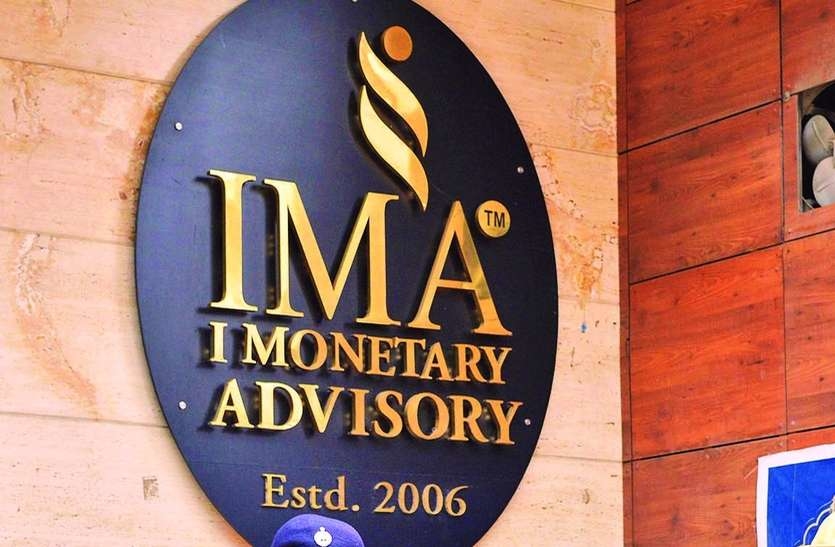
[image: 'Halal' Ponzi Schemes]
<https://www.newsclick.in/sites/default/files/2019-06/%27Halal%27%20Ponzi%20Schemes.jpg>
Image for representational use only.Image Courtesy : Business Today

Afzal Pasha, a 55-year-old labourer, is dead. He died of a heart attack a
few days back.

The news that the attractive scheme in which he had invested his life's
savings worth Rs 8 lakh went bust proved unbearable for him.

While Afzal's tragic death could catch headlines, we will never know the
plight of the thousands of investors – all of them belonging to the Muslim
community – who had similarly invested their hard-earned savings in the
said investment scheme launched
<https://www.telegraphindia.com/india/halal-ponzi-scheme-monetary-advisory-leaves-investors-in-the-lurch/cid/1692451?ref=search-page>
by
Mohammed Mansoor Khan in 2006 through his firm I Monetary Advisory (IMA).

The scheme was declared 'Shariah-compliant' and worked on '“no interest”
policy of Islamic banking. A section of the clergy had even certified this
scheme as “halal”, which means “lawful” or “permitted” in Arabic, which
helped it easily earn the trust of the Muslim community. Small investors
from across the state of Karnataka had flocked to it with their investments
ranging from a few thousand rupees to a few lakhs.

A few days back, the promoter of IMA just disappeared from Bengaluru and is
supposed to have fled to Dubai.

According to rough estimates, the size of the fraud is of more than Rs
2,000 crore and a special investigation team (SIT) has been constituted to
look into the scam and punish the fraudsters. Apart from the fact that
people invest in such schemes because of the promise of incredible returns,
what is so particular about these schemes which lure Muslims from various
strata to go for it?

One, as 'Shariat' compliant fund, they formally claim that they do not
invest in companies that deal in alcohol, tobacco, weapons, pornography or
gambling, among others.

Two, they do not take “deposits” or pay “interest”, rather convert the
investors into limited liability partners and pay the investors dividends.

What is notable is that it is not for the first time that one witnessed a
firm being run on purely 'Islamic principles' has similarly gone bankrupt.
'The Milli Gazette' had time and again reported
<http://www.milligazette.com/Archives/01-7-2000/Art13.htm>activities of
similar fraudsters who had robbed ordinary Muslims of their precious
savings under the name of ‘Islamic investment’.

*Al-Fahad goes Al-Falah way*

*... Another fraud in the name of ‘Islamic investment.’ Delhi-based
Al-Fahad investment group downed its shutters in the densely Muslim
populated area of Okhla and left investors high and dry. It is not the
first instance when a non-banking investment company collecting millions of
rupees in the name of Islamic and halal investment schemes has bolted with
no trace. (...) According to a brochure of the company, Al-Fahad worked on
the principle of participation in profits. The amount invested by people, a
group or trust in different schemes was to be utilized to finance various
profitable ventures. The profit so earned was to be shared among investors
and the company (in the ratio of 80:20).*

Four years later, it had reported
<http://www.milligazette.com/Archives/2004/01-15May04-Print-Edition/0105200497.htm>
about
another such scam by 'Al-Barr Finance House' –headquartered in Mumbai with
branches in different parts of India – which had adopted a little different
method
<http://www.milligazette.com/Archives/2004/01-15May04-Print-Edition/0105200497.htm>
to
defraud the gullible Muslims:

“*Islamic” fraud is back, New “al-Falah” on the prowl*

*While a sizable number of Muslim investors are still recuperating from the
scars inflicted by Al-Falah brand of “Islamic” financial sharks, we now
have another “al-” brand of companies claiming to be an associate of a
multinational Islamic finance group. Unlike Al-Falah, this group has
adopted another route for harassing poor Muslims.*

Coming back to the busting of the IMA Ponzi scheme, one can also witness a
palpable sense of anger among a section of Muslims who are venting against
the Maulanas exemplified by what a young Asif told
<https://www.telegraphindia.com/india/halal-ponzi-scheme-monetary-advisory-leaves-investors-in-the-lurch/cid/1692451?ref=search-page>
a
reporter:

“*Hunt down the maulanas and ulemas who went about asking people to invest
only in halal schemes. What makes anyone think this kind of scheme is
halal?”*

This techie had also a word of advice for Muslims:

“*Your earnings are halal only when you work hard for it. Otherwise it is
haram (forbidden under Islamic law). At least now Muslims should realise
this.” *(-do-)

It is different matter that this advice is going to fall on deaf ears.

It is important to note that the very idea of Islamic banking and promoting
it as a parallel to conventional banking – which is being portrayed as
un-Islamic – and which has caught the imagination of a section of
god-fearing Muslims, is a clear manifestation of shifts in Muslim politics
over the world.

Growing acceptability of halal investment groups among large sections of
Muslims is also a reflection of a significant sections remaining aloof from
conventional banking systems for various reasons. Sachar Commission had
rightly noted:

“*The access of Muslims to bank credit, including priority sector advances,
is low and inadequate. The average size of credit is also meagre and low
compared with other socio-religious communities both in public sector and
private sector banks. The position is similar with respect to finances from
specialised institutions like the SIDBI and NABARD. Census 2001 data show
that the percentage of households availing themselves of banking facilities
is much lower in villages where the share of Muslim population is high….
The financial exclusion of Muslims has far-reaching implications for their
socio-economic and educational uplift.”*

This financial exclusion could be a considered a culmination of various
factors. It has also to do with the fact that majority of the population is
poor and engaged in informal sector; it is also because of a certain
mindset prevailing in the banking sector, which has categorised Muslims and
Muslim-dominated areas as “negative zones” (which is documented in the
Sachar report), and also for reasons of faith. (Purnima S. Tripathi,
“Inclusive Banking”, Frontline, vol. 26, no. 21, October 10-23, 2009)

Any neutral observer can see that these twin factors – shifts in Muslim
politics over the world and financial exclusion of Muslims here in India –
has led us to a situation where one witnesses proliferation of such schemes
<http://www.mainstreamweekly.net/article3300.html> when "[o]ne can find
these banks in almost every locality where a substantive Muslim population
exists".

As a caveat, one needs to admit that all such ventures cannot be painted
with the same brush and there could be quite a few genuine people among
them who, as pious Muslims, could be running these ventures with utmost
transparency.

Question arises what needs to be done so that separating the genuine
efforts one is able to curb proliferation of such schemes among minorities
which have effectively turned into ventures where "[u]nscrupulous Muslim
shylocks, supported by a section of the Muslim clergy, continue to operate
in India and are able to hoodwink Muslims in the name of Islamic or
non-interest banking".

First of all, it is important that government and the Reserve Bank of India
(RBI) come forward to take stern action against this kind of scandalous
banking. A necessary first step in this direction could be guidelines
issued by the RBI are strictly enforced in all such cases which pursue
financial activities of the banking/non-banking kind under the banner of
'Islamic Banking' or Sharia Compliant Funds etc.

Secondly, it is equally important that special attempts are made to end the
financial exclusion of Muslims – evident at very many levels – by adopting
special measures to accomplish it.

Thirdly, it is also important to raise broadly two categories of questions:

– How did Ulemas or Islamic scholars of yore looked at introduction of
modern banking?

– How countries which call themselves Islamic look at this proposition; are
they ready to convert their modern banking system into Islamic Banking or
have kept their efforts at a symbolic level only?

It is instructive to look at the debates in colonial India between Muslim
scholars when modern banking was being introduced and a section of the
Ulemas who objected to it on the basis of their understanding of Islamic
principles. In his important intervention on the subject, Ather Farouqui
tells us:

*According to eminent Muslim thinkers of the twentieth century including
Maulana Shibli Nomani and Allama Iqbal, bank ‘interest’ is a profit on
investment or charge on capital and when it is not exploitative, it is not
riba.*

(Islamic Banking in India at the Service of Pan-Islamists, MAINSTREAM, VOL
L, NO 11, MARCH 3, 2012)

He also quotes a

…a letter dated January 17, 1932 to Khwaja Abdur Raheem, Allama Iqbal
writes, “Interest in every form is prohibited. But this is so in an ideal
society. Fatwa of Shah Abdul Azeez is that to draw bank interest is
permissible.” [B.A. Dar (ed.), Anwaare-Iqbal (Karachi: 1967), p. 245
(publication house not known)]

What does the experience of Islamic countries tells us on this matter. One
can refer to Farouqui's observations once again:

*In Saudi Arabia, banks, are involved in charging and paying interest. The
only difference from other modern/conventional banking is that they ’employ
semantics’ and instead of using the term interest use the terms profit-loss
sharing. Looking at the fact that it is an oil-rich economy, banks there
rarely face losses and the depositors ‘share the profits’ which is not
considered ‘riba’ (usury)*

*The most interesting case vis-a-vis Islamic banking pertains to Pakistan.
Here few years back Islamists demanded to overhaul the conventional/modern
banking system for an end to the interest paying system. The Federal
Shariat Court also ruled in their favour but the government did not take it
up in the legislature. When the matter went to Supreme Court, it has set
aside the judgement and the matter is still pending.*

He adds:

*Even in an Islamic state such as Pakistan, therefore, interest-free
banking has till date been unsuccessful largely due to the lacunae in the
existing system but also as a result of the dichotomy between overemphasis
on religious principles while trying to find one’s place in a globalised
market economy.*

(Islamic Banking in India at the Service of Pan-Islamists, MAINSTREAM, VOL
L, NO 11, MARCH 3, 2012)

Last but not the least, one also needs to brood over the fact that in a
polarised ambience whether such a move would prove really beneficial for
those Muslims who are financially excluded or would it pave the way for
their further pauperisation?

(https://www.newsclick.in/Halal-Ponzi-Schemes-God-Fearing-Islamic)

--
You received this message because you are subscribed to the Google Groups
"humanrights movement" group.
To unsubscribe from this group and stop receiving emails from it, send an email
to [email protected].
To post to this group, send email to [email protected].
Visit this group at https://groups.google.com/group/humanrights-movement.
To view this discussion on the web visit
https://groups.google.com/d/msgid/humanrights-movement/CAJGPqcbzTMXz0j%2BsYGpyMbYK-2woWnkQHZKh_AjPz99XwRa%2B1g%40mail.gmail.com.
For more options, visit https://groups.google.com/d/optout.