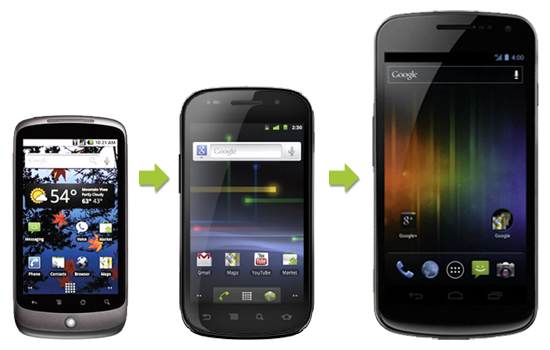
sekedar refresh aja.. evolusi nexus dr awal.. ;) 
So last week’s big announcements have all been wrapped up and we have the
next edition of the Nexus phone on our hands – the Galaxy
Nexus<http://phandroid.com/galaxy-nexus/>by Samsung. We’ve gotten a
dual-core processor, Android 4.0 Ice Scream
Sandwich, a 720p HD display and a lot more. But let’s take some time to see
just how far we’ve come and reminisce how we got here.

<http://phandroid.s3.amazonaws.com/wp-content/uploads/2011/10/evolution-of-nexus.png>

*Nexus One* <http://phandroid.com/nexus-one/>* *

The original Nexus phone – the Nexus One – was an exciting project. I can
recall the day like it was literally yesterday, though I won’t go into grave
detail. For specs, it boasted a 3.7 inch LCD display, a 1GHz single-core
Snapdragon processor, 512MB of RAM, a 5 megapixel rear camera and one of my
personal favorite features – a trackball that doubled as a multi-colored
notification light.

Its aluminum unibody build made it feel as premium as any phone and we
considered it our “iPhone killer”. But beneath all that was Android 2.0/2.1
Eclair, the first edition of Android to bring exciting things like Live
Wallpapers, multiple accounts support and more. At the time, a 1GHz
processor was about as desirable as a million dollars. Having suffered over
a year of subpar performance due to slow processors, the 1GHz processor (not
to mention general optimization in the OS) made Android run like a dream.

<http://phandroid.s3.amazonaws.com/wp-content/uploads/2010/02/nexus-one-3.jpg>

The Nexus One also marked the beginning of Google’s “phone store”
experiment. Instead of selling the phone in respective carrier and retailer
stores, they opted to sell it online without any major advertising. It all
started with T-Mobile, but AT&T and several Canadian carriers would add
support for the device.

Verizon was initially said to get the phone, but that never came to pass as
they instead directed users to buy the DROID Incredible (which was and still
is a very awesome phone for its time). Sprint also opted to push their
then-revolutionary HTC EVO 3D <http://phandroid.com/htc-evo-3d/> Worldwide
it was made available by many carriers.

While those of us who check Android news every day were aware of the phone
and bought it as soon as we could, we imagine sales performance wasn’t what
Google expected. They soon closed the online store, though Nexus One devices
continued to be sold. To this day, it remains many peoples’ main phone.

*Nexus S*

Though the Nexus One wasn’t a commercial success (it wasn’t meant to be),
Google wanted to create a series, of sorts. Think of it as the iPhone of
Google’s (not literally, of course). Finally, Android truly has its own
flagship smartphone through the Nexus program that has OEMs clamoring for a
shot at making the ultimate Google Experience phone.

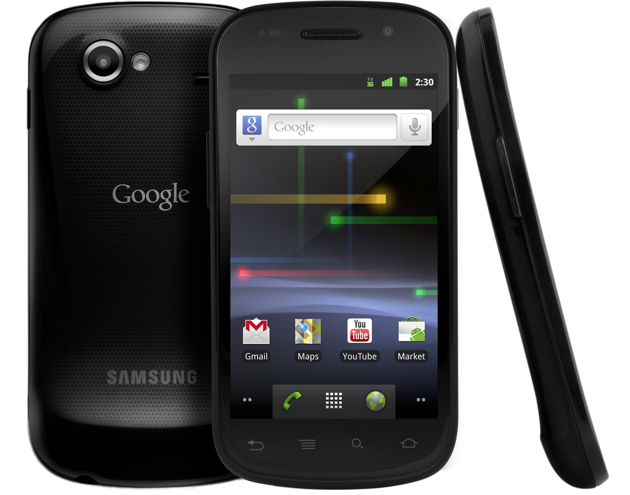
The Nexus S is a fine phone. Still advertised and sold in stores today, it
has a 1GHz Samsung Hummingbird processor, a 4 inch Super AMOLED curved
display, an NFC chip, 16GB of internal storage, 512MB of RAM, a 5 megapixel
camera with a VGA front-camera and more. Notably lacking from this phone is
a notification light and a microSD card slot, something which affected
many’s decision to buy it.

This release also marked the first time that a carrier put 4G radios inside
of the phone as Sprint – a first time carrier for the series – put WiMax
radios inside and dubbed it Nexus S 4G
<http://phandroid.com/nexus-s-4g/>Retailers and carriers were allowed
to advertise it and sell it in stores,
meaning it has a lot better chance at success than the original (though
we’re not exactly sure where its numbers are right now).

<http://phandroid.s3.amazonaws.com/wp-content/uploads/2010/12/nexusbig.png>

With its introduction came the first commercial release of Gingerbread.
While Gingerbread was seen as a disappointment at first due to beliefs that
it would be transformed so extensively that regular Android users wouldn’t
recognize it, it eventually grew on everyone.

UI improvements were more than just eye-candy as we saw a great boost in
overall OS performance. It also brought with it darker tones and the very
green that the Android mascot is painted with. It also boasted great new
features such as a highly-improved text editing feature and a new battery
usage visual.

While the Nexus S is a great phone, a lot of original owners didn’t see too
much reason to upgrade. It still had a single-core processor and it was
actually a downgrade in some areas. That’s not to take anything away from it
– it’s a great phone – but this wasn’t the one we were looking for.

*Galaxy Nexus*

And then there’s the Galaxy Nexus, the second entry in the series by
Samsung. This one was revealed last week in Hong Kong at a joint press
conference of Google’s and Samsung’s. We were extremely blown away by the
announcement and showing and it’s impressive what Samsung has achieved here.

This is one of the first phones with a 720p HD display. It’s 4.6 inches in
size, but as it comes with Ice Cream Sandwich there are no hardware
navigation buttons as those are replaced by buttons built into the software.

Like its predecessor, it has a curved glass display for ergonomics’ sake.
Unlike the previous version which has a completely plastic chassis, it also
uses aluminum in parts of its chassis to give it that premium, solid feel.

<http://phandroid.s3.amazonaws.com/wp-content/uploads/2011/10/Samsung-galaxy-nexus-OFFICIAL1.jpg>

To keep the trend going, the launch of the Galaxy Nexus will mark the first
release of Ice Cream Sandwich, the latest version of Android. Android 4.0
has applications and features to take advantage of everything inside the
phone, including NFC-based content/document sharing.

It appears that a lot more carriers (at least here in the United States)
will be willing to carry this phone. Verizon Wireless, who skipped the first
two devices, have officially announced plans to carry it. Sprint has shown
that they’re all-in with Nexus, too, as they went so far as to put 4G radios
inside their Nexus S.

While Sprint, AT&T and T-Mobile have yet to announce any of their plans
(Verizon is said to be a timed-exclusive carrier for the device), we expect
all of them to carry the Galaxy Nexus at one point or another.

*A Benchmark for OEMs*

I feel it’s necessary to touch on what the Nexus series of devices is meant
for. For consumers, those of us who want quick access to the latest versions
of Android is the main driving point, but Google has created this series
more for OEMs in certain ways.

The Nexus series provides a benchmark for OEMs to work with for their own
phones. It’s a program that is supposed to inspire the evolution of phone
technology and drive OEMs to create great, powerful Android phones showing
them that it isn’t hard to put a great device out.

Nexus phones often showcase never-before-seen features not only in the
Android world, but in smartphones period. 720p HD displays, barometers and
NFC chips among other components inside the Galaxy Nexus are all relatively
new to America, for instance, and Google hopes that OEMs will find value in
using such components in some of their future products.

Google first changed the game with the Nexus One mentioned above. With a 3.7
inch display, a 1GHz processor, sufficient amounts of RAM, ROM and more, it
was fairly advanced for its time. Shortly after, we saw many phones follow
the model. Android phones were no longer seen as the ugly cousin around the
block.

The Nexus One was the blueprint for great devices like the HTC EVO 3D, the HTC
Droid Incredible <http://phandroid.com/htc-droid-incredible/> and more. The
Nexus S wasn’t too much different – it had a better GPU and CPU, a bigger
and better display, a front-facing camera, an NFC chip and Android 2.3.
Still, it introduced features that Google hoped OEMs would adopt.

By this time, many OEMs have outdone Google in the Nexus line. NVIDIA first
introduced their dual-core chips to OEMs and showed them that they can put a
lot more powerful chips inside phones while still minding the budget.

Since then, manufacturers like TI, Qualcomm and Samsung have created
dual-core processors and have put them in many of their high-end phones. The
industry will soon take it even further as NVIDIA looks to quickly usher in
quad-core chips.

While the Nexus One’s purpose and effects on the industry weren’t
immediately seen, you can now see how much it is responsible for the great
devices being pumped out left and right today. You could even say that the
original concept behind Nexus isn’t even needed anymore as technology seems
to be self-evolving in the Android world, but of course we would never want
the series to end.

*Finally, A Flagship for Google*

Up until now and for the foreseeable future, the battle has always simply
been “Android vs iPhone”. Early criticism was that Google didn’t really have
a flagship device even though they get tons of high-end offerings from tons
of OEMs. Apple brings out roughly one iPhone per year and that is their only
phone.

The reason people put so much emphasis on Google needing a flagship device
is due to fragmentation and inconsistency between low-end and high-end
offerings from all the manufacturers.

<http://phandroid.s3.amazonaws.com/wp-content/uploads/2011/10/google_phone_concept3.jpg>

While Google surely wouldn’t describe the Nexus line as a flagship series
(it’s more of a developer phone and that contract other OEMs to create it),
we all look at it that way. Each iteration since the Nexus One, Google has
been able to showcase the latest in technology without waiting for OEMs to
catch on.

We always see the latest version of Android on these devices and they always
get the fastest updates. It’s essentially the “Google phone” we’ve always
wanted even if Google doesn’t do a lot of the R&D for these phones alone.

Still, the brand has evolved into an identifying entity for all of Android,
showcasing just how great an Android device can be when given the right
combination of hardware and software. It’s alright if Google doesn’t want to
call it a flagship, but we have no problem doing so.

*The Future*

After a dual-core phone with as many great features as the Galaxy Nexus,
we’re not sure where the series can go from here. Quad core? An actual
microSD card? A fingerprint scanner? The Galaxy Nexus is in line with most
high-end smartphones these days and we’re not sure what would give Google
incentive to keep the program going. That’s not to say we wouldn’t love to
see another device, but at this point in time it’s about as good as it’s
going to get.

We would love to see a Nexus tablet of some sort. We all viewed the Motorola
XOOM as the first Android 3.0+ tablet for developers but Google had no more
of a hand in its conception than they did with any other device – they
provided the software (and understandably decided to test it on the XOOM
seeing as it was the first and only Honeycomb tablet on the market earlier
this year.

In any case, we’re optimistic that Google will continue the series even if
there is very little to add. Then again, innovation is never ending so we
probably just haven’t had the vision to think up anything else cool Google
could add to these devices. Let’s hope Google’s vision still extends far
down the road.

Read full article at
http://phandroid.com/2011/10/26/the-evolution-of-nexus-what-it-was-what-it-is-why-its-here-and-where-its-going/

Sent from Mr.Incredible

--
"Indonesian Android Community"  Join: http://forum.android.or.id

===============
Join ID-ANDROID Developers
http://groups.google.com/group/id-android-dev
---------------------
Gunakan Paket Unlimited Data XL Mobile Broadband
http://www.xl.co.id/XLInternet/BroadbandInternet
--------------------
PING'S Mobile - Plaza Semanggi
E-mail: [email protected] Ph. 021-25536796
--------------------
i-gadget Store - BEC Bandung
E-mail: [email protected] Ph. 0812-21111191
--------------------
Toko EceranShop - BEC  Bandung
E-mail: [email protected]  Ph. 0815-56599888
===============

Aturan Jualan dan Kloteran ID-Android http://goo.gl/YBN21