Android pertama saya HD2 hehehe.. trus langsung lompat ke HTC Evo 4G
On Mon, Nov 18, 2013 at 5:59 PM, dantez <[email protected]> wrote:

> hadier!!!
>
>
>
> On Sunday, November 17, 2013 11:11:10 PM UTC+7, agus ry™ wrote:
>
>> #terharu
>>
>> Hayoo mana ini pasukan G1,dengan goldcard pamungkasnya :)
>>
>> Nte Enya,Kang Dantez,Oom Jefri Priambodo,Oom Jus,Tyo,Ichan dkk
>>
>> Markiflash!
>>
>> Gak terasa dah 6 taun yah..masa² bergadang apply apps2d demi beberapa
>> puluh Mb sudah berlalu.
>>
>> Suwun,
>>
>> a g u s r y™
>>
>> quantum | 4.1.2 | N9810V1.0.0B06
>> On Nov 17, 2013 10:59 PM, "Defriando Riza" <[email protected]> wrote:
>>
>>> sudah 6 thn ya..perasaan br kemarin main2 ama spica, flash kernel, coba
>>> JIT, main-main ama zipfiles.. ;)
>>> dulu, omongan disini isinya oprek2 semua..jarang ada yg ngomongin
>>> jualan..ramenya adlh informasi utk markiflash (suhu Ocu mana yak, sang
>>> ketua MAC)
>>> ngomongin changelog, ver.ini lbh baik dr ver.itu...
>>> but well, sekarang sdh beda, hh android out of the box sdh mumpuni, tdk
>>> perlu oprek2 lg kecuali utk fitur2 spesifik..fitur2 inovasi..
>>> anyway..happy bday ya robot ijo..semoga tetap bisa berinovasi :)
>>>
>>>
>>>
>>> <http://www.xda-developers.com/wp-content/uploads/2013/11/android-logo-.jpg>
>>>
>>> Android is now 6 years old. Over the years, Android was able to command
>>> over 80% of the market, while leaving iOS and Windows Mobile/Phone behind.
>>> Thus, this moment is ripe to look back at how the story of the little green
>>> robot began.
>>>
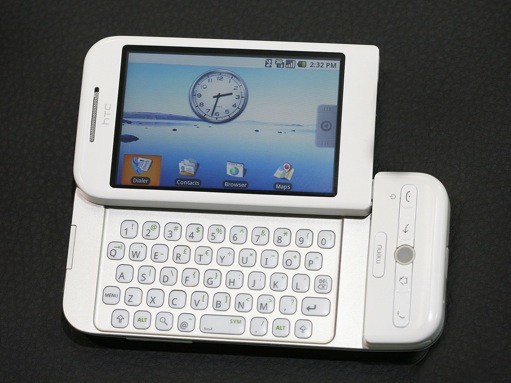
>>> Android was presented in November 2007, but September 22, 2008 marked
>>> the “real” beginning. On that day, the HTC
>>> Dream<http://forum.xda-developers.com/forumdisplay.php?f=446> (also
>>> known as the T-Mobile G1) was presented. The beginning wasn’t nice and
>>> easy, though. Many critics claimed that the OS would never be able to beat
>>> out those made by Apple and Microsoft. At the time, these opinions were
>>> quite valid. After all, Android back then greatly differed from the highly
>>> customized builds now released by Sony, LG, HTC, and Samsung.
>>>
>>> Early versions of Android were meant to call, send and receive text
>>> messages, and connect to the Internet. The thing that made Android unique
>>> was that it was open source, and users were able to contribute to the code
>>> to add in innovative ideas.
>>>
>>> <http://www.xda-developers.com/wp-content/uploads/2013/11/htcdream.jpg>
>>>
>>> But let’s go back to the HTC
>>> Dream<http://forum.xda-developers.com/forumdisplay.php?f=446> for
>>> a bit. The device was presented at one of the very first Android
>>> conferences. Its technical specifications were outstanding for the time:
>>> Qualcomm MSM 7201A ARM 11 CPU running at 528 MHz, 256 MB of internal
>>> memory,  and 192 MB of RAM. Compared to many other devices of the era, this
>>> was something beyond imagination. The phone initially packed Android 1.0,
>>> upgradeable to Android 1.6 Donut.
>>>
>>> *Version 1.0* had many unique features such as the Android Market (now
>>> known as the Google Play Store), which gave users the option to obtain
>>> hundreds of applications to enhance the initial capabilities of the phone.
>>> Contacts were stored in the cloud and integrated with Gmail. The OS also
>>> had a fully functional Internet browser. At first, Google didn’t use
>>> confectionary codenames like Cupcake, Donut, or Eclair. This was just
>>> Android 1.0—though Android 1.1 was codenamed Petit Four and there were some
>>> other milestone released named Astro Boy and Bender along the
>>> way<http://www.androidpolice.com/2012/09/17/a-history-of-pre-cupcake-android-codenames/>
>>> .
>>>
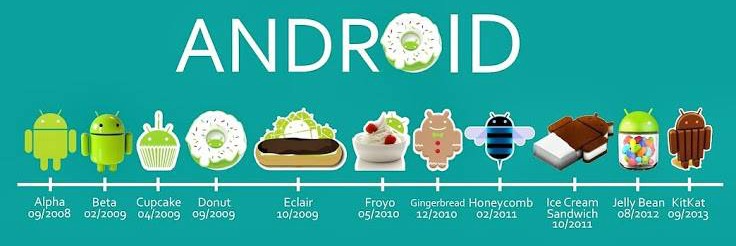
>>> *Android 1.5 Cupcake* offered many improvements. The first big step was
>>> a kernel upgrade to version 2.6.27, which made the system more stable.
>>> Also, widgets were presented and they are still widely used now 4 years
>>> later. For the first time, users were able to install custom keyboards. The
>>> last big improvement was implementing copy/paste.
>>>
>>> *Android 1.6 Donut* premiered 4 months later, but it was essentially an
>>> upgraded Cupcake build that didn’t bring much user-facing innovation except
>>> screenshots in the Android Market and the ability to select multiple photos
>>> for removal from the Gallery.
>>>
>>> <http://www.xda-developers.com/wp-content/uploads/2013/11/android-evolution.jpg>
>>>
>>> The next big step in Android Development was *Android 2.0/2.1 Eclair*.
>>> The kernel was once again updated, this time to version 2.6.29. The contact
>>> synchronization system was revamped, and offered an ability to add Email
>>> addresses. Speaking of which, a standalone Email application was
>>> introduced, as well as support for Bluetooth 2.1. The camera app in Eclair
>>> added support for device flashes, as well as zooming and setting white
>>> balance. The UI was also optimized, increasing scrolling speed, and
>>> allowing users to select Live Wallpapers as backgrounds. Version 2.1 was
>>> also a big update because for the first time, Google decided to release a
>>> phone: the HTC-made Google Nexus
>>> One<http://forum.xda-developers.com/nexus-one>.
>>> Since then, their branded devices all donned the moniker *Nexus*. Many
>>> believe that the name derived from Philip K. Dick’s Nexus
>>> 6<http://online.wsj.com/news/articles/SB10001424052748703436504574640623301172810>
>>> .
>>>
>>> *Android 2.2 **Froyo* (a regional abbreviation for frozen yogurt) was
>>> presented in May 2010. The main objective of this update was to improve the
>>> system speed, as evidenced by the introduction of a JIT (Just-in-Time)
>>> compiler into Dalvik. The connectivity was also revamped, allowing for
>>> Internet tethering via USB and WiFi. Finally, the browser app was updated
>>> to support GIFs and Flash player—something that was later dropped when
>>> Chrome replaced the AOSP browser. In Q4 2010, Android was available on 1/3
>>> of American smartphones, finally overtaking iOS. Since then, Android was
>>> seen as a major mobile player.
>>>
>>> The Google Nexus S <http://forum.xda-developers.com/nexus-s> was the
>>> first smartphone that shipped with *Android 2.3 Gingerbread*. It was
>>> also the first Nexus device produced by Samsung. This was a major step, as
>>> Samsung has grown to become the biggest smartphone manufacturer today. The
>>> Samsung
>>> Nexus S <http://forum.xda-developers.com/nexus-s> was almost the same
>>> as Samsung Galaxy S, a highly regarded legacy device. Gingerbread was a
>>> very successful operating system, which in time became the most popular
>>> version of the mobile OS. Android 2.3 offered native support for new
>>> sensors such as NFC, gyroscope, and barometer. And for the first time,
>>> Android was given API support for front and rear cameras rather than
>>> device-specific implementations such as what was originally seen on the HTC
>>> <http://forum.xda-developers.com/htc-evo-4g>Evo<http://forum.xda-developers.com/htc-evo-4g>4G<http://forum.xda-developers.com/htc-evo-4g>.
>>> The OS was fast and reliable, and it can still be found on various legacy
>>> devices.
>>>
>>> It is impressive that such a small player became one of the most
>>> pervasive operating systems of all times. But for now, let’s pause this
>>> story. Next week, we’ll continue with Google’s later releases.
>>>
>>> <http://www.xda-developers.com/wp-content/uploads/2013/11/android-comparaison-comparateur-comparatif-google-nexus-one-nexus-s-galaxy-nexus-samsung-htc.jpg>
>>>
>>>
>>>
>>> Read full article at
>>> http://<http://www.xda-developers.com/android/the-evolution-of-android-part-i/>
>>> www.xda<http://www.xda-developers.com/android/the-evolution-of-android-part-i/>
>>> -<http://www.xda-developers.com/android/the-evolution-of-android-part-i/>
>>> developers.com<http://www.xda-developers.com/android/the-evolution-of-android-part-i/>
>>> /android/the-evolution-of-android-part-i/<http://www.xda-developers.com/android/the-evolution-of-android-part-i/>
>>>
>>> @Q 4.1.2
>>> Japri : [email protected]
>>>
>>> --
>>> ==========
>>> ID-Android on YouTube
>>> https://www.youtube.com/watch?v=0u81L8Qpy5A
>>> --------------------
>>> Aturan Umum ID-Android: http://goo.gl/MpVq8
>>>
>>> Join Forum ID-ANDROID: http://forum.android.or.id
>>> ==========
>>> ---
>>> Anda menerima pesan ini karena Anda berlangganan grup "[id-android]
>>> Indonesian Android Community " dari Grup Google.
>>> Untuk berhenti berlangganan dan berhenti menerima email dari grup ini,
>>> kirim email ke id-android+berhenti [email protected] .
>>>
>>> Kunjungi grup ini di http://groups.google.com/group/id-android.
>>>
>>  --
> ==========
> ID-Android on YouTube
> https://www.youtube.com/watch?v=0u81L8Qpy5A
> --------------------
> Aturan Umum ID-Android: http://goo.gl/MpVq8
>
> Join Forum ID-ANDROID: http://forum.android.or.id
> ==========
> ---
> Anda menerima pesan ini karena Anda berlangganan grup "[id-android]
> Indonesian Android Community " dari Grup Google.
> Untuk berhenti berlangganan dan berhenti menerima email dari grup ini,
> kirim email ke id-android+berhenti [email protected] .
> Kunjungi grup ini di http://groups.google.com/group/id-android.
>


--
Cheers,

Imam Moeloek
Proud Owner of SGT 7.7

--
==========
ID-Android on YouTube
https://www.youtube.com/watch?v=0u81L8Qpy5A
--------------------
Aturan Umum  ID-Android: http://goo.gl/MpVq8

Join Forum  ID-ANDROID: http://forum.android.or.id
==========
---
Anda menerima pesan ini karena Anda berlangganan grup "[id-android] Indonesian
Android Community " dari Grup Google.
Untuk berhenti berlangganan dan berhenti menerima email dari grup ini, kirim
email ke id-android+berhenti [email protected] .
Kunjungi grup ini di http://groups.google.com/group/id-android.