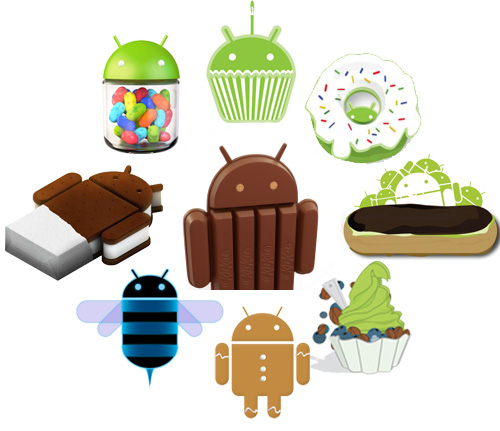
The journey continous...

<!-- <span id="mce_marker" data-mce-type="bookmark"></span><span
id="__caret">_</span><!-- P { margin-bottom: 0.08in; }A:link { } -->
<http://www.xda-developers.com/wp-content/uploads/2013/11/android-evolution1.jpg>Android
is six years old now. One week ago, we presented the first part of the
Android
story<http://www.xda-developers.com/android/the-evolution-of-android-part-i/>.
Now, it’s time to continue the journey.

A long time ago in a galaxy far, far away—located in Mountain View, the
first version of the operating system dedicated for tablets was born.
Google called it *3. 0 Honeycomb* and presented it alongside the Motorola
Xoom <http://forum.xda-developers.com/motorola-xoom>.

For the first time, the company decided to leave the source code closed.
Clearly, they were trying to implement some unique features—and they did.
Notification area toggles were introduced and graphics rendering was
transferred to the Graphic Processing Unit (GPU), making the system much
more responsive with increased UI performance. And speaking about
performance, that was the first time where more than one core was used in a
popular Android device—a trend which has continued now with our ongoing
specifications war.

<!-- P { margin-bottom: 0.08in; }A:link { } -->

<http://www.xda-developers.com/wp-content/uploads/2013/11/Google-Galaxy-Nexus.jpg>

<!-- P { margin-bottom: 0.08in; }A:link { } -->

The next version introduced by Google was *4.0* *Ice Cream Sandwich*. Aimed
at both phones and tablets alike, Google launched the OS alongside a very
popular device: the Samsung Galaxy
Nexus<http://forum.xda-developers.com/galaxy-nexus>.
ICS was released on October 19th, 2011. For the first time, the Linux 3.0.1
kernel was used, and most of features known from Honeycomb were ported. The
GNex lacked physical buttons, which were replaced by software equivalents.
The purpose of this was to maximize the available 4.65″ screen area. Users
were able to unlock the phone just by looking at their devices, and Holo,
which was first showcased in rudimentary form in Honeycomb, was refined.

<http://www.xda-developers.com/wp-content/uploads/2013/11/Android-Jelly-Bean-Logo.jpg>

<!-- P { margin-bottom: 0.08in; }A:link { } -->

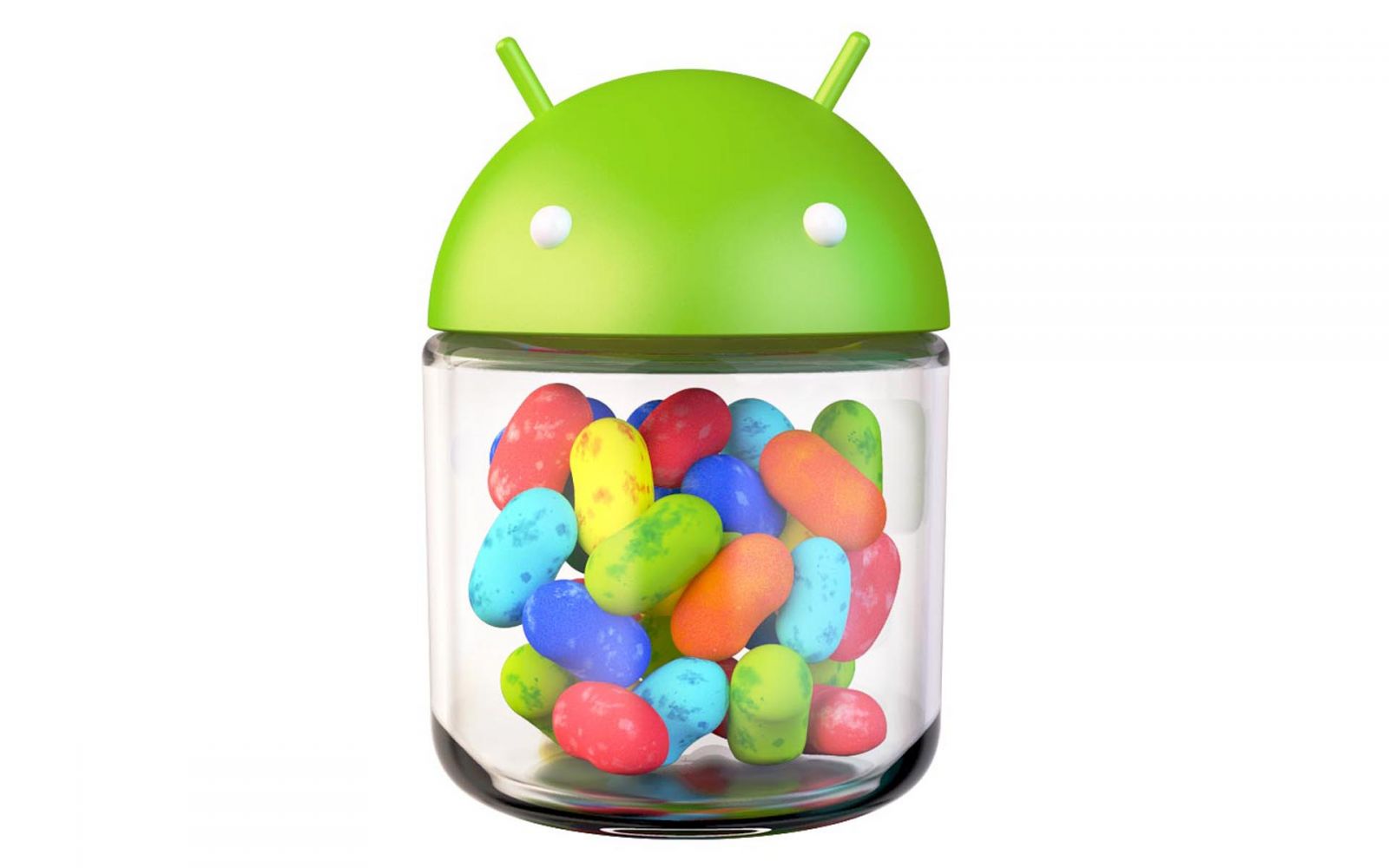
Half a year after ICS was introduced, Google unveiled *Android 4.1 **Jelly
Bean*. Google released 4.1 with the Asus-manufactured Google Nexus
7<http://forum.xda-developers.com/nexus-7>. Jelly
Bean was spread into three major updates: 4.1, 4.2, and 4.3. These three
combined eventually went on to became the most popular version of the
operating system <http://developer.android.com/about/dashboards/index.html>,
currently accounting for more than 50% of Android devices that have access
to Google Play.

Android 4.1 brought various
improvements<http://www.xda-developers.com/android/highlights-from-day-1-at-google-io-2012/>
such
as Project Butter, richer notifications, indoor maps, Google Now, and much
more. *Android 4.2* was first seen on the incredibly popular LG-sourced Google
Nexus 4 <http://forum.xda-developers.com/nexus-4>. Then, the Asus-made Google
Nexus 7 (2013) <http://forum.xda-developers.com/nexus-7-2013> first
showcased *Android 4.3*, which brought various enhancements such as
the previously
covered<http://www.xda-developers.com/android/android-4-4-security-enhancements/>
SELinux. Along
the way, the camera software received various updates such as the
swipe-to-dismiss UI paradigm, Photosphere, and more.

<http://www.xda-developers.com/wp-content/uploads/2013/11/InnovationM-Android-Release-History.png>

<!-- P { margin-bottom: 0.08in; }A:link { } -->

Around this time, much speculation arose that the next version of Android
would be version “5.0 Key Lime Pie.” However, we now all know that the next
version eventually became *Android 4.4 **KitKat*.

The new OS was released on Halloween 2013, alongside the highly anticipated
LG-sourced Google Nexus 5 <http://forum.xda-developers.com/nexus-5>. There
were a substantial number of feature
additions<http://www.xda-developers.com/android/new-in-android-4-4-kitkat-everything-you-need-to-know/>
in
this version, but one of the main objectives was to make the OS run better
on lower end devices, such as those with only 512 megs of RAM. The new ART
compiler<http://www.xda-developers.com/android/new-runtime-compiler-in-android-4-4/>was
also introduced in 4.4,  and it’s quite possible that it will replace
Dalvik in the future after further refinement.

However, not all is well with Android’s latest version, as many are worried
that in an attempt to regain some control over the platform, Google may
make the system almost unusable without their closed source applications.
Unfortunately, they have already decided to abandon many of the previous
AOSP applications in favor of closed source, Google applications. These
include Chrome, Hangouts, and the new Google Experience Launcher. While
this may not mean much for end users now, nobody knows what this will hold
for the future of the platform.

Over the last six years, Android has changed from that cute little green
robot to the massive force that it is today. Google is now the biggest
player in the mobile market, and the majority of new smartphones are
running Android. This success is driven in part by the freedom and
customization that the software affords.  New OEMs can make modifications
such as TouchWiz or Sense, and add extra extra features on top of the
already feature-packed OS. That said, we can only hope that Google will
rethink its course regarding replacing open source applications with
proprietary counterparts, as this eventually takes away the freedom that we
have all grown to love.

<!-- P { margin-bottom: 0.08in; }A:link { } -->

Read full article at
http://<http://www.xda-developers.com/android/the-evolution-of-android-part-ii/>
www.xda<http://www.xda-developers.com/android/the-evolution-of-android-part-ii/>
- <http://www.xda-developers.com/android/the-evolution-of-android-part-ii/>
developers.com<http://www.xda-developers.com/android/the-evolution-of-android-part-ii/>
/android/the-evolution-of-android-part-<http://www.xda-developers.com/android/the-evolution-of-android-part-ii/>
ii <http://www.xda-developers.com/android/the-evolution-of-android-part-ii/>
/ <http://www.xda-developers.com/android/the-evolution-of-android-part-ii/>

@Q 4.1.2
Japri : [email protected]

--
==========
ID-Android on YouTube
https://www.youtube.com/watch?v=0u81L8Qpy5A
--------------------
Aturan Umum  ID-Android: http://goo.gl/MpVq8

Join Forum  ID-ANDROID: http://forum.android.or.id
==========
---
Anda menerima pesan ini karena Anda berlangganan grup "[id-android] Indonesian
Android Community " dari Grup Google.
Untuk berhenti berlangganan dan berhenti menerima email dari grup ini, kirim
email ke id-android+berhenti [email protected] .
Kunjungi grup ini di http://groups.google.com/group/id-android.