Forwarding pl.

---------- Forwarded message ----------
From: English Rose Garden <[email protected]>
Date: 18 August 2013 20:35
Subject: FW: Re: [itpmods:7089] poona kheera or puneri khira
To: [email protected]
Yeah I got mr singhs mail yesterday but below are several more emails I
sent to him. See the links im trying to show how american farmers sell it.
I show pictures from usa markets.


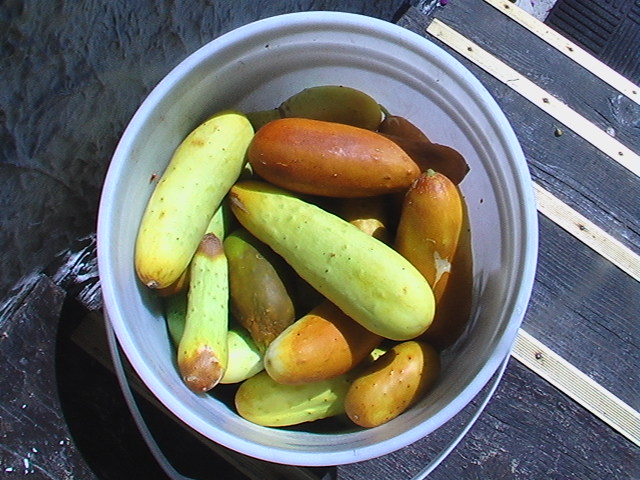
Some sell it black and large like a melon! I feel some arent harvesting
right. In the email I got from you you only show my last email to singh not
all others below it about 4 or 6 more to him.

also it tastes bitter im not sure what ideal growing situation and color
indicates a floral taste not bitter taste.

----Forwarded Message----
From: [email protected]
To: [email protected], [email protected]
Cc: [email protected]
Sent: Sun, Aug 18, 2013 7:30 AM PDT
Subject: Re: [itpmods:7089] poona kheera or puneri khira


I just ate it with no skin. Its tasting kind of bitter. But oddly I also
taste hint of honey . Maybe we never are to eat the seed for that gives
bitterness? And never eat skin? Some left over rind can give bitter taste?
What stage its most fragrant in taste not bitter unless bitter is good for
us?

Sorry for all mails its hard to explain all this unless you come to
market here in usa and to taste it. Cucumbers often taste bitter in usa.
 But all the links below show how its sold here.


------------------------------
On Sat, Aug 17, 2013 4:13 PM PDT English Rose Garden wrote:

>
>It would help if you showed picts of ideally how it should look length
wise width wise and color.
>
>I assume pune and konkani eat like this? But rarely I see it green or
white. mainly gold or brown.
>
>
>http://150sqft.files.wordpress.com/2013/03/poona-kheera-cucumber-seeds.jpg
>
>http://www.rareseeds.com/poona-kheera-cucumber/?F_Keyword=poona%20
>
>
http://books.google.com/books?id=VYwQAAAAQBAJ&pg=PT134&lpg=PT134&dq=pooneri+khira&source=bl&ots=QN5cas5C7-&sig=CXflCX8unYew1PscXFM9kO3aMBk&hl=en&sa=X&ei=kXEOUuj5EeGSyAHkoYGoAg&ved=0CDwQ6AEwCTgK
>
>
>
>
>
>------------------------------
>On Sat, Aug 17, 2013 3:53 PM PDT English Rose Garden wrote:
>
>
>
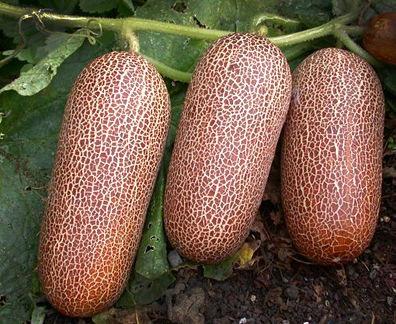
>This is a picture from a farmers market. They sold it exactly like this
today black with crackles but I was too scared to buy.
>
>http://www.forkandbottle.com/cooking/images/thanks07/poona_kheera_bg.gif
>
>Another farmer sold it like this. I picked out the light ash colored one
and yellow one. I tend to look for small and smooth but many farmers sell
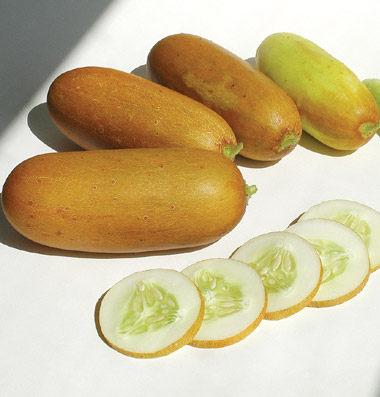
it large like a melon as shown in first link. Most farmers sell it gold or
brown. I need to watch sugar levels so I guess white is better?
>
>
http://www.greenling.com/blog/wp-content/uploads/2013/07/poona-kheera-cucumbers.png
>
>http://i30.servimg.com/u/f30/17/10/59/89/2012-014.jpg
>
>
http://www.ozarksgardens.com/pv/DzCNe/16/6/DbJRog/boWxORZfbzixgZA/poona-kheera-cucumbers-jpg.html?pfriendly=1
>
>All these links show how its sold here in usa. So I fish through the piles
and try to figure out which to get.
>
>
>------------------------------
>On Sat, Aug 17, 2013 3:28 PM PDT English Rose Garden wrote:
>
>
>
>When you say young and tender is best how it should be do you have
pictures?
>
>Can we eat the seeds? Can we eat the skin?
>In india or pune at what stage they ususally eat it?
>
>
>Ive been buying it smooth not bumpy. Usually we peel skin but americans
eat the skin and seeds. But the americans say the skin gets tough when
brown and with crackles tastes astringent or off.
>
>What is the ideal size and length?
>today I bought one the length of my hand in gold yellow and one slightly
fatter and longer that looks white like ash gourd. No one knew it was
cucumber.
>
>
>------------------------------
>On Sat, Aug 17, 2013 3:17 PM PDT English Rose Garden wrote:
>
>
>
>Is it better smooth without bumps?
>
>So you are saying you can eat it
>light green
>white
>which is best
>
>but it can be eaten
>gold yellow
>gold brown
>and totally brown
>
>my mom says its too sweet does it get sweeter the older it gets?
>
>I even saw someone sell it almost blackish with cracks.
>
>No indian at the market today knew what it was. I asked few people.
>
>traditionally how you eat it just raw? Its not for sambar?
>
>
>------------------------------
>On Sat, Aug 17, 2013 5:30 AM PDT Gurcharan Singh wrote:
>
>It is Poona khira or Puneri cucumber
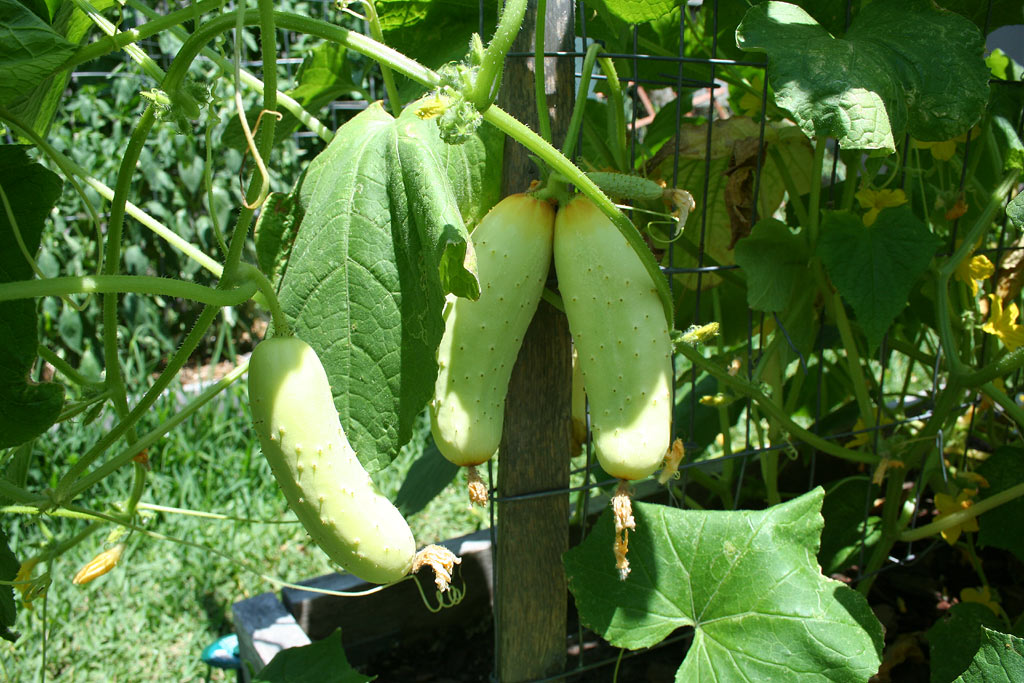
>There are two cultivars light green when young and nearly white when young,
>both turning almost brown when nearing maturity and brown with cracks when
>nearly mature.
>Young tender fruits are best for salads, even brown without cracks. those
>with cracks have ripe seeds.
>
>
>--
>Dr. Gurcharan Singh
>Retired  Associate Professor
>SGTB Khalsa College, University of Delhi, Delhi-110007
>Res: 932 Anand Kunj, Vikas Puri, New Delhi-110018.
>Phone: 011-25518297  Mob: 9810359089
>http://www.gurcharanfamily.com/
>http://people.du.ac.in/~singhg45/
>
>On Sat, Aug 17, 2013 at 12:14 PM, J.M. Garg <[email protected]> wrote:
>
> Forwarding again for any assistance in the matter please.
>
>
> ---------- Forwarded message ----------
> From: English Rose Garden <[email protected]>
> Date: 17 August 2013 01:46
> Subject: [itpmods:7089] poona kheera or puneri khira
> To: [email protected]
> Cc: [email protected]??
>
>
>
> Im radha from usa. Im south indian.
>
> at my farmers market they sell poona kheera or some say puneri khira.
>
> When is the correct stage to harvest and eat it and is it really an indian
> cucumber? I asked other indians at the market and they dont know what it
is.
>
> I see it sold in various stages
>
> Harvest?
>
http://www.feldoncentral.com/garden/photos/d/9728-1/IMG_8297-poonakheera.jpg
>
> Ripe?:http://www.cherrygal.com/images/PoonaKheeraCuke.jpg
>
> Totally overripe and suitable only for saving seeds:
> http://gardenerd.com/wp-content/uploads/2013/06/cucumber_poona_kheera.jpg
>
>
>
> cream
> light green
> gold
> brown
> brown with crackles
> small
> fat
> smooth
> bumpy
> semi bumpy
>
> do we eat the skin?
> Do we eat the seeds?
> How do they usually prepare it?
>
>
> --
> You received this message because you are subscribed to the Google Groups
> "ITPmods" group.
> To unsubscribe from this group and stop receiving emails from it, send an
> email to [email protected].
> To post to this group, send an email to [email protected].
> Visit this group at http://groups.google.com/group/itpmods.
> For more options, visit https://groups.google.com/groups/opt_out.
>
>
>
> --
> With regards,
> J.M.Garg
> http://en.wikipedia.org/wiki/User:Jmgarg1
> 'Creating awareness of Indian Flora & Fauna'
> The whole world uses my Image Resource of more than a *thousand species*&
eight thousand images of Birds, Butterflies, Plants etc. (arranged
> alphabetically & place-wise):
> http://commons.wikimedia.org/wiki/Category:J.M.Garg. You can also use
> them for free as per Creative Commons license attached with each image.
> For identification, learning, discussion & documentation of Indian Flora,
> please visit/ join our Efloraofindia Google e-group (largest in the
world):
> http://groups.google.co.in/group/indiantreepix (more than 2135 members &
> 1,61,500 messages on 31/7/13) or Efloraofindia website:
> https://sites.google.com/site/efloraofindia/ (with a species database
> of more than 8500 species & 1,70, 000 images).
> Also author of 'A Photoguide to the Birds of Kolkata & Common Birds of
> India'.
>
>
>
>
>


--
With regards,
J.M.Garg
http://en.wikipedia.org/wiki/User:Jmgarg1
'Creating awareness of Indian Flora & Fauna'
The whole world uses my Image Resource of more than a *thousand species* &
eight thousand images of Birds, Butterflies, Plants etc. (arranged
alphabetically & place-wise):
http://commons.wikimedia.org/wiki/Category:J.M.Garg. You can also use them
for free as per Creative Commons license attached with each image.
For identification, learning, discussion & documentation of Indian Flora,
please visit/ join our Efloraofindia Google e-group (largest in the world):
http://groups.google.co.in/group/indiantreepix (more than 2135 members &
1,61,500 messages on 31/7/13) or Efloraofindia website:
https://sites.google.com/site/efloraofindia/ (with a species database
of more than 8500 species & 1,70, 000 images).
Also author of 'A Photoguide to the Birds of Kolkata & Common Birds of
India'.

--
You received this message because you are subscribed to the Google Groups
"efloraofindia" group.
To unsubscribe from this group and stop receiving emails from it, send an email
to [email protected].
To post to this group, send email to [email protected].
Visit this group at http://groups.google.com/group/indiantreepix.
For more options, visit https://groups.google.com/groups/opt_out.