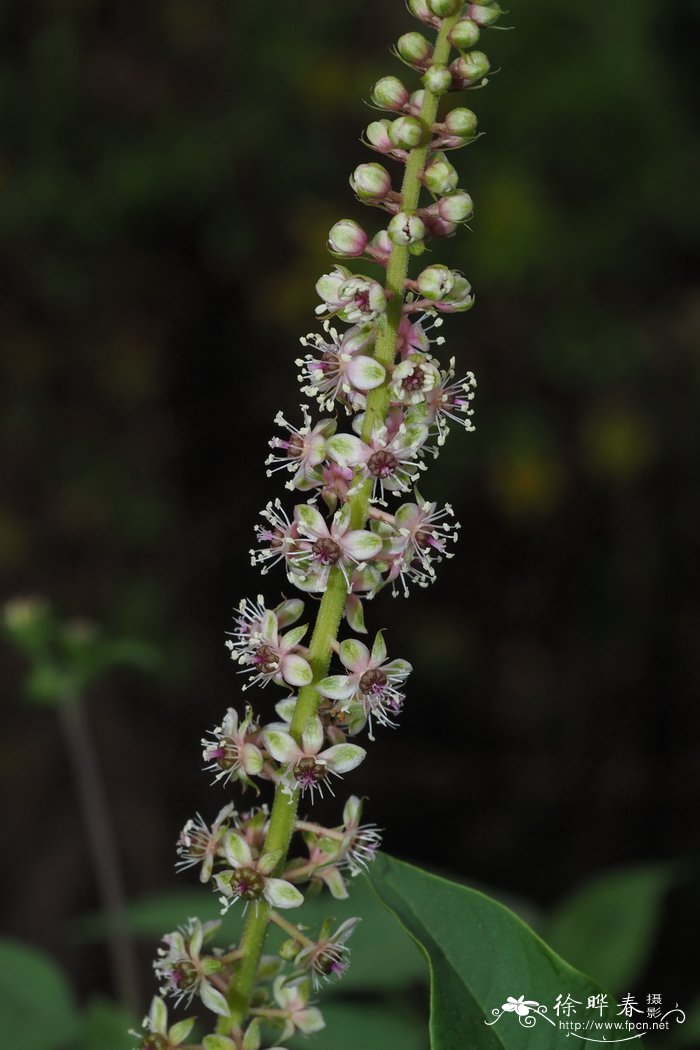
Thanks, Singh ji,
I have based my observations on efi site pages.
Here as per Catalogue of life
<https://www.catalogueoflife.org/col/details/species/id/bb02f1b9b42d159adc78b9b2eeaf18d9/synonym/be012470dba9ec028a30c1979ac95ab8>,
*Phytolacca octandra* L. is considered a syn. of *Phytolacca icosandra *L.
Also both are considered the same as per
https://keyserver.lucidcentral.org/weeds/data/media/Html/phytolacca_octandra.htm
The Plant List Ver. 1.1 <http://www.theplantlist.org/tpl1.1/record/kew-2562609?ref=tpl1> is based on WCSP (under review). On Fri, 11 Sep 2020 at 18:27, Gurcharan Singh <[email protected]> wrote: > Here is typical P. isocandra with more than 10 longer stamens > http://www.fpcn.net/uploads/allimg/180724/2-1PH4120645202.JPG > > The plant by Aarti ji has fewer shorter stamens which separates P. > octandra, which is considered distinct by both Plants of the World Online > and World Flora Online > > > > > > Dr. Gurcharan Singh > Retired Associate Professor > SGTB Khalsa College, University of Delhi, Delhi-110007 > Res: 932 Anand Kunj, Vikas Puri, New Delhi-110018. > Mob: 9810359089 > https://www.gurcharanfamily.com/ > > > On Fri, Sep 11, 2020 at 6:06 PM J.M. Garg <[email protected]> wrote: > >> I think *Phytolacca icosandra* L. >> <https://sites.google.com/site/efloraofindia/species/m---z/p/phytolaccaceae/phytolacca/phytolacca-octandra> >> as >> per details and keys herein and as per comparative images at Phytolacca >> <https://sites.google.com/site/efloraofindia/species/m---z/p/phytolaccaceae/phytolacca> >> >> Looks different from *Phytolacca acinosa* Roxb. >> <https://sites.google.com/site/efloraofindia/species/m---z/p/phytolaccaceae/phytolacca/phytolacca-acinosa> >> >> On Mon, 7 Sep 2020 at 14:39, JM Garg <[email protected]> wrote: >> >>> P. esculenta has now been merged with P. acinosa >>> According to revised interpretation it should be P. octandra (I don't >>> see more than 10 stamens), in P. icosandra there are more than 10 stamens >>> in two whorls. >>> Dr. Gurcharan Singh >>> >>> On Friday, 27 January 2017 11:47:35 UTC+5:30, Aarti S. Khale wrote: >>> >>>> A wild plant seen in the first week of Jan,2017 near a lake. >>>> Aarti >>>> >>> -- >>> You received this message because you are subscribed to the Google >>> Groups "efloraofindia" group. >>> To unsubscribe from this group and stop receiving emails from it, send >>> an email to [email protected]. >>> To view this discussion on the web, visit >>> https://groups.google.com/d/msgid/indiantreepix/9bd82d0c-fecd-4dc9-84a7-ab26b9cee2d7o%40googlegroups.com >>> <https://groups.google.com/d/msgid/indiantreepix/9bd82d0c-fecd-4dc9-84a7-ab26b9cee2d7o%40googlegroups.com?utm_medium=email&utm_source=footer> >>> . >>> >> >> >> -- >> With regards, >> J.M.Garg >> > -- With regards, J.M.Garg -- You received this message because you are subscribed to the Google Groups "efloraofindia" group. To unsubscribe from this group and stop receiving emails from it, send an email to [email protected]. To view this discussion on the web, visit https://groups.google.com/d/msgid/indiantreepix/CA%2BiuSFBPvZhRwqJKTPdooDCc_OFTTMJKWA1zE7%2BLzM8g_AVtZA%40mail.gmail.com.