Dear Kenneth
Thanks for the link. I have photographs of both P. occidentalis and P.
racemosa from California, but I did not upload them firstly because they
were on another hard disc and secondly to restrict upload to Indian plants.
Links are easier solutions for comparison.
--
Dr. Gurcharan Singh
Retired  Associate Professor
SGTB Khalsa College, University of Delhi, Delhi-110007
Res: 932 Anand Kunj, Vikas Puri, New Delhi-110018.
Phone: 011-25518297  Mob: 9810359089
http://people.du.ac.in/~singhg45/


On Wed, Jul 14, 2010 at 8:57 PM, Kenneth Greby <[email protected]> wrote:

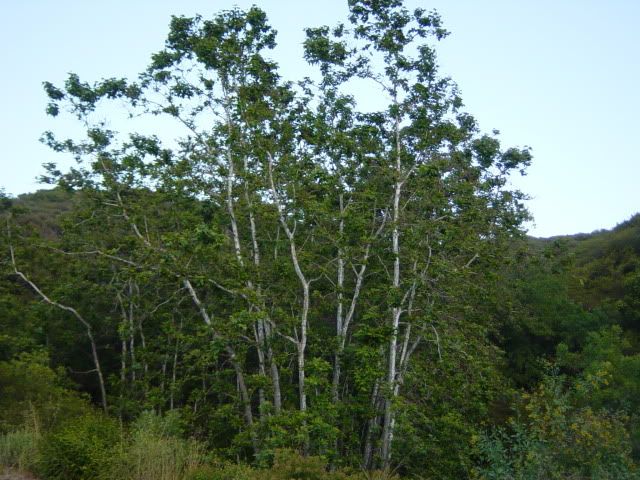
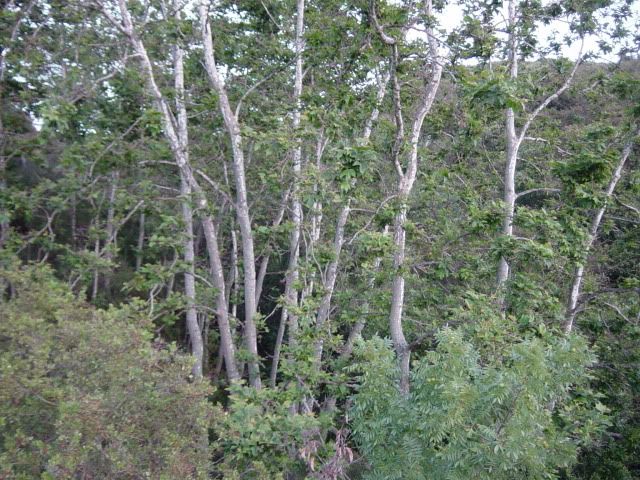
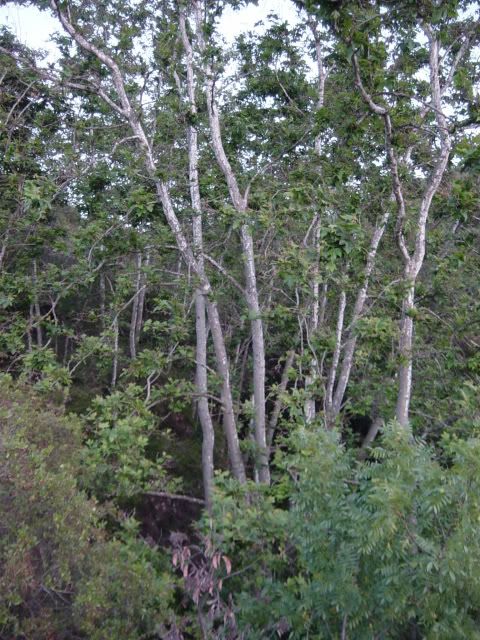
>  Here is California sycamore, Platanus racemosa, growing in the Santa
> Monica Mountains, Malibu, CA USA.
>
>  This grove of over thirty genetically-identical trees is the result of one
> individual specimen that has fallen and rerooted multiple times. It is
> common for this to occur when specimens are found near bodies of water.
>
>
> http://i192.photobucket.com/albums/z93/fastfeat/DSC00487.jpg
>
> http://i192.photobucket.com/albums/z93/fastfeat/DSC00488.jpg
>
> http://i192.photobucket.com/albums/z93/fastfeat/DSC00489.jpg
>
> Regards--
> Ken.
>
> ------------------------------
> *From:* Gurcharan Singh <[email protected]>
> *To:* efloraofindia <[email protected]>
> *Sent:* Wed, July 14, 2010 6:00:10 AM
> *Subject:* [efloraofindia:41423] Platanus orientalis from Kashmir
>
> Platanus orientails the most famous chinar tree of Kashmir, very commonly
> grown in Parks, Gardens and avenues. There is a famous garden in Dal lake
> known as char chinar, with four trees of chinar, a favourite tourist spot.
> Another example of vicariance. Its American couterpart is P. occidentalis.
>
> I am providing the link of P. occidentalis for comparison:
>
> http://www.google.com/imgres?imgurl=http://www.sbs.utexas.edu/bio406d/images/pics/plt/Platanus%2520occidentalis%2520leaf2.jpg&imgrefurl=http://www.sbs.utexas.edu/bio406d/images/pics/plt/platanus_occidentalis.htm&usg=__VXyK4zJQE5siN8AZOi__FoKShS4=&h=480&w=640&sz=47&hl=en&start=2&sig2=Xws8mIL2YLUALwuIqzu98w&itbs=1&tbnid=U3gv4-iHcyLmPM:&tbnh=103&tbnw=137&prev=/images%3Fq%3Dplatanus%2Boccidentali
> s%26hl%3Den%26gbv%3D2%26tbs%3Disch:1&ei=QbQ9TPTlJpW0cJGv6KIB<http://www.google.com/imgres?imgurl=http://www.sbs.utexas.edu/bio406d/images/pics/plt/Platanus%2520occidentalis%2520leaf2.jpg&imgrefurl=http://www.sbs.utexas.edu/bio406d/images/pics/plt/platanus_occidentalis.htm&usg=__VXyK4zJQE5siN8AZOi__FoKShS4=&h=480&w=640&sz=47&hl=en&start=2&sig2=Xws8mIL2YLUALwuIqzu98w&itbs=1&tbnid=U3gv4-iHcyLmPM:&tbnh=103&tbnw=137&prev=/images%3Fq%3Dplatanus%2Boccidentalis%26hl%3Den%26gbv%3D2%26tbs%3Disch:1&ei=QbQ9TPTlJpW0cJGv6KIB>
>
>
> --
> Dr. Gurcharan Singh
> Retired  Associate Professor
> SGTB Khalsa College, University of Delhi, Delhi-110007
> Res: 932 Anand Kunj, Vikas Puri, New Delhi-110018.
> Phone: 011-25518297  Mob: 9810359089
> http://people.du.ac.in/~singhg45/ <http://people.du.ac.in/%7Esinghg45/>
>
>
>