http://www.marxist.com/venezuela-lise-of-counter-revolution-answered.htm
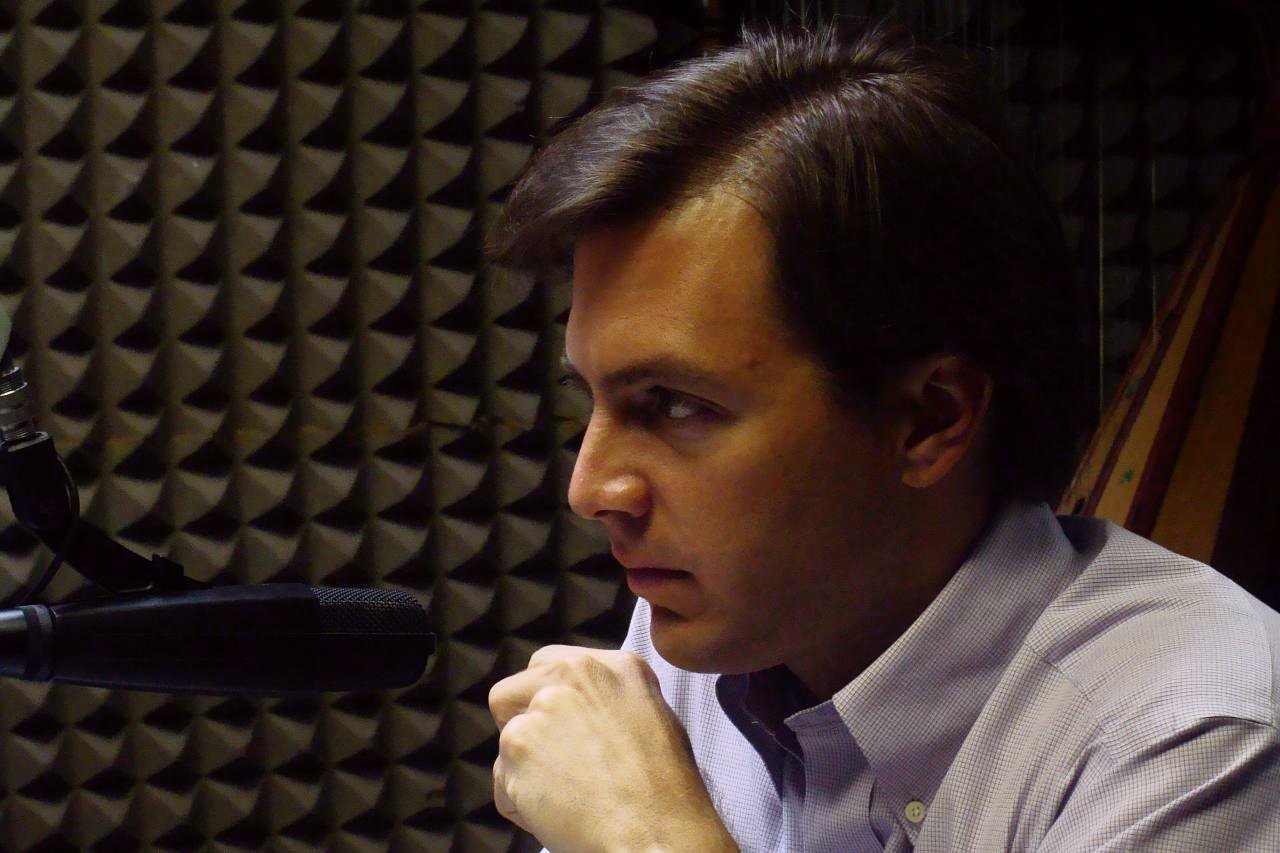
Venezuela: The lies of the counter-revolution answered<http://www.marxist.com/venezuela-lise-of-counter-revolution-answered.htm> Written by Alan Woods Friday, 26 November 2010 [image: Print]<http://www.marxist.com/venezuela-lise-of-counter-revolution-answered/print.htm#> *In January of this year an article appeared in the main bourgeois paper in Brazil that referred to me as Chavezs adviser. A few weeks later the same story appeared on the frost page of the Venezuelan opposition paper Tal Cual, edited by Todor Petkoff, who wrote the article. I answered Mr. Petkoff at the time. But, as a cynical journalist once said: why let the facts spoil a good story?* <http://www.marxist.com/images/stories/venezuela/LuisCarlos_Diaz-Ramon_Muchacho.jpg> [image: Ramón Muchacho, one of the leaders of the opposition. Photo: LuisCarlos Díaz] In the last few weeks this campaign has reached a crescendo. The story was taken up by most of the press in Venezuela: *Ultimas Noticias, El Correo del Orinoco, Diario El Progreso, VenEconomia, Analítica, Entorno Inteligente, El Mundo* and others. On Sunday 21 November 2010, *El Universal*, the opposition paper with the biggest circulation, published on its front page an article reiterating the attacks on Alan Woods, with a full page article on the inside repeating the same nonsense. All this is intended to create an atmosphere of fear and stampede people into the camp of the opposition. The story about a sinister foreign adviser has been depriving little old ladies of their sleep in Caracas. As the story is repeated in different variants, it acquires an increasingly grotesque, not to say farcical, character. The legend of Alan Woods as Chavezs adviser has acquired wings and has now crossed the Ocean to land on the foreign desk of *The Economist*. This normally serious conservative journal recently repeated this nonsense, which I have replied to in a letter to the editor as follows: Sir, In this weeks issue of The Economist I am described as an informal adviser to President Chávez. This is incorrect. I am not, and never have been, an adviser, either formal or informal, to the President of Venezuela. I have written extensively on Venezuela from a Marxist standpoint. I have consistently defended President Chavez against the spiteful and biased attacks in the media. I am a firm supporter of the Bolivarian Revolution, but I am entirely independent of the Bolivarian, or any other, government. *I support the nationalizations in Venezuela, but point out that piecemeal nationalization cannot work. One can have a market economy, or one can have a socialist planed economy, but one cannot have both.* The Economist is opposed to socialism and nationalization. So logically, you disagree with my advice to nationalize the land, the banks and big industries in Venezuela. Instead, you advocate free market economics (capitalism). A large part of the problems of the Venezuelan economy is a result of deliberate sabotage by the owners of private industry. The nationalizations are a defensive measure to maintain production. Your correspondent issues a dire warning that more nationalisation signifies scarcity and economic decline. But that is precisely the future that faces Ireland, Greece and the whole of Europe as a result of pursuing free market policies for the last two decades. Finally, may I remind you that the last time Venezuela implemented free market economics, it led to a social catastrophe in which thousands of unarmed people were killed on the streets of Caracas in February 1989. It was precisely this that led to the rise of Hugo Chavez, a fact that is never mentioned by the anti-Chavez media. One would have thought that this would be sufficient to silence my critics, but they obviously have no intention of allowing little old ladies to sleep soundly in their beds. The attacks continue and show no signs of abating. Today (26 November 2010) I am told it has resurfaced in the Latin American edition of *Herald Tribune. * It seems that the phantom of communism is haunting Venezuela. So it is high time we exorcized the phantom and explained the facts of the case. Muchachos speech All the recent articles in the right wing Venezuelan press were based on a press conference given on 4th November by Ramón Muchacho the national leader of the main party of the opposition Primero Justicia (PJ), in which he criticized my article *Where is the Venezuelan Revolution Going*? The whole speech can be found (in Spanish) on YouTube<http://www.youtube.com/watch?v=aFtBEeSQ4g4> . Waving a copy of my article at the cameras, the PJ leader describes me as a politician and writer [ ] from England, leader of the International Marxist Tendency, the author of two books on Venezuela, a personal friend of the President and his family and the main ideologue of the ruling party". I am also, apparently, the chief ideologue and adviser to the President, The leader of the opposition is anxious to promote me to the most dizzying heights. I am now not only *the main adviser to Chavez*, but also the *main ideologue of the ruling party*, this must be as surprising to the leadership of the PSUV as it is to me. All that is left is to name me adviser to the Pope of Rome and the main ideologue of the Dalai Lama, and the picture would be complete. <http://www.marxist.com/images/venezuela/Chavez_greeting_alan.jpg> [image: Chavez greeting Alan Woods some years ago] On what does he base these assertions? On photographs of me with the President. Now if everyone who had his photograph taken with the President can be considered an adviser, Chavez must have more advisers than any leader in world history. If he fails in the end, it will certainly not be for lack of advice! I have consistently defended Chavez and the Bolivarian Revolution against imperialism and the counterrevolutionary opposition. I have never been afraid to express my opinions, which may or may not coincide with his. Whether this is considered to be advice, I do not know. Anyone who reads my articles is free to agree or disagree, as they wish. Now, to the best of my knowledge, it is not a crime to express an opinion on any matter. *El Universal* has been expressing its opinions about the Bolivarian Revolution for years, and nobody sees anything wrong with that. Perhaps the objection is that I am not a Venezuelan citizen. But *The Economist, The Wall Street Journal *and CNN have also been expressing opinions about Chavez for years. Yet Mr. Muchacho sees nothing sinister in that. The problem is therefore not the giving of advice but *the nature of that advice*. The right wing press advises Venezuela to support capitalism, and I write articles advocating the expropriation of the oligarchy and the establishment of a democratic socialist planned economy. I approve of the expropriations carried out by the Bolivarian government. *But to approve of something does not necessarily mean that I am responsible for it*. I approve of Darwins theory of evolution, but had no hand in the writing of *The Origin of Species*. Here, as everywhere else, the logic of my critics is not only defective but childish in the extreme. Lies of the opposition According to Muchacho my article recommends accelerating and deepening communism *and nationalizing the entire economy*." This, he said, violated the right to private property enshrined in the Constitution." We will deal later with the attitude of Mr. Muchacho to the Constitution. For the present, suffice it to say that nowhere in this article (or anywhere else) do I advocate *nationalizing the entire economy*, as Mr. Muchacho is well aware. Muchacho certainly has no intention of letting the facts spoil his case against the expropriation of the property of the oligarchy. He persists in his misrepresentation of what I wrote. He continues thus: "Likewise in the document Woods says that in Cuba they nationalized even the hairdressers and shoeshine boys, all were seized and nobody was spared." Before this causes a stampede of hairdressers and shoeshine boys to the nearest airport, let us read what I actually wrote: *It is quite true that a planned economy does not need to nationalize everything, down to the last barber shop. This was always a Stalinist caricature*. In Cuba the nationalization of all small and medium enterprises took place as part of the "Revolutionary Offensive" in 1968, when 58,000 small businesses, mainly in the cities, were expropriated. Ice cream vendors, barber shops, shoe repair shops, etc, all were nationalized. This was a completely unnecessary step, which only resulted in the creation of a further layer of bureaucracy to oversee and manage these really small productive units. In the transition towards socialism, it is inevitable that elements of capitalism will continue to exist alongside the elements of a socialist planned economy. That includes a certain number of small businesses, shops and small peasant plots, etc. In itself, that should pose no threat to socialism, as long as the key points of the economy remain in the hands of the state, and the state and industry is in the hands of the working class. On that condition, and only on that condition, a small private sector could and should be allowed, as long as the state maintains firm control over the commanding heights of the economy. Yet again, Mr. Muchacho attributes to me ideas that are the very opposite of what I stand for, which is *not the nationalization of small businesses but the expropriation of the estates of the big landowners, the banks and monopolies*. Is that not perfectly clear and unambiguous? Yes, it is. But Muchacho wants to have his cake and eat it as well. He says that this is a *trap*, a lie, which is intended to conceal the real intention of the Marxists, which is to nationalize everything. Now, let us ask Mr. Muchacho to make a big effort to be serious for a moment, if he can. You have made a big fuss about my article, which you claim represents the real intentions of President Chavez. But it turns out that one cannot believe what the article actually says because it contains a trap. We must not believe what the article says *but what Mr. Muchacho says it says*. One of two things: either the article in question represents correctly the views of Alan Woods (and, by implication, Hugo Chavez) or it does not. If the above mentioned sentence does not really mean what it says, why should we assume that the rest of it does? This is really for little children. But the people of Venezuela are not little children and they can recognize distortions and lies when they see them. What the article says is that we: "defend the expropriation of property of the oligarchy, the big banks, monopolies and estates, the nationalization of the commanding heights of the economy is a necessary means of defending the revolution." We are not entirely convinced about Mr. Muchachos intellectual attributes, but we assume at least he can read. And anyone who can read will see immediately that I specifically say that the only thing that should be expropriated is *the property of the oligarchy*. Under no circumstances should the property of the middle class be touched. We are not interested in the peasant who has a small plot of land and keeps a few chickens, in small shops and businesses. These are better left in private hands. This is written very plainly in black and white, and anyone who claims that I advocate nationalization of everything is merely twisting what I have written. Either they have not understood what is written, in which case they are fools, or they have understood it and try to make it say the opposite, in which case they are rogues. In the case of Mr. Muchacho, we can be charitable and accept that it is the former case. But as the lawyers say: *ignorance is no excuse*. Small business and big business In my article I wrote: "the first step required to create a socialist planned economy is the nationalization of banks and merging them into one single state bank. The expropriation of the banks and monopolies is the only realistic way to defend revolution against the systematic sabotage of the capitalists. " These lines, which are completely true, produced such a paroxysm of fury in Ramón Muchacho that one begins to fear for his blood pressure. He protests that: "the government sees employers, workers and investors, not as allies to create jobs and develop our country, but as an enemy to destroy." Here the same trick is repeated. The above passage refers exclusively to the banks. Yet it is described as an attack on employers, workers and investors in general. This is nonsense. We do not want to destroy anybody, but merely to put an end to an unacceptable situation where key economic decisions are taken by a handful of unelected super-rich individuals who control the banks and big companies. In my article I wrote: The rich will protest that this is an attack against "the right to private property". But this is a lie. For us, the right to private property of 98 percent of Venezuelans is untouchable. But the property of the oligarchy - that handful of parasites who have plundered the wealth of Venezuela for generations and bled the country white - that is another matter altogether. In no sense can this be interpreted as an attack on workers or middle class people. It is the capitalist system that destroys jobs, closes factories, sends billions out of the country and subjects everything to the profits of a handful of super-rich families. Muchacho says that my article proposed to gradually replace the large *and small farmers* as food producers and that the government wants to eliminate the few food chains that remain in private hands, including small suppliers and warehouses. Nobody can deny that there are serious problems in relation to the production and distribution of food. Who would dare to say that Venezuelan agriculture and food distribution has been well served by the big landowners and the big food monopolies? Mr. Muchacho says: "here's the snag, the trap [prepared by] the ruling circles. They say it is not necessary to expropriate the most small people, barbershops and small businesses should not be touched. This is what they want the Venezuelan people to think, but we have seen that *expropriations affect us all equally *, because we are poorer and *they take away from Venezuelans in the future opportunities to grow and become owners of our homes, jobs and small businesses*." (my emphasis, AW) Here the whole swindle stands exposed in all its barefaced crudity. The trick is for the political representatives of big business to pose as the defenders of *private property in general*, in order to protect *the property of the big landowners, banks and monopolies*. In order to do this they try to deceive the middle class into thinking that socialism signifies nationalizing everything. *What my article proposed was the expropriation of Polar*. Does the leader of PJ think that Polar is a small supplier? It consists of 40 different companies with 19,000 direct workers and 150,000 indirect employees. Its annual sales are $3 billion. Polar is, in fact, Venezuelas biggest private company, accounting for 2.4 percent of non-oil GDP. We have already seen that the leader of PJ is a very credulous chap who believes in fairy stories, especially of the kind used to frighten little children. Here is yet another fairy tale: that any ordinary Venezuelan, by working hard, can aspire to be as wealthy as the owner of Polar, Lorenzo Mendoza. He is one of the richest men in Venezuela, and the 258th richest man in the world in 2010 with a fortune estimated at $3.5 billion (up from 337th and $2 billion in 2009). The domination of big businesses makes it materially impossible for small businessmen to progress and become large-scale capitalists, as they did in the past. In reality, the interests of the middle class and small business stand in contradiction to those of big business. The small shopkeeper is always in debt to the big banks. He is driven out of business by the big supermarkets. The small peasant is also in debt to the big banks and is constantly being robbed by the big fertilizer companies and the big supermarkets that pay him very little for his produce while making fat profits. Muchacho continues: Likewise it shatters the aspirations of many Venezuelans who aspire to own their homes and their land and become owners of their work, prosperity and future." In reality, under the capitalist system it is impossible for the great majority to own their own homes, or even to obtain a roof over their heads. Even the middle class who struggle to save enough money to buy a house often find themselves victims of profiteers and unscrupulous builders. In the best of cases they are saddled with huge debts to the banks that they spend the rest of their lives paying off. Recently President Chavez announced the expropriation of construction firms that illegally increasing the prices of homes after their sale has been agreed, and then failed to finish buildings on time, forcing residents to continue to pay out beyond the set deadlines. Was this action against the construction Mafia justified or not? I believe it was completely justified and serves the interests of middle class people who are the victims of the construction Mafia. *The nationalization of the big banks and monopolies is therefore a measure that serves the interests of the small business people*. The state can guarantee them cheap loans on much better terms than private bankers whose only interest is to enrich themselves at the expense of small businesses and the public in general. By nationalizing the banking system, the government can begin to plan the economy, using the vast resources of the banks to promote productive investment and provide assistance to those who need it. Socialism and democracy The biggest lie is that I advocate for Venezuela the kind of bureaucratic totalitarian system that existed in USSR, what Muchacho calls communism, although it had nothing to do with communism or socialism. The counter-revolutionary opposition is attempting to discredit the Marxist tendency by associating it with Stalinist totalitarianism. They will not succeed. In fact, I do not advocate that the Venezuelan Revolution follow any foreign model, and least of all that of Stalinist Russia. The Venezuelan Revolution will proceed according to its own dynamics and laws, which must reflect the concrete conditions of the country, its history and peculiar traditions. Their can be no question of imposing any external scheme that is alien to these traditions. However, when I pointed out that "the superiority of a nationalized planned economy was demonstrated by the huge success of the Soviet Union in the past," I was simply stating a fact. The economic successes of the planned economy in Russia cannot be denied. The advantages of a planned economy permitted backward Russia to transform itself rapidly into an advanced modern economy. This proved that it was possible to run society without capitalists, feudal landlords and money lenders and get excellent results. For many years the apologists of capitalism have vented their spleen against the Soviet Union. But the fact is that the abolition of the market mechanisms and the introduction of the planned economy revolutionized the productive forces and laid the basis for a modern economy. In the fifty years from 1913 (the height of the pre-revolutionary production) to 1963, total industrial output of the USSR rose by more than *52 times.* The corresponding figure for the USA was less than *six times. * In a few decades a backward agricultural economy was transformed into the second most powerful country in the world. It developed a mighty industrial base, a high cultural level and more scientists than the USA and Japan combined. Life expectancy more than doubled and child mortality fell by nine times. Such economic advance, in so short a time, has no parallel in the world. Rents were fixed at about 6 percent of the monthly income. A small flat in Moscow, up until the early 1980s, cost $17 per month, which included gas, electricity, telephone and unlimited hot water. Let us also remember that the USSR defeated Hitlers armies because the colossal superiority of a nationalized planned economy enabled them to produce more and better arms and machinery more rapidly than Nazi Germany, with all the productive resources of Europe behind it. The apologists of capitalism have spared no effort to identify socialism with the bureaucratic totalitarian regime which arose from the isolation of the revolution in a backward country. However, in the early days the regime established by the revolution was neither bureaucratic nor totalitarian, but the most democratic regime yet seen on earth. However, the isolation of the revolution under frightful conditions of economic, social and cultural backwardness led to a process of degeneration in which the regime of workers democracy established by Lenin and Trotsky was replaced by the monstrously deformed caricature under Stalin. In the end the USSR was undermined by the bureaucracy, which ended in the restoration of capitalism. But far from representing an advance, the replacement of the planned economy by market economics led to the biggest economic and cultural collapse in history. Bureaucracy is not an inherent result of a planned economy. It is a product of backwardness, as we see in many underdeveloped capitalist countries. Pakistan and Nigeria are countries that clearly have nothing to do with socialism, yet they are plagued with bureaucracy and corruption at all levels. One might add that this is sadly the case in Venezuela also. The fight for socialism in Venezuela is inseparable from the struggle against these evils. A nationalized planned economy needs democracy as the human body needs oxygen. It must be accompanied by the democratic control and administration of the working class at all levels, both in drawing up the plan and putting it into practice. I do not speak here of the fraudulent bourgeois democracy that is only a fig-leaf for the dictatorship of the big banks and monopolies, but of a genuine workers democracy. We reject bureaucracy and totalitarianism but we defend what was progressive in the Russian Revolution: a nationalized planned economy. But since all mentions of the USSR provoke an apoplectic attack in the leader of PJ, let us provide him with a completely different example that proves the superiority of central planning. In 1940, when Britain faced a critical situation, Mr. Churchill did not rely on free market economics but resorted to nationalization, centralization and state-directed planning. Why? *Because they give better results. * Why nationalization is necessary The Economist wrote recently: Polls suggest that most Venezuelans disapprove of the nationalisations and firmly support private property. But Mr Chávez seems to be following the advice of Alan Woods, a Welsh Trotskyist who has become an informal adviser. Mr Woods [ ] publicly urged the president to respond to his electoral setback by accelerating the revolutionary process, expropriating land, banks and the main industries. Venezuelans had better brace themselves for more nationalisation, scarcity and economic decline. We do not know what polls are referred to here. But we do know that how a question is posed will determine the answer. If people are asked: are you in favour of the state nationalizing everything, including your house, car, garden and wife, there is a reasonable possibility that the answer will be in the negative. But if the question is: are you in favour of abolishing the dictatorship of the oligarchy by expropriating the big landowners, bankers and capitalists, it is quite likely that the answer would be different. Why do we need to take such a step? It is not for dogmatic reasons or out of a desire for revenge. *It is a matter of economic necessity. You cannot plan what you do not control. And you cannot control what you do not own*. Let us take a key example: productive investment. Everybody agrees that the main problem in the Venezuelan economy is the lack of private investment. What is the reason for this? In part, it is due to political considerations: an attempt to sabotage the Bolivarian government. But this is not the only, or even the main reason. The state can only plan that part of the economy that has been nationalized. Since many of the firms that were taken over were bankrupt, unprofitable and badly run in the first place, they require a lot of investment to make them viable. This imposes a severe burden on the state and the public finances, while the most profitable sectors remain in private hands. It is a case of nationalizing the losses and privatizing the profits. This will ultimately be unviable. Failure to nationalize the commanding heights of the economy creates contradictions at all levels, which will inevitably end in a chaotic situation. It will combine all the worst evils of capitalist anarchy (falling investment, flight of capital, factory closures, inflation and unemployment) with all the most negative features of bureaucracy (waste, mismanagement, inefficiency and corruption). For a time the vast oil wealth of Venezuela can tolerate this situation, but not indefinitely. The private sector is not investing in Venezuela. In the words of Reporte Diario de la Economia: The weakening of the Bolívar makes the Venezuelan products relatively cheaper, but the employers are doubting whether to invest during a recession. Furthermore they have been through years of intimidations from the president, who has nationalised wide-ranging industrial sectors." *Source: Editorial in Reporte diario de la economía, 13 de enero, 2010, pag. 11 (Quoted in *Venezuela: Expropriations of banks, PSUV congress and revival of the workers' movement<http://www.marxist.com/venezuela-expropriations-banks-psuv-congress.htm> *)* Instead, there is a flight of capital, or, to give it its right name, *a strike of capital*. According the Central Bank of Venezuela (BCV) in the first half of 2009 put the figure for capital flight at $8.11 billion. In 2007 the figure was twice that: $ 16,49 billion. As a result, there has been a massive shutdown of companies during the last years. During the past ten years the bourgeoisie has closed more than 4000 companies of medium and large size, according to Conindustria. The same survey says it expects that less than 15% of the capitalists will increase their payroll this year, and only 60% of capital investments in the manufacturing sector will be operational investments. These figures show that the capitalists cannot develop the Venezuelan economy. On the contrary, they are destroying it. The continuation of the present situation will mean more factory closures, more unemployment, more inflation and more chaos. The problem with reformism is that it renders impossible the normal functioning of capitalism but puts nothing coherent in its place. Partial nationalization does not solve anything fundamental. On the contrary, it distorts the market mechanism and causes chaos. It remains impossible to have a rational plan of production because key parts of the economy remain in private hands. Only when the key points of the economy are nationalized will it be possible to mobilize the colossal productive potential of Venezuela to serve the interests of the people. Workers control Will nationalization lead to a bureaucratic totalitarian regime like that of Russia? Such a conclusion would be erroneous. We say that the key sectors of the economy (but not small businesses) must be in the hands of the state. *But we also say that industry and the state must be in the hands of the working people*. Contrary to the assertions of The Economist, wherever companies have been nationalized, there has been an enthusiastic response from the workers. The history of the last decade is sufficient to show the enormous creative power of the masses. It has been manifested at every critical stage of the Revolution. During the bosses lockout the workers occupied the oil installations, kicked out the old counter-revolutionary managers and ran the installations under workers control. They not only saved the Revolution, but also showed that they were capable of running the industry and getting better results than before. What is true of the oil workers is true of every other branch of industry. We have seen many other examples that show that the workers are capable of running industry and raising productivity, if they are allowed to do so. But the bureaucracy has waged a systematic campaign to discredit the idea of workers control and management, sabotaging every move in this direction. In the hands of the bureaucrats, nationalization becomes transformed into a dead letter. The bad old habits of bureaucratic mismanagement, swindling and corruption reappear. The workers feel alienated, discontent grows and is reflected in low productivity. In this way the bureaucracy discredits the very idea of nationalization. In the words of Fernando Buen Abad: One of the most odious expressions [of bureaucracy] is that, in the middle of a revolutionary processes like Venezuela, the bureaucrats regroup as a counter-revolutionary force among the ruling elite in order to enjoy all the possible perks, while people living in poverty see that their most vital needs are postponed. Recently Chavez said that the Bolivarian Revolution did not aim to abolish the state but to build a new state. To everyone except the anarchists it is obvious that the Bolivarian Revolution cannot abolish the state. The Revolution needs state power to defeat its enemies and organize production on socialist lines. *The question is who controls the state? Who holds the power*? *One thing is clear: it is impossible to defend the Revolution on the basis of a bureaucracy that is opposed to the Revolution. Is it possible to move in the direction of socialism as long as the old functionaries left over from the IV Republic remain in control of the state? It is sufficient to pose the question for it to answer itself. Do we need a state? Yes, of course. But we need a state that is completely different from the old corrupt and oppressive state that was perfected by the oligarchy for decades to defend its interests.* Chavez has pointed to the danger represented by the counter-revolutionary bureaucracy: "Bureaucracy and corruption are poisonous formula which is inside us" ... "It is the fourth republic and have to give a battle to death because that can kill the best of revolutionary dreams." What is the solution? It was provided long ago by Lenin, who in his *State and* * revolution* explained the conditions for a genuine workers democracy: 1. Free and democratic elections with the right of recall of all officials by the soviets*.* 2. No official must receive a salary higher than that of a skilled worker. 3. No standing army but an armed people. 4. Gradually, all the tasks of running the state should be performed by everyone in turn. As you can see, there is nothing remotely totalitarian in this programme. It is the most democratic programme of any state in history. In order for socialism to be a reality, not just a word, the workers must take the administration of industry, society and the state into their own hands. That is the essence of a socialist revolution. Everything else is only empty words. Muchacho and democracy The leader of Primero Justicia objects to my proposal to accelerate the Bolivarian revolution, and that there must be a sense of urgency. He thinks this is very violent. Mr. Muchacho concludes: This communist Marxist path blocks any possibility that Venezuelans can rise above ourselves, enjoying the fruits of our work and initiative. It makes a mockery of the expressed will of [the elections of] September 26, and contradicts the Constitution." The irony of this will not be lost on anybody who knows the recent history of Venezuela. Ramón Muchacho, without even blushing, delivers us lectures on the sanctity of the Constitution and accuses us of violating the popular will as expressed through elections! *Let us recall that the first act of the counter-revolutionaries in 2002 was to announce the abolition of the Constitution and the sacking of all the elected representatives of the people*. Was there ever such barefaced hypocrisy? Muchacho accuses me of writing a very violent document (which is not the case) but he has forgotten all about the *counter-revolutionary violence* in 2002. By taking isolated phrases from my article Muchacho tries to twist its meaning. I wrote that in the end one side must win and one lose, there is no third way." This is perfectly true, as Muchacho knows very well. In April 2002 he and the other leaders of Primero Justicia were determined to crush the Bolivarian Revolution by force. There was no talk then about conciliation and national unity. Between May 2001 and November 2004 Muchacho worked as a secretary and spokesperson of Alfredo Peña, the notorious coup-plotter and ex-mayor of Caracas, who is now hiding in Miami because Venezuela asked for his extradition. This arch-reactionary was responsible for the deliberate use of the local police force (Policia Metropolitana) to repress the people who resisted the coup. Muchacho says he is in favour of* unity*. He preaches brotherly love and reconciliation between the classes. He maintains that "the only way to have a Venezuela with opportunities for everyone, where we can prosper is when the government, private enterprise and workers pull together in the same direction and stop to be fighting each other." The counter-revolutionary opposition that for over a decade has not ceased its belligerent attacks on the democratically elected government now tells us we must stop fighting and reads us lectures on the need for national unity and brotherly love between workers and capitalists, between rich and poor. If the consequences were not so serious it would be funny. There can be no question of unity between antagonistic interests. The Bible tells us the wolf and *the lamb will* live together; the leopard *will lie down with*the baby goat. It is a beautiful picture, but in real life a lamb that tried to fraternize with the wolf would soon come to a bad end. The PJ president Julio Borges, one of the most aggressive leaders of the counter-revolution, was one of the leading figures of the 2002 coup, although he has never been jailed for any of this. After the collapse of the coup, PJ then went on to support the bosses lockout of December 2002-january 2003, which cost the country around 10 million US dollars. Only when the repeated attempts to overthrow the government were defeated by the action of the masses did the leaders of the opposition discover the joys of parliamentary democracy, peace and harmony. The workers of Venezuela can put no trust whatsoever in these phrases about national unity. Unity between workers and capitalists is the unity between the horse and its rider. The counter-revolutionary opposition has learned that the best form of defence is attack. By creating a tremendous fuss about the alleged danger of communist extremism, they wish to cover up their own *right wing extremism *. By shouting about the alleged threat to the Constitution, they wish to conceal the fact that *the first thing they would do is to abolish the Bolivarian Constitution*. By accusing us of violent words they want us to forget the *violent deeds* that they were responsible for in the past and will repeat in the future if they are allowed to. By inventing the legend of *foreign advisers* to Chavez, they wish to draw attention away from the *foreign advisers in Washington* who dictate everything they say and do. What does this mean? 20 years since the fall of the Berlin Wall not one stone upon another is left of the assertion of the superiority of the market economy. Everywhere capitalism finds itself in a deep crisis, millions have lost their jobs and the world is in a state of turmoil. The restoration of capitalism in Russia and Eastern Europe has created a nightmare for the working class. Yet our friend Muchacho continues to sing the praises of the market economy. One wonders on what planet these gentlemen are living. Under these conditions there can be no question of capitalism with a human face, and a bad capitalism (neo-liberalism). In fact, the crisis of capitalism renders reformism impossible. The huge deficits force the bourgeoisie to attack living standards and take back the concessions made in the past in such areas as health, housing and education. If this is true in Europe, it is a hundred times more so in Venezuela! *What does this large scale attack against the Marxist tendency mean? On the one hand, it is just the latest in a series of attacks and slanders against Chavez and his socialist policies, which are described as extreme, communist, like Russia, and so on. In that sense, it is nothing new.* *But there is also another element here. The counter-revolutionaries have tried several times to defeat the Revolution by direct assault. On each occasion they have failed, defeated by the movement of the masses. Therefore, they have been forced to change their tactics.* *It is well known that in the natural world animals will disguise themselves in order to deceive other animals from which they wish to escape or that they wish to kill and eat. The leopard has spots and the tiger has stripes. But the Venezuelan opposition is more like the chameleon, which can adopt many disguises, all of which are aimed to confuse the insects it intends to consume.* *The same gentlemen who in April 2002 launched a counter-revolutionary coup that would have installed a brutal dictatorship now dress themselves as democrats. The same people who wished to abolish the Bolivarian Constitution, now pose as the most fervent defenders of the Constitution against the Marxists.* *In all its speeches and articles the chameleon-opposition talks about democracy (the same democracy it was preparing to abolish in 2002). It says it won the elections last September. But the fact is that it lost the elections. The PSUV won the majority of the National Assembly. This is a problem for them. But, as we know, every problem has a solution. And the chameleon-opposition is working on different fronts.* *On the one hand, they are stepping up the frontal attack on Chavez and the Bolivarian Revolution. On the other hand, they are intriguing with the right wing of the Bolivarian Movement: that section that never accepted the idea of socialism and expropriations and supports the plan known as Chavism without Chavez.* *These attacks are a clear invitation and signal to the reformists to attack the Marxist wing and separate it from Chavez and the Bolivarian Movement. These attacks are meant as a pre-emptive strike against the possibility of a left wing in the PSUV that would give a voice to the socialist aspirations of the chavista rank and file.* *The opposition, for tactical reasons, has been compelled to put on the smiling mask of moderation and democracy. But if they are allowed to come to power, that mask will immediately be cast aside. All the gains of the past decade will be liquidated. The ruling class will want to teach the masses a lesson they will not forget. This must not be allowed to happen!* *At a recent student demonstration in support of the revolutionary transformation of the university system, Chavez said: "We need a more radical parliament and a left government, and a radical, revolutionary National Army, close to people." "There should be no place in our military to civilian life for half measures. A single line: radicalise the revolution." "For this revolution there is no turning back, here there is no pact with the bourgeoisie, never again," he concluded, supported by the chants of thousands of students from all across the nation who filled Urdaneta Avenue.* *This is the way to proceed.* *London, 26th November 2010.* List of attacks in the last few weeks 4 November 2010. Ramón Muchacho presenta la ruta de radicalización del gobierno PARTE I <http://www.youtube.com/watch?v=aFtBEeSQ4g4>, PARTE II<http://www.youtube.com/watch?v=cRoQQ1cFpmE&feature=related> 4 November 2010. El Nacional (Venezuela): Ramón Muchacho: El camino marxista se burla de la voluntad del pueblo<http://www.elnacional.com.ve/www/site/p_contenido.php?q=nodo/163792/Naci%C3%B3n/Ram%C3%B3n-Muchacho:-%E2%80%9CEl-camino-marxista-se-burla-de-la-voluntad-del-pueblo%E2%80%9D-> 4 November 2010. Ultimas Noticias (Venezuela): PJ: El camino marxista va contra la Constitución"<http://www.ultimasnoticias.com.ve/Noticias/PJ---El-camino-marxista-va-contra-la-Constitucion-.aspx> 4 November 2010. Notiactual (Venezuela): Primero Justicia: El camino marxista va contra la Constitución y la voluntad del pueblo"<http://www.notiactual.com/primero-justicia-%E2%80%9Cel-camino-marxista-va-contra-la-constitucion-y-la-voluntad-del-pueblo%E2%80%9D/> 5 November 2010. El Correo del Orinoco p. 8 (Venezuela): Primero Justicia aseguró que medidas de expropiación responden a un plan de Alan Woods<http://www.correodelorinoco.gob.ve/wp-content/uploads/2010/11/WEB-CO-426.pdf> 5 November 2010. Diario El Progreso (Venezuela): Primero Justicia: El camino marxista va contra la Constitución y la voluntad del pueblo"<http://www.diarioelprogreso.com/edi-051110/html/pag02-b.html> 10 November 2010. El Universal (Venezuela): Las caras del radicalismo. Sería trágico que esta masa descontenta pisara la concha de mango de la violencia y el caos<http://opinion.eluniversal.com/2010/11/10/opi_art_las-caras-del-radica_2093304.shtml> 12 November 2010. En Oriente (Venezuela): Bancos Privados por el Marxismo<http://www.enoriente.com/noticias-magazine-105/opiniagazine-113/23405-bancos-privados-por-el-marxismo--por-victor-j-gonzalez-q> 15 November 2010. El Universal (Venezuela): ¿Adónde va la revolución venezolana? By Alan Woods<http://www.eluniversal.com/2010/11/15/pol_esp_adonde-va-la-revolu_15A4734411.shtml> 16 November 2010. El Universal (Venezuela). El documento de Alan Woods: lo que está pasando y lo que pasará en Venezuela <http://blogs.eluniversal.com/2010/11/16/smarc_blog_el-documento-de-alan_16A4737109.shtml> 18th November, The Economist in English (Great Britain): Towards state socialism. A wave of nationalisation promises scarcity and decline <http://www.economist.com/node/17527250?story_id=17527250> 21 November 2010. El Universal. Radicalización es la hoja de ruta que le marcan a Chávez. Analistas consideran poro probable que el Presidente sea moderado<http://www.eluniversal.com/2010/11/21/pol_art_radicalizacion-es-la_2109964.shtml> 21 November 2010. The Economist: Hacia el socialismo de estado. Ola de nacionalización presagia escasez y declive<http://www.eluniversal.com/2010/11/21/expro_esp_the-economist:-hacia_21A4758371.shtml> 22 November 2010. VenEconomia: Tomado de VenEconomía Mensual, Vol. 28 No.2, noviembre de 2010 ¿A dónde va la Revolución Bolivariana?<http://www.veneconomia.com/site/index.asp?ids=43&idt=279> 23 November 2010. El Universal: El fin de la pequeña propiedad. Lenin lo dijo: no expulsemos sólo terratenientes y capitalistas, sino también al pequeño productor<http://www.eluniversal.com/2010/11/23/opi_art_el-fin-de-la-pequena_2110650.shtml> 23 November 2010. Analítica: Con mi imagen no te metas <http://www.analitica.com/va/editorial/8941983.asp> 24 November 2010, Nueva Prensa de Guayana (Venezuela): The Economist vaticina más expropiaciones en Venezuela<http://nuevaprensa.com.ve/content/view/55815/3/> 24 November 2010: Alan Woods un agente doble? Análisis de su documento lo sugiere <http://lasarmasdecoronel.blogspot.com/2010/11/alan-woods-un-agente-doble-analisis-de.html> 24 November 2010, Entorno Inteligente (Venezuela): Un banco social único es el medio para "defender" la revolución<http://www.entornointeligente.com/resumen/resumen-completo.php?items=1076570> 25 November 2010, El Mundo (Venezuela): Socialismo dependiente<http://www.elmundo.com.ve/Default.aspx?id_portal=1&id_page=15&Id_Noticia=38302> 25 November 2010. El Universal (Venezuela): Ramos Allup presidente...<http://www.eluniversal.com/2010/11/25/opi_art_ramos-allup-presiden_25A4770343.shtml> 26 November 2010. Latin American Herald Tribune * (In English): VenEconomy: Wheres the Bolivarian Revolution Going?<http://www.laht.com/article.asp?ArticleId=379048&CategoryId=13303> 26 November 2010. El Universal: ¡Enterramos a Walid Mackled o estamos ponchaos!<http://www.eluniversal.com/2010/11/26/opi_art_enterramos-a-walid_26A4776295.shtml> [Non-text portions of this message have been removed] ------------------------------------ --------------------------------------------------------------------------- LAAMN: Los Angeles Alternative Media Network --------------------------------------------------------------------------- Unsubscribe: <mailto:[email protected]> --------------------------------------------------------------------------- Subscribe: <mailto:[email protected]> --------------------------------------------------------------------------- Digest: <mailto:[email protected]> --------------------------------------------------------------------------- Help: <mailto:[email protected]?subject=laamn> --------------------------------------------------------------------------- Post: <mailto:[email protected]> --------------------------------------------------------------------------- Archive1: <http://www.egroups.com/messages/laamn> --------------------------------------------------------------------------- Archive2: <http://www.mail-archive.com/[email protected]> --------------------------------------------------------------------------- Yahoo! Groups Links <*> To visit your group on the web, go to: http://groups.yahoo.com/group/laamn/ <*> Your email settings: Individual Email | Traditional <*> To change settings online go to: http://groups.yahoo.com/group/laamn/join (Yahoo! ID required) <*> To change settings via email: [email protected] [email protected] <*> To unsubscribe from this group, send an email to: [email protected] <*> Your use of Yahoo! Groups is subject to: http://docs.yahoo.com/info/terms/