http://www.marxist.com/egypt-moment-of-truth.htm
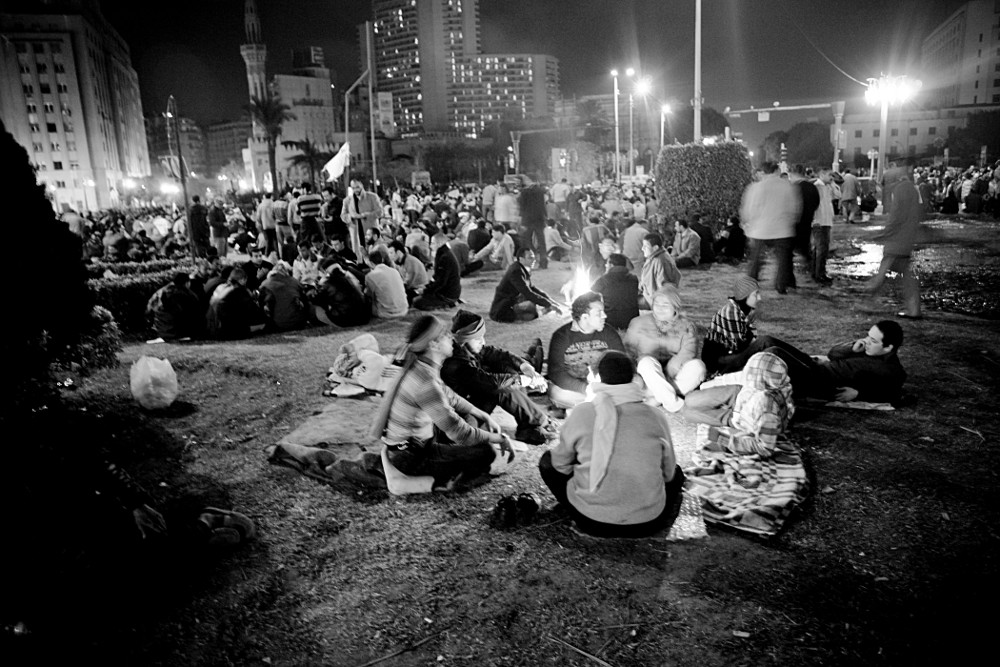
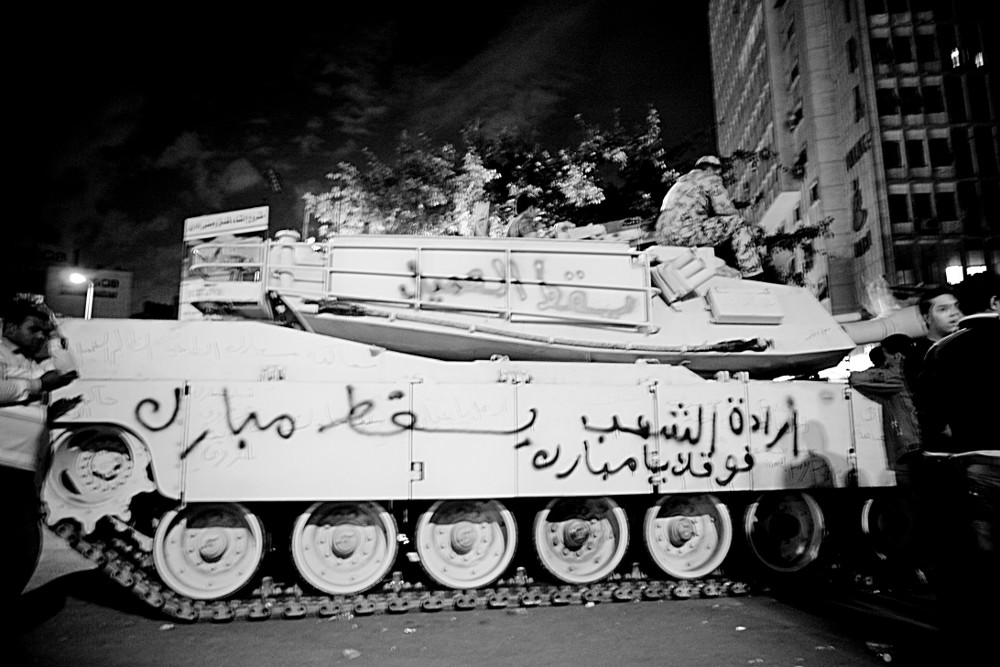
Egypt: the moment of truth<http://www.marxist.com/egypt-moment-of-truth.htm> Written by Alan Woods Tuesday, 01 February 2011 [image: Print] <http://www.marxist.com/egypt-moment-of-truth/print.htm#> *The Great Pyramid of Giza has lasted for 3,800 years. Hosni Mubarak has lasted somewhat less, but he would like to survive for a little longer. The difference between his regime and the Pyramid of Khufu is that it is an inverted pyramid. All its strength is at the top, but there is only a tiny point at the bottom. The laws of gravity and architecture tell us that such a structure is inherently unstable. The slightest push can bring the whole structure crashing down.* **<http://www.marxist.com/images/stories/egypt/31_Jan_Tahrir_square_camp-3arabawy.jpg> *[image: Camp at Tahrir Square last night. Photo: 3arabawy.]* *The whole of Egypt is now in a precarious balance.* That same precariousness applies to the role of the armed forces, the sole remaining fulcrum of the regime. On paper it is a formidable force, as solid as the aforementioned pyramid. But armies are composed of human beings, and are subject to the same pressures as any other social stratum or institution. >From one minute to the next the protesters awaited the order from the President for the army to disperse the crowds. "The soldiers are not out here for the people, they are out for the president," said a middle-aged man. As darkness fell, the loud whirring of military helicopters could again be heard above central Cairo. Despite this, the rebels continued to chant angrily for President Hosni Mubarak to step down, some waving the Egyptian flags. Air force jets made multiple passes overhead. But on the ground the troops made no attempt to break up the protests. The tanks that rolled into Tahrir Square were meant to intimidate. But they were immediately surrounded by a human mass that impeded their progress. There have been shows of solidarity with protesters sharing their food with soldiers and in one case, carrying a young officer on their shoulders. The longer the army is in contact with the revolutionary masses, the greater will be the effect and the more difficult it will be to use it to crush the revolution. The display of military might was meant to have a psychological effect on the tens of thousands of protesters gathering in Tahrir Square. However, the tanks have failed to stop the protests. Mubarak, a former air force officer, decided that fighter planes might get better results, since it is difficult to fraternize with a high-flying pilot. Yesterday fighter jets flew low over the protesters in an attempt to cause panic. But just as they had quickly adjusted to the presence of tanks on the streets, demonstrators were undeterred. Instead of fear, however, this intimidatory gesture caused anger. Look! They are sending the air force against us. From this moment we have no President. We will get rid of Mubarak or we will die here. That was the reaction of one protester. "At first, I was frightened from the sound of the planes, but now it's as if I'm listening to music," commented a student who had come out to protest for the first time. "It's okay, they're not going to kill us," she said, then added, "although some people do say the president might kill all the country just to stay on." In a revolution, as in a war, timing is of the essence. The same is true of a counterrevolution. Decisive action is necessary if order is to be imposed by force of arms. But here there is no decisive action, only hesitation, prevarication and indecision. Mubarak is willing to wound, and yet afraid to strike. This is a sure recipe for undermining any authority he may still have had. Machiavelli said that it was better for a ruler to be feared than to be loved. Just one week ago Mubarak was not loved but he was feared. Now he is regarded with contempt. He has lost the initiative and it will be impossible to regain it. General strike It is obvious that society cannot continue like this. Either the old order will re-impose its authority a perspective that is becoming increasingly unlikely or the masses will impose a new order. There is talk of a general strike. Groups of protesters camped out in the capital overnight, determined not to leave until Hosni Mubarak goes. The momentum of the movement continues to grow as we write these lines. Thousands rallied over the weekend in Alexandria and there were also sizeable demonstrations in Mansoura, Damanhour and Suez. Crowds are again building in Cairo's Tahrir Square, despite army checkpoints designed to limit access. A march billed as the "protest of the millions" is taking place today (Tuesday). More than a million people are out in Tahrir Square, 300,000 in Suez, 250,000 in Mahalla, 250,000 in Mansoura, and 500,000 in Alexandria. Protesters are out in every single city and town in Egypt, approximately four million all over Egypt. It is the moment of truth. Even without a general strike normal economic life has already ground to a halt. The Japanese car maker Nissan has announced that it is halting production at its Egypt plant for a week, and it has urged non-Egyptian employees to leave the country. The impact is already being felt in global markets. The Nikkei fell in early trading in Tokyo as the Egyptian unrest prompted investors to dump risky assets. <http://www.marxist.com/images/stories/egypt/31_Jan_tank_with_graffiti-3arabawy.jpg> [image: 'The Will of The Egyptian People is above you Mubarak'. Photo: 3arabawy] Most shops and businesses in Cairo are closed. The middle classes are rushing to withdraw money from bank cash machines. The few supermarkets that are open are stripped bare by shoppers, stocking up with food. In the poor areas, the bakeries are running out of the small round loaves of bread that are a staple of the national diet. Streets are said to be piling up with rubbish as shops and hotels run out of basic supplies as infrastructure breaks down due to the unrest. In a further vacillation the police have been ordered back on the streets again. State television has warned there are gangs on the rampage, although some believe it is exaggerating the threat to scare people. The regime is trying to create an atmosphere of tension to justify a clampdown. Security forces in plainclothes are engaged in destroying public property in order to give the impression that many protesters represent a public menace. A recent Stratfor report indicated that plainclothes police from Egypts internal security apparatus are the main drivers behind the growing insecurity in the streets over the past few days. It says: It is important to keep in mind that historically, animosity has existed between Egyptian police and army officers. The Interior Ministry, according to STRATFOR sources, wanted to prevent the military from imposing control in the streets. It appears that the absence of police on the streets Jan. 29 was (at least in part) encouraged by the outgoing interior minister, who was sacked the same day along with the rest of the Cabinet. Egyptian plainclothes police allegedly were behind a number of the jailbreaks, robberies of major banks and the spread of attacks and break-ins in high-class neighbourhoods. The idea behind the violent campaign was to portray the protesters as a public menace and elicit a heavy-handed army crackdown to embroil the military in an even bigger crisis. The reaction of the people has been to begin to take over the running of their areas. The protester are forming peoples committees to protect public property and also to coordinate demonstrators activities, including supplying them with food, beverages and first aid. In some neighbourhoods, residents are erecting makeshift checkpoints. They arm themselves with sticks and pistols against looters. Some use equipment left by police officers after they abandoned their usual positions. Images of the scenes unfolding are being broadcast into homes across Egypt and the Arab world, and large audiences are watching and waiting to see what happens. The authorities are attempting to get a monopoly over the means of communication by restricting the printed media and the internet. The information ministry has closed the local Al-Jazeera office in a fresh attempt to control the message. However, such efforts seem futile. The ever-resourceful Egyptians are continuing to tune in to satellite television to hear the news. An orderly transition Amid growing fears in London and other European capitals that extremists could try to exploit the situation, British premier David Cameron spoke to King Abdullah of Jordan on Sunday about the situation in the Middle East and North Africa. (*) British foreign secretary William Hague told the BBC: "It's to avert those risks and meet the legitimate grievances and aspirations of the Egyptian people that we are urging the Egyptian authorities... to create a more broadly-based government." He said reforms should be "real and visible" and elections "free and fair". But there is one small problem with all this well-meaning advice. Mubarak seems determined not to run away as Ben Ali did. And in fact the Americans dont wish that either. They can see that the resulting power vacuum would be very dangerous for them. The Americans have warned President Mubarak urgently that there must be no more killings. They know that one bloody clash would be sufficient to split the army in pieces. Then the floodgates would open. That is why the army has stated that it will not use force to suppress the demonstrations. This is the kiss of death for Mubarak. ElBaradei and the other reformers are pleading with the Americans to intervene: "It is better for President Obama not to appear that he is the last one to say to President Mubarak: 'It's time for you to go'." But Obama has not said this not yet anyway. The masses want a complete transformation. But Barack Obama wants only an "orderly transition". An orderly transition to what? We do not know. But we do know that Obama has called for Mr Mubarak to initiate it. That is to say, he is willing to give the old dictator a key role in making arrangements for the future of Egypt. We know also that Washington sees Egypt is a key ally in the Middle East. It has given it billions of dollars of aid, and it wants value for its money. The White House says Mr Obama made a number of calls about the situation over the weekend to foreign leaders including Turkish Prime Minister Recep Tayyip Erdogan, King Abdullah of Saudi Arabia and British Prime Minister David Cameron. The protests in Egypt are top of the agenda of a meeting of European Union foreign ministers in Brussels on Monday. All are terrified about the effect of contagion from Egypt. The BBC correspondent John Simpson says: From the American point of view, the best thing that could happen would be a peaceful end to the protests, the retirement of Mr Mubarak and the continuation of some part (at least) of the system which he has created - shorn, hopefully, of its corruption. But he adds a warning: It won't be easy and it won't appeal greatly to the demonstrators, who have condemned Mr Mubarak's entire political structure and want to bring it down. The strategists of Capital are relying on the fact that people will be tired, and that there will be a general desire to get back to ordinary life, and this will bring a gradual end to the protest. Then the system if not the president himself might survive. But everything depends on the demonstrators: if they hold out - an orderly transition will not be possible, and the movement could go far further than anybody suspects. Last night on (British) Channel Four News there was a debate between an American and a British expert. The American a typically bone-headed right winger was optimistic about a managed transition to democracy. His British counterpart was not impressed. This is a revolutionary situation, he replied with icy sarcasm. You cannot hope to manage a situation like that. There can be no doubt that the latter evaluation is the correct one. Meanwhile, China has added its voice to the chorus calling for a return to order. A Chinese foreign ministry spokesman said on Sunday: "Egypt is a friend of China's, and we hope social stability and order will return to Egypt as soon as possible". The Chinese regime is interested in global economic stability because it wants to continue to earn a lot of money from exports. But it is also afraid of anything that could provide an impetus for strikes and protests in China itself. That explains why the Chinese regime has blocked the use of search engines to find news on the events unfolding in Egypt! The masses fight, the politicians intrigue The Americans are desperately manoeuvring behind the scenes. For the last week there have been intense discussions with senior U.S. officials, the government and the tops of the army. The military is preparing the time for Mubaraks political exit. Until this happens, the unrest in the streets will continue. But who and what will take his place? In its search for an orderly transition, the western media is trying to build up the figure Mohamed ElBaradei. The television cameras somehow always manage to locate him among a mass of demonstrators. But it brings to mind the following anecdote. A man was seen wandering aimlessly behind a crowd of demonstrators. When someone asked him who he was, he answered: Me? Im their leader. Although he played no role in organizing the protests, he is nevertheless presented as the leader of a mysterious opposition coalition, which apparently includes the Islamist Muslim Brotherhood, which also played no role in organizing the protests and at first did not even participate in them. This coalition is calling for a national unity government to be set up. Who will be in this government? Nobody knows. Who elected this opposition coalition? Nobody knows. Yet behind the backs of the masses, these gentlemen are already making plans to seize the reins of power. The leaders are jockeying for power. The opposition is unified in its hatred against Mubarak, yet divided on almost everything else. Already there were signs of disunity within the united opposition. The Muslim Brotherhood is having second thoughts about its endorsement of leading figure Mohamed ElBaradei as a negotiator with Mr Mubarak. A spokesman for the Muslim Brotherhood, Mohamed Morsy, told the BBC: "The people have not appointed Mohamed ElBaradei to become a spokesman of them." That is quite true. The people have not appointed Mohamed ElBaradei, but neither have they appointed the Muslim Brotherhood. They have not appointed anybody because they have not been consulted. They are fighting and dying on the streets, and their objective is not to further the careers of opportunist politicians but to change their lives. The revolts in Tunisia and Egypt are largely secularist and democratic, and often deliberately excluding the Islamists. The conventional wisdom that only the Muslim Brotherhood can organise grassroots opposition movements in the Middle East is false, as is the idea that it is the only real opposition. The protests indicate the extent to which Egyptians have rejected jihadist ideology. They prove that Islamists do not have a monopoly on grassroots movements.* *The basic demands of the Egyptian demonstrators are for jobs, food and democratic rights. This is nothing to do with the Islamists and is a bridge to socialism, which has deep roots in the traditions of Egypt and other Arab countries. The moment of truth Tensions are growing between the army and the police and between the police and protesters. The revolution has provoked a crisis in the state. There are reports of a major confrontation that has been played out behind the scenes between the Interior Ministry and the military. The army must try to end the protests on the streets. But it will not be easy, now that the masses have got a sense of their own power. The political structure of the state is crumbling, forcing the army to assume direct responsibility for the running of society. The military is supposed to be the guarantor of the state. But the military is not a monolithic entity. The army in Egypt is not like the army in Britain or the USA. The lower and middle ranks of the officer caste reflect the pressure of the masses. The entire history of Egypt places the possibility of a colonels coup on the agenda. The result could be a nationalist regime like that of Gamal Abdel Nasser, a colonel in the armed forces, who overthrew the British-backed monarchy in 1952. *In the present situation, it is possible that history will be repeated. But whatever transitional government is formed will be under close scrutiny. It will feel the hot breath of the masses on its neck. The key to the whole situation is the mass movement. All the contradictions are coming to a head. The coming hours will be decisive. The moment of truth has arrived.* *London, on the morning of February 1, 2011* * ------------------------------ * *(*) Note: No doubt Cameron was advising the King of Jordan on what to do to placate the masses. The latest news is that King Abdullah II of Jordan has now sacked his government. This has come after huge street protests inspired by the revolutions in Tunisia and Egypt. This is confirmation that, after the protests in Yemen, Algeria and other countries, what started in Tunisia could engulf the whole of the Arab world.* [Non-text portions of this message have been removed] ------------------------------------ --------------------------------------------------------------------------- LAAMN: Los Angeles Alternative Media Network --------------------------------------------------------------------------- Unsubscribe: <mailto:[email protected]> --------------------------------------------------------------------------- Subscribe: <mailto:[email protected]> --------------------------------------------------------------------------- Digest: <mailto:[email protected]> --------------------------------------------------------------------------- Help: <mailto:[email protected]?subject=laamn> --------------------------------------------------------------------------- Post: <mailto:[email protected]> --------------------------------------------------------------------------- Archive1: <http://www.egroups.com/messages/laamn> --------------------------------------------------------------------------- Archive2: <http://www.mail-archive.com/[email protected]> --------------------------------------------------------------------------- Yahoo! Groups Links <*> To visit your group on the web, go to: http://groups.yahoo.com/group/laamn/ <*> Your email settings: Individual Email | Traditional <*> To change settings online go to: http://groups.yahoo.com/group/laamn/join (Yahoo! ID required) <*> To change settings via email: [email protected] [email protected] <*> To unsubscribe from this group, send an email to: [email protected] <*> Your use of Yahoo! Groups is subject to: http://docs.yahoo.com/info/terms/