http://www.marxist.com/spain-rebellion-of-youth.htm
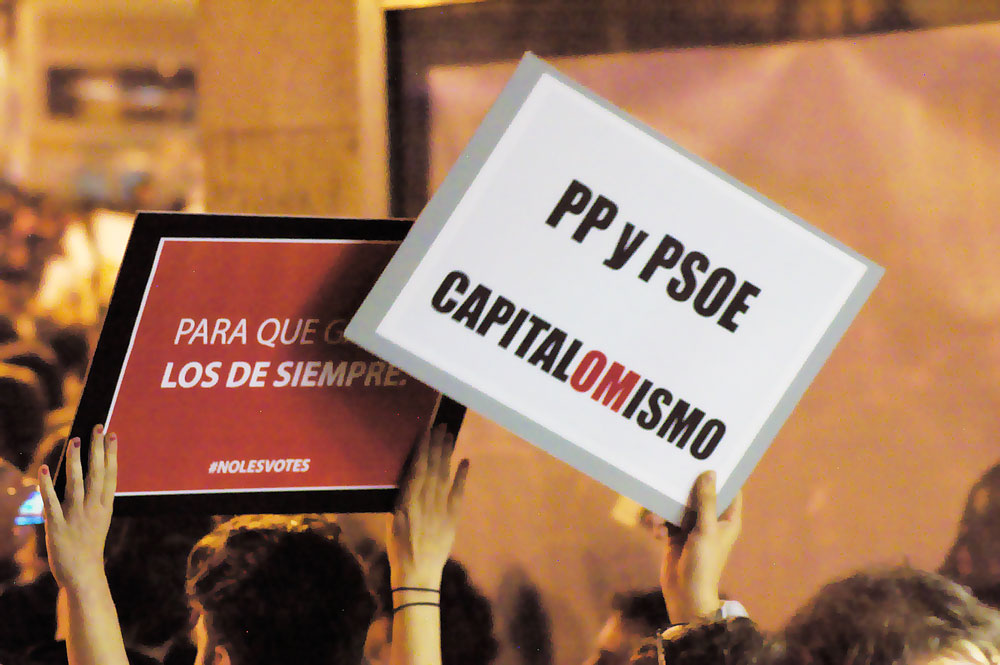
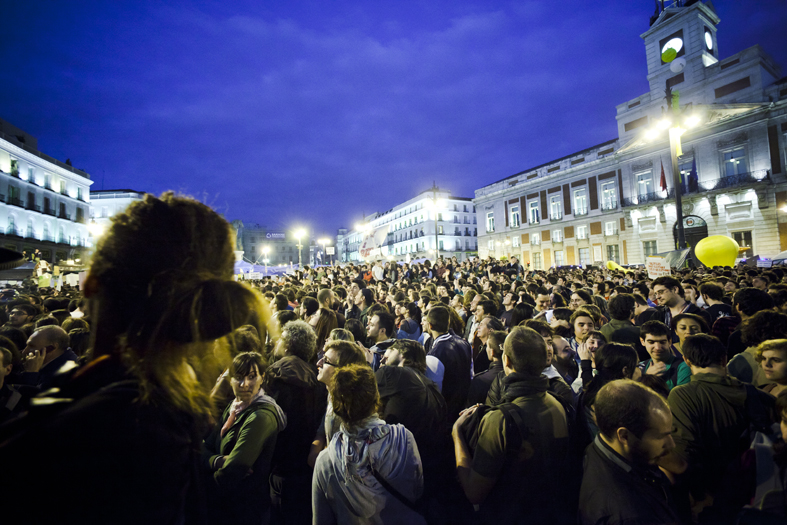
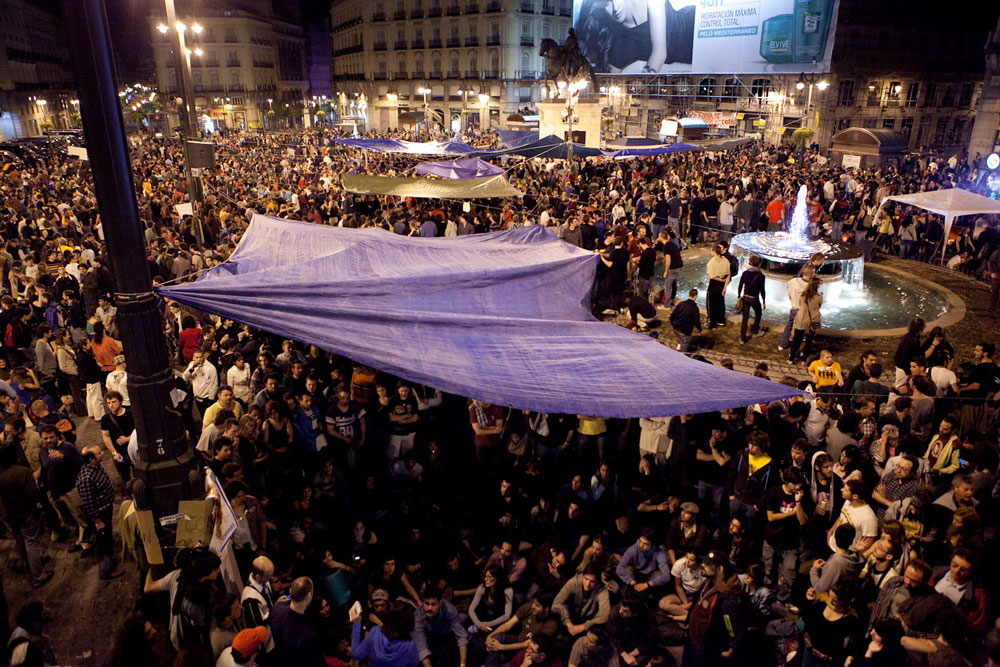
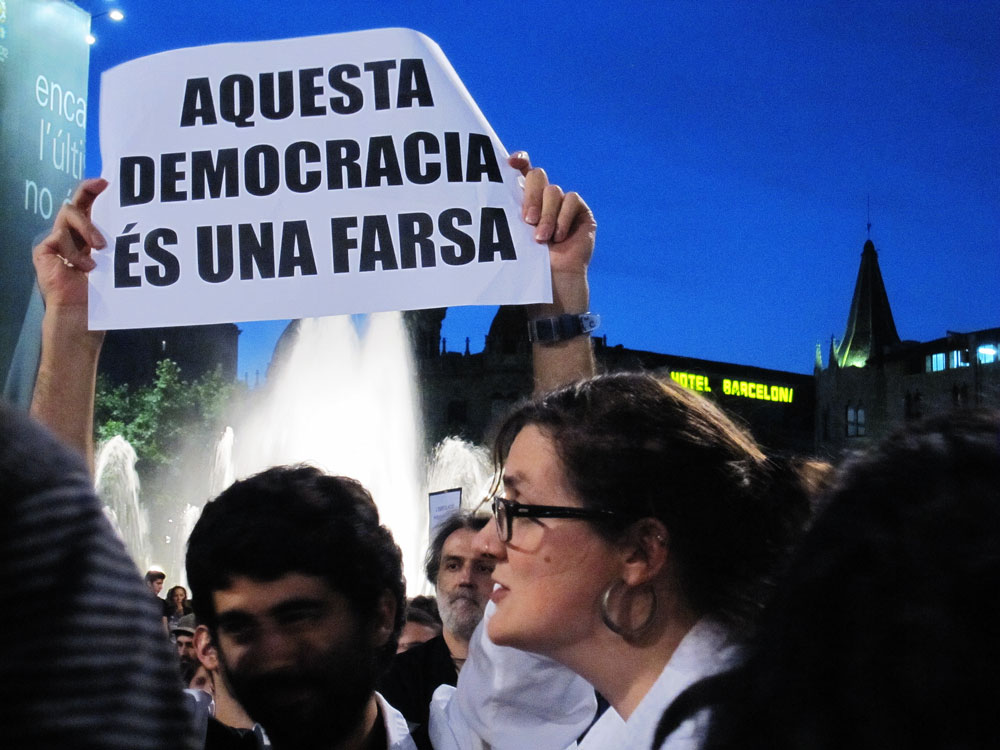
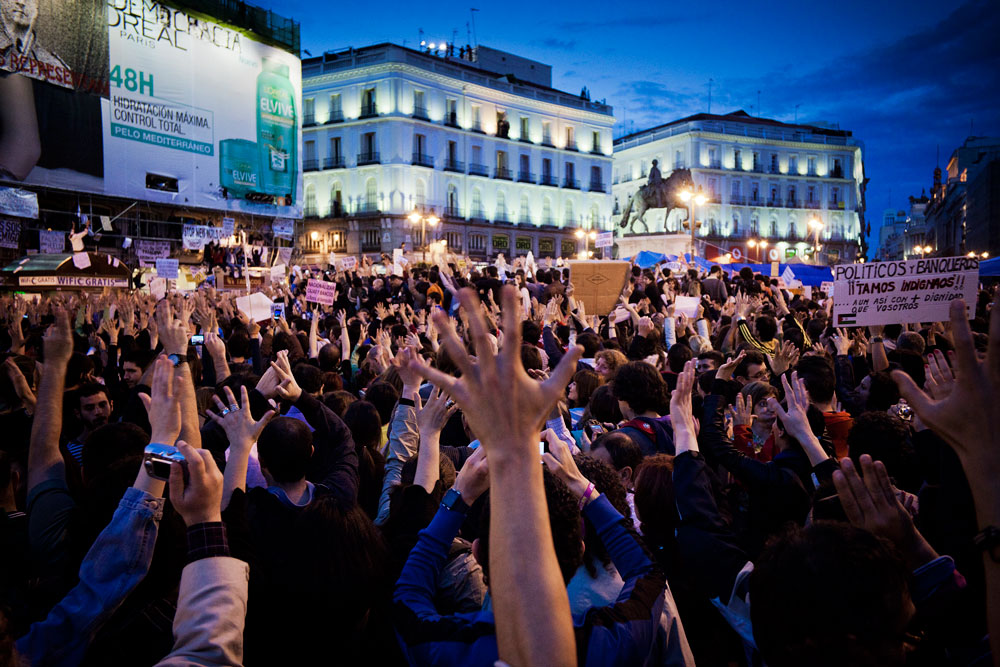
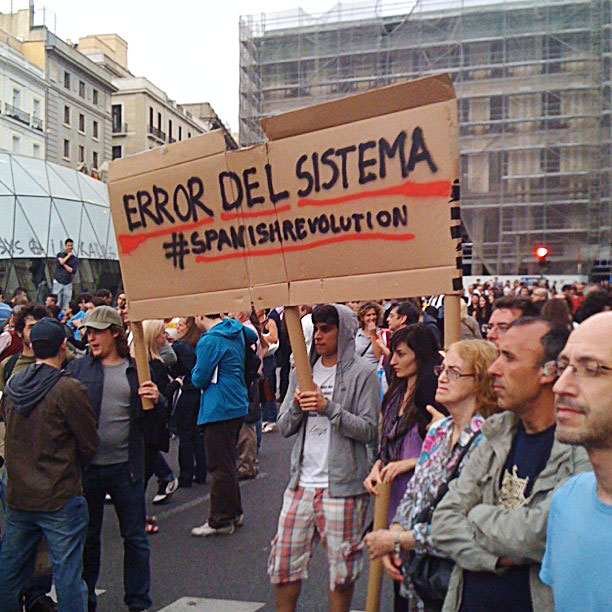
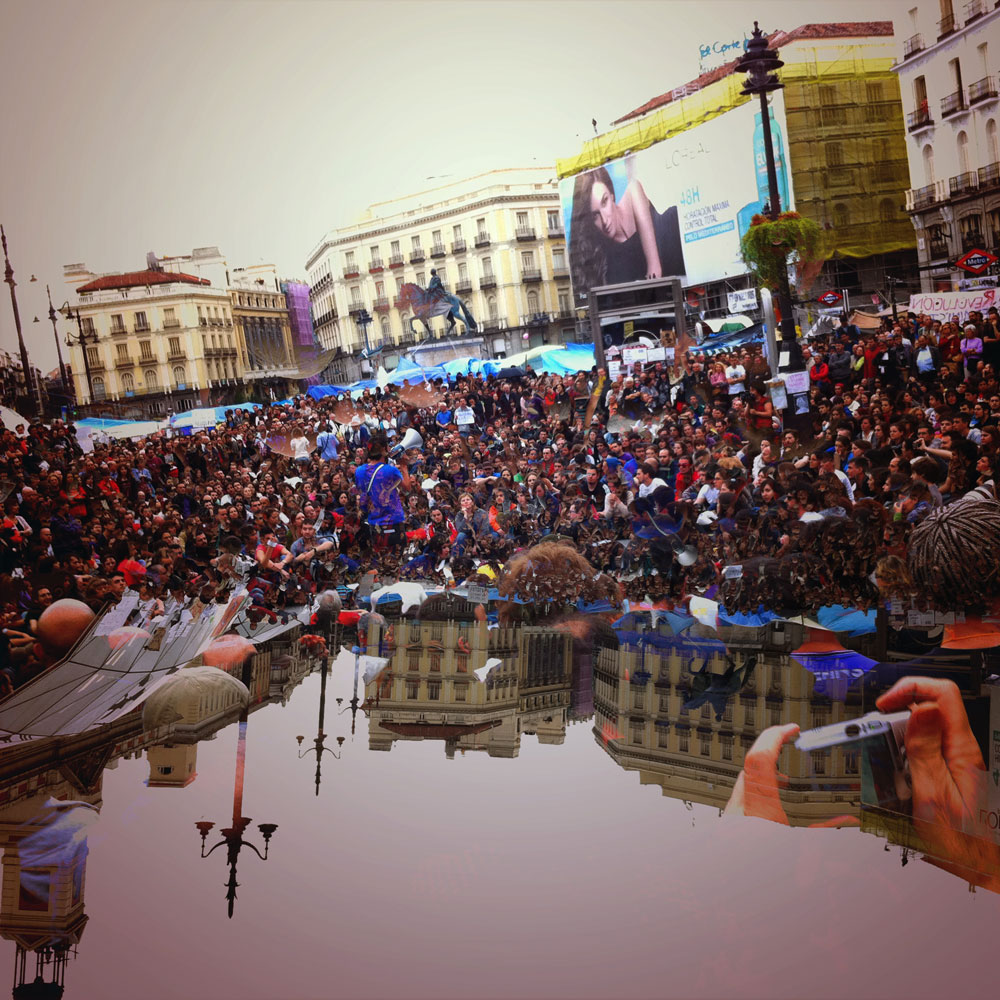
Spain: The rebellion of the youth<http://www.marxist.com/spain-rebellion-of-youth.htm> Written by Alan Woods Friday, 20 May 2011 [image: Print] <http://www.marxist.com/spain-rebellion-of-youth/print.htm#> First it was Tunis, then Cairo, then Wisconsin, and now Spain. The crisis of capitalism has set in motion a tsunami that is impossible to control. All the representatives of the old order have combined to halt it: politicians and police, judges and trade union bureaucrats, the hired press and the television, priests and intellectuals. But the tsunami of revolt rolls on from one country to another, from one continent to another. Bankruptcy of Spanish capitalism [image: "PP and PSOE - the same Capitalism", May 18. Foto: Virginia Garcia] <http://www.marxist.com/images/stories/spain/M15/May_18_capitalomismo-Virginia_Garcia.jpg>The local and regional elections in Spain this weekend come at a time of ever deeper economic, social and political crisis. For ten years the Spanish economy was presented as the motor of job creation in the euro-area. A frenzied speculative boom was followed by a severe slump. Spain now stands on the edge of bankruptcy. Economists are warning of revelations about higher debt levels than previously known. And following the collapse in Greece, Ireland and Portugal, the market is turning its attention to Spain. Spanish capitalism went up like a rocket and came down like a stick. The collapse of the construction boom has left Spain with a painful hangover of falling house prices, huge debts, one million empty homes and the highest rate of unemployment in the European Union. The ranks of the jobless in Spain have soared to about 4.9 million. With unemployment in Spain at 21 percent, dissatisfaction has been growing. The discontent is reflected in scepticism towards all the main political parties, which, given their record, should surprise no-one. In Spain, there are two main parties: the right wing PP and the socialist PSOE. The first is made up of the open representatives of Capital, the party of the bankers and capitalists. We know very well what to expect from this party. The PSOE is supposed to represent the interests of the working class. But does it? Millions of workers voted for this party in the hope that it would defend their living standards. But these hopes have been cruelly deceived. The leader of the Socialist Party, José Luis Rodríguez Zapatero, was supposed to be a left. But under conditions of capitalist crisis, there were only two alternatives: either take action to break the power of the bankers and capitalists, or else accept the dictates of big business and attack the living standards of the workers. There is no third way, as Zapatero soon discovered. The PSOE leaders surrendered to the bankers and capitalists, just as the reformists have done in every other country. Using the excuse of the economic crisis (that is, the crisis of the capitalist system) the leaders of the PSOE have joined hands with the bourgeoisie to save the system. They are trying to place all the burden of the crisis onto the shoulders of those least able to bear it: the workers, the youth, the old, the sick, the unemployed. They pour billions into the pockets of the bankers, while attacking living standards and pensions. 89% of Spaniards think political parties only care about themselves, according to Metroscopia. But is it any wonder that people are alienated from political parties when they see this kind of thing? The Social Democrats always prepare the way for right wing reaction. That is their role. Already the opinion polls indicate that the PSOE could lose to the right wing Popular Party (PP) in at least one key region. Even Andalucía, which has always been governed by the Socialists, might fall to the right wing. This would set the stage for a defeat in general elections next year, handing the government over to the right wing Popular Party, the open party of big business. This is to jump from the frying pan into the fire. If the PP wins a majority, it will introduce even bigger cuts. They will say: You think there was so much debt, but no, theres more. We have already seen this in Catalonia, where regional elections last year swept out the Socialist-led coalition government, but the new government of the CiU has introduced a vicious packet of cuts in health care and education and attacks on living standards that has provoked a wave of wild cat strikes and a 200,000 strong trade union demonstration in Barcelona. [image: May 19, Madrid. Photo: Sergio Rozas] <http://www.marxist.com/images/stories/spain/M15/May_19_Madrid-Sergio_Rozas.jpg> Mood of disappointment The leaders of the traditional workers parties are completely enmeshed with the capitalists and their state. It is an intolerable state of affairs that leaders who speak in the name of socialism and the working class, or even democracy, preside over huge bailouts to private banks, which signifies a big increase in the public debt that will be paid for by years of cuts and austerity. This is done in the name of the general interest, but is in reality a measure in the interest of the rich and against the interest of the majority. Under these conditions, the working class looks to the trade unions for a lead. Under the pressure from below the leaders of the UGT and CCOO called a general strike on 29 September last year. But the union leaders were desperate to do a deal with the government, and saw the general strike only as a means of putting pressure on Zapatero to give some concessions. They think that they can get what they want through negotiation [image: May 17, Madrid. Photo: Julio Albarrán] <http://www.marxist.com/images/stories/spain/M15/May_17_Madrid-Julio_Albarran.jpg>For the leaders, this is only a means of blowing off steam. For serious trade unionists, on the contrary, strikes and demonstrations are a means of getting the workers to understand their power and prepare the ground for a fundamental change in society. Although they think of themselves as practical and realistic people, the union leaders have not the slightest idea of the seriousness of the crisis of capitalism. They imagine that, by accepting cuts and other impositions in the hope that everything will be all right in the end. This is an illusion. For every step back they make, the bosses will demand three more. In reality the union leaders are just as out of touch with the real mood of anger of the workers and youth as the leaders of the political parties. Having called a general strike, they then agreed to a pension reform that was completely unsatisfactory from the standpoint of the working class. This led to a wave of disappointment that further reinforced the mood of alienation, frustration and discontent. As the class struggle develops the radicalization of the rank and file of the unions will undoubtedly enter into conflict with the conservatism of the leadership. The workers will demand a complete transformation of the unions from top to bottom, and will strive to turn them into real fighting organizations. But at the present time the unions are lagging behind the needs of the workers and youth. Elena Ortega, who has managed to find only a part-time secretarial job, and helped spread the word on Facebook about the protests on Wednesday, told CNN: "*If this is happening, it's because the unions weren't doing what was needed, when it was needed. They haven't delivered*". These moods are most intense among young people, who, as always, are the principal victims of the crisis. The figure of youth unemployment stands at around 45 percent. Many university graduates, having worked hard to obtain qualifications, cannot find work, or else are forced to accept menial jobs on low wages. The levels of precarious employment, that is, casual. part-time work, on short term contracts with no rights, is at an all-time high in Spain. This situation is not so very different to that faced by young people in places like Tunisia and Egypt. Yet Spain is not a Third World country, but a developed and prosperous European economy. This glaring contradiction has produced a mood of anger, frustration and bitterness in the youth, which does not find any reflection in the existing political parties or trade unions. The discontent and frustration has finally burst to the surface. On Sunday May 15, 150,000 people marched in about 40 cities throughout Spain under the banner of *Democracia Real Ya (*Real Democracy Now). The largest demonstration was in Madrid with 25,000 or more, followed by Barcelona with 15,000. The main slogan of the demonstration was We are not commodities in the hands of bankers and politicians, which shows an instinctive anti-capitalist character of the movement. Politicians and expert commentators have dismissed this movement as not having clear aims, or even being opened to right wing manipulation. The truth is that the overwhelming majority of people present at the demonstrations on May 15 would consider themselves as progressive and left wing. The slogans, about the lack of housing, the lack of jobs, the lack of future, the lack of genuine democracy, the dictatorship of the markets, against corrupt politicians and their obscene wages, about the strength of the organised people, show this clearly. While May15 took many by surprise, it had been preceded by a series of mobilisations which showed the growing pressure building up below the surface. In January and February, mass demonstrations of civil servants rocked Murcia, where the regional right wing government of the PP has carried out particularly vicious cuts. In the same region, activists have organised and effectively resisted evictions of families who have defaulted on their mortgage repayments. On April 7th thousands of youth took to the streets following a call made by the Youth without future platform, a coalition of left wing youth and student groups. It is also clear that the wave of the Arab revolution has been an inspiration to many in Spain. They have seen the power of ordinary people to change things when they are on the move. The idea of setting up tent camps, comes directly from Tahrir Square in Cairo. Many had also looked up to the Greek workers and youth and their courageous mobilisations throughout last year, the massive strike movement in France and even the movement of the youth in Portugal. A sign in Madrid read: France and Greece fight. Spain wins, in football, but not anymore. Despite the complete lack of leadership offered by the leadership of the official organisations, the Spanish youth is on the move, and they have the sympathy of wide layers of the workers. Thousands have been protesting on and off since Sunday in the Puerta del Sol, the city centre in Madrid and in more than 80 cities and towns all over Spain. Protests have also been organised by groups of Spanish youth outside the embassies in a number of European capitals. Threat to democracy? [image: "This Democracy is a farse", Barcelona, May 19. Photo: Erzsebét] <http://www.marxist.com/images/stories/spain/M15/May_19_Barcelona_democracia_farsa-Erzsebet.jpg>These protests took all the politicians by surprise. They have reacted with hysteria and alarm. The defenders of the existing society are scandalized: this is anarchy, they protest. This is chaos! Some even say it is a threat to democracy. Yet what we are seeing on the streets of Madrid and other Spanish cities is no threat to democracy but, on the contrary, an attempt to exercise direct democracy: to give a voice to those who have no voice, to defend the interests of those who nobody defends. When they speak of a threat to democracy, what do they mean? Democracy in its literal sense signifies the rule of the people. But is it true that the people really rule in Spain or anywhere else? No, it is false. In the framework of capitalist society, the participation of the majority of people in democracy is limited to voting every five years or so for one or other of the existing political parties. Once they are elected, they do whatever they like, and the people have no means of changing anything. Under capitalism all the key decisions are taken by the boards of directors of the big banks and monopolies. They decide whether people will have jobs and houses or not. Nobody elects them and they are responsible to nobody but themselves. The real relationship between the elected governments and the bourgeoisie was exposed in the recent crisis, when the bankers were given a present of billions of public money with no questions asked. In reality, bourgeois democracy is only another word for *the dictatorship of Capital* . Those who protest do so because they do not recognize themselves in any of the existing parties. And who can blame them? Many people are saying: what is the use in voting when they are all the same? They look at the election campaign with a mixture of indifference and disgust. If this represents a threat to democracy, those responsible are not the young people who are protesting in the Puerta del Sol but the ones sitting in the Palacio de la Moncloa. The right to peaceful protest is a basic democratic right. It was for this right that the Spanish working class fought for decades against the Franco dictatorship. Last Sunday thousands of people, mainly young but also others, went to the Puerta del Sol in the centre of Madrid to register their protest against a system that effectively excludes them. In so doing they were exercising this basic right. How is this democratic conquest being upheld by those who are in control of Madrid and the whole of Spain? Those people who fill their mouths with the word democracy depicted this peaceful protest as a threat to democracy. On the early hours of Tuesday May 17 Madrid authorities sent the riot police to disperse a relatively small group of protesters who had set up a camp in Puerta del Sol with the utmost violence. Madrid is ruled by the right wing PP. They must therefore bear the direct responsibility for this brutal and unprovoked attack. But they could never have done this without the approval (tacit or open) of the Zapatero government. This hypocritical chorus was to be expected from the right wing. But it is shameful that people who call themselves socialists and lefts should echo this poison. [image: Madrid, May 19. Photo: Sergio Rozas] <http://www.marxist.com/images/stories/spain/M15/May_19_Madrid_voting-Sergio_Rozas.jpg>The tough tactics did not work. On Tuesday night, tens of thousands protesters returned to Madrid's central plaza. By Wednesday morning, many remained in their overnight encampment. On Wednesday afternoon, Madrid's elections board banned the planned demonstration at 8 pm at the Puerta del Sol. A regional office spokesman said the election board was trying to prevent demonstrations during the final days of the election campaign because it could affect the right of citizens to vote freely. The board said there were not "extraordinary and serious reasons" to allow the demonstration on short notice. And to sooth the nerves of voters, El Pais reported that authorities planned to have sufficient police officers on hand to prevent the demonstration. The Madrid Metro system was warning passengers not to go to Plaza del Sol as the rally has not been allowed. But faced with tens of thousands of people who once again turned up to show their protest, the authorities realised it would be unwise to use the riot police to confront them, as this would have only radicalised the movement further and provoked and even more massive response. It is not only in Spain where democratic rights are being trampled. Not long ago Cossiga, who was Christian Democrat Minister of the Interior in Italy in the 1970s, later President of the Republic, and now life Senator, was asked what should be done about students demonstrations. He answered: Let them get on with it for a while. Withdraw the police from the streets and campuses, infiltrate the movement with agents provocateurs who are ready for anything, and leave the demonstrators for about ten days as they devastate shops, burn cars and turn the cities upside down. After that, having gained the support of the population making sure that the noise of the ambulance sirens is louder than those of the police and *carabinieri * the forces of order should ruthlessly attack the students and send them to hospital. Dont arrest them, as the judges will only release them immediately; just beat them up and also the professors who foment the movement. Here is the authentic voice of the democratic bourgeoisie. The moment their privileges are threatened, they cast aside the smiling mask of democracy and resort to violence and repression. The youth of Spain like the youth of Britain a few months earlier is receiving a splendid lesson in the values of bourgeois democracy, delivered in the form of truncheon blows. By dispersing a peaceful demonstration the rulers of Spain showed two things: firstly their complete contempt for the democratic right to demonstrate; secondly *their fear of the people*. Manifesto of the May 15 Movement The youth of Spain is beginning to draw the most advanced conclusions. The following is the Manifesto of the May 15 Movement. While we do not agree with every dot and comma of this document, it is an extraordinary expression of the feelings of millions of people who are now beginning to awaken to political life, for this is fundamentally a political document, even though its authors do not use this word. The reason they do not like the word political is because the scandalous conduct of the existing political parties have made the word stink in their nostrils: We are ordinary people. We are like you: people, who get up every morning to study, work or find a job, people who have family and friends. People, who work hard every day to provide a better future for those around us. [image: "The system is the problem". Madrid, May 17. Photo: Jose A. Gelado] <http://www.marxist.com/images/stories/spain/M15/May_17_Madrid_error_sistema-Jose_A_Gelado.jpg> *Comment*: The most important aspect of this is precisely that it is a spontaneous movement from below, from the real base of society. It is the voice of those who work in the factories and study in the schools and universities: the real voice of Spain, not that of the exploiters and parasites. This represents its inner strength and resilience. Some of us consider ourselves progressive, others conservative. Some of us are believers, some not. Some of us have clearly defined ideologies, others are apolitical, but we are all concerned and angry about the political, economic, and social outlook which we see around us: corruption among politicians, businessmen, bankers, leaving us helpless, without a voice. *Comment:* This is a mass movement that is giving a voice to the people who have no voice: the people who do not feel represented by the professional politicians and political apparatchiks who sit in the Cortes, that is to say, the great majority of the Spanish people. It is a protest against corruption and exploitation. But here we find a contradiction. How is it possible to hold such radical views and be a conservative? A conservative is somebody who wishes to conserve the status quo, who defends the existing order that the present movement seeks to overturn. To seek to build a mass movement with the broadest base is very good. But it is not possible to combine fire with water. Either we stand for a complete change in society, in which case we are revolutionaries. Or we stand for its preservation, in which case we are conservatives. One can be one thing or the other, but one cannot be both. This situation has become normal, a daily suffering, without hope. But if we join forces, we can change it. Its time to change things, time to build a better society together. Therefore, we strongly argue that: The priorities of any advanced society must be equality, progress, solidarity, freedom of culture, sustainability and development, welfare and peoples happiness. These are inalienable truths that we should abide by in our society: the right to housing, employment, culture, health, education, political participation, free personal development, and consumer rights for a healthy and happy life. *Comment:* Yes, we must fight for all these things. But we must understand that there are powerful interests opposed to change. The bankers, landlords and capitalists do not accept that the right to housing, employment, culture, health, education, political participation, free personal development, and consumer rights for a healthy and happy life are inalienable rights. They will tell us that these things are luxuries we cannot afford. Only the right of the bankers to receive vast amounts of public money are considered by them to be inalienable. The current status of our government and economic system does not take care of these rights, and in many ways is an obstacle to human progress. *Comment*: That is right, but it needs to be clarified, so that there does not remain a shadow of doubt concerning the real nature of the problem. Unemployment is not the result of bad policies by this or that government. It is an expression of the sickness of a whole system, that is to say, of capitalism. The problem is not the greed of certain individuals, nor is it the lack of liquidity or the absence of confidence. The problem is that the capitalist system on a world scale is in a complete blind alley. The root cause of the crisis is that the development of the productive forces has outgrown the narrow limits of private ownership and the nation state. The expansion and contraction of credit is often presented as the cause of the crisis, but in fact it is only the most visible symptom. Crises are an integral part of the capitalist system. Is it really logical that the lives and destinies of millions of people are determined by the blind play of market forces? Is it fair that the economic life of the planet is decided as if it were a gigantic casino? Can it be justified that the greed for profit is the sole motor force that decides whether men and women will have a job or a roof over their heads? Those who own the means of production and control our destinies will answer in the affirmative because it is in their interest to do so. But the majority of society, who are the innocent victims of this cannibalistic system, disagree. Democracy belongs to the people (demos = people, krátos = government) which means that government is made of every one of us. However, in Spain most of the political class does not even listen to us. Politicians should be bringing our voice to the institutions, facilitating the political participation of citizens through direct channels that provide the greatest benefit to the wider society, not to get rich and prosper at our expense, attending only to the dictatorship of major economic powers and holding them in power through a bipartidism headed by the immovable acronym PP & PSOE. *Comment*: Under capitalism democracy must necessarily have a restricted, one-sided and fictitious character. What use is freedom of the press when all the big newspapers, journals and television companies, meeting halls and theatres are in the hands of the rich? As long as the land, the banks and the big monopolies remain in the hands of a few, all the really important decisions affecting our lives will be taken, not by parliaments and elected governments but behind locked doors in the boards of directors of the banks and big companies. The present crisis has exposed this fact for all to see. [image: May 19, Madrid. Photo: Matth Van Mayrit] <http://www.marxist.com/images/stories/spain/M15/May_19_Madrid-Matth_Van_Mayrit.jpg>We stand for a genuine democracy in which the people would take the running of industry, society and the state into their own hands. That would be a genuine democracy, as opposed to the caricature we now have, in which anyone can say (more or less) what they want, as long as the most important decisions affecting our lives are taken behind locked doors by small, unelected groups on the boards of directors of the banks and big monopolies. Lust for power and its accumulation in only a few; create inequality, tension and injustice, which leads to violence, which we reject. The obsolete and unnatural economic model fuels the social machinery in a growing spiral that consumes itself by enriching a few and sends into poverty the rest. Until the collapse. The will and purpose of the current system is the accumulation of money, not regarding efficiency and the welfare of society. Wasting resources, destroying the planet, creating unemployment and unhappy consumers. Citizens are the gears of a machine designed to enrich a minority which does not regard our needs. We are anonymous, but without us none of this would exist, because we move the world. If as a society we learn to not trust our future to an abstract economy, which never returns benefits for the most, we can eliminate the abuse that we are all suffering.! *Comment*: The *right to work* is a fundamental right. What sort of society condemns millions of able-bodied men and women to a life of enforced inactivity, when their labour and skills are required to satisfy the needs of the population? Do we not need more schools and hospitals? Do we not need good roads and houses? Are the infrastructure and transport systems not in need of repair and improvement? The answer to all these questions is well known to everybody. But the reply of the ruling class is always the same: we cannot afford these things. Now everybody knows that this answer is false. We now know that governments can produce extraordinary sums of money when it suits the interests of the wealthy minority who own and control the banks and industries. It is only when the majority of working people request that their needs are attended to that the government argues that the money is not available. What does this prove? It proves that in the system in which we live the profits of the few are more important than the needs of the many. It proves that the whole productive system is based on one thing and one thing only: the profit motive, or, put plainly, greed. We need an ethical revolution. Instead of placing money above human beings, we shall put it back to our service. We are people, not products. I am not a product of what I buy, why I buy and who I buy from. *Comment*: The only solution to the problems listed here is *the overthrow of the present corrupt and unjust system and its replacement by a genuinely humane, rational and democratic society, which is genuine socialism or communism*. In order to achieve this end, however, what is needed is a fundamental change in society *a revolution*. The Manifesto speaks of an ethical revolution. But this formulation is too vague. The ethics of a given society reflect the economic base of that society. If we accept an economic system based on profit, we must accept the ethics that flow from this: each for himself and let the devil take the hindermost. A cannibalistic society will inevitably have cannibalistic ethics. Before we can have humane ethics we must have a society based on genuine human relations. The prior condition for an ethical revolution is *a social revolution*. *For all of the above, I am outraged. I think I can change it. I think I can help, I know that together we can. I think I can help. I know that together we can*. This conclusion contains a most important lesson. It tells us that whereas I, as a single individual, am powerless, there is no power on earth that can withstand the masses, once they are mobilized and organized for the revolutionary transformation of society. That is the lesson of Tunisia and Egypt. The working class has in its hands a colossal power: not a light bulb shines, not a wheel turns, and not a telephone rings without our permission. Advanced conclusions The most important thing is that the youth is on the move, and through the experience of concrete struggle the conclusions that the movement as a whole is drawing are becoming more advanced and are coming more openly into conflict with the capitalist system itself. Thus, at the demonstration in Madrid on Tuesday, in protest against the brutal eviction of the camp that same morning, the following slogans could be heard: it is not the crisis, it is the *system*, the revolution, has begun, they call it democracy and it is not, and also the slogans from the 1970s Chilean movement: el pueblo unido jamás sera vencido (the people united would never be defeated), luchar, crear, poder popular (to fight, to build, peoples power). *Video:* *http://www.ustream.tv/recorded/14772578*<http://www.ustream.tv/recorded/14772578> The manifesto adopted by the tens of thousands present at Plaza del Sol in Madrid on May 18 was certainly a step forward. Amongst other things it recognised the *political* character of the movement: we have lost respect for the main political parties, but we have not lost our ability to criticise. On the contrary we are not afraid of *politics*. To express an opinion is *politics*. To look for alternative ways to participate *is politics*. It also clarified that it did not call for an abstention in the elections, but rather it demanded that voting would have a real impact in our lives. The manifesto also clearly identified those responsible for the situation we face: the IMF, the European Central Bank, the European Union, the credit rating agencies like Moodys and Standard and Poors, the Popular Party and the PSOE, amongst others. Some are also questioning the Monarchy as an institution and arguing it should be put to a referendum. Now the Electoral Junta has declared that no protests on Saturday (the day of reflection before elections day in which no political propaganda is allowed) and Sunday (election day itself) will be allowed. This is a direct challenge to the movement. The only effect of the repression in Madrid on Tuesday 17, and the banning of the demonstration on Wednesday 18 has been to radicalise and spread the movement. Demonstrations in provincial capitals have doubled in size in the last few days and tent camps have sprung everywhere. There is now a call for everyone to remain in the squares from midnight today, thus defying the prohibition of demonstrations. The Spanish ruling class is faced with a difficult choice: if they use repression to enforce the decision to ban the demonstrations then they can provoke a social explosion, if they do not, then the movement will have won a victory and shown the power of the masses as opposed to the power of the official institutions. Vice-president Rubalcaba was today trying to square the circle by arguing that the fact that people gather despite gatherings being banned, is not a reason enough for the police to intervene unless there is violence We Marxists welcome the protests of the youth. We express our wholehearted solidarity with the protest movement and call on the working class to support it actively. It is time to use the power of the working class to change society. It is time to put an end to all prevarications, unprincipled deals and compromises. Stop trying to prop up a diseased and moribund system! It is time to unite and fight! This is the real meaning of the Spanish protests and the May 15 Movement. *Long live the Spanish protests!* *Long live the May 15 Movement!* [Non-text portions of this message have been removed] ------------------------------------ --------------------------------------------------------------------------- LAAMN: Los Angeles Alternative Media Network --------------------------------------------------------------------------- Unsubscribe: <mailto:[email protected]> --------------------------------------------------------------------------- Subscribe: <mailto:[email protected]> --------------------------------------------------------------------------- Digest: <mailto:[email protected]> --------------------------------------------------------------------------- Help: <mailto:[email protected]?subject=laamn> --------------------------------------------------------------------------- Post: <mailto:[email protected]> --------------------------------------------------------------------------- Archive1: <http://www.egroups.com/messages/laamn> --------------------------------------------------------------------------- Archive2: <http://www.mail-archive.com/[email protected]> --------------------------------------------------------------------------- Yahoo! Groups Links <*> To visit your group on the web, go to: http://groups.yahoo.com/group/laamn/ <*> Your email settings: Individual Email | Traditional <*> To change settings online go to: http://groups.yahoo.com/group/laamn/join (Yahoo! ID required) <*> To change settings via email: [email protected] [email protected] <*> To unsubscribe from this group, send an email to: [email protected] <*> Your use of Yahoo! Groups is subject to: http://docs.yahoo.com/info/terms/