http://www.marxist.com/world-perspectives-2012-draft-5.htm Perspectives for world capitalism 2012 (Draft discussion document) Part Five Africa and the Middle East<http://www.marxist.com/world-perspectives-2012-draft-5.htm> *Written by International Marxist Tendency **Thursday, 05 April 2012* [image: Print]<http://www.marxist.com/world-perspectives-2012-draft-5/print.htm#>
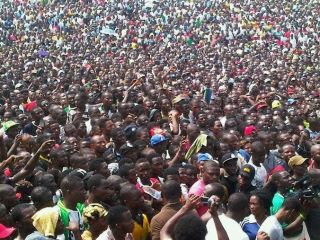
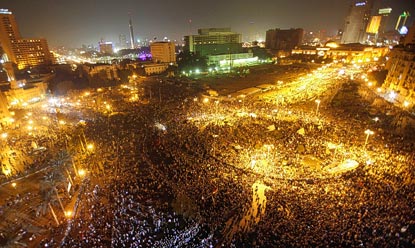
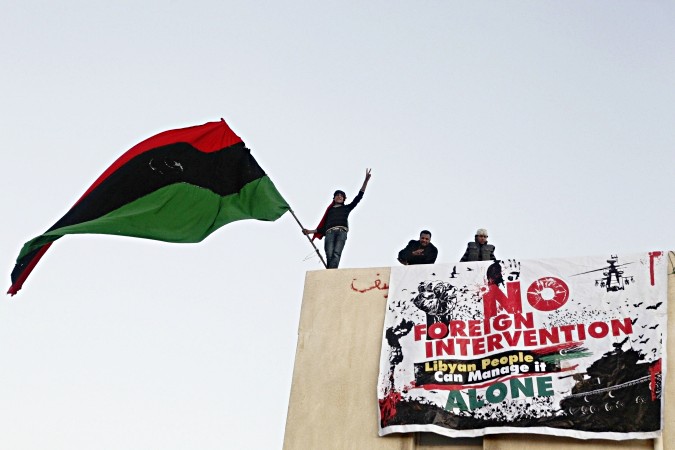
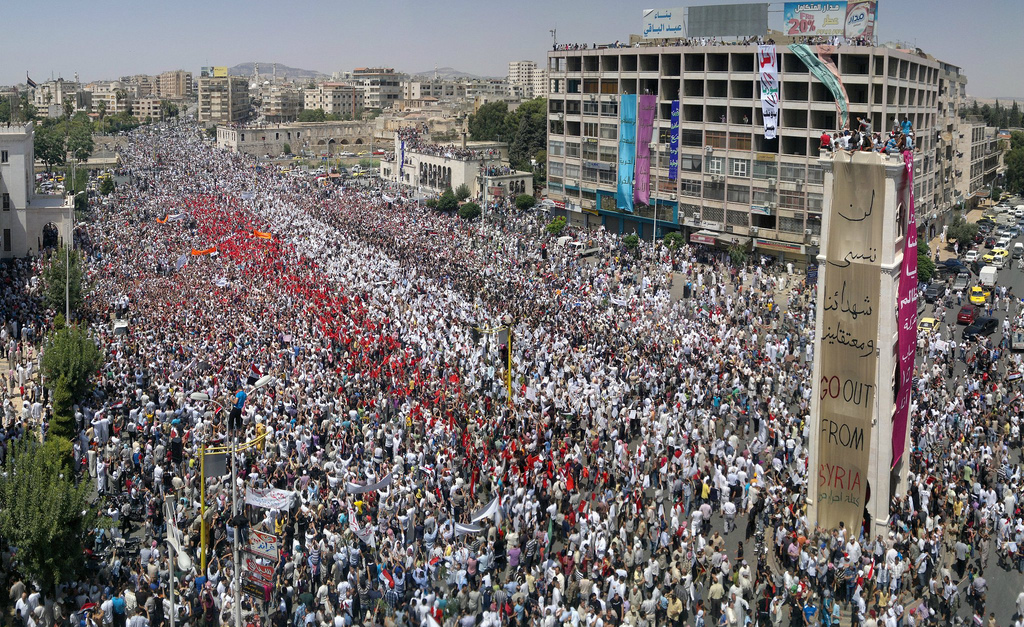
*The revolutionary movement of the Arab masses naturally had a large impact in sub-Saharan Africa, stirring up the masses that for decades have been forced to live in the most desperate conditions. Immediately after the beginning of the Arab Spring, eruptions of mass discontent were seen in many sub-Saharan countries, especially in Burkina Faso, Senegal, Malawi, Zambia and Swaziland, but minor eruptions occurred in all African countries, and in general the level of tension between the masses and their rulers has significantly increased. **[part 1]*<http://www.marxist.com/world-perspectives-2012-draft.htm> Africa [image: 12 January, Ojota, Lagos, Nigeria]<http://www.marxist.com/images/stories/nigeria/20120112_ojota.jpg>12 January, Ojota, Lagos, NigeriaThree countries can be marked out as being of key strategic importance in Africa: Egypt, Nigeria and South Africa. That is because they have sizeable populations and relatively developed economies with an important proletariat. Egypt is dealt with elsewhere in this document, under the Arab Revolution below, so we will touch on Nigeria and South Africa, to highlight the general processes taking place. In Nigeria, which with its 170 million inhabitants is the most populated country in Africa, the social contradictions are glaring. Although the Nigerian economy has been officially growing at over 6% for the past five years, the poverty rate keeps increasing and youth unemployment has risen to an unprecedented 47%. This is a recipe for class struggle. The Nigerian workers have moved again and again in many general strikes and mass demonstrations. The main problem has been the lack of a political leadership to carry the struggles further. In recent years the pressure to create a political party of the masses pushed some elements within the trade union bureaucracy to set up the Nigerian Labour Party. But the leaders of the trade unions, being afraid that they would not be able to control the development of such a party, have not put their full weight in mobilising for it. Thus the Labour Party, although it has great potential, is still a very small organisation that does not play a significant role nationally. The organisation that the mass of workers look to continues to be the Nigerian Labour Congress, the main trade union federation in the country. This was evident in the mass movement that erupted in January, sparked off by the governments plan to remove the subsidy on fuel. This movement, which led to a 5-day general strike, was very different to past protest movements. The rallies saw hundreds of thousands of protestors taking to the streets, accompanied with the election of neighbourhood committees in some areas, which indicates that the masses were trying to take their destiny into their own hands. Also, given the political vacuum on the left, with the Labour Party reduced to a mere bargaining tool in the hands of a few bourgeois elements, the JAF (Joint Action Front) and LASCO have assumed greater importance for the most advanced workers and youth. This indicates that a process of radicalisation is taking place, as in all countries across the globe. What we witnessed in January can be considered as the first shots of the Nigerian Revolution. What is evident is that the Nigerian workers were inspired by the movements in the Arab countries, and in the present conditions the calling off of the general strike will not be the end of the movement, and renewed outbursts of class struggle are inevitable in the coming period. Although important developments have taken place all over Africa, the key to the continent remains South Africa, by far the most developed industrial power. Sixteen years after the downfall of the apartheid regime, the South African masses are yet to see real change in their lives. Although South Africa by many accounts has immense mineral resources, 31% of the population of working age is unemployed. Among the youth the unemployment rate exceeds 70 percent and about a quarter of the population lives on less than $1.25 pr. day. In these conditions the South African masses are becoming more radicalised by the day. In 2010 1.3 million civil sector workers went on strike and hundreds of thousands more were ready to join in. This trend of massive strikes continued in the summer of 2011 where hundreds of thousands of metalworkers and other industrial workers went on strike for several weeks. At the same time the townships of South Africa are brewing with anger and mass uprisings are witnessed on an almost monthly basis in one township or another protesting cuts and inconsistency in the delivery of basic utilities and the growing corruption that is clogging up all parts of South African society. The pressure from below is starting to reflect itself in the tripartite alliance between the ANC, SACP and COSATU. In the last years a divide has started to develop between the parts of the alliance that are closer to the state apparatus and the parts that are closer to the workers and youth. This process has been especially reflected in the development of the ANC Youth League whose populist leader, Julius Malema has swung sharply to the left. In recent years Malema has put forward the idea of nationalising the mines in South Africa an idea that is a part of the Freedom Charter, viewed by many as the programme of the ANC. The youth have responded enthusiastically to this call. Also the leaders of COSATU have responded in favour, but at the same time the proposal has been met with fierce resistance from the ANC and SACP leaderships who have instead suspended him from the ANC. In June 2011 at the congress of the ANCYL, the nationalisation of the strategic sectors and the commanding heights of the economy was adopted as part of the programme of the ANCYL. This is an indication of how ripe the situation is for revolutionary socialist ideas. In general, the capitalist system has nothing to offer the African masses except rising inflation, unemployment and the most desperate poverty levels. 50% of Africans live on less than $2.5 a day. The average poor person in sub-Saharan Africa is estimated to live on only 70 cents per day, and was poorer in 2003 than he or she was in 1973. The present crisis of capitalism is aggravating this situation and under these conditions the masses of the continent are beginning to draw conclusions and moving to the left. They will play an important role in the general movement towards revolution on a global scale. The Arab Revolution [image: 22 November, Tahrir Square]<http://www.marxist.com/images/stories/egypt/22-11-2011_Tahrir_square-million_man_march.jpg>22 November, Tahrir SquareThe Arab revolution marks a fundamental turning point in history. It shows how quickly events can develop. The revolutions in Tunisia and Egypt seemed to happen suddenly, without warning. At least, that is how it appeared to the bourgeoisie. The problem is that the so-called experts of the bourgeoisie understand nothing. The economists, politicians, and journalists foresee nothing and can explain nothing. Bourgeois empiricism is incapable of understanding the processes that are at work at a deeper level. Only the method of dialectical materialism can provide a scientific explanation of this. Marxism explains how things can and do and will suddenly change into their opposite. Marxist theory provides us with the superiority of foresight over astonishment. The Arabs were portrayed as passive, apathetic, backwards and submissive. But they said exactly the same about the Russians before 1917. Here racial prejudice rubs shoulders with a superficial and unscientific view of history. One finds the same kind of prejudice in some so-called Marxists who are always moaning about the so-called low level of consciousness of the masses. For such people dialectics will always remain a book sealed with seven seals. The events in the Middle East and North Africa are not an isolated phenomenon but part of a world process. The Arab Revolution was an anticipation of what will also happen in Europe and North America. Up until now, the situation was most advanced in Latin America, but the Tunisian events changed all that. In a matter of weeks, the Arab revolution leapt from one country to another. The impact was felt by millions of ordinary workers and youth around the world who were able to watch the revolution unfold before their very eyes. Here were dramatic and inspiring scenes of millions of people mobilizing, organizing, fighting, and prepared to face death in order to change society. For the first time in decades, the idea of revolution ceased to be a mere abstraction and took on a very concrete aspect. This confirms everything we have said in the past about the international character of the revolution and the leading role of the working class. It also confirms the need for a revolutionary leadership in order for the revolution to succeed. As Trotsky said of the Spanish workers in the 1930s, the workers of Tunisia and Egypt could have made not one, but ten revolutions. What was missing was the revolutionary leadership. This will mean that the Arab revolution will take on a protracted and convulsive character, passing through many stages. In Egypt and Tunisia the overthrow of Ben Ali and Mubarak was a great step forward. But it was only the first step. What is required is the overthrow of the regime itself, not just the individual who stood at its head. The demand for the confiscation of the wealth of these parasites, and of the imperialists that supported them, links democratic demands to socialist demands. With their astonishing bravery and spirit of sacrifice, the marvellous revolutionary Egyptian proletariat brings to mind Barcelona 1936, when the workers rose spontaneously with no party, no leadership, no programme, no plan and smashed the fascists almost with their bare hands. But then, the masses never have a preconceived plan when the revolution erupts. The Revolution has already achieved much. An important element in the equation has been the role of womenalways a sure sign that the revolution has aroused the masses. It has cut across religious division and across gender, language and nationality. It unites the broadest masses in struggle. The role of the Islamic fundamentalists and the Muslim Brotherhood in these events was deliberately exaggerated by the western media. In fact, they are pillars of the regime, used by the imperialists as a convenient bogeyman. Under the pressure of the masses the Islamist organizations have already begun to split into different factions along class lines. To a large degree, the revolution has, and will continue to expose political Islam as nothing but a fog behind which right-wing bourgeois politics of all shades stand. However, this is not a linear process. In the absence of a truly revolutionary leadership, the movement must necessarily take a number of detours and learn through painful experience, through trial and error. Many bourgeois elements within society have swung their weight behind Islamic liberals and conservatives, such as the Ennahda in Tunisia and the Muslim Brotherhood in Egypt. But, because there is no clear class alternative being posed, at the same time these parties and tendencies are able to attract the support of some layers of the masses. This is especially the case when the movement ebbs temporarily. In these conditions the masses come to see these parties as opposition forces untainted by the old regimes. However, unlike the empiricist bourgeois experts, who do not hesitate to declare this the victory of Islamic fundamentalism in the Middle East, it would be wrong to automatically see the electoral gains or the temporary growth of the Islamic parties as a defeat for the revolution. It is merely one stage in a long drawn out process. *Whoever *comes to power in the context of the Arab revolution will immediately be faced with demands from the masses who want a solution to their main problemspoverty, unemployment and lack of democracyin this world and not the next. Therefore, the next period will see the rise and fall of many tendencies and parties. None of these parties challenges capitalism as a system. In fact, they defend the capitalist order and that is why they will not be able to address the main demands of the people and will therefore come into conflict with the masses at some stage. The workers and youth are still imbued with confidence from their victories in the spring of 2011. They will test every party that comes to power. Initially there can be a period in which they wait to see what is being offered, but inevitably these parties will be found wanting. Therefore, the rise of Islamic organisations does not mean the final defeat of the revolution; on the contrary, it is the preparation for future uprisings. Stages in the revolution A revolution is not a single event, it is a process. Every revolution goes through stages. The first stage is like a big carnival, with the masses coming to the streets with a sense of great euphoria. The masses have the feeling of Weve won! In such a situation, slogans and tactics must be concrete. They must reflect the real situation. We demand complete democracy, immediate abolition of all reactionary laws, and a Constituent Assembly. But the question is: who will call the Constituent Assembly. The Egyptian Army? But that was an integral part of the old regime. The workers and youth must continue to struggle, on streets, in factories, until all their demands are met. The immediate demands are democratic. But that was also true in Russia in 1917. The objective tasks of the Russian Revolution were democratic: overthrow of the tsar, formal democracy, freedom from imperialism, freedom of the press, etc. But the Russian Revolution showed that the democratic demands could only be achieved by the assumption of power by the working class. That is why the democratic demands must be linked to the socialist demands. The Bolsheviks conquered power on the basis of democratic demands: peace, bread and landnot socialist slogans. In theory you could have these under capitalism. But that time has passed already. We live in the epoch of imperialism in which the theory of permanent revolution is fully valid in explaining the inability of the bourgeoisie to carry out the left over democratic tasks. As well as this Lenin linked these transitional demands to another demand: all power to the soviets. In this way, using most advanced democratic slogans, he linked the actual level of consciousness of the masses to pose the central question of workers power. Similarly in Egypt we say: You want democracy? We do too! But dont trust the Army or the Muslim Brotherhoodlets fight for real democracy! Revolutions do not develop in a straight line. We see a similar process in every revolution. In Russia, following the overthrow of the tsar in February, there was a period of reaction in July and August, followed by a new upswing of the revolution in September and October. In Spain, the overthrow of the monarchy in April 1931 was followed by the defeat of the Asturian Commune in October 1934 and the victory of reaction in the *Bienio Negro* (the two black years), which was only the prelude to a new upsurge in 1936 with the election of the Popular Front. Given the absence of a Bolshevik leadership, it was inevitable that the Egyptian revolution would be pushed back. However, those who made the revolution realize that they have been cheated. They say: what has changed? Fundamentally, nothing. Its like the July Days in Russia. Therefore the revolution moves into another stage, beginning with the youth, who have exclaimed Nothing has changed! This is an inevitable stage: part of the school of experience. We cannot say for sure what will follow in the immediate period. Probably there will be a series of unstable bourgeois regimes. It will not be easy. The masses will have to learn through painful experience that the working class must take power or it can all end very badly. There will have to be an extended process of inner differentiation. There will be defeats, even serious ones. But in the prevailing conditions, every defeat will only be the prelude to new revolutionary upheavals. If this had all happened 10 years ago, they might have consolidated bourgeois democratic regimes much more easily. But now there is a profound crisis: they cannot offer anything to the masses. They cannot even do it in the U.S.how can they do it in Egypt? There will be no bread, jobs, etc. In 1915 Lenin wrote: *Whoever expects a pure social revolution will never live to see it. Such a person pays lip-service to revolution without understanding what revolution is.* The Russian Revolution of 1905 was a bourgeois-democratic revolution. It consisted of a series of battles in which all the discontented classes, groups and elements of the population participated. Among these there were masses imbued with the crudest prejudices, with the vaguest and most fantastic aims of struggle; there were small groups which accepted Japanese money, there were speculators and adventurers, etc. But objectively, the mass movement was breaking the back of tsarism and paving the way for democracy; for this reason the class-conscious workers led it. The socialist revolution in Europe cannot be anything other than an outburst of mass struggle on the part of all and sundry oppressed and discontented elements. Inevitably, sections of the petty bourgeoisie and of the backward workers will participate in itwithout such participation, mass struggle is impossible, without it no revolution is possibleand just as inevitably will they bring into the movement their prejudices, their reactionary fantasies, their weaknesses and errors. But objectively they will attack capital, and the class-conscious vanguard of the revolution, the advanced proletariat, expressing this objective truth of a variegated and discordant, motley and outwardly fragmented, mass struggle, will be able to unite and direct it, capture power, seize the banks, expropriate the trusts which all hate (though for difficult reasons!), and introduce other dictatorial measures which in their totality will amount to the overthrow of the bourgeoisie and the victory of socialism, which, however, will by no means immediately purge itself of petty-bourgeois slag. These lines are perfectly applicable to the Arab Revolution today. Libya [image: Banner opposing foreign intervention, Benghazi, last year]<http://www.marxist.com/images/stories/libya/no_foreign_intervention-Al_Jazeera.jpg>Banner opposing foreign intervention, Benghazi, last yearThe Left has displayed enormous confusion over the events in Libya. On the one hand, some people capitulated to imperialism to the extent of supporting the military intervention of NATO. This was both naive and reactionary. To allow ones judgment to be clouded by the hypocritical chorus of the hired media and to swallow the lies about a so-called humanitarian intervention to protect civilians was stupid in the extreme. However, the other tendency on the Left was no better. They went to the other extreme and backed Gaddafi, who they painted in rosy colours as a progressive, anti-imperialist and even a socialist. None of this was true. It is true that the Libyan regime (and also the Syrian regime) had a different character to the regimes of Tunisia and Egypt. But that did not fundamentally change its oppressive nature, or qualify it as genuinely anti-imperialist. The Gaddafi regime had a very peculiar character. Initially, Gaddafi had a mass base as a result of his anti-imperialist rhetoric. The regime, which posed as socialist, nationalized the majority of the economy, and with vast reserves of oil and a small population, was able to provide a relatively high standard of living, health and education for the majority of the people. This gave the regime considerable stability for a long time. It also explains why, after the initial uprising against him, Gaddafi, in spite of everything, was still able to muster enough support to resist for several months and was not immediately overthrown. However, it was a system that concentrated all power in the hands of one individual, effectively preventing the development of anything resembling political or even state institutions. There was no ruling party (political parties were banned), a very small bureaucracy, and a weak, divided army. Gaddafi maintained himself in power through a complicated system of repression, patronage, alliances with tribal leaders and a network of informal contacts. Over the last 20 yearsand in particular the last decadethe Gaddafi regime had begun to loosen the states control over the economy and was attempting to reach a deal with imperialism, opening up its markets and adopting free market economics and neo-liberal policies. It introduced some market-oriented reforms, including applying for membership of the World Trade Organization, reducing subsidies and announcing plans for privatization. This move towards market economics led to a fall in living standards for many Libyans and the enrichment of a minority, mainly the Gaddafi family. This was one of the main reasons for the popular discontent that led to the uprising. The insurrection in Benghazi was a genuine popular revolution, but in the absence of a revolutionary party it was hijacked by the bourgeois politicians of the so-called National Transitional Council. These elements were self-appointed, unelected and responsible to nobody. They forced their way to the fore, elbowing to one side the revolutionary masses, mainly the youth, who did all the fighting. The result has been a confused and messy situation, which could easily degenerate into chaos. Throughout all the revolutionary upheavals in the Middle East and North Africa the imperialists were unable to intervene. But now they understood that they had a chance to play a role in the situation. The Americans, French and British entered into contact with the National Transitional Council, which is an alliance of bourgeois elements and some former ministers in the Gaddafi regime. The new rulers of Libya are even more eager to throw themselves into the embraces of the imperialists. But despite the demonstrations of friendship in Benghazi, the mass of Libyans hate and distrust the imperialists. They know that the Libyan revolution gathered Western support because the land is so rich in oil, and that the British, French and Americans only wish to plunder the countrys natural resources. In analysing any phenomenon we must distinguish carefully between the different tendencies, separating what is progressive from what is reactionary. In the case of Libya, this is not always easy. The movement in Libya clearly contains many different elements, both reactionary and potentially revolutionary. There are a number of forces vying for leadership of the revolution. This struggle is not yet decided and it can go in a number of different directions. The fate of Libya is not yet decided and will be decisively influenced by international events and particularly the developments in Egypt. Syria As in Libya, the effects of the revolutions in Tunisia and Egypt were felt in Syria, with similar results. The masses believed that to overthrow the regime all that was needed was to organise mass rally after mass rally. But the situation has proven to be more complicated than that. The regime clearly had some remnants of support among at least a section of the population. This together with the lack of a clear revolutionary leadership, and crucially without the working class coming out decisively, is what led to the stalemate for months. [image: July 22. Photo: Syriana2011]<http://www.marxist.com/images/stories/syria/jul_22-syriana2011.jpg>July 22, Hama. Photo: Syriana2011 <http://www.flickr.com/photos/syriana2011/>The Syrian Baath regime in the past was based on a planned economy modelled on that of the former Soviet Union, which allowed for significant economic development in the 1960s and 1970s. In the 1980s, however, the economy began to slow down. After the collapse of the USSR the regime began to move towards capitalism. As a consequence of this transition, greater and greater social polarisation emerged with a minority elite enriching itself at one end of the social spectrum and growing poverty at the other end. Unemployment shot up and some estimates indicate that it stands above 20 percent; for the youth this figure would be far higher. It is this growing social polarisation that is at the root of the revolution in Syria. The Syrian regime is now more hated than ever by the masses, but as in Libya, the imperialists have seen an opportunity to intervene and attempt to impose their own stooges on the Syrian revolution and divert it along safe channels. Splits have emerged within the armed forces, with many officers declaring themselves the Free Syrian Army. This indicates that many rank and file soldiers are in sympathy with the revolution and a section of the army elite seeing the writing on the wall, in an attempt to gain credence among the masses, have jumped ship before it sinks completely. These officers have called for a no-fly zone to be imposed by the imperialists, which indicates they will play a counter-revolutionary role within the revolution. What is lacking in Syria is a clear Marxist leadership that can explain to the masses that the regime must indeed and can be brought down, but that in its place, what is required is a planned economy under the direct control of the workers. Without such a leadership the revolution is being pushed in the direction of a democratic bourgeois counter-revolution. This will not solve any of the burning problems of the masses. In fact, social inequalities will increase further and at an even faster pace than before. Over time, the masses will learn that it is not enough to merely overthrow a dictator like Assad. They will learn that on a capitalist basis, none of their problems will be solved. The imperialists are seriously concerned at developments in the Arab world, which occupies a central place in their geopolitical calculations. The fall of Mubarak was a serious blow to their strategy in the Middle East. This will force them into an even closer relationship with Israel, now the only reliable ally they have left in the region. They will also do everything in their power to shore up the Saudi regime and the reactionary sheikhs in the Gulf States. Recently, the United States made a $60 billion arms deal with Saudi Arabia. It hopes to sell thousands of bunker busters to the UAE. They are manoeuvring to save the monarchist clique in Bahrain, where the masses are beginning to move once again, despite the ferocious repression and the presence of Saudi mercenaries. But all these manoeuvres will ultimately be to no avail. The Saudi regime intervened in Bahrain out of fear for its own safety. The royal family is rotten, corrupt and hypocritical and is now facing a crisis of succession. At the same time, the living standards of ordinary Saudis have been falling and the situation facing the millions of immigrant workers is appalling. The head of the Wahhabi clergy has warned the regime to make immediate concessions and raise living standards or what happened in Tunisia and Egypt could happen in Saudi Arabia. The genie has been released from the bottle, and cannot easily be put back. The revolutionary upheavals have already spread to Libya, Syria, Djibouti, Yemen, Bahrain, Jordan, Oman, Algeria and Morocco. And the masses, once aroused, are not easily pacified by promises, as the events in Egypt have shown. The revolution will go through all manner of vicissitudes, ebbs and flows, ups and downs. Periods of advance will be followed by periods of lull, tiredness, disappointment, defeats and even reaction. But these will only be the prelude to new and even more dramatic revolutionary upsurge. Iran The Arab revolution has also had a big effect in Iran.When the Iranian Revolution began in June 2009, thousands of Iranian youth had incredible hopes. But the movement reached an impasse after the massive Ashura uprising in December 2009. The Arab revolution served as a new impulse, reviving the movement again in February and March 2011. Hundreds of thousands repeatedly took to the streets. But the movement, tired and disoriented, due to the treachery of Mousavi, Karroubi and the other Liberal parliamentarians of the Reformist movement, did not succeed in developing into anything that went beyond demonstrations and was thus defeated after its last spasms in April 2011. After almost two years of revolutionary struggles, the movement is now at a low ebb. But nothing has been solved. The ever-deepening economic crisis, with steeply rising inflation, unemployment rates, and the removal of subsidies on basic goods, will provoke a mood of dissatisfaction in the masses, including those layers that did not participate in the mass movements of 2009. Although the movement has been defeated this does not mean that the situation is static in Iran. In the summer of 2011, massive movements, consisting of tens of thousands, emerged in the Azeri areas as well as the Kurdish areas of Iran. Also, as we predicted, while there has been a decline of the democratic movement there has been an increasing activity of the working class. Since the spring of 2011, the number of strikes has been steadily rising. The most interesting characteristic of this workers movement is that it is led by fresh layers of mainly casual workers who have not participated in the strikes of the preceding period. Especially in the petrochemical industry, which is gaining strategic importance for the regime, a series of strikes, several weeks long, and involving thousands of workers, has disturbed the apparent calm on the surface of Iranian society. These strikes are an anticipation of a new wave of the revolutionary movement on a higher plane. The tensions in society find their reflection in splits at the top, including an open conflict between Khamenei and Ahmadinejad. This crisis at the top is a symptom of the growing crisis in society, which is in a very fragile and nervous equilibrium, and which sooner or later, must lead to new and even more explosive upheavals. Israel and Palestine Last, but not least, Israel has experienced the biggest mass protests in its history. Netanyahu was terrified by the Egyptian Revolution, as his closest regional ally was toppled. Then, in the summer of 2011, the people came out onto the streets protesting against rising prices, and demanding better living conditions and decent housing. Netanyahu, trying to play down the scope of the movement, said the protestors were being paid by foreign powers. But it is difficult to convince people of this, when up to 500,000 out of a population of less than seven million were on the streets. This marvellous movement gives the lie to the sects who view Israel as one reactionary bloc. The Palestinians have also been affected by the Arab revolution. They see that Abbas has completely betrayed the Palestinian cause. His attempt to get the UN to recognize a Palestinian state was a desperate effort to recover some credibility but, predictably, has led nowhere. The idea will gain ground among the Palestinian youth of the need for another Intifada. In the present climate, this would change everything. In such conditions, the Zionist ruling class of Israel is looking for a diversion from the domestic issues. And, as in the past, Iran is used as the bogeyman, presented as a threat to all Jews in Israel. This explains why Israel is once again threatening to attack Iran. The Israelis also feel threatened by the increasing influence of Iran in the region. All this sabre-rattling is presented by the media as being about curbing a dangerous rising nuclear power; but it has deeper roots than that. The Israelis and the Iranians, are *both* beating the war drums to divert attention away from the rising social conflicts at home. They are both very interested in an armed clash, as this could be used to calm down the movements developing from below and also unify the increasingly split ruling circles at the top. However, an all-out war is ruled out. It would be a limited aerial attack against strategic military and nuclear sitesas the Israelis have done in Syria and Iraq in the past. The growing possibility of such an attack is also increased by the fact that the U.S. is increasing its military presence in the Gulf as it withdraws its last forces from Iraq. If Israel embarks on such an attack, however, it would detonate an explosion throughout the Middle East. The masses would take to the streets against Israeli and U.S. imperialism, shaking every standing regime. Even in Iran, the regime could not hope for more than a temporary relief through such a conflict, aslike all military conflictsit would bring to the fore all the contradictions within society and expose the true nature of the regime to the last of its remaining supporters. Both the Israeli government and the Iranian regime feel the heat from the masses and therefore cannot afford to back downthey are forced thus to constantly step up their mutual provocations. The proletariat of the Middle East is the decisive factor in the whole equation. The building of a strong Marxist tendency in the Arab world is an urgent task. It will have to be built in the fire of events. The Arab revolution will last for years with ups and downs like the Spanish Revolution in the 1930s. There will be a process of inner differentiation. A left wing will crystallize, and an extreme left wing. We must find a way to connect with this process. *[To be continued...]* [Non-text portions of this message have been removed] ------------------------------------ --------------------------------------------------------------------------- LAAMN: Los Angeles Alternative Media Network --------------------------------------------------------------------------- Unsubscribe: <mailto:[email protected]> --------------------------------------------------------------------------- Subscribe: <mailto:[email protected]> --------------------------------------------------------------------------- Digest: <mailto:[email protected]> --------------------------------------------------------------------------- Help: <mailto:[email protected]?subject=laamn> --------------------------------------------------------------------------- Post: <mailto:[email protected]> --------------------------------------------------------------------------- Archive1: <http://www.egroups.com/messages/laamn> --------------------------------------------------------------------------- Archive2: <http://www.mail-archive.com/[email protected]> --------------------------------------------------------------------------- Yahoo! Groups Links <*> To visit your group on the web, go to: http://groups.yahoo.com/group/laamn/ <*> Your email settings: Individual Email | Traditional <*> To change settings online go to: http://groups.yahoo.com/group/laamn/join (Yahoo! ID required) <*> To change settings via email: [email protected] [email protected] <*> To unsubscribe from this group, send an email to: [email protected] <*> Your use of Yahoo! Groups is subject to: http://docs.yahoo.com/info/terms/