http://www.marxist.com/world-perspectives-2012-draft-6.htm
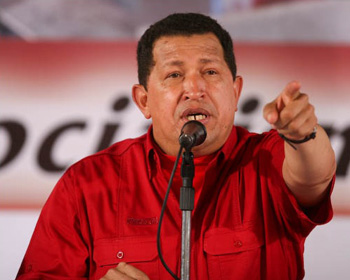
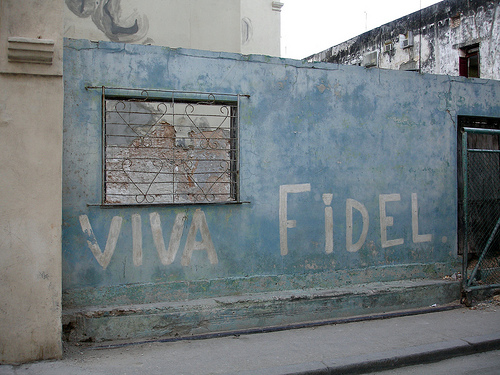
Perspectives for world capitalism 2012 (Draft discussion document) Part Six Latin America<http://www.marxist.com/world-perspectives-2012-draft-6.htm> Written by International Marxist Tendency Tuesday, 10 April 2012 [image: Print]<http://www.marxist.com/world-perspectives-2012-draft-6/print.htm#> In the last year and a half the Arab revolution and the stormy events in Europe have thrust themselves to the forefront. The Latin American revolution, by contrast, appears to be unfolding at a slower pace than previously. Such developments are inevitable, reflecting the combined and uneven character of the process of the world revolution. But there are also important developments in Latin America, with some decisive events being prepared in the coming months. Latin America Latin America and the Caribbean were severely affected by the world recession of 2008-09, with an overall fall of GDP of 2.1 percent in 2009. The severest impact was in those countries whose economies are more closely linked to the U.S., such as Mexico, which suffered a fall of 6.1 percent. However, the region was generally able to recover quickly and strongly in 2010, with a GDP growth of 5.9 percent (6.4 percent for the 10 countries of South America). This economic growth is closely linked, in most cases, to the export of raw materials to Chinathe region now represent 25 percent of Chinas total imports of primary productsand the influx of Chinese investments. In 2010 alone, China invested in Latin America an amount which is double what it had invested in the previous 20 years. China has emerged as the largest export destination for Brazil, Chile, and Peru, and the second-largest export destination for Argentina, Costa Rica, and Cuba. The economic recovery is therefore very much dependant on what happens with the Chinese economy and is already showing signs of slowing down (to an estimated 4.4 percent in 2011 and a forecast of 4.1 percent in 2012). A sudden slowdown in China combined with a return of the US and the EU to recession would abruptly put an end to the regions recovery. [image: Dilma Rousseff, Cristina Fernández de Kirchner and Luiz Inácio Lula da Silva]<http://www.marxist.com/images/stories/latinamerica/lulakirchnerroussof.jpg>Dilma Rousseff, Cristina Fernández de Kirchner and Luiz Inácio Lula da SilvaThis economic growth has been to a large extent responsible for the election of the PTs Dilma Rousseff in Brazil, the re-election of Christina Kirchner in Argentina and the re-election with a massively increased majority of Daniel Ortega of the FSLN in Nicaragua. It has also played a role in the temporary stabilisation of relations between Colombia and Venezuela and the agreement for the return of Zelaya to Honduras brokered by these two countries. At the same time we have seen the heroic movement of the students in Chile, which has lasted for many months and involved hundreds of thousands of students and workers, and has completely broken the post-Pinochet political consensus in the country. A similar movement of the students has taken place in Colombia and we see the beginning of a mobilisation of the students in Brazil. We also saw the opening of the new political stage in Peru with the electoral victory of Ollanta Humala who defeated the candidate of the oligarchy and imperialism, Keiko Fujimori (despite the fact that once in power he moved sharply to the right). In 2012 we will see major battles being waged in the Mexican elections, where Andres Manuel Lopez Obrador has been selected as the PRD candidate, and the crucial Venezuelan presidential elections. The setting up of the CELAC The setting up of the CELAC (Community of Caribbean and Latin American States) has raised some expectations within the labour movement and the youth in Latin America, who see it as an alternative to the Organisation of American States (OAS) under the supervision of US imperialism. The CELAC has set itself the aim of deepening the integration of Caribbean and Latin American countries within a framework of "solidarity, cooperation, complementarity and political agreement," but it is impossible to advance decisively on this road given the capitalist nature of the economy and its national states, the heterogeneity of the countries and governments that make it up, the reactionary character of the national bourgeoisie and their servile dependence on imperialism. *The historical weapon of national liberation, of the expulsion of imperialism, is the class struggle.* Under all circumstances we must explain that without the expropriation of the landlords, bankers and monopolies, both imperialist and Latin American, and without the harmonious socialist and democratic planning of the immense natural resources of the sub-continent on the part of working people there is no possibility of a genuine anti-imperialist liberation of the Latin American countries. Our slogan remains that of the struggle for a Socialist Federation of Latin America as a first step towards a Socialist Federation of the Americas, the only orientation which can offer a way out for the dominated and exploited peoples. Venezuela [image: Hugo Chavez]<http://www.marxist.com/images/stories/venezuela/chavez_flickr.jpg>Hugo Chavez*The Bolivarian Revolution has reached an impasse. The failure to carry out the main tasks of the Socialist Revolution has, as we predicted long ago, led to a chaotic situation of economic stagnation, inflation, factory closures and falling living standards. This, together with the poison of bureaucracy and corruption, has created a dangerous situation where the fate of the Revolution is in the balance.* The Bolivarian Revolution could have been carried through to the end on many occasions, easily and without civil war. Particularly following the defeat of the 2002 coup, it would have been possible to carry out the socialist revolution peacefully. The counterrevolutionaries were demoralized and could offer no resistance. The masses were aroused and confident and had the support of the decisive sections of the armed forces. One word from the President would have been enough to finish the job. But the word never came. *A Revolution is a struggle of living forces. Despite all the mistakes and setbacks, the Bolivarian Revolution still has huge reserves of support in the masses. But these reserves are being paralyzed by the dead hand of the chavista bureaucracy. The problem is one of leadership.* The constant vacillations, swinging from left to right and back again, the unwillingness to take decisive measures against the counterrevolutionary oligarchy means that many opportunities have been thrown away. The balance of class forces is now less favourable than what it was a few years ago. The impending Presidential election signifies a crucial turning-point. Decisive events are being prepared in the next 12-18 months that will have important consequences for the fate of the Venezuelan Revolution. The disappointment of the masses may be expressed in widespread abstention, which could hand victory to the counterrevolutionary opposition. But this outcome is by no means certain. For more than a decade, the main motor force of the Revolution has been the enormous revolutionary élan of the masses. At every key moment, the workers and peasants have rallied to the Revolution. It is possible that, as the date of the election approaches and the threat of counterrevolution looms large in the consciousness of the masses, they will rally once more to give victory to Chavez. *The bureaucracy is the main ally of the counterrevolution and is systematically undermining the Revolution from within. Many of these bureaucrats come from a Stalinist background. That is the source of their cynicism and pessimistic appraisal of the revolutionary potential of the masses. The typical bureaucrat has an arrogant attitude to the masses and a cowardly servility to the bourgeoisie, which he regards as the natural holder of power.* *In addition, it is clear that those sections of the Cuban bureaucracy that are moving in the direction of capitalist restoration in Cuba are pressurizing him to halt the Revolution in Venezuela and arrive at an agreement with the bourgeoisie.* *These elements have completely broken with socialism and communism and have no interest in supporting a socialist revolution in Venezuela or anywhere else. All they want is a friendly bourgeois regime in Caracas that will supply them with oil. But their actions will secure the opposite result. They are preparing the way for the fall of Chavez and the victory of the counterrevolutionary bourgeoisie, whose first act will be to cut all relations with Cuba.* It seems that everything is conspiring to defeat the Venezuelan Revolution, despite the undeniable heroism of the masses. All of the left currents are behaving in a criminal fashion in Venezuela. The ex-Stalinists in the PSUV are playing their usual counterrevolutionary game, supporting the reformists in the leadership of the party. But these ex-Stalinists are not the only obstacle in the path of the working class. The UNT trade union federation, which had an enormous revolutionary potential, was wrecked by the irresponsible adventurism of Orlando Chirinos and the other so-called Trotskyists. These elements were in the leadership of the UNT and refused to do anything to materially further the struggle for socialism. They aborted the movement for factory occupations and workers control. Now Chirinos is organizing demonstrations against nationalization. *For more than a decade, Chavez has served as a rallying point for the revolutionary forces. Chavez may well want to carry through the socialist revolution but he does not have a clear idea of how to do it. Furthermore, he is surrounded by a gang of bureaucrats and reformists and worse. The constant vacillations and swings to the left and right have served to confuse and disorient the masses. The situation has dragged on for too long and people are getting tired.* Chavez is attempting to lean on different classes, swinging first one way and then another. After the election setback in September 2009, he seemed to come quite close to nationalizing the whole of the economy. But he continues to vacillate. The Enabling Law allows him to really take power and expropriate the landlords and capitalists, and to appeal to the workers to take control of the factories and to the peasants to take over the land. But this has not been done. It is the failure to expropriate the landlords, bankers and capitalists that has led to the present mess. We support all of the nationalizations, as far as they go. But partial nationalizations do not work; even less so if the companies are not administered under workers control as part of a rational plan of production for the entire country. Unless you take over the decisive planks of the economy, including the banks, you cannot plan the economy. The policies of reformism are supposed to be practical but in reality they make it impossible for the economy to function. We get the worst of all worlds: the disadvantages of a market economy with all its chaos and anarchy, combined with all the corruption and bungling of a bureaucratic system. The result is chaos. The interests of the bourgeoisie and the bureaucrats are increasingly identified. There is a Fifth Column within the Bolivarian Movement that is conspiring to defeat it from within. This constitutes a mortal threat to the Revolution. But a far bigger threat is the disillusionment and passivity of the masses. The masses are tired of endless talk of socialism and revolution, when the situation is deteriorating. The situation is further complicated by Chavezs illness. One cannot play hide and seek with a revolution. It is time to decide. If it is not decided in one way, it will be decided in another. The elections of 2012 will be the critical point. The mood of disillusionment among a growing layer of the masses could lead to passivity and abstention, while the right wing is energized by the set-backs in the revolution. It is impossible to predict the result, but the final outcome will not be decided by the ballot box alone. It may be that Chavez will win by a small majority. In that case, it is likely that the opposition would cry fraud and bring their supporters onto the streets. This could bring Venezuela to the point of civil war, which the counterrevolutionaries could not be sure of winning. The creation of a popular militia will be an important factor in the equation. The *chavistas* have arms and, despite inadequate training and discipline, could win in an armed clash with the counterrevolutionaries on the streets. This would give a new impulse to the Revolution. Cuba The future of the Cuban revolution has profound implications for the whole of Latin America and beyond. After the collapse of the USSR, Cuba continued to hold out, just 90 miles from the most powerful imperialist country on earth. The positive effect of the nationalized planned economy in the fields of healthcare, education, housing, employment were in stark contrast to the conditions in neighbouring countries in Latin America. Furthermore, there was a generation which was still alive which had lived through the revolution. The other difference was that in Eastern Europe, people compared themselves to Western Europe. Cubans compare themselves largely to Latin America. But now there is a question mark over its future. The collapse of USSR means that there is no longer a powerful Stalinist model with influence and ideological authority. Many people are thinking critically and there are passionate, open debates about what happened in the USSR and drawing conclusions for Cuba. On the other hand, it is clear that elements in the state bureaucracy are going over wholeheartedly to the counter-revolution, and are positioning themselves to reap the benefits from the restoration of capitalism. The most important over-riding factor, however, is the severe economic crisis on the island. Marxism explains that in the last analysis, the viability of a given socioeconomic system is determined by its ability to develop the productive forces. As long as the system could provide the people with good healthcare, education and guaranteed jobs and housing, it could maintain itself, and the ruling party had legitimacy. But when this is no longer the case, social unrest can emerge, together with a questioning of the way society is run and moods of cynicism and scepticism, especially among the youth. Two interlinked factors led to economic crisis: the collapse of the USSR and the world crisis of capitalism. The fall of the Eastern bloc meant the disappearance of subsidies and favourable terms of trade, leaving Cuba completely at the mercy of the world market. Socialism in One Country is a reactionary utopia. If the Soviet Union and China, both huge countries with vast human and material resources, could not defend themselves against the pull of the capitalist world market, how can a small island with few resources and a small population hope to survive? The only real solution is world revolution, beginning by spreading the revolution to Latin America. [image: Viva Fidel]<http://www.marxist.com/images/stories/latinamerica/Vivafidel.jpg>Now extremely dependent on the world market, Cuba has been badly affected by the capitalist world crisis. Services represent 75 percent of GDP. The export of medical services (Cuban doctors in Venezuela) is double the income from tourism. Thus, the Cuban economy has gone from depending on the USSR to depending on Venezuela. The world crisis of capitalism has meant a collapse in prices for Cubas main export (nickel), a drop in remittances from Cubans working in the US, a fall in the tourist industry and lower foreign direct investment. To make things worse, three waves of hurricanes battered the island from 2008 and 2009, causing US$10 billion in damage to housing stock which was already in a poor state. In 2009, Cuba had a current account deficit of US$1.5 billion. Cuba had to default on its payments in 2009/10 to its debtors. This lowered its credit rating for future loans, making it harder to borrow money and imposing further burdens on the population. It was forced to massively cut back on food imports, and to adopt other measures of adjustment. A big part of the salary of the Cuban workers is in social benefits, not actual cash wages. There is more or less free housing, free high quality healthcare and education, and people pay almost nothing for phone calls and electricity. Public transportation is almost free but highly deficient. However, over the last 20 years the health service has eroded. Cubans have the highest ratio of doctors to population, but many are not in Cuba. The education system is also suffering deterioration. Teachers may earn more as taxi drivers, so they will drive a taxi instead of teaching. Above all, the productivity of labour is very low. Since the state can't guarantee decent wages or subsidies, practically everyone is forced to be involved in some kind of illegal or semi-legal activities to cover all the necessities. They must resort to the black market to obtain convertible pesos. In this way a parallel economy develops, with huge mark-ups on basic products. Gradually, the idea takes hold that private enterprise is better than collective solutions. The planned economy is being undermined from within. The idea that individualism and wheeling and dealing are the way forward becomes more dominant. In the absence of workers control, corruption and bureaucracy grows, further undermining the planned economy. Everybody knows that the present situation cannot be maintained, that something has to change. But what? Raul Castro says: we need to be efficient. But how is efficiency to be achieved? There are only two options: either return to capitalist market economics or establish Leninist norms of workers democracy. A section of the state bureaucracy stands for a return to capitalism, although they cannot be open about their real aims. They refer to the Chinese and Vietnamese models of socialism. They say they do not want to abandon socialism, only improve it. But down this road lies capitalist restoration. The economic measures, which have already been taken, all go in the direction of introducing market mechanisms in the running of the economy and pushing people into the small business sector. All these are open doors through which the powerful pressure of the world capitalist market penetrates and dissolves Cubas planned economy. In the final analysis, the fate of Cuba will be determined on the international plane. The general perspectives for world revolution are favourable for the survival of a Cuba with a planned economy on conditions that Leninist workers democracy is established and that it is linked to the international workers movement. But the longer this is delayed, the more the pro-capitalist forces will advance in Cuba, and could reach a tipping point. For us, the key question is the ownership of the means of production. We must try to find a road to the best elements that are fighting against capitalist restoration and defend the nationalized planned economy, while at the same time advocating workers control and the extension of the socialist revolution to Latin America as the only way out. *The victory of the socialist revolution in Venezuela would be a major step in the direction of breaking the isolation of Cuba in the world capitalist market. But the pro-capitalist sections of the Cuban state bureaucracy, with their narrow nationalist mentality, do not see that the failure to carry out the revolution in Venezuela constitutes a serious threat to the future of the Cuban Revolution. By constantly putting the brakes on the Venezuelan Revolution, they are like a man in a tree sawing off the branch he is sitting on.* *[To be continued...]* [Non-text portions of this message have been removed] ------------------------------------ --------------------------------------------------------------------------- LAAMN: Los Angeles Alternative Media Network --------------------------------------------------------------------------- Unsubscribe: <mailto:[email protected]> --------------------------------------------------------------------------- Subscribe: <mailto:[email protected]> --------------------------------------------------------------------------- Digest: <mailto:[email protected]> --------------------------------------------------------------------------- Help: <mailto:[email protected]?subject=laamn> --------------------------------------------------------------------------- Post: <mailto:[email protected]> --------------------------------------------------------------------------- Archive1: <http://www.egroups.com/messages/laamn> --------------------------------------------------------------------------- Archive2: <http://www.mail-archive.com/[email protected]> --------------------------------------------------------------------------- Yahoo! Groups Links <*> To visit your group on the web, go to: http://groups.yahoo.com/group/laamn/ <*> Your email settings: Individual Email | Traditional <*> To change settings online go to: http://groups.yahoo.com/group/laamn/join (Yahoo! ID required) <*> To change settings via email: [email protected] [email protected] <*> To unsubscribe from this group, send an email to: [email protected] <*> Your use of Yahoo! Groups is subject to: http://docs.yahoo.com/info/terms/