http://www.marxist.com/what-the-assad-regime-was-and-what-it-has-become-2.htm
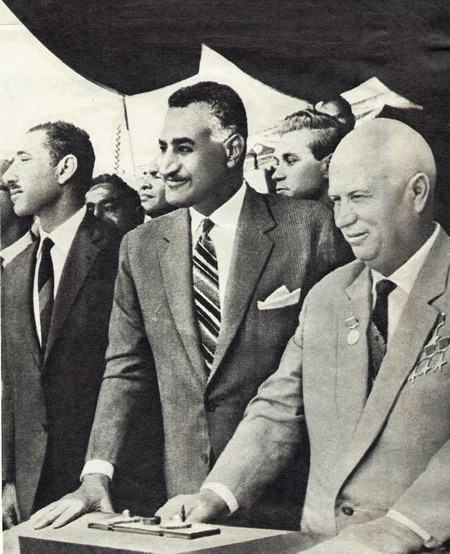
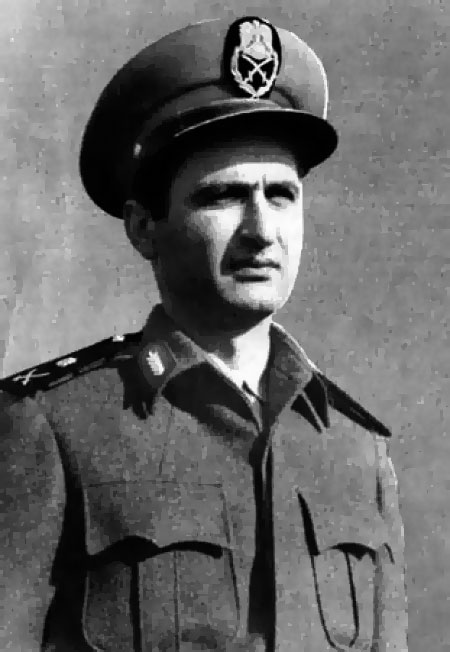
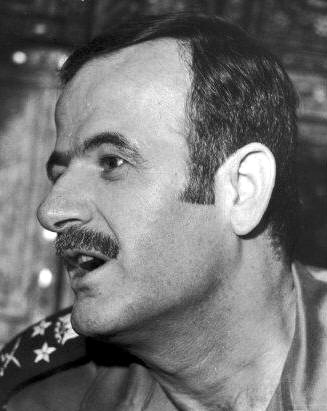
What the Assad regime was and what it has become Part Two<http://www.marxist.com/what-the-assad-regime-was-and-what-it-has-become-2.htm> Written by Fred WestonFriday, 08 March 2013 [image: Print]<http://www.marxist.com/what-the-assad-regime-was-and-what-it-has-become-2/print.htm>[image: E-mail]<http://www.marxist.com/component/option,com_mailto/link,5bce64d86c9bd89b891aa16e2848d976fe6c7afe/tmpl,component/> The false idea that the Assad regime is somehow progressive, is rooted in the events of the 1960s, which were eventually to lead to the setting up of a centrally planned, state owned economy, very similar to that in the Soviet Union. However, a long drawn out process has changed the nature of the Syrian economy from what was fundamentally a planned economy to one where the private sector dominates and this has to be understood if one is to make a correct appraisal of the nature of the regime headed by Assad today.[part 1]<http://www.marxist.com/what-the-assad-regime-was-and-what-it-has-become-1.htm> Early years of the Baath regime The events in the 1950s and 1960s are key to understanding what kind of regime was established by the Baath party coming to power. And the events of those decades can only be understood in the context of the growing social polarisation that had emerged in the 1950s after independence. After the Second World War French imperialism was pushed out, but the country remained under the domination of imperialism. The local bourgeoisie was weak and unable to create a truly modern, independent bourgeois state. It was a compradore bourgeoisie at the service of imperialism. This explains the radical mood among the masses and their desire for social change. In the late 1950s to cut across this rising movement of revolt among the Syrian masses, a section of the military elite turned to Egypt for help. Thus in 1958 a group of army officers pushed for union with Nassers Egypt, and the short-lived United Arab Republic (UAR) came into being. The measures adopted during the UAR period included land redistribution, social welfare for workers and the poor, and a push to industrialise the country. These popular measures, however, were combined with a ban on strikes and also of independent trade unions and peasant organisations. [image: Nasser and Khrustev during the construction of Aswan Dam]<http://www.marxist.com/images/stories/egypt/Nasser_and_Khrustev_during_the_construction_of_Aswan_Dam.jpg>Nasser and Khrustev in 1964What has to be remembered is that at that time Nasser began moving to the left and was adopting measures against imperialism and also against the local capitalists and landlords. That explains why the reactionary military caste in Syria very quickly decided to break the union with Egypt in 1961. Union with Nassers Egypt instead of solving their problems was actually exacerbating them, by introducing precisely the measures this officer caste wanted to avoid! In spite of their wishes, however, the underdeveloped nature of the economy required major investments in infrastructure projects such as roads, ports, and irrigation systems, all of which the local bourgeoisie was incapable of providing. Only the state could provide the levels of investment required for such development. In these conditions, on the basis of capitalism Syria could not emerge from its historical backwardness. The peasants could play no independent role and therefore the task of modernising the country, which could only be achieved through the socialist transformation of the country, fell to the working class. Unfortunately, the workers were led by parties such as the Syrian Communist Party which had no perspective of overthrowing the bourgeoisie through socialist revolution. On the contrary its leaders were constantly seeking alliances with the so-called progressive bourgeoisie, which did not exist! This was the heritage of the Stalinist two-stage theory, which was based on the idea that in backward, semi-feudal countries, the task of the working class was first to support the so-called progressive bourgeoisie in eliminating the remnants of feudalism and establishing a modern bourgeois state. This was the first stage. Only much later, once capitalism had been built and consolidated, would the socialist tasks be posed. In practices in meant that in every revolution the workers had to subordinate themselves to the interests of the bourgeoisie. Thus, we had a situation where the bourgeoisie was incapable of taking the country forward but the working class did not have the leadership required for it to be able to take on the unfinished historical tasks of modernising the country. In these circumstances the military officer caste assumed a much greater role than would normally be the case. The military was constantly involved in the political affairs of the country. These objective conditions, combined with a general worldwide swing towards statisation, such as was the experience in countries like Egypt, Algeria and many other underdeveloped countries that had emerged from the colonial period, determined the events that unfolded in Syria at that time. The impact of the Soviet Union and China also played a key role. Economic growth in both countries was still very strong. Thus the idea that a planned economy was the answer to the problems of these countries was growing among whole layers of the population, and this was also the case among intellectuals, the petit-bourgeois and *a section of the officer caste in Syria, expressed through the development of the Baath party.* The 1963-66 coups In this context, in 1963 a section of the military officer caste carried out a coup. But this coup was very different from the ones that had preceded it. It set in motion a process that was to lead the nationalisation of more and more sections of the economy, including measures of land redistribution and the nationalisation of the private banks, going much further than even Nasser had done, eventually setting up a system modelled on that of the Soviet Union. Thus, in spite of the manoeuvres to avoid radical measures being taken against the local capitalists and landlords, the inability of the local bourgeoisie historically to develop the Syrian economy is what led to the 1963 coup which brought to power a radical wing of the officer caste, in the form of the Baath, to power. A note here also needs to be introduced on the nature of the Syrian army officer caste. As in many underdeveloped countries, many of the army officers were not directly linked to the bourgeoisie, as would be the case in the advanced capitalist countries, through family ties and so on. Very often they came from lower layers in society. That explains for example why so many Syrian officers were from the Alawite minority, at that time considered an oppressed section of society. [image: General Salah Jadid]<http://www.marxist.com/images/stories/syria/General_Salah_Jadid.jpg>General Salah JadidSalah Jadid, who later led another more radical coup in 1966, was an example of such an officer. Such officers sought the modernisation of their countries, and because the local bourgeoisie was tied to the interests of imperialism, they very often came into conflict with the class they were supposed to represent. And with the pre-existing models of the Soviet Union and China, which at that time seemed to provide a successful economic alternative to capitalism, this layer of the officer caste saw economic planning as the answer to the countrys woes. The Soviet Union and China were also attractive to these officers, because they dispensed with any form of democracy, in particular workers democracy, and also allowed for the existence of a privileged, bureaucratic elite. One of the first things the regime did was to carry out agrarian reform taking from the large landowners their estates, and gave some land to the landless peasants. Commercial banks and insurance companies were completely nationalised, and by 1965 most large enterprises had been completely or partially nationalised. As we have seen, because the local bourgeois class were incapable of developing the economy, the state was forced to step in, not partially in this or that industry, but to run the whole of the economy. This provoked an enormous backlash by the Muslim clergy and the business community. The military regime, under pressure from these elements, was moving towards compromise, but this merely led to another coup which was carried out by radical young officers who were much more in tune with the mood of the masses. It was these young officers who went even further in the social transformation of Syria. For them it had become a life and death issue. That explains why in 1966, the Jadid-led coup took place, which finally completed and consolidated the process. By 1966, the bulk of the economy was in the hands of the state, which now controlled the development of natural resources, electricity generation, and water supplies, most industrial plants, banking, and insurance, sections of the transport system and most of foreign trade and the domestic wholesale trade. The government also controlled most of the investments, credit and pricing of many commodities. What has to be noted here is that the radical army officers proceeded to set up a militia and a massive peasant army to finally break the power of the old rotten, pro-imperialist semi-feudal, semi-capitalist regime. In the process a new state machine was created, with almost the whole of industry in state hands and a large part of the land as well. What was taking place was a struggle between revolution and counter-revolution. The leaders of the Baath regime, in attempting to forestall counter-revolution were forced to lean on the masses, and this is how Ted Grant described the process in 1965: In the early part of January, the Baath Socialist Party Government nationalised 106 of the biggest industrial concerns and banks with capital of over £25 million. To break the possible resistance of the capitalists, special courts were organised with powers up to the death penalty for anyone trying to obstruct these new measures. Within a week, the capitalists tried to organise a counter-revolution: merchants and small shopkeepers organised a capitalist 'strike' of protest, closing their shops and bazaars. The reactionary heads of the Moslem church in Syria joined in the conspiracy and denounced the government as being against God and religion. They launched together a campaign of civil disobedience and demonstrations. However, the government had cast the die. To retreat would have meant the collapse of the government and probably execution for the leaders of the Baath Socialists. Demonstrators were carried away by the truckload; shops that remained closed were broken open and their stock impounded; 22 leading merchants were stripped of their possessions; the power of the religious foundations were transferred to the ruling juntaincluding the power to appoint and dismiss Moslem clergymen; and eight ringleaders of an extremist religious organization were sentenced to death for plotting to assassinate the Head of State, General Hafiz. To carry out the struggle successfully, the Baath government had to appeal to the workers and peasants of Syria for support. On Tuesday, January 26th, in response to an appeal, thousands of peasants flocked into Damascus to demonstrate their fervent support for these measures. As the *Observer *correctly comments: In Syria, the Baath's survival and stern repressive measures will have profound effects. The private sector, has been dealt a mortal blow, at least insofar as any large scale private enterprise is concerned. The government has now no choice but to pursue to the end its socialisation of the economy. At home this means that power has passed decisively away from the bourgeoisie of the cities to the more radical countryside and to the peasant army on which the regime depends. Thus these events mark the decisive beginning of the collapse of capitalism in Syria. What should be the attitude of advanced workers and of the Labour movement to these events? First, it is necessary to give unconditional support to the measures of the Baath Socialist Party against capitalism in Syria, a capitalism dependent on imperialism in the past for its survival and sustenance. But it is also necessary to understand the background to these events, their limitations, and the course of the revolution. (20th February 1965) Genuine Marxists supported the nationalisations that were carried out back then. At the same time, however, they had no illusions about the nature of the regime. Although the widespread nationalisations were progressive, the lack of workers democracy, of workers control and management of industry, meant that what had come into being in Syria was a system like that in the Soviet Union, i.e. a totalitarian one party dictatorship, with power concentrated in the hands of a privileged bureaucracy resting on a state owned economy. This was not socialism. For such a system to move towards genuine socialism would have required a second, political, revolution. As Ted Grant pointed out: The Syrian regime, deformed and Bonapartist right from its inception, *rests on the peasant army*. It will lay the basis for an industrial plan by ending the senseless anarchy of capitalism. But because there is no check of workers' democracy, it can only end in creating a new privileged strata of managers, army officers and bureaucrats, as in Russia and China. To introduce this [workers' democracy] will require a new revolution, not a social but a political revolution. The masses in these countries will have to pay with this second revolution because of the tardiness of the Socialist revolution in the West. (20th February 1965) These quotes demonstrate the superiority of Marxism in its understanding of the processes that unfolded in Syria at the time. Marxist harboured no illusions in the regime, while at the same recognising and supporting whatever progressive measures it carried out. The new regime was what Marxists would define as a deformed workers state, i.e. a state where the economy is state owned and planned, but power is in the hands of a bureaucratic elite standing above the workers. Permanent Revolution in distorted form [image: Senior officials in the Baath Party 1969]<http://www.marxist.com/images/stories/syria/Senior_officials_in_the_Baath_Party_1969.jpg>Senior officials in the Ba'ath Party, 1969The 1963 coup and the coups that followed are an example of permanent revolution, albeit in a distorted manner. Leon Trotsky had explained how, in the more backward underdeveloped countries emerging from colonialism, the working class would have to take the lead in carrying out the tasks that belonged to the bourgeois revolution, i.e. breaking the grip of the old feudal ruling class, and developing a modern industrial nation. However, he also explained that because of the reactionary role of the nascent bourgeoisie in these countries, and with the working class at the head of the revolution, the struggle would inevitably move towards socialism. In Syria due to the political forces leading it, the Syrian working class did not emerge as an independent leading force in society. In these conditions, the radicalized layer of petit bourgeois army officers stepped in and carried out many of the tasks that belonged to the working class. It was because of this, as we have already explained, that the regime that emerged was Bonapartist in nature, while resting on nationalized property relations. The Ideological Report of the Syrian Baath Partys 6th Congress in October 1963 states that the aim of the party was to build a socialist society. It also referred to the need for Agrarian Reform, the nationalization of commercial and industrial enterprises, economic planning and the setting up of a state bank. At the same time it stated that the Trade Unions were to be brought under state control. What this meant was that no independent workers organizations were to be allowed, again copying the Soviet Union. The first to be affected were the private entrepreneurs, the big traders, big landowners and bankers, many of whom fled the country with their capital. In 1967 the private schools were nationalized. This was a measure against the religious foundations. On the international arena the country turned to the Soviet Union for both military and economic aid. De facto, the country had come under the Soviet Unions sphere of influence, in spite of the fact that Brezhnev had not pushed for any such measures to be taken. It was the state owned centrally planned economy of Syria that provided the basis for rapid expansion and economic growth. In the 1960s as a whole GDP per capita expanded by an overall 80%, and in the 1970s the figure was 336%. The early years saw the most radical measures being taken. These were the years when the most radical wing of the Baath was most influential in determining the regimes policy. The rise of Assad However, as we have seen many times in history, once the more revolutionary wing has played a role in establishing and consolidating the regime, given the very nature of the more conservative bureaucratic apparatus that is put in place, the more pragmatic elements within the regime take over and displace the more radical elements. This explains the frequent changes at the top of the regime between 1964 and 1966, and the subsequent struggle between Jadid and Assad, which reflected the struggle between the more radical and the more conservative wings of the Baath party. This can be compared with all the obvious differences in the circumstances to what Trotsky described as the Stalinist Thermidorean reaction after the revolution in Russia. It was this process that led to the rise within the regime of Hafez al-Assad, the father of Basher, the present dictator of Syria. Initially the old Assad had to share power with some of the more radical leaders, but eventually he put on the regime the stamp of the so-called pragmatist apparatchiks who wished to push to one side the revolutionaries. The key leading figure in the Baath party in the early days of the regime was Salah Jadid, a Baathist army officer. Particularly after the defeat in the 1967 war against Israel tensions began to grow within the regime between Jadid and his followers in the Baath on the one side and a more conservative faction around Defence Minister Hafez al-Assad that argued for a more moderate stance on Jadids policy of widespread nationalisation. Jadid had the support of most of the civilian side of the Ba'ath, but Assad, using his position as defence minister gradually gained control of the military wing of the party. In 1969, Assad proceeded to remove Jadids supporters from their positions of influence. [image: Hafez Al-Assad]<http://www.marxist.com/images/stories/syria/Hafez_Al-Assad.jpg>Hafez Al-AssadThe simmering conflict between the two factions eventually led in 1970 to Jadid attempting to remove Assad and his supporters at the Baath party congress, but it was the latter, through his control of the army, that successfully launched an intra-party coup against Jadid, who was arrested, and was kept in prison, and later under house arrest, until his death in 1993. The whole process led to the creation of a highly centralised regime, with the military playing a key role at all levels, even of the economy. Together with this we saw the growing Alawite nature of the regime, Hafez al-Assad belonging to the Alawite minority. The Alawite minority within Syria was always considered an oppressed layer and it is not by chance that it is from this minority that a layer of radical officers emanated. Hafez proceeded to promote Alawites to the highest levels of the state and security forces. To this day some of the key forces are Alawite dominated. What Syria became through this whole process was a totalitarian regime based on a state owned, centrally planned economy, fundamentally the same as that in the Soviet Union. As we have seen above, initially this provided a big stimulus to economic growth. In the decade of the 1970s GDP grew by an average annual rate of 9.7%, much higher than was achieved in the advanced capitalist countries, even during the height of the post-war boom. Together with this growth went many social reforms in welfare, education, healthcare and so on. And it was this that stabilised the regime for a period. Even in the bourgeois media this is often referred to as the socialist period; the economy is referred to as socialist. It was of course not genuine socialism, as there was no workers' democracy. It was a terribly deformed caricature of genuine socialism. Infitah opening up What happened subsequently to the Syrian economy, however, is of interest to us in understanding what Syria has become today. Already by 1970, once Hafiz al-Assad had strengthened his grip on power, and in the aftermath of the defeat in the 1967 war against Israel, a process of opening up of the economy to private investment had begun This economic opening was referred to as infitah, albeit a modest or moderate one. Some degree of private capital was allowed in various sectors, such as trade, real estate and services. Assad sought help from expatriate Syrian capitalists and foreign investors. In this, some of the previously expropriated property was handed back to its owners in an attempt to attract private investment. In this first infitah the investment that was attracted proved to be mainly of a speculative nature, an indication of the fact that those investing did not trust the regime in power. In spite of the modest infitah of the early 1970s the state continued to control most of economic output. However, the rapid growth of the 1970s peaked in 1981, when growth was 10.2%, and then sharply decelerated to 3.2% in 1982 and in 1984 went into reverse with an actual fall in GDP of 2.1%. At this time the state still controlled over 60% of output and through various means had a major influence over the smaller private sector, but the system was clearly entering into crisis. All the limitations of bureaucratic control over production were coming to the surface. This was taking place at the same time as the economy of the Soviet Union and the East European Bloc was facing a major crisis. This is when Gorbachev came to power (1985 to 1991) and promoted his policies of Glasnost (openness) and Perestroika (the reconstruction of the political and economic system of the country). Perestroika aimed at the introduction of some semi-private businesses and to create a semi-free market system. It was evident that within the Soviet bureaucracy the idea was growing that the market worked better than planning. This has to be understood in the context of a collapsing economy in the Soviet Union, while capitalism in the West had partially recovered from the crisis of the 1970s and was back in boom. One also has to add to this the reforms introduced by Deng in China, where Special Economic Zones were set up in which capitalist relations were allowed to develop. The same process that we observed in the Soviet Union under Gorbachev and in the East European bloc as a whole could be seen within the Assad regime in the mid-1980s. In 1986 the state in Syria still controlled a majority of the economy, but measures were introduced, known as the second infitah, to open up the economy somewhat. More private sector activity and investment were allowed and government controls were loosened to allow a degree of private trade in the importation of certain goods. This was the beginning of the dismantling of the state monopoly of foreign trade, although over 100 of the key foreign commodities were still solely imported by state trading organizations. Also, in 1986 the possession of foreign currency was regulated and the limitations on importations introduced in 1977 and generalized in 1981 were still in place, an indication of the fact that the state was still holding on to its means of control over the economy. The government did, however, establish six free trade zones clearly taking a lead from Dengs policies in China, where local traders and manufacturers were allowed to freely import, process, and re-export goods. Private investment, both domestic and foreign, was allowed in some sections of industry. Measures such as tax exemptions and cheap credit were introduced to facilitate the private investors. The old state owned, centrally planned economy, however, had not been broken down. The state sector still continued to dominate, although by now the private sector dominated in agriculture and small trade. The private sector was also growing in influence in light industry, construction, transportation and tourism. At this stage, the nature of the regime had not fundamentally changed, although processes similar to what we have seen in China were taking place: the private sector was growing in importance. The regime was still at the stage of seeking market stimuli to generate growth within what remained substantially a planned economy. *[To be continued...]* Home <http://www.marxist.com/> » Middle East<http://www.marxist.com/middle-east/> » Syria <http://www.marxist.com/syria/> [Non-text portions of this message have been removed] ------------------------------------ --------------------------------------------------------------------------- LAAMN: Los Angeles Alternative Media Network --------------------------------------------------------------------------- Unsubscribe: <mailto:[email protected]> --------------------------------------------------------------------------- Subscribe: <mailto:[email protected]> --------------------------------------------------------------------------- Digest: <mailto:[email protected]> --------------------------------------------------------------------------- Help: <mailto:[email protected]?subject=laamn> --------------------------------------------------------------------------- Post: <mailto:[email protected]> --------------------------------------------------------------------------- Archive1: <http://www.egroups.com/messages/laamn> --------------------------------------------------------------------------- Archive2: <http://www.mail-archive.com/[email protected]> --------------------------------------------------------------------------- Yahoo! Groups Links <*> To visit your group on the web, go to: http://groups.yahoo.com/group/laamn/ <*> Your email settings: Individual Email | Traditional <*> To change settings online go to: http://groups.yahoo.com/group/laamn/join (Yahoo! ID required) <*> To change settings via email: [email protected] [email protected] <*> To unsubscribe from this group, send an email to: [email protected] <*> Your use of Yahoo! Groups is subject to: http://docs.yahoo.com/info/terms/