http://www.marxist.com/marxism-falklands-malvinas-war140607.htm
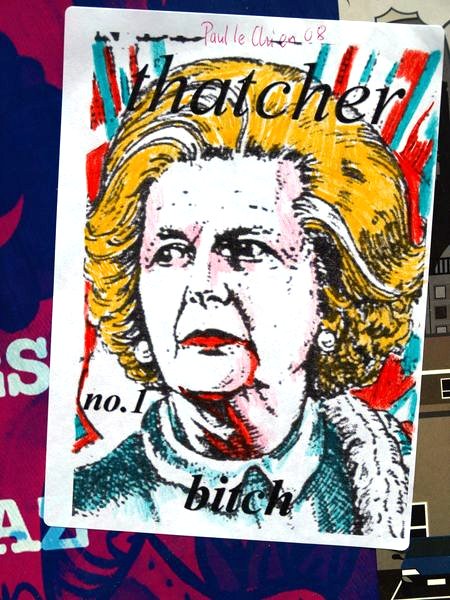
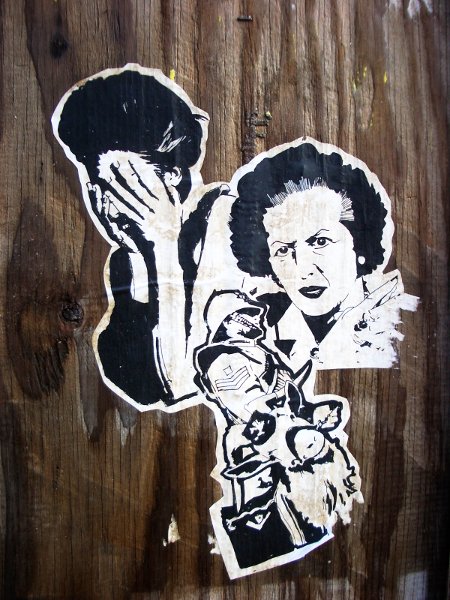
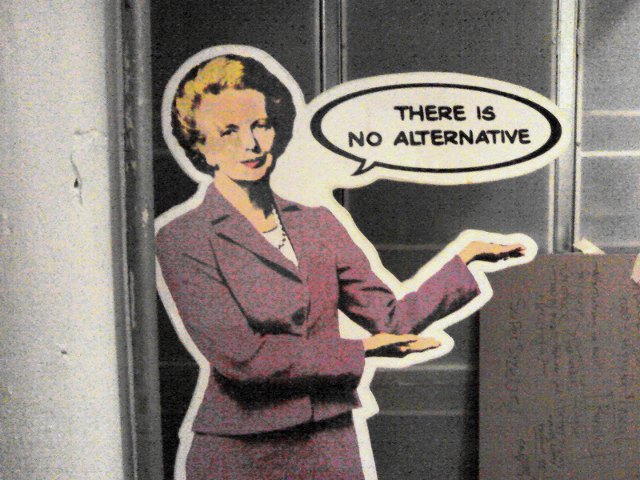
Marxism and the Falklands/Malvinas war<http://www.marxist.com/marxism-falklands-malvinas-war140607.htm> Written by In Defence of MarxismThursday, 14 June 2007 [image: Print]<http://www.marxist.com/marxism-falklands-malvinas-war140607/print.htm>[image: E-mail]<http://www.marxist.com/component/option,com_mailto/link,8ce9e57f888e344a1cc1ec905ed9d7211ad82d3c/tmpl,component/> As the media remind us of the war that took place 25 years ago, we remind our readers of our analysis of the question: The Falklands Crisis - A Socialist Answer<http://www.marxist.com/britain-falklands-crisis020402-10.htm> by Ted Grant in 1982, The Falklands War - 20 years later<http://www.marxist.com/britain-falklands-war-20yrs-later020402-9.htm> by Phil Mitchinson in 2002, Reply to Luis Oviedo - Part Three - The Malvinas: Marxism and War<http://www.marxist.com/luis-oviedo-malvinas-war170204-7.htm> and Reply to Luis Oviedo - Part Five - For a class policy<http://www.marxist.com/luis-oviedo-class-policy190204-7.htm> by Alan Woods in 2004. -------------------------------------------------------- http://www.marxist.com/thatcher-thirty-years-on.htm Thatcher: Thirty Years On<http://www.marxist.com/thatcher-thirty-years-on.htm> Written by Terry McPartlanTuesday, 09 June 2009 [image: Print] <http://www.marxist.com/thatcher-thirty-years-on/print.htm>[image: E-mail]<http://www.marxist.com/component/option,com_mailto/link,30be644c7c7381b5b3fcc44621c89ef6b8bb69fe/tmpl,component/> "Where there is discord may we bring harmony..." said Margaret Thatcher 30 years ago this May when she was elected as British Prime Minister in 1979. Some politicians are remembered for their achievements, in Aneurin Bevan's case the founding of the NHS; others like Tony Blair will be remembered as warmongers and traitors to the ideals of the Labour movement. Meanwhile John Major will be remembered, if at all, for his ineffectual personality and his blandness. But very few will have been hated by working people with such intensity as Margaret Thatcher. Destruction of Industry [image: Thatcher remains one of the most hated British politicians. Photo of street art by unusualimage.]<http://www.marxist.com/images/stories/britain/unusualimage-thatcher_street_art.jpg>Thatcher remains one of the most hated British politicians. Photo of street art by unusualimage.Margaret Thatcher presided over the destruction of more industry in Britain than that destroyed by the Luftwaffe in the Second World War. She plotted to smash the National Union of Mineworkers and to dismantle the welfare state and all the reforms that had been fought for over decades by the working class. She slashed welfare payments, attacked the old and the sick and basically co-ordinated a one sided civil war against the British (and Irish) working class. There were many people in Britain whose lives were cut short by unemployment, by sickness and poverty as a result of the politics of Thatcherism, many families that fell apart, many children who went hungry. Yet, she was admired by Tony Blair and Gordon Brown, who wants her to have a state funeral, the sort of event normally reserved for royalty. But how did Margaret Hilda Roberts, the grocer's daughter from Grantham, come to power in the first place and how did she get away with so much for so long? Thatcher's rise to power in the Tory party reflected two different processes. On the one hand the power of the Tory grandees, the big landowners and the industrial bourgeoisie, was on the wane by the early 1970s. Britain's long slow industrial decline which Trotsky alluded to in 'Where is Britain Going' written in 1925 was only accelerated by the War and the dominance of US imperialism, the development of the colonial revolution in the Post War period and the rise of smaller regional powers in the likes of Latin America and the Middle East. Relative Decline On the other hand this relative decline was superimposed on the definitive end of the Post War boom and the beginning of a period of general political and economic crisis in the entire capitalist world. The balance of power within the British bourgeoisie and internationally had tipped towards the financial bourgeoisie. In addition the British bourgeoisie were in a state by the mid seventies. The waves of industrial struggle, including the two national miners' strikes, one of which resulted in Ted Heath being dumped from power in 1974, had radicalised the working class and society was becoming increasingly polarised. On the one hand many workers were beginning to draw revolutionary conclusions, while on the other hand sections of the Tory Party were drifting to the right. Revolution and counter revolution develop side by side after all. That is because of the class nature of society was as close to revolution as it has been at any time since the General Strike of 1926 in the 1970s as Thatcher was clawing her way to leadership of the Tory party. The selection of Thatcher represented the ruling class rearming for a period of storm and strife. They had abandoned the politics of consensus dominant in the Post War boom and were preparing for confrontation with the working class that they saw as necessary. Thatcher was their chosen instrument. Thatcher represented a new brand of Toryism, ostensibly more middle class and "ordinary" than many of their predecessors. Thatcher and Norman Tebbit - the Chingford Skinhead - sought to appeal to the backward prejudices of the middle class and to layers of the most backward workers. Thatcher was heralded as possibly the first woman Prime Minister. She would understand therefore the needs of ordinary women and so on. Hardly a day went by without her appearing on telly armed with a shopping basket bemoaning the lot of the "little people." The fact is however that she was anything but ordinary. Married to oil millionaire Dennis Thatcher, she represented the most vicious and small minded layers of the bourgeoisie. It used to be said that the British bourgeoisie thought in terms of decades and centuries. At their height they dominated the Asian sub continent and it was said that the sun never set on the British Empire. But the social forces that underpinned Thatcherism were those of finance capital. The laws that she observed were those of the balance sheet and the speculator, where decisions were counted as long term if they had a currency of 10 or more minutes. A similar process had lead to the election of Ronald Reagan in the USA. Reagan, an ex Hollywood cowboy actor represented a sharp turn to the right in US politics. Even more than George W Bush however Reagan was a mouthpiece, a front man for the ruling class. Class Compromise Dead The ideas of class compromise and a formal commitment to the goal of full employment that were dominant in both big parties during the period of the Post War boom and were based on the theories of Keynes were abandoned. Thatcher embraced monetarism and neoliberalism. Her ideology was a ragbag of reactionary prejudices and crackpot economic theories, but they represented a coherent set of ideas and programme to attack the working class with. It's no surprise that the dominant economic and political ideas that Thatcher and Reagan supported were those of the Chicago school of economics - ideas known as monetarism - that had been promoted by the likes of Milton Friedman and Hayek. These ideas had been tried before of course. They had been put into practice in Chile under the murderous military regime of General Pinochet. There the 'Chicago Boys' had advocated tight monetary controls ostensibly to reduce inflation - which means smashing up the public sector, mass privatisation and attacks on the poorest in society. "No Such Thing as Society" [image: Margaret Thatcher launched a vicious attack on the working class, using the police to quell dissent. Photo of anonymous street art by bixentro.]<http://www.marxist.com/images/stories/britain/bixentro-thatcher_street_art-1.jpg>Margaret Thatcher launched a vicious attack on the working class, using the police to quell dissent. Photo of anonymous street art by bixentro.This was combined with a political programme to advocate self help, standing on your own two feet, and all the other alleged petty bourgeois virtues. Thatcher went as far as to say that there was no such thing as society. This was the green light for a massive onslaught on the working class, their communities and their organisations. This onslaught wasn't restricted to Britain either. It generated a programme of liberalisation and deregulation, that was ruthlessly applied by the IMF and the World Bank across the ex-colonial countries. Thatcher dressed up this reactionary programme as the logic of commonsense and thrift, armed only with a handbag (and a small onion for when she needed to shed a tear - according to Private Eye) she set off to put the world to rights. Thatcher's programme of privatisation and so called "popular capitalism" was wrapped up with the idea of a "property owning democracy", where everyone owned their own council house and had shares in the gas board and the electricity board. They would travel to work on privatised buses, or privatised tubes and trains. Because everyone was thereby "standing on their own feet" they would forget about the evil ideas of socialism and accept the god of "market forces". The fact is though that the assault on the public sector had much more to do with providing productive fields of investment for the bosses. Compulsory competitive tendering and the internal market within the health service served to batter down wages and conditions across the public sector. In the service sector the vast majority of costs are in wages. The logic of compulsory competitive tendering meant that private companies could undercut council services, by the very straightforward policy of cutting wage levels and staff numbers. Thus, once they had also built their percentage profit into the equation, resulting in a massive growth in the exploitation of some of the poorest sections of the working class. Of course Thatcher also opposed the minimum wage as it would harm industry. The recession between 1979 and 1981 had a huge impact on the working class. Unemployment shot through the roof as millions lost their jobs. What was the Tory answer? These, they said, were weak old fashioned industries that were uncompetitive and overstaffed. In other words they took the same attitude as their Victorian predecessors; they introduced laissez faire capitalism. In other words Thatcher did absolutely nothing; the Tories just let the industries fold with calamitous results for working class communities up and down the country. What about the unemployed? Well, they were lazy, layabout shirkers, moaning minnies and scroungers. The Tories slashed the number of tax inspectors and took on hundreds of people to police the benefit system. There were huge tax cuts for the rich while benefits were cut and people were encouraged to get on their bikes and look for work. Did the medicine work? Monetarism meant that unemployment went higher sooner in Britain than in any other major capitalist country. Neoliberal policies didnt solve anything. They are now totally discredited and the policies introduced by Thatcher in the 1980s are seen as being a factor in the present crash. Recession But the effects of the recession were such that whole towns were devastated. Well over 3 million were on the dole, while at least a million more werent counted. The Tories changed the way that they counted the unemployment statistics some 20 times. New Labour has only continued massaging the figures. Towns like Consett had grown up around the steel works and went into freefall when they closed down. The Wearside shipyards, huge swathes of industry in London, Liverpool, Manchester, Teesside, Tyneside and the cotton mills in Lancashire and West Yorkshire were written off as sunset industries. In one town in the North East - North Shields - which had a working population of around 40,000, 10,000 jobs were lost. The effect was particularly felt by the youth. Youth unemployment hit 50% in some areas. This was at a time when only a minority went into sixth form and even fewer into university. In many industrial areas it was said that people walked out of the school yard into the mill, the pits or the shipyards. Then all of a sudden the apprentice schools closed down and the factory gates were shut. In the summer of 1981 the anger of the youth erupted into rioting, the most famous examples being the riots in Brixton and Toxteth. Essentially they were outbursts of deep anger and frustration which were aggravated by huge youth unemployment, racist policing and terrible social conditions. Young people were massively politicised, there was a huge polarisation. Everything was political, music in particular and there was a huge radicalisation of young people. As for Thatcher, she was public enemy number one for working class youth. She was and still is deeply resented and hated. Many people in their 40s and 50s today represent the lost generation who suffered years of unemployment and werent given the skills to get work when the boom years eventually came. Left on the March The left in the Labour Party had been developing throughout the 1970s and by 1981 Tony Benn had come within a whisker of winning the deputy leadership of the Labour Party. Under these conditions its no surprise that the Marxist led Labour Party Young Socialists mushroomed. But far from winning the 1983 general election Labour was slaughtered, the Tories gained seats and the right wing began to regain control of the party. In Ireland Thatcher is remembered for being the prime minister who callously sent the 1981 hunger strikers to their deaths. Although it is now clear that the Tories had been in contact with the Sinn Fein leaders during the hunger strikes, the public persona was of no discussions with terrorists and no negotiations. The net effect of Thatchers stubborn refusal to negotiate was probably to prolong the troubles for years. Falklands Factor[image: Margaret Thatcher used the Falklands War to bolster support for her ailing government.]<http://www.marxist.com/images/stories/britain/Margaret_Thatcher_1983.jpg>Margaret Thatcher used the Falklands War to bolster support for her ailing government. One of the biggest factors in the victory of the Tories in the general election was the Falklands war. Out of the blue, or at least it appeared to be, the Argentinean army invaded the Falklands Islands or Malvinas a small bleak and utterly inhospitable group of islands with a tiny population massively outnumbered by sheep, penguins and elephant seals. The Argentinean Juntas invasion unleashed a wave of jingoism on behalf of the press, which Thatcher used to present herself as a great war leader, casting herself as the successor to Winston Churchill, Joan of Arc and of course Britannia. The Tories sent a task force to the South Atlantic to retake the islands in what was essentially the most expensive election campaign in history. Its clear that the Argentine military were surprised by the level of the response from the British. But for Thatcher it was too good an opportunity to miss, an opportunity to play on all of the long faded traditions of the British Empire, Rule Britannia and so on by showing the Argies who was boss. The response of the Labour leadership on the other hand was seen as weak and vacillating. The Marxists opposed the war, and called for a general strike in both Britain and Argentina against both Thatcher and dictator Galtieri. Far from being inevitable or necessary the Falklands war was essentially a fluke, an empty net. SDP Defection Apart from the Falklands factor another factor in Labours defeat in 1983 was the confusion spawned by the right wing split led by Roy Jenkins, Shirley Williams, David Owen and Bill Rogers. The SDP had been established in 1981 after a section of the Labour right wing, frightened for their careers decided that they would split in an attempt to cut across the growing support for the Labour Party. After initial polls indicated that the SDP would win over 50% of the vote it collapsed, but still managed to affect the Labour vote, giving Thatcher another accidental boost. The effect in the Labour Party was further polarisation and a further development of the left. The ruling class was in danger of losing control of its second eleven. As the Labour ranks moved left they engineered the split away of the Social Democratic Party from the Labour Party that kept Thatcher in power. It should never be forgotten that though she won two landslides, Thatcher never got the support of more than 43% of those voting. For most of her reign she was miles behind in the opinion polls and deeply unpopular in the country. *Under Thatcher, class struggle was the order of the day.* Decline and fall The period after 1983 saw the right wing in the Labour Party trying to take on the left, starting with the witch hunt against Militant. The polarisation in the Party reflected the aftermath of the failed policies right wing Labour Government under Jim Callaghan, but it also reflected an attempt by the right wing to regain control and begin to roll back the democratic reforms inside the Labour Party that had been won over a whole period in the 1970s and 1980s. Thatchers assault on the public sector was accompanied a greater and greater concentration of power in the hands of central government and the cabinet. The huge unpopularity of the Tories throughout the working class areas meant a radicalisation within the Labour Party that was reflected in the local authorities. Thatcher and her environment minister Michael Heseltine began a war against municipal socialism. Sales of council houses and privatisation were key to this, but over time a whole series of measures were introduced to cap spending by local authorities, create new school management structures to take power away from elected councils and close loopholes that allowed for creative accounting by councils, and eventually led to the introduction of the poll tax. If the councils came up with a new ploy the Tories would introduce new regulations to ban it. This process reduced massively the councils capacity to meet local needs and resulted in the powers of local authorities being hugely curtailed. Local democracy was turned into an empty shell. The GLC and the Metropolitan County Councils were abolished, ostensibly to save money and get rid of waste, but in reality the main reason was that Ken Livingstone and other municipal leaders were in opposition to Tory policy. Anti-union Laws Law after law was passed to try and tie down the trade unions: laws against secondary picketing, laws about ballots, how many pickets you could have, postal ballots, trade union elections, the closed shop and the political levy were all introduced in attempt to smash the power of the trade unions. The Tories passed regulations allowing the courts to sequester trade union assets and funds and to ban trade unions at GCHQ. The trade unions are the defensive organisations of the working class. By 1979 the TUC organised some 13 million workers, around 50% of the working population. The Tories were terrified of the potential power of the working class, particularly after the experience of the 1970s. But the fact that Thatcher got away with this attack was certainly not inevitable. It reflected the weakness and cowardice of the right wing trade union leaders and of the Labour leadership. Weakness invites aggression, so the Tories just piled up the legislation. Miners' Strike The role of the trade union leaders was most dramatically evidenced during the Great Miners Strike of 1984-85. The Tories threw every law in the book against the miners and their union, the National Union of Mineworkers, in particular. Not only that, but the Tories effectively created a new national police force which once again concentrated greater and greater power in the hands of the government. The response of the trade union leaders and particularly the Labour leaders was to hide behind Thatchers new laws and to denounce what the Tories termed picket line violence. The truth is though that it wasnt the unarmed miners in their trainers, but the riot police and troops in their full body armour or sitting on horses wielding truncheons who were the main protagonists in the picket line violence that went on. The miners had mass support among the working class. Even if the trade union leaders had lifted their little finger; there is no doubt that the miners could have won the strike. The lorry drivers, power workers and the dockers could have shut off the supplies of coal and power within weeks. The role of the leadership was absolutely crucial, but none came. As Bernard Ingham, Thatchers Press Secretary, commented recently, it was a close run thing. It was the Labour and trade union leaders, the forerunners of New Labour, who managed to turn it into a defeat. The defeat of the strike had a demoralising effect on the trade union movement, but especially on its leadership. The idea of new realism, sweetheart deals and no strike agreements were posed against militant action. After all if the miners couldnt win how could anyone else, went the argument? This was the justification for two decades of class collaboration and the steady drift to the right within the Labour Party under Neil Kinnock. Kinnock goes Right Kinnock sought to disprove the general belief that Labour was a left wing party. He attempted to present Labour as moderate and modern, ditching policy after policy, rolling back the reforms, closing down the youth wing, the Labour Party Young Socialists, and attempting (highly unsuccessfully) to witch hunt Militant and other sections of the left. Kinnock famously stabbed Liverpool and Lambeth Councils in the back when they fought the Tory spending cuts. But all this manoeuvring and tacking to the right just invited more attacks. The latter part of 1980s is associated with economic boom and the generation of Thatchers children, yuppies carrying mobile phones the size of bricks, financial deregulation and the collapse of Stalinism. However, despite the boom, the reality was very different for most workers. The North-South divide was accentuated as the financial boom in London sucked in jobs. There was a housing boom which collapsed after Britain fell out of the ERM in 1992 under John Major, leaving hundreds of thousands in negative equity, but thats another story. Despite the boom, the financial and economic straitjacket on the public sector in particular meant the hardship carried on. But the boom had the effect of underpinning the ideas of reformism in the Labour movement. Many of the New Labour leadership bought massively into the idea that capitalism had solved its problems, after the economic crash in 1987 was prevented from turning into a slump by the co-ordinated action of the western governments. As the Marxists explained at the time, this only had the effect of making the recession all the worse when it eventually arrived. The rush to the right in the Labour Party was so dramatic that as Dave Nellist , Labour MP for Coventry (and a Marxist), said at the time, the easiest way to end up on the left of the party was to stand still. Former lefts like David Blunkett and Margaret Hodge led the charge rightward. But Thatchers luck was beginning to run out. The Tory party was deeply divided over the question of the Europe Union and what role Britain was to play in it. This reflected the conflicting interests of different sections of the ruling class; the industrialists who were trading with Europe and the bankers who placed their trust in trading in sterling and close relations with the USA for example. The tensions within the Tory Party were evident and it was becoming clear that the trappings of high office and eleven years in power were resulting in the Tories becoming associated with sleaze. Poll Tax But the first nail in Thatchers coffin was driven in by the 16 million people who refused to pay the poll tax. Thatcher saw this as one of the flagships of her 1987 government. Why, she said, should poor little old ladies living in 5 bedroom mansions pay the same rates as a family of 6 living in a three bedroom council house? The rates, a broadly progressive local tax on property values, were always a source of grumbling among the Tory party rank and file, numerous letters were written to the Daily Telegraph and local newspapers by angry rate payer and company, mostly bemoaning the council spending money on terrible Bolshevik policies like nurseries or translation services. So in an attempt at populism Thatcher decided the rates had to go. The poll tax proposed to replace the rates was a flat rate tax on local residents. Why should a duke pay more than a dustman, asked Tory Minister Ridley? The effect was dramatic. The Community Charge, as it was known, meant enormous bills for the poor and overcrowded and big discounts for the rich. At the same time, it also meant that the local authorities could only control directly around 25% of their budgets, whereas previously they had controlled around 50% (including rates on businesses, which were now set by the government). The effect was immediate and dramatic. Anti poll tax unions sprang up in every town and estate. Millions of people simply couldnt afford to pay and many more refused to do so. Thousands were dragged to court and many ended up being jailed. It was one of the most obvious pieces of anti-working class legislation in decades. On 31st March 1990 the Tories organised a police assault on what had been an overwhelmingly peaceful demonstration of 250,000 people. Young and old, political and non political the march was gigantic. Whats more it was organised without the support of the leaders of the unions or the Labour Party. The Labour leaders had placed all of their eggs in the basket of fighting for this or that amendment to the legislation, break the law? Heavens no! The march turned into a pitched battle, South Africa house was set alight and the riot vans moved in. But the poll tax was doomed, Thatchers popularity plummeted and Kinnock suddenly found himself in the lead in the polls. The anti poll tax movement spread to every corner of the country. It was compared with the peasants revolt of 1381, which had developed in opposition to a medieval version of the poll tax. The fight against the poll tax was the biggest act of civil disobedience in British history. The end was nigh for Thatcherism. No alternative? [image: Thatcher's Mantra: There is no alternative. Photo by Charles Hope.]<http://www.marxist.com/images/stories/britain/charles_hope-thatcher_tina.jpg>Thatcher's Mantra: There is no alternative. Photo by Charles Hope.Thatchers mantra was, there is no alternative. The fight against the poll tax showed that wasnt true. If stood up to Thatcherism could be beaten. It was not inevitable, but none of the official leadership had the guts to stand up to her. Thats how she got away with it for so long. We toppled her over the poll tax because it was a unique movement that the official leadership wasnt in a position to take over and sabotage. Eventually, the divisions over Europe within the Tory Party resulted in a leadership challenge against Thatcher. After she failed to win outright on the first ballot, she was eventually persuaded to resign. As the car pulled away from Downing Street a tear appeared in the corner of her eye, but it was drowned out by the cheers of millions of working people. She was gone at last. The New Labour myth machine would have us believe that Thatcherism was necessary, that it was in some way inevitable. It was necessary yes, from a bourgeois perspective to attack the working class to ensure their profits. It was necessary to try and shackle the unions, to try and destroy any points of opposition. Thatcherism and Reaganism in the USA were part of a period of mild reaction and a drift towards parliamentary Bonapartism. They reflected the fact that capitalism had changed, that the post War boom had ended and the relations between the classes had changed. Capitalism could no longer afford reforms. The days of the 1950s and 1960s were long gone; consensus politics, the so called Butskellism (the bipartisan policies of the Tory Butler and Labour politician Gaitskell), was a thing of the past. Thatcher has always been portrayed as a strong leader. She was certainly dogmatic, stubborn and inflexible, but her longevity in power was achieved in part as a result of accident and in large measure as a result of the absolute incapacity of the Labour and trade union leaders to seriously challenge the Tories. Weakness and prevarication invite aggression and the Labour Leaders helped to create the conditions whereby the Tories were able to lay in to the working class for over a decade. Thatcher was no great thinker either. Her social base within the Tory Party was the nouveau riche, the petty bourgeois upstarts and the yuppies, the city slickers and the wide boys, the very same people who brought us the credit crunch. Large parts of the country were decimated, whole industries wiped out of existence. Dogmatic monetarism drove the Tories politics and it was the working class that suffered. Tony Blair admired Thatcher, particularly for her determination and what he as a bourgeois politician considered her achievements. The fact is though that from a working class perspective Thatcherism was an unmitigated disaster. The 11 years that she was in power certainly changed British politics, in fact it underlined Britains position as an ex world power, completely in the thrall of the special relationship with the United States. Thatcher created discord where there was harmony and polarised British politics. Her reign represented a desperate attempt by the British ruling class to return to the days of the empire, where their rule was unchallengeable. By the end she was isolated, leading a deeply divided party having been hounded out on the back of the campaign against the poll tax, the biggest movement of working people in Britain since 1926. [Non-text portions of this message have been removed] ------------------------------------ --------------------------------------------------------------------------- LAAMN: Los Angeles Alternative Media Network --------------------------------------------------------------------------- Unsubscribe: <mailto:[email protected]> --------------------------------------------------------------------------- Subscribe: <mailto:[email protected]> --------------------------------------------------------------------------- Digest: <mailto:[email protected]> --------------------------------------------------------------------------- Help: <mailto:[email protected]?subject=laamn> --------------------------------------------------------------------------- Post: <mailto:[email protected]> --------------------------------------------------------------------------- Archive1: <http://www.egroups.com/messages/laamn> --------------------------------------------------------------------------- Archive2: <http://www.mail-archive.com/[email protected]> --------------------------------------------------------------------------- Yahoo! Groups Links <*> To visit your group on the web, go to: http://groups.yahoo.com/group/laamn/ <*> Your email settings: Individual Email | Traditional <*> To change settings online go to: http://groups.yahoo.com/group/laamn/join (Yahoo! ID required) <*> To change settings via email: [email protected] [email protected] <*> To unsubscribe from this group, send an email to: [email protected] <*> Your use of Yahoo! Groups is subject to: http://docs.yahoo.com/info/terms/