http://www.counterpunch.org/2013/08/21/the-generals-second-act/ AUGUST 21, 2013 <http://www.counterpunch.org/2013/08/21/the-generals-second-act/print> SHARE ON FACEBOOK<http://www.counterpunch.org/2013/08/21/the-generals-second-act/#>SHARE ON TWITTER<http://www.counterpunch.org/2013/08/21/the-generals-second-act/#>SHARE ON GOOGLE<http://www.addthis.com/bookmark.php?v=300&winname=addthis&pub=ra-4f60e2397d05b897&source=tbx-300&lng=en-US&s=google&url=http%3A%2F%2Fwww.counterpunch.org%2F2013%2F08%2F21%2Fthe-generals-second-act%2F&title=The%20Generals%E2%80%99%20Second%20Act%20%C2%BB%20CounterPunch%3A%20Tells%20the%20Facts%2C%20Names%20the%20Names&ate=AT-ra-4f60e2397d05b897/-/-/52155ab78aa8d1fe/2&frommenu=1&uid=52155ab7fd12e0ee&ct=1&tt=0&captcha_provider=nucaptcha>MORE SHARING SERVICES<http://www.counterpunch.org/2013/08/21/the-generals-second-act/#><http://www.counterpunch.org/2013/08/21/the-generals-second-act/#> 0 <http://www.counterpunch.org/2013/08/21/the-generals-second-act/#> Egyptian Military Seeks Support for Counter Revolution The Generals Second Act by CARL FINAMORE
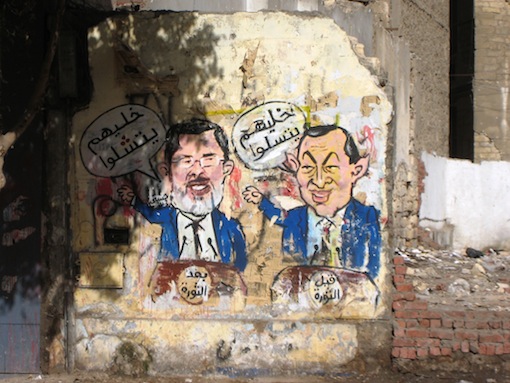
Egypt is again making headlines and the army is again stepping from behind the curtains to take center stage. The military-appointed civilian figures are merely second-rate stand ins. Polls indicate that most Egyptians dont even recognize the names of the president or the prime minister. This is the second time in as many years that the generals have acted. In both cases, it was unparalleled, insurrectionary-like mobilizations prompting them to strategically head off boundless anger against two discredited rulers in a row, Presidents Hosni Mubarak and Mohamed Morsi, from growing into deeper condemnations of the whole rotten system. On February 11, 2011, Mubarak was deposed and the Supreme Command of the Armed Forces (SCAF) took control, ushering in a one-year period of intense repression and secret military trials. More prisoners filled their jails in this one year than during the entire 29-year rule of the deposed dictator himself. But after removing Morsi, Mubarak with a beard, in early July 2013, the military has returned with far greater force and with far broader support. It must be a great disappointment for thousands of victims of violence over the last two years to learn that supporters of the patched together military-appointed government includes many seasoned leaders who fought side by side with them against these very same generals. For example, the respected leader of the Egyptian Federation of Independent Trade Unions (EFITU) has joined the government. The International Trade Union Confederation website<http://www.ituc-csi.org/egypt-labour-minister-appointment?lang=en> reported on July 17, 2013 that Egypts interim government appointed union leader Kamal Abu Eita as Manpower [Labor] Minister. As a result, Abu Eita, a pioneering leader in the campaign for trade union rights and social justice resigned his post as president of EFITU. How could this happen? Why are so many reformers supporting the military? [image: IMG_2903]<http://www.counterpunch.org/wp-content/dropzone/2013/08/IMG_2903.jpg> *Political graffiti in Cairo. Photo by Carl Finamore.* *Ruling the Streets but Not the Government* The sad and unforgiving reality is that the removal of this bankrupt governing duo in the last two years created political vacuums in government that the rebellious youth, women, working class and impoverished millions were never quite able, willing or prepared to fill. As a result, many millions, perhaps reluctantly or perhaps by default, accept the powerful military as inevitable and even necessary. Despite these important political limitations, common to most social protest movements, the mobilizations in Egypt did in fact topple two powerful regimes and must still be considered the highest form of peoples democracy. Direct action remains the most immediate register of peoples opinions and most authentic expression of their real voices, unfettered by financial manipulation by the rich and unrestrained by organizational superiority of traditional parties that normally characterize stagnant, static parliamentary elections the world over. However, after the Morsi government became paralyzed by incredibly massive protests throughout the country, the same glaring contradictions appearing in February 2011 reappeared in July 2013 that is, the main actors in Morsis demise, the mobilized and aroused majority, were still politically and organizationally unprepared to directly take over the reins of government. But the generals were ready again this time, indeed, more than ever. Shocked by the 18-day revolutionary anti-Mubarak protests of 2011, both the army and the *feloul* (Egyptian term for former regime remnants) were better prepared the second time around. Alas, in both cases, the military was the only organized force having the sheer power, historical authority and social credibility to fill the vacated seats of power. This is a glaring example of how a gaping political breech, like any physical vacuum in nature, is filled with forces exerting the most pressure. The harsh truth is that the army was the only remaining organized force of the old regime that survived the February 2011 toppling of the dictator Hosni Mubarak. The Muslim Brotherhood was also intact and was by far the best organized social and political entity outside the boundaries of the traditional power structure. This explains their brief rise to power. Everything else collapsed. Even the notorious police thugs of the Ministry of Interior were nowhere to be seen in the weeks after Mubaraks fall but they have since resurfaced with a vengeance. Though the old *feloul* business elite remained largely intact during the last tumultuous two years of revolutionary protest, they generally kept a low profile. The current army takeover has given them new life with their political representatives occupying most of the thirty or so military-appointed regional governorships and around one-third of the top cabinet positions. *Reform Movement Disoriented by New Government* It is to be expected that the military takeover has temporarily stunned the population, particularly because of the dramatic episodes of police violence. There is also a quite natural knee-jerk mass impulse favoring and giving the benefit of doubt to those in power that briefly exerts itself. But all these factors, these otherwise false hopes in the military government, can be countered and challenged by continuing to campaign for urgent popular reforms that could expand the base and increase the organization of the protest movement. True, the government would remain in the hands of the military or their civilian cronies during this time but reform pressures would continually be exerted from below through strikes and mobilizations. These efforts could win critically important partial victories and ultimately strive to credibly compete at some future point for government power directly, via a newly constructed political party of the oppressed and working class majority. For example, the Egyptian Federation of Independent Trade Unions (EFITU) just posted the following proposals worth noting in full because of their popular urgency in a country still suffering significant unemployment and vast stretches of poverty: The President of Republic must reinstate all laid-off workers; Representation of employees in the drafting committee of a Constitution and of the laws relating to social justice; Immediate publication of a law on trade union freedoms; Immediate publication of a law setting minimum and maximum wages, indexed to prices; Implement a law that guarantees pensions for all workers, including the street vendors, fellahin (poor peasants) and fishermen; Publication of a true healthcare law, to replace the current law, which dates back to 1964; Repeal the law criminalizing strikes and demonstrations, as well as those who organize them; End the privatization program and implement the decisions of the Justice Department which mandate the return of privatized firms to the State. But such a national broad action campaign has not yet materialized, no doubt weakened by the loss of key EFITU figures like Abu Eita. Support given to the military by veteran reformers provides baseless prestige to a government engaged in a brutal and unconscionable war against the Muslim Brotherhood a war that must be opposed on principled grounds of supporting democratic rights for all, not just those with whom we agree. In addition, unrestrained attacks on the otherwise compliant Muslim Brotherhood, who have never challenged the economic power of the elite minority, raises legitimate fears that the military is actually testing the waters for future repression against striking workers and a rebellious majority sure to eventually reemerge against lingering poverty. It is uncertain when that upsurge will arise because this latest government transformation is no doubt the most successful cosmetic facelift yet, buying more time for the old order or deep state as it is now commonly referred, to reassert its control. In any case, while the regime makeover definitely comes at the bloody expense of the Muslim Brotherhood, all who are being fooled into postponing action campaigns demanding the government address the countrys glaring problems are its victims as well. *Carl Finamore has seen up close the bravery and remarkable achievements of the Egyptian revolution and is confident more fraternal international solidarity including discussion and debate will benefit their cause. He is Machinist Lodge 1781 delegate to the San Francisco Labor Council, AFL-CIO and can be reached at [email protected] and at carlfinamore.wordpress.com* [Non-text portions of this message have been removed] ------------------------------------ --------------------------------------------------------------------------- LAAMN: Los Angeles Alternative Media Network --------------------------------------------------------------------------- Unsubscribe: <mailto:[email protected]> --------------------------------------------------------------------------- Subscribe: <mailto:[email protected]> --------------------------------------------------------------------------- Digest: <mailto:[email protected]> --------------------------------------------------------------------------- Help: <mailto:[email protected]?subject=laamn> --------------------------------------------------------------------------- Post: <mailto:[email protected]> --------------------------------------------------------------------------- Archive1: <http://www.egroups.com/messages/laamn> --------------------------------------------------------------------------- Archive2: <http://www.mail-archive.com/[email protected]> --------------------------------------------------------------------------- Yahoo! Groups Links <*> To visit your group on the web, go to: http://groups.yahoo.com/group/laamn/ <*> Your email settings: Individual Email | Traditional <*> To change settings online go to: http://groups.yahoo.com/group/laamn/join (Yahoo! ID required) <*> To change settings via email: [email protected] [email protected] <*> To unsubscribe from this group, send an email to: [email protected] <*> Your use of Yahoo! Groups is subject to: http://docs.yahoo.com/info/terms/